Pierced for our Transgressions

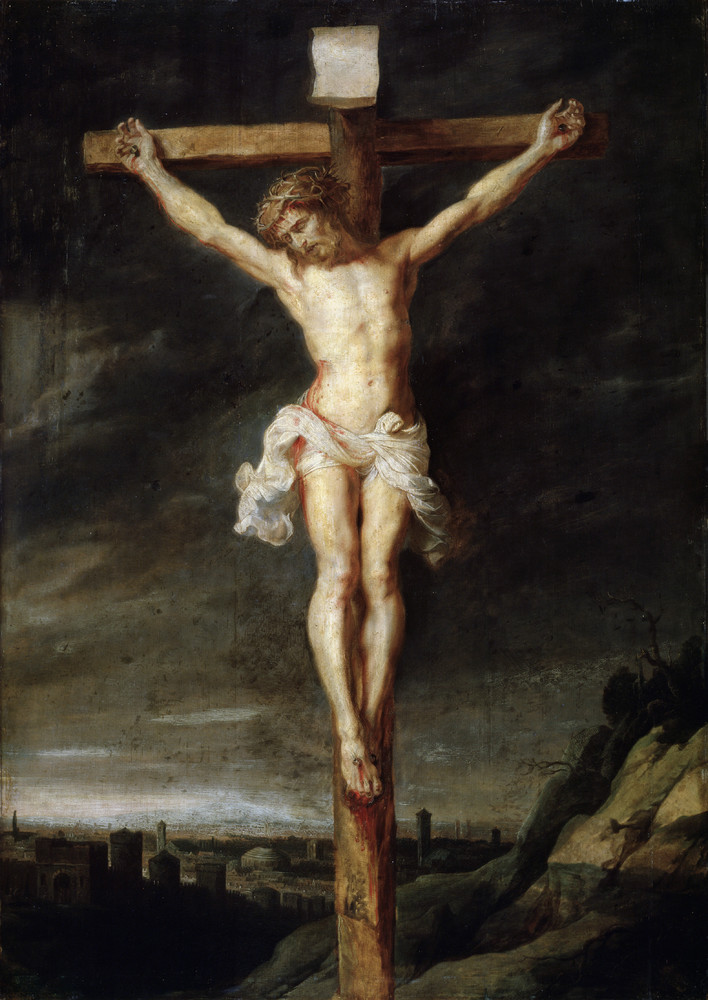
Cheviot_lamb_on_the_Isle_of_LewisWho has believed our message and to whom has the arm of the Lord been revealed?   He grew up before him like a tender shoot, and like a root out of dry ground. He had no beauty or majesty to attract us to him, nothing in his appearance that we should desire him.   He was despised and rejected by mankind, a man of suffering, and familiar with pain. Like one from whom people hide their faces he was despised, and we held him in low esteem.   Surely he took up our pain and bore our suffering, yet we considered him punished by God, stricken by him, and afflicted.   But he was pierced for our transgressions, he was crushed for our iniquities; the punishment that brought us peace was on him, and by his wounds we are healed.   We all, like sheep, have gone astray, each of us has turned to our own way; and the Lord has laid on him the iniquity of us all.   He was oppressed and afflicted, yet he did not open his mouth; he was led like a lamb to the slaughter, and as a sheep before its shearers is silent, so he did not open his mouth.   By oppression and judgment he was taken away. Yet who of his generation protested? For he was cut off from the land of the living; for the transgression of my people he was punished.    He was assigned a grave with the wicked, and with the rich in his death, though he had done no violence, nor was any deceit in his mouth.   Yet it was the Lord ’s will to crush him and cause him to suffer, and though the Lord makes his life an offering for sin, he will see his offspring and prolong his days, and the will of the Lord will prosper in his hand.   After he has suffered, he will see the light of life and be satisfied ; by his knowledge my righteous servant will justify many, and he will bear their iniquities.   Therefore I will give him a portion among the great,  and he will divide the spoils with the strong,  because he poured out his life unto death, and was numbered with the transgressors. For he bore the sin of many, and made intercession for the transgressors. – Isaiah 53:1-12

Today’s passage is a very familiar bit of water.  It contains only a fleeting reference to water, but it is such an important verse to followers of Christ that I felt it important to float this stretch of water.  I think this is one of the most quoted of the Isaiah prophecies that I can remember, with the possible exception of the one that John the Baptist quoted back in Isaiah 40:3-14.  Followers of Christ have seen a clear description in this passage of the death and suffering of Jesus.  It provides an explanation of this event that is consistent with all I have read so far about the extending of the “Arm of God” and a God who deeply desires to carry us like a son or daughter.

The description here of the “Arm of the Lord” is so strikingly similar to the Gospel description of Jesus that it is hard to imagine it is referring to someone else.  Although there are still many Jews and others who do not accept this as a prophetic pointer to the Messiah who we call Jesus.  Some argue that the English translation is incorrect or inaccurate.  I will just say that this passage is one of many in Isaiah that all seem to point toward the same Messiah.  A Messiah Who many did not expect and that only some will understand and receive as we find in the beginning of the passage; “Who has believed our message and to whom has the arm of the Lord been revealed?”

The main character of the story is someone that sounds a lot like Job, “He was despised and rejected by mankind, a man of suffering, and familiar with pain.”  This man was not flashy or “popular” in a worldly sense.  He “took up our pain and bore our suffering, yet we considered him punished by God, stricken by him, and afflicted.”  So this person will see suffering which seems out of proportion with their actions and His treatment will lead many to ask “where is His God“.

We can identify with the character being described because “We all, like sheep, have gone astray, each of us has turned to our own way; and the Lord has laid on him the iniquity of us all.”  So the “Arm of God” was extended so that all of us rebellious and lost sheep could find our way home.  This word picture is completely consistent with the metaphors and parables shared about lost sheep, coins, and the prodigal son in the New Testament.

God is revealing here a great mystery.  He will take our transgressions onto Himself when He was “cut off from the land of the living; for the transgression of my people he was punished.”  This is truly a paradox.  The most powerful being in the universe subjecting Himself to the same mortal death that our bodies experience when we die.  This is clearly deep water.

God allowed part of His spirit to “condense” into human form and experience the same physical death to make “his life an offering for sin, he will see his offspring and prolong his days, and the will of the Lord will prosper in his hand.”  So God needed to provide this demonstration of His love for us.  I do not pretend to fully understand why this was needed.  I am content to accept the mystery that it was a necessary part of God’s plan.  Part of the New Song that God has been alluding to throughout Isaiah.

The end result of this sacrifice is a continuing legacy of Lordship through the God-man Jesus: “Therefore I will give him a portion among the great, and he will divide the spoils with the strong, because he poured out his life unto death, and was numbered with the transgressors. For he bore the sin of many, and made intercession for the transgressors.”

All those who follow “the Way” of Jesus are part of this legacy and benefactors of this amazing grace.  Jesus “poured out” his soul for all of us so that we could learn how to pour out our souls both here on earth and when we “cross over” at the end of our earthly existence.  God made it clear that we are itinerants in this world and our souls are not really intended to be “comfortable” in our earthly bodies.  In a sense we do not really belong here.  We are spiritual children of God and our rightful home is with Him.  It is when we remember this that we find peace like a river flowing from the One River.

Prayer: God Your sacrifice for our transgressions is a great mystery.  Help us to learn to live and die as You taught us through Your Son Jesus.

SDG
Posted in Christianity, Covenant, Death and Dying, Discernment, Discipleship, Faith, Following God, Forgiveness, God's Love for Us, Gospel, Isaiah, Jesus, Obedience, Peace, reconciliation, Redemption, religion, Sin, The Nature of God, The Spiritual Realm, Trusting God | Tagged , , , , , , , | 10 Comments

He Will Sprinkle Many Nations


slide_346099_3632589_free“And now what do I have here?” declares the Lord . “For my people have been taken away for nothing, and those who rule them mock, ” declares the Lord . “And all day long my name is constantly blasphemed.   Therefore my people will know my name; therefore in that day they will know that it is I who foretold it. Yes, it is I.”   How beautiful on the mountains are the feet of those who bring good news, who proclaim peace, who bring good tidings, who proclaim salvation, who say to Zion, “Your God reigns!”   Listen! Your watchmen lift up their voices; together they shout for joy. When the Lord returns to Zion, they will see it with their own eyes.   Burst into songs of joy together, you ruins of Jerusalem, for the Lord has comforted his people, he has redeemed Jerusalem.   The Lord will lay bare his holy arm in the sight of all the nations, and all the ends of the earth will see the salvation of our God.   Depart, depart, go out from there! Touch no unclean thing! Come out from it and be pure, you who carry the articles of the Lord ’s house.   But you will not leave in haste or go in flight; for the Lord will go before you, the God of Israel will be your rear guard.   See, my servant will act wisely ; he will be raised and lifted up and highly exalted.   Just as there were many who were appalled at him — his appearance was so disfigured beyond that of any human being and his form marred beyond human likeness— so he will sprinkle many nations,  and kings will shut their mouths because of him. For what they were not told, they will see, and what they have not heard, they will understand. – Isaiah 52:5-15

This passage is clearly prophetic and intended to be a “wormhole” to a different time. It begins with a rather innocuous statement “And now what do I have here?”, and ends with kings shutting there mouths because of “Him”.  The “Him” here I am convinced is Jesus and the “good news” is that “your God reigns” – in the end God wins.  It is a new song for the people of Israel and we will see later in this passage that God is talking to more than just the people of Israel.

The “watchman” are apparently those who are looking and listening for God to send the Messiah into Zion, Israel. This could refer to the Jews of Jesus’ time that were anxiously awaiting a Messiah.  It could also refer to all those who are searching and seeking to find God. God says ” When the Lord returns to Zion, they will see it with their own eyes”. This sounds to me like God will show up in a very tangible and approachable way. Like, for example, as a baby in a stable born to a mother named Mary and a father named Joseph.

When the people of Israel see God’s arrival they are to ” Burst into songs of joy together, you ruins of Jerusalem, for the Lord has comforted his people, he has redeemed Jerusalem.”  There were certainly some who were singing at Jesus’ arrival, but there were many others that rejected Him and acted somewhat differently.

God lays out the new thing He will do to save the people of Israel, and in fact all those who freely choose to faithfully follow Him: “The Lord will lay bare his holy arm in the sight of all the nations, and all the ends of the earth will see the salvation of our God.”  God’s “Holy Arm” sounds to me like a clear reference to Jesus the God-man through whom all people can receive the salvation historically offered to the people of Israel. I confess I have never heard of Jesus referred to as God’s “Holy Arm”before but it has a pleasant ring to it that rings true in my soul. Jesus was the “Arm” God used to reach down to set us free.

The passage then takes a confusing turn with the statement “Depart, depart, go out from there! Touch no unclean thing! Come out from it and be pure, you who carry the articles of the Lord ’s house. But you will not leave in haste or go in flight; for the Lord will go before you, the God of Israel will be your rear guard.”  Clearly God has the back of the people of Israel just like He did when the people of Israel escaped Egypt through the Red Sea.

He wants them to “depart”. Depart from where? Or maybe more appropriately from what? I think God is talking about leaving their old way of relating to God by “carrying the articles of the Lord’s house”. God wants them to allow themselves to be truly carried like a son or daughter by the “Arm of God”, the Messiah, Jesus.

Next comes a heart wrenching description of the reception that “God’s Arm” will receive at the hands of those He was reaching out to save: “See, my servant will act wisely ; he will be raised and lifted up and highly exalted. Just as there were many who were appalled at him — his appearance was so disfigured beyond that of any human being and his form marred beyond human likeness.”  This is an Easter verse I have never heard read at Easter. It seems to be describing Jesus’ work here on earth (act wisely); His resurrection (lifted up and exalted); the response of many to His wisdom (they are appalled); and His crucifixion and torture (his form marred beyond human likeness”).

The passage even explains why God reached out His “Arm” in this way: “so he will sprinkle many nations and kings will shut their mouths because of him. For what they were not told, they will see, and what they have not heard, they will understand.”  This is the water connection in the passage, the sprinkling.  The “sprinkling” was actually not with water but with the blood of Christ to take away the sins of the world. His blood has the power to shut king’s mouths, open their eyes to see, their ears to hear, and their souls to understand. His blood has the power to do the same for all those who choose to be “sprinkled” by it.

Prayer: God thank You for reaching out Your arm to save us. I am sorry that we received You so poorly, but thankful that You chose to sprinkle many nations with Your love so that I could know the Good News.

Posted in Christianity, Covenant, Death and Dying, Discernment, Discipleship, Faith, Following God, Free Will, God's Love for Us, Gospel, Isaiah, Jesus, Love for the Lost, Obedience, reconciliation, Redemption, religion, Sharing the Gospel, Sin, The Earthly Realm, The Nature of God, The Spiritual Realm, Trusting God | Tagged , , , , , , , | 6 Comments

Awake!

12219495_10102916792765935_6243168120663063339_n“Hear me, you who know what is right, you people who have taken my instruction to heart: Do not fear the reproach of mere mortals or be terrified by their insults.   For the moth will eat them up like a garment; the worm will devour them like wool. But my righteousness will last forever, my salvation through all generations.”   Awake, awake, arm of the Lord , clothe yourself with strength! Awake, as in days gone by, as in generations of old. Was it not you who cut Rahab to pieces, who pierced that monster through?   Was it not you who dried up the sea, the waters of the great deep, who made a road in the depths of the sea so that the redeemed might cross over?   Those the Lord has rescued will return. They will enter Zion with singing; everlasting joy will crown their heads. Gladness and joy will overtake them, and sorrow and sighing will flee away.   “I, even I, am he who comforts you. Who are you that you fear mere mortals, human beings who are but grass,   that you forget the Lord your Maker, who stretches out the heavens and who lays the foundations of the earth, that you live in constant terror every day because of the wrath of the oppressor, who is bent on destruction? For where is the wrath of the oppressor?   The cowering prisoners will soon be set free; they will not die in their dungeon, nor will they lack bread.   For I am the Lord your God, who stirs up the sea so that its waves roar— the Lord Almighty is his name.   I have put my words in your mouth and covered you with the shadow of my hand— I who set the heavens in place, who laid the foundations of the earth, and who say to Zion, ‘You are my people.’ ” – Isaiah 51:7-16
For some reason this passage has been hard to get inspired about.  It falls in the midst of some amazing parts of Isaiah, but this one just seems to be missing me or I am missing it.  God is speaking and appears to be reassuring the people of Israel that if they commit to Him all will be well in the end: “Hear me, you who know what is right, you people who have taken my instruction to heart: Do not fear the reproach of mere mortals or be terrified by their insults.”  Those opposing God will have a different fate: “the moth will eat them up like a garment; the worm will devour them like wool”.

The pronouns and who is speaking here is a bit confusing to me.  God is reminding the people that “my righteousness will last forever, my salvation through all generations.”  I assume this is God talking about Himself.  Then God asks the “arm of the Lord” to awaken.  I am not so sure what this means.  In the passage yesterday the “arm of the Lord” seemed to refer to a coming Messiah or God’s Spirit.  This “arm of the Lord” is the one Who “dried up the sea, the waters of the great deep, who made a road in the depths of the sea so that the redeemed might cross over?”  It sounds like this is referring to the God’s power or the Spirit of God that helped the Israelites to escape from Egypt.

God is asking the people of Israel to wake up from their slumber and act in a way that is consistent with their role as rescued people: “Those the Lord has rescued will return. They will enter Zion with singing; everlasting joy will crown their heads. Gladness and joy will overtake them, and sorrow and sighing will flee away.”  God seems to make sense of the confusing pronouns by saying “I, even I, am he who comforts you”,  So it is God who comforts the people of Israel and all those who follow Him.

God promises to set the captives free, “The cowering prisoners will soon be set free; they will not die in their dungeon, nor will they lack bread.”  The One who will set us all free is the God-man, Jesus.  He is the Lord Almighty “who stirs up the sea so that its waves roar”.  Paradoxically, He is also the one who calms the storm.  He says that we are “his people” and He will put words in our mouths and cover us with the shadow if His hand.

Prayer: God you are the God who was, is, and is to come.  Help us to know you by all of Your names, and to be confident that we are all Your people.


Posted in Covenant, Following God, Isaiah, Obedience, reconciliation, The Nature of God | Tagged , , , , , | Leave a comment

Was my arm too short to deliver you?

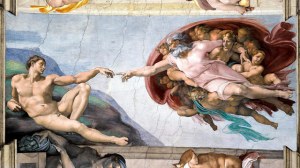
The restored 'Creation of Adam' by Michelangelo Buonarroti on the ceiling of the Sistine Chapel

This is what the Lord says: “Where is your mother’s certificate of divorce with which I sent her away? Or to which of my creditors did I sell you? Because of your sins you were sold; because of your transgressions your mother was sent away. When I came, why was there no one? When I called, why was there no one to answer? Was my arm too short to deliver you? Do I lack the strength to rescue you? By a mere rebuke I dry up the sea, I turn rivers into a desert; their fish rot for lack of water and die of thirst. I clothe the heavens with darkness and make sackcloth its covering.” – Isaiah 50:1-3

The metaphors and imagery in this passage are somewhat complicated and rich with what appear to be cultural codes. God is speaking with the people of Israel metaphorically. He did not divorce them or send them away despite their lack of ability to remember and remain faithful followers. But because of their sins and rebellion they were “sold”.

I assume by “sold” God means that the people of Israel were in a sense purchased by someone else other than God. They were allowed to be owned by someone else for a time because that is what they chose by not following God. God sent many messengers to try to get them to listen and learn, but “When I came, why was there no one? When I called, why was there no one to answer?” This language is interesting on several levels. I get that God is referring to prophets, and perhaps His presence in clouds and on mountain tops, but it seems there is another layer of meaning. It is almost as if God is describing His reception when He arrives in the form of a Messiah named Jesus.

The Jews of Jesus’ day were slow to recognize and accept Him as the Messiah. they were slow to answer His call and some never accepted it. God rebukes their doubt before it even occurs: “Was my arm too short to deliver you? Do I lack the strength to rescue you?” God is saying that He will rescue those who allow themselves to be rescued. He is strong enough to rescue us by enduring the cross; and His arms are long enough to stretch around the world.

God finishes His words for the people of Israel by describing what a world without Him would be like: “By a mere rebuke I dry up the sea, I turn rivers into a desert; their fish rot for lack of water and die of thirst. I clothe the heavens with darkness and make sackcloth its covering.” A world without God’s loving hand and spirit is a place where seas dry up, we lack water to drink, and skies are full of dark clouds. This sounds like a very grim land of Oblivion that will not be a fun place to be. God gave the people of Israel a choice just as He gives all of us a choice. We can answer His call or we can continue to live in the dark — our call.

Prayer: God thank You for bringing Your light into the darkness and reaching down to provide water for the thirsty.

Posted in Covenant, Discernment, Following God, Free Will, Isaiah, Obedience, reconciliation, The Nature of God, The Spiritual Realm, Trusting God | Tagged , , , , , | 28 Comments

Roads Through the Mountains

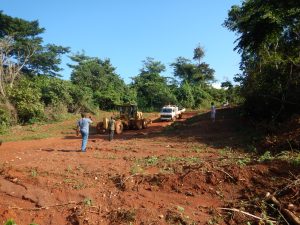
Road through the hills of Ghana, west Africa

Road through the hills of Ghana, west Africa

This is what the Lord says: “In the time of my favor I will answer you, and in the day of salvation I will help you; I will keep you and will make you to be a covenant for the people, to restore the land and to reassign its desolate inheritances,   to say to the captives, ‘Come out,’ and to those in darkness, ‘Be free!’ “They will feed beside the roads and find pasture on every barren hill.   They will neither hunger nor thirst, nor will the desert heat or the sun beat down on them. He who has compassion on them will guide them and lead them beside springs of water.   I will turn all my mountains into roads, and my highways will be raised up.   See, they will come from afar— some from the north, some from the west, some from the region of Aswan. – Isaiah 49:8-12

My retracing of the river in Isaiah took longer than anticipated.  Life happened and I have been eddying out for the last couple of days.  I am back on track and headed down river again today.

This passage starts with God reminding the people of Israel that He will make a covenant with them.  He will set the captives free and bring those who are in darkness into the light.  All language that would fit quite nicely in the Gospels and the coming of the “Light of the World”, Jesus. The covenant is an agreement between God and His people, both the people of Israel and those that follow Him in modern times like myself.  The agreement which we will see is essentially “you follow me and I will build the roads that lead to Me”.

God goes on to say that “He who has compassion on them will guide them and lead them beside springs of water.”  This sounds very much like a merging of the God who leads us beside quiet waters in the Psalms, and the Messiah who will lead people into the Jordan River to be baptized.  This God-man will “turn all my mountains into roads, and my highways will be raised up.”   God is reassuring the people of Israel, and us, that He will find a way to reach us no matter what “mountains” stand in the way.

God will show us “the way” through the mountains.  Jesus certainly faced, and conquered, many mountains as He taught His disciples how to build roads and free the captives.  Jesus was making roads through the mountains so that all who were seeking Him could find Him.  His disciples, in their own imperfect ways, got to help Him in this process.  The end result is that people will come to know God, “they will come from afar— some from the north, some from the west, some from the region of Aswan.”  The roads are many but all have the same destination, God.

People who are earnestly seeking God will find the savior who He sent to set the captives free and brings light to the darkness.  Jesus is Who lies at the beginning and the end of the roads that God creates through the “mountains”.  Our choice to follow the way of Jesus is a commitment to seek out these roads and to follow them wherever they lead us.

God is at the center of what sometimes feels like a labyrinth of roads and trails.  Sometimes the road is hard and we feel like we need to give up.  That is when God carries us like a Son or Daughter until we are ready to walk on our own again.

Prayer: God Thank You for leading us onto the roads that lead to You,  and carrying us when we grow weary.


Posted in Covenant, Discernment, Discipleship, Following God, Isaiah, Trusting God | Tagged , , , , , , | 1 Comment

I Am and There is None Besides Me

Babylon_DurKurigalzu01_full

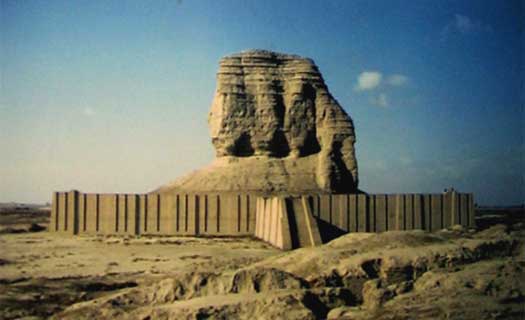
The partly restored ziggurrat of Dur-Kurigalzu

“Go down, sit in the dust, Virgin Daughter Babylon; sit on the ground without a throne, queen city of the Babylonians.  No more will you be called tender or delicate.   Take millstones and grind flour; take off your veil. Lift up your skirts, bare your legs, and wade through the streams.   Your nakedness will be exposed and your shame uncovered. I will take vengeance; I will spare no one.”   Our Redeemer—the Lord Almighty is his name— is the Holy One of Israel.   “Sit in silence, go into darkness, queen city of the Babylonians; no more will you be called queen of kingdoms.   I was angry with my people and desecrated my inheritance; I gave them into your hand, and you showed them no mercy. Even on the aged you laid a very heavy yoke.   You said, ‘I am forever— the eternal queen!’ But you did not consider these things or reflect on what might happen.   “Now then, listen, you lover of pleasure, lounging in your security and saying to yourself, ‘I am, and there is none besides me. I will never be a widow or suffer the loss of children.’   Both of these will overtake you in a moment, on a single day: loss of children and widowhood. They will come upon you in full measure, in spite of your many sorceries and all your potent spells.   You have trusted in your wickedness and have said, ‘No one sees me.’ Your wisdom and knowledge mislead you when you say to yourself, ‘I am, and there is none besides me.’   Disaster will come upon you, and you will not know how to conjure it away. A calamity will fall upon you that you cannot ward off with a ransom; a catastrophe you cannot foresee will suddenly come upon you. – Isaiah 47:1-11

This passage describes the downfall of Bablyon.  There are many mixed metaphors and confusing aspects of this passage.  I confess I was tempted to skip this passage of Isaiah.  The water reference is somewhat minor and the content very confusing, but I signed up for the whole river so I will give it my best shot.

Babylon is compared to a “virgin daughter”.  I am pretty sure there is cultural meaning here that I am missing.  My initial reaction would be that comparing a city or nation to a “virgin daughter” would be a complement, but it does not seem like that was God’s intention.  Perhaps this is alluding to the lack of a relationship with God? I do not know.

The confusion continues when God paints an image of the “queen city” of Babylon sitting in the dust engaged in the unqueenly activity of milling grain: “Take millstones and grind flour; take off your veil”.  There seems to be a sense that this city is a bit full of itself and not seeking God.  God really takes the city of Babylon down a notch: “Lift up your skirts, bare your legs, and wade through the streams. Your nakedness will be exposed and your shame uncovered.”

So it seems there will come a great humbling of this proud people and city that God allowed to enslave the people of Israel: “Sit in silence, go into darkness, queen city of the Babylonians; no more will you be called queen of kingdoms.”  Babylon seems to be self sufficient and in no need of God or His people.  God accuses them of saying “I am, and there is none besides me. I will never be a widow or suffer the loss of children.”  They have made themselves the great “I am” instead of acknowledging the great I Am.

The God who sees us was not being seen by the Babylonians because of their pride and wickedness, “You have trusted in your wickedness and have said, ‘No one sees me.’   God goes on to remind Babylon that they are trusting their own wisdom and not acknowledging His existence, “Your wisdom and knowledge mislead you when you say to yourself, ‘I am, and there is none besides me.”  This description sounds eerily like the post-modern, secular, and independent United States of America of 2015.

The coming calamity that is to befall Babylon is sobering and scary: “Disaster will come upon you, and you will not know how to conjure it away. A calamity will fall upon you that you cannot ward off with a ransom; a catastrophe you cannot foresee will suddenly come upon you.”  I hope and pray that the fate of Babylon does not fall upon the U.S. someday, but to be honest we are kind of asking for it with our pride and our trust in our own wisdom and knowledge to the exclusion of the far greater I Am.

Prayer: God You often remind us of our incomplete and imperfect grasp of the greater spiritual world around us.  Help us to trust in You more than our own wisdom and understanding.

Posted in Conflict, Covenant, Discernment, Faith, Following God, Free Will, God's Love for Us, Isaiah, Obedience, reconciliation, The Spiritual Realm, Trusting God, Truth, Wisdom | Tagged , , , , , , | Leave a comment

Drinking no Water

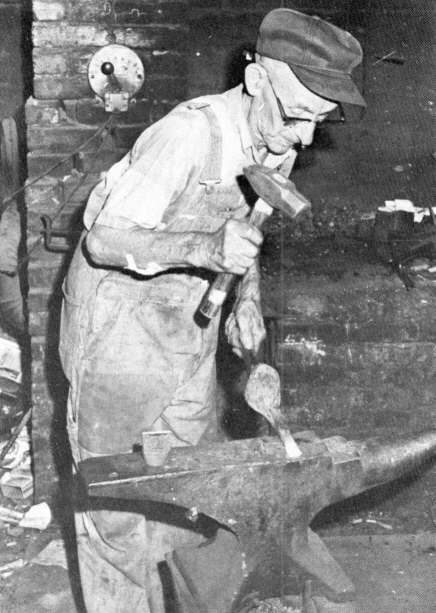
2i3p30The blacksmith takes a tool and works with it in the coals; he shapes an idol with hammers, he forges it with the might of his arm. He gets hungry and loses his strength; he drinks no water and grows faint.   The carpenter measures with a line and makes an outline with a marker; he roughs it out with chisels and marks it with compasses. He shapes it in human form, human form in all its glory, that it may dwell in a shrine.   He cut down cedars, or perhaps took a cypress or oak. He let it grow among the trees of the forest, or planted a pine, and the rain made it grow.   It is used as fuel for burning; some of it he takes and warms himself, he kindles a fire and bakes bread. But he also fashions a god and worships it; he makes an idol and bows down to it.   Half of the wood he burns in the fire; over it he prepares his meal, he roasts his meat and eats his fill. He also warms himself and says, “Ah! I am warm; I see the fire.”   From the rest he makes a god, his idol; he bows down to it and worships. He prays to it and says, “Save me! You are my god!”   They know nothing, they understand nothing; their eyes are plastered over so they cannot see, and their minds closed so they cannot understand.   No one stops to think, no one has the knowledge or understanding to say, “Half of it I used for fuel; I even baked bread over its coals, I roasted meat and I ate. Shall I make a detestable thing from what is left? Shall I bow down to a block of wood?”   Such a person feeds on ashes; a deluded heart misleads him; he cannot save himself, or say, “Is not this thing in my right hand a lie?” – Isaiah 44:12-20

The blacksmith character in this passage is a metaphor for all of us who find ourselves busy doing important things at the expense of eternal things.  He “takes a tool and works with it in the coals; he shapes an idol with hammers, he forges it with the might of his arm. He gets hungry and loses his strength; he drinks no water and grows faint.”

The water that the blacksmith is reluctant to take is in fact the water of God that we all need to have our soul thirst quenched. The blacksmith is engaged in a noble profession, but he is investing his energy, heart, and soul in creating idols. He is squandering his skills on an idol, a God-substitute, and producing bad fruit. No matter how hard he works he grows faint because he is not nourishing his spirit with water from the Great Cistern.

The second character in this passage is the carpenter, another noble and respected profession during the time this was written.  The carpenter is also engaged in using his talents for making idols, in this case out of wood.  The source of the carpenter’s wood is described as wood that he intentionally planted: “He let it grow among the trees of the forest, or planted a pine, and the rain made it grow.”  The key part of this description is the “rain” that made it grow, something the carpenter has no control over. The raw material that the carpenter is using to fashion his idols and obtain his livelihood and warmth comes from the father of the rain, God.

The carpenter uses some of the wood to cook and warm himself, “Half of the wood he burns in the fire; over it he prepares his meal, he roasts his meat and eats his fill. He also warms himself and says, “Ah! I am warm; I see the fire.”  The last part of this description is the key, “I see the fire”.  Using the wood to heat and cook was a tangible thing, he could see the fire and feel its heat.  God on the other hand was not tangible and real to the carpenter or the people of Israel at this time.  God is more approachable today through His arrival on earth as Jesus, but we can still find ourselves yearning for a “fire” that we can see and feel.

This yearning for a God that we can see and touch has resulted in some followers of Christ seeking very specific gifts to demonstrate God is in fact with us.  As I grow older I am increasingly convinced that God provides and uses gifts of the spirit, but they are not something that we should seek at the expense of seeking after God — even when the God we seek is sometimes hard to see and touch.  He wants faithful followers who are willing to follow Him unconditionally by striving on even when we seem to be groping in the dark for a silent savior.

Sometimes the darkness is not because of a lack of light, but because our eyes are closed: “They know nothing, they understand nothing; their eyes are plastered over so they cannot see, and their minds closed so they cannot understand.” The important point here is that if we find ourselves “in the dark” the first thing we should suspect is that our eyes are plastered over.  Instead we often conclude that God is missing or absent.  He is still with us.  We are not permanently blind, but we need to allow God to wash the plaster from our eyes so we can see His face clearly.  Jesus did just that for the man born blind in John 9:4-7:

“As long as it is day, we must do the works of him who sent me. Night is coming, when no one can work.  While I am in the world, I am the light of the world.”  After saying this, he spit on the ground, made some mud with the saliva, and put it on the man’s eyes.  “Go,” he told him, “wash in the Pool of Siloam” (this word means “Sent”). So the man went and washed, and came home seeing.” John 9:4-7

The details of these two tales are telling.  Both the blacksmith and the carpenter, respected people in their communities, are using the raw materials provided by God to create something they can see and touch.  They are providing for themselves rather allowing God to provide what they need.  They seek to fashion for themselves a tangible God that they can see, feel, and touch because they have not grown accustomed to God’s whisper.  They are investing in ephemeral things instead of their eternal souls.  The Good News is that we all gaze imperfectly at our loving God, but He knows that and loves us anyway.

Prayer: God You love us even when our eyes are covered over and we find it difficult to see Your face.  Help us to use our time and talents to know You better.


Posted in Christian Community, Christian Leadership, Christianity, Covenant, Discernment, Discipleship, Faith, Following God, Free Will, Healing, Isaiah, Jesus, Obedience, reconciliation, Redemption, religion, Sharing the Gospel, The Nature of God, The Spiritual Realm, Trusting God | Tagged , , , , , , , , , | Leave a comment

I Belong to the Lord

25-aweinspiring-jesus-fish-tattoos-3But now listen, Jacob, my servant, Israel, whom I have chosen.   This is what the Lord says— he who made you, who formed you in the womb, and who will help you: Do not be afraid, Jacob, my servant, Jeshurun, whom I have chosen.   For I will pour water on the thirsty land, and streams on the dry ground; I will pour out my Spirit on your offspring, and my blessing on your descendants.   They will spring up like grass in a meadow, like poplar trees by flowing streams.   Some will say, ‘I belong to the Lord ’; others will call themselves by the name of Jacob; still others will write on their hand, ‘The Lord ’s,’ and will take the name Israel. – Isaiah 44:1-5

I got so excited by yesterday’s post that I overlooked a couple of water verses.  I guess this would be the equivalent of “skipping” part of the river which you can’t really do so I am going to retrace a small portion of Isaiah to pick up the verses I missed when I wrote about Peace Like a River yesterday.

God is talking to Jacob or Israel in this passage.  He also uses the name Jeshurun.  Apparently the term Jeshurun is a poetic reference to the nation of Israel which means loosely “to be blessed”.  This is appropriate as in this passage God is describing the blessings he will be pouring out on the nation and people of Israel, “I will pour water on the thirsty land, and streams on the dry ground; I will pour out my Spirit on your offspring, and my blessing on your descendants.”

God seems to be equating water and streams to His spirit and blessings.  In a dry and desert land this makes sense.  Water is life in the desert and without water nothing is possible and death comes swiftly.  God is saying that spiritually He is the water that the people of Israel need.  They, and their descendants, are to be truly blessed by God’s spirit.  His spirit will do for their souls what water does in the desert – provide life.

God offers the same to all those who seek him with their hearts and souls.  I just finished reading a chapter in A.W. Tozer’s book Pursuit of God called “The Gaze of the Soul”.  It is an exploration of what faith means and how we are to understand faith in actions.  One of the most amazing word pictures Tozer provides is that faith is “the gaze of a soul upon a saving God”.  The God who see us allows us to see Him.  This is something that the people of Israel could hardly fathom.  Their view of God was in the clouds high above them.  God pouring out His very soul is truly a new song for the people of Israel.

Those who plant themselves firmly in the water God is providing will find that they “spring up like grass in a meadow, like poplar trees by flowing streams.”  Our souls were made to operate on the spirit of God.  It is only through His spirit that we can leap across mountains and find water in the desert.

The last part of the passage seems to be saying that many will accept God’s invitation to be planted by the river: “Some will say, ‘I belong to the Lord ’; others will call themselves by the name of Jacob; still others will write on their hand, ‘The Lord ’s,’ and will take the name Israel.” I am not sure what “writing on our hands” looks like but it would seem to be a direction to get a tattoo or other marking that clearly identifies us as belonging to God — maybe I should get a tattoo after all.

Prayer: God thank You for sharing Your spirit with us and allowing us to gaze upon a saving God in such an intimate way.

Posted in Christianity, Covenant, Discernment, Discipleship, Following God, Isaiah, Love for the Lost, Obedience, Peace, religion, The Earthly Realm, The Nature of God, The Spiritual Realm, Trusting God | Tagged , , , , , , | Leave a comment

Peace Like a River

ville_du_havre

The collission of the Ville du Havre in which Horatio Spafford’s daughters died

This is what the Lord says— your Redeemer, the Holy One of Israel: “I am the Lord your God, who teaches you what is best for you, who directs you in the way you should go.   If only you had paid attention to my commands, your peace would have been like a river, your well-being like the waves of the sea.   Your descendants would have been like the sand, your children like its numberless grains; their name would never be blotted out nor destroyed from before me.”   Leave Babylon, flee from the Babylonians! Announce this with shouts of joy and proclaim it. Send it out to the ends of the earth; say, “The Lord has redeemed his servant Jacob.”   They did not thirst when he led them through the deserts; he made water flow for them from the rock; he split the rock and water gushed out.   “There is no peace,” says the Lord , “for the wicked.” – Isaiah 48:17-22

As a river scientist, this verse is particularly interesting.  It contains a phrase that I confess I did not know occurred in Isaiah “If only you had paid attention to my commands, your peace would have been like a river, your well-being like the waves of the sea”.  I assume this is where the phrase “peace like a river” came from.  It was made famous by the Horatio Spafford hymn “it is well with my soul” written after several tragic events in his life.  It is also the title of a book by Leif Enger called “peace like a river”.  Here are the lyrics that Horatio Stafford wrote back in 1876.

When peace like a river, attendeth my way,
When sorrows like sea billows roll;
Whatever my lot, Thou hast taught me to know,
It is well, it is well, with my soul.

A google search defines peace as “freedom from disturbance; quiet and tranquility”.  Both the natural water features that God compares to peace, the sea and rivers,  are hardly free from disturbance.  The peace that God is promising here is clearly different than simply a lack of conflict or disturbance. So what is the peace that God is speaking about?  Perhaps it will be helpful to explore the features of rivers and the sea to see if we can better understand what God means.

What attributes do rivers possess that make them a good metaphor for the peace that comes from God?  Rivers are actually quite variable in size and nature.  Some rivers are very small and docile while others are powerful and scary.  Rivers like the Colorado river at flood stage would hardly be what most people describe as peaceful.  The same river can actually transform from being gentle and calm to being mighty and dangerous.  It sounds almost like the dual nature of God, the lion and the lamb.

In order to successfully navigate great rivers it helps to 1) be prepared with the right equipment, and 2) have experience and training on a lot of rivers so that you can make good choices about choosing a line.  The right equipment from a spiritual perspective is, according to God in this passage, a person who “paid attention to my commands”.  So the right equipment for our souls is knowledge of God’s commands and obedience to them.  “River running experience” from a spiritual perspective is gained by attempting to faithfully follow God no matter where He leads and what rapids we encounter along the way.

Each time we navigate a rapid with God we learn a bit about how God can care for us and carry us like a son or daughter.  His care may not look like what we think of as “peace”.  Part of our learning process may actually involve going for a swim through a patch of whitewater.  That was the experience for Horatio Spafford.  He lost his four daughters to a tragic accident at sea.  He reportedly wrote the song “it is well with my soul” as he passed by the very spot that they were lost.  He had “peace like a river” amidst what must have felt like a drowning rapid.

The sea is rarely a calm place.  The sailors on wind-powered vessels dreaded “calm seas” because they could not get anywhere without wind, but the same wind that makes the boat move creates waves that, when large enough, can destroy the boat — the lion and the lamb.  It is almost as if God’s interaction with our souls is like the wind.  We need it to move toward Him but it also creates waves that at times can feel rather scary and dangerous.  So to have “your well-being like the waves of the sea” is to trust that our well-being is ultimately in God’s hands whether the waves are large or small.  Job certainly experienced wave upon wave in his life, yet he seems to have been able to trust his well-being to God, and in the end God took him where he needed to go.

The passage ends with a reminder of God’s provision of water from a rock in the desert (Exodus 17:5-7), and a stark warning: “There is no peace,” says the Lord , “for the wicked.”  So no matter how hard we seek peace in our lives, or between nations, we will not find it apart from God.

Prayer: God grant us peace like a river.  Help us to know that when we encounter waves and scary patches in life that you are with us and we have but to rest in You to have peace.

Posted in Christian Community, Christianity, Conflict, Faith, Following God, Free Will, Isaiah, Life Together, Love for the Lost, Obedience, Peace, reconciliation, The Earthly Realm, The Nature of God, The Spiritual Realm, Trusting God | Tagged , , , , , , , | 17 Comments

Streams in the Wasteland

The restored 'Creation of Adam' by Michelangelo Buonarroti on the ceiling of the Sistine Chapel

This is what the Lord says— he who made a way through the sea, a path through the mighty waters, who drew out the chariots and horses, the army and reinforcements together, and they lay there, never to rise again, extinguished, snuffed out like a wick: “Forget the former things; do not dwell on the past. See, I am doing a new thing! Now it springs up; do you not perceive it? I am making a way in the wilderness and streams in the wasteland. The wild animals honor me, the jackals and the owls, because I provide water in the wilderness and streams in the wasteland, to give drink to my people, my chosen, the people I formed for myself that they may proclaim my praise. “Yet you have not called on me, Jacob, you have not wearied yourselves for me, Israel. You have not brought me sheep for burnt offerings, nor honored me with your sacrifices. I have not burdened you with grain offerings nor wearied you with demands for incense. You have not bought any fragrant calamus for me, or lavished on me the fat of your sacrifices. But you have burdened me with your sins and wearied me with your offenses. “I, even I, am he who blots out your transgressions, for my own sake, and remembers your sins no more. Review the past for me, let us argue the matter together; state the case for your innocence. Your first father sinned; those I sent to teach you rebelled against me. So I disgraced the dignitaries of your temple; I consigned Jacob to destruction and Israel to scorn. – Isaiah 43:16-28

I have been chewing on this passage for the better part of the last day and I am still puzzled by some parts of it. The passage starts out recounting the times that God has had the backs of the people of Israel when they crossed the red sea fleeing from the Egyptians. The sense is that this is ancient history and part of an old pattern of relationship between God and His people. God is saying that all this past interaction is about to change “Forget the former things; do not dwell on the past. See, I am doing a new thing!”. What is this “new thing” that God is speaking about?

The new thing “springs up” and makes “a way in the wilderness and streams in the wasteland.” This is very similar language to Isaiah 40:3-14 that I reflected on a few days ago, and the Gospels (Matthew 3:3, Mark 1:3, Luke 3:4, John 1:23). The “new thing” seems to begin here in Isaiah and culminates when God comes to earth in human form to show us what this new kind of relationship between God and His people looks like. This “new thing” is ongoing through all who follow God the Father through His son Jesus.

Jesus Himself is the stream in the wasteland as He said in John 7:37 “Jesus stood and said in a loud voice, “Let anyone who is thirsty come to me and drink. Whoever believes in me, as Scripture has said, rivers of living water will flow from within them.” So not only will Jesus be a stream in this land of oblivion but He will place this living water in each of us who ask for it. Truly this was the beginning of a “new thing”. Although the people of Israel had to wait for the coming of Jesus I think this part of Isaiah marks a beginning, or to quote Winston Churchill “Now this is not the end. It is not even the beginning of the end. But it is, perhaps, the end of the beginning”.

This new beginning was not just for “Jacob”, the people of Israel, for even “The wild animals honor me, the jackals and the owls”. This living water in the wilderness was for “my people, my chosen, the people I formed for myself that they may proclaim my praise”. One could interpret this to be exclusive to the people of Israel, but I think God is extending this new thing to all who proclaim His praise. Basically all who hunger and thirst for Him to be their water source in the wilderness.

God makes it clear that the relationship between the people of Israel and Himself is broken. All the offerings and incense have not repaired this broken relationship because the fundamental problem is the sins of the people “you have burdened me with your sins and wearied me with your offenses.” The passage then enters a truly deep pool when God says “I, even I, am he who blots out your transgressions, for my own sake, and remembers your sins no more.” This is a reminder that all sin is really between us and God. This is similar to a stretch of river back in Psalm 51:1-12.

The twist here is that God adds that He is going to blot out our transgression for His own sake. What does He mean by that? I have always been under the impression that the forgiveness of sins promised by Jesus’ death on the cross was for us, but here God is saying that it was also for His sake. As I have chewed and prayed about this it is becoming more clear. It is consistent with the idea that God cannot tolerate sin, or perhaps it is that sin is incompatible with the spiritual sea into which we must pass.

I think this is because all sin is really separation from God. It is almost as if sin is spiritual oil that cannot mix with the endless ocean that is God. So God blots out our transgressions so that He can be with us and we can be with Him. God knows we must pass through a door to be with Him and we have this huge growth attached to our souls that will not allow us to pass. He wants to be with us so He must remove this growth so we can pass. I am sure there are nuances and swirling eddies of meaning that I have missed here. I am really enjoying this part of Isaiah and the undercurrents of the Gospel I am finding here.

Prayer: God thank You for coming to be with us and blotting out our sins so we can be with You.

Posted in Christianity, Covenant, Death and Dying, Discernment, Faith, Following God, Forgiveness, Free Will, God's Love for Us, Gospel, Heaven, Isaiah, Jesus, Love for the Lost, Obedience, reconciliation, Redemption, religion, Sin, The Earthly Realm, The Nature of God, The Spiritual Realm | Tagged , , , , , , , | Leave a comment