Summoned by Name

DCIM100SPORTBut now, this is what the Lord says— he who created you, Jacob, he who formed you, Israel: “Do not fear, for I have redeemed you; I have summoned you by name; you are mine.  When you pass through the waters, I will be with you; and when you pass through the rivers, they will not sweep over you.  When you walk through the fire, you will not be burned; the flames will not set you ablaze.  For I am the Lord your God, the Holy One of Israel, your Savior; I give Egypt for your ransom, Cush and Seba in your stead.  Since you are precious and honored in my sight, and because I love you, I will give people in  exchange for you, nations in exchange for your life.  Do not be afraid, for I am with you; I will bring your children from the east and gather you from the west.  I will say to the north, ‘Give them up!’ and to the south, ‘Do not hold them back.’  Bring my sons from afar and my daughters from the ends of the earth— everyone who is called by my name, whom I created for my glory, whom I formed and made. – Isaiah 43:1-7

I have taken an extended break from my walk with water. No great reason just a confluence of mid-terms, flu, and a professional conference that left me with a deficit of energy for the last several days. I am over the flu, mid-terms are graded, and the conference is behind me so I am back on the water today.

This verse begins by reminding Jacob, Israel, and us that we belong to God. Sometimes it is reassuring to belong to someone, especially when that someone is God. He has summoned us by name and we are his. What does it mean to be God’s possession? Can we possess God while He is possessing us? It is a bit like playing tag with God as we pursue, and are simultaneously pursued by, God.

I confess ever since the movie Exorcist the idea of being possessed by something has taken on decidedly negative connotations for me.  In that movie being possession by the devil created all manor of strange and scary behavior.  Possession by God should produce the opposite result, but I digress… back to the water reference in this verse.

“When you pass through the waters, I will be with you; and when you pass through the rivers, they will not sweep over you.”  In this instance water is being referred to metaphorically as a barrier or something that can “sweep over us”.  The great crossing over occurred back in Deuteronomy 31:1-8 when the people of Israel entered the promised land after their sojourn as desert people.  This crossing over was the beginning of a new relationship with, and reliance on, God.

Another major “passing through waters” occurred when the Jews were escaping Pharaoh and his gang at the Red Sea and Moses had the lead and God had their back.  I feel like what God is referring to in this passage is more like the red sea crossing than the crossing of the Jordan, but in the words of Forrest Gump, “I think maybe it’s both. Maybe both is happening at the same time”.  God wants us to boldly cross over scary waters that separate us from Him to the Promised Land where he exists.

God finishes with the comforting command “Do not be afraid, for I am with you”.  That is essentially the same message that Jesus brought when He came to earth.  In John 14:27 Jesus says “Peace I leave with you; my peace I give you. I do not give to you as the world gives. Do not let your hearts be troubled and do not be afraid.”  We are simply to “Bring my sons from afar and my daughters from the ends of the earth— everyone who is called by my name.”  We are to help fellow travelers find their way to the One River so that He may help them cross into the Promised Land.

Prayer: God thank You for helping us to cross mighty waters and find our way to You.  Help us to boldly pursue You even though You are always with us.


Posted in Christianity, Death and Dying, Faith, Following God, Free Will, God's Love for Us, Heaven, Isaiah, Obedience, reconciliation, Redemption, The Earthly Realm, The Nature of God, The Spiritual Realm, Trusting God | Tagged , , , , , , | 1 Comment

Rivers into Islands

Screenshot from 2015-10-29 22:45:45_v1Sing to the Lord a new song, his praise from the ends of the earth, you who go down to the sea, and all that is in it, you islands, and all who live in them.   Let the wilderness and its towns raise their voices; let the settlements where Kedar lives rejoice. Let the people of Sela sing for joy; let them shout from the mountaintops.   Let them give glory to the Lord  and proclaim his praise in the islands.   The Lord will march out like a champion, like a warrior he will stir up his zeal; with a shout he will raise the battle cry and will triumph over his enemies.   “For a long time I have kept silent, I have been quiet and held myself back. But now, like a woman in childbirth, I cry out, I gasp and pant.   I will lay waste the mountains and hills and dry up all their vegetation; I will turn rivers into islands and dry up the pools.   I will lead the blind by ways they have not known, along unfamiliar paths I will guide them; I will turn the darkness into light before them and make the rough places smooth. These are the things I will do; I will not forsake them.   But those who trust in idols, who say to images, ‘You are our gods,’ will be turned back in utter shame. – Isaiah 42:10-17

The idea of singing a new song showed up back in Psalm 33:1-11.  In this passage God is asking “those who go down to the sea” and “you islands and all who live in them” to sing a new song to the Lord.  I am not sure if this reference to the sea and islands refers to sea faring folk, people from distant lands (islands), or something completely metaphorical.  If we assume that it is at least in part metaphorical then it might be instructive to explore the meaning and properties of islands.

When I think of islands I think of something isolated and separated.  Something that has to rely on itself for food and water.  For example islands like Haiti are isolated economically and physically from large land masses and this disconnects them from the larger world.  I wonder if God’s reference to islands here could mean something similar in a spiritual sense.  The people he was directing to sing a new song, including us, were behaving like islands.  They were isolating themselves from God.  The people here are supposed to “give glory to the Lord and proclaim his praise in the islands”.  Does this mean taking the good news to those who have made themselves islands?   Are we all in a sense islands? I do not know, but it definitely makes me wonder.  Am I an island?  Are there people I meet who are islands that need me to proclaim the Good News to them?

The passage turns prophetic and says that God “will march out like a champion, like a warrior he will stir up his zeal; with a shout he will raise the battle cry and will triumph over his enemies.”  This sounds like the military Messiah that the Jewish people were looking for in the time of Jesus.

Then the passage gets a little confusing and the metaphor gets murky with the statement “I will lay waste the mountains and hills and dry up all their vegetation; I will turn rivers into islands and dry up the pools”.  What does “turn rivers into islands” mean?  This would seem like a mixed metaphor at best.  I am perplexed.  Up to this point “river” has pretty much referred to the One River God,  so to say that one is going to turn a river into an island is to say that God will become like one of us islands.

When Jesus came to earth He did allow himself to become “an island” in the sense that He was separated from the Father for a time.  The passage seems to confirm that this is what God meant in the next couple of sentences “I will lead the blind by ways they have not known, along unfamiliar paths I will guide them; I will turn the darkness into light before them and make the rough places smooth. These are the things I will do; I will not forsake them.”

This sounds very much like the Messiah described in the Gospels that came up in a post a few days ago called “in the hollow of His hand” (Isaiah 40:3-14).  Jesus certainly leads all those who choose to faithfully follow Him along unfamiliar paths.  He gave sight to the blind and brought light into darkness, and He made the rough places smooth.  the Gospel is woven all through this part of Isaiah in ways that I did not fully appreciate until now.

Prayer: Thank You for helping us islands and being willing to come show how to navigate unfamiliar paths.


Posted in Christianity, Discipleship, Faith, Following God, God's Love for Us, Isaiah, Jesus, Obedience, reconciliation, Redemption, religion, The Nature of God, The Spiritual Realm, Trusting God | Tagged , , , , , , | 3 Comments

The Poor and Needy Search for Water

treading“The poor and needy search for water, but there is none; their tongues are parched with thirst. But I the Lord will answer them; I, the God of Israel, will not forsake them. I will make rivers flow on barren heights, and springs within the valleys. I will turn the desert into pools of water, and the parched ground into springs. I will put in the desert the cedar and the acacia, the myrtle and the olive. I will set junipers in the wasteland, the fir and the cypress together, so that people may see and know, may consider and understand, that the hand of the Lord has done this, that the Holy One of Israel has created it. “Present your case,” says the Lord . “Set forth your arguments,” says Jacob’s King. “Tell us, you idols, what is going to happen. Tell us what the former things were, so that we may consider them and know their final outcome. Or declare to us the things to come, tell us what the future holds, so we may know that you are gods. Do something, whether good or bad, so that we will be dismayed and filled with fear. But you are less than nothing and your works are utterly worthless; whoever chooses you is detestable. “I have stirred up one from the north, and he comes— one from the rising sun who calls on my name. He treads on rulers as if they were mortar, as if he were a potter treading the clay. Who told of this from the beginning, so we could know, or beforehand, so we could say, ‘He was right’? No one told of this, no one foretold it, no one heard any words from you. I was the first to tell Zion, ‘Look, here they are!’ I gave to Jerusalem a messenger of good news. I look but there is no one— no one among the gods to give counsel, no one to give answer when I ask them. See, they are all false! Their deeds amount to nothing; their images are but wind and confusion. Isaiah 41:17-29

This passage starts out with an incredible message of hope: ““The poor and needy search for water, but there is none; their tongues are parched with thirst. But I the Lord will answer them”  There are several interesting aspects of this part of the passage that hold special meaning to me as a water scientist.  The water imagery is rich and deep.

The first part seems to at least imply that God is the hope of all who “search for water”, especially those who recognize that they are “poor and needy”.  This may have been directed at the people of Israel, but I think it applies more broadly to all those who follow God.  It is similar to what Jesus said in the Sermon on the Mount “Blessed are those who hunger and thirst for righteousness, For they shall be filled” (Matthew 5:6).  I think the meaning is similar.

All those who acknowledge their neediness and poverty will be filled by God just like He “will make rivers flow on barren heights, and springs within the valleys. I will turn the desert into pools of water, and the parched ground into springs.”  The living water will fill our souls if we acknowledge that we are empty and seek after the One who can fill us.  This applies especially to the “barren heights”, the “valleys”, and the “deserts” that we encounter in life.

If we look at this metaphorically it is a good description of the spiritual cycle of mountain tops and valleys we all experience as we seek after God.  It is during times of spiritual drought that we become discouraged and seek after other water sources to fill our souls.  God has promised to provide water for our thirst, but He also wants us to hunger and thirst for Him.

In the middle of the passage God takes on the idols that have taken His place in the lives of many in Israel “Present your case,” says the Lord . “Set forth your arguments,” says Jacob’s King. “Tell us, you idols, what is going to happen. Tell us what the former things were, so that we may consider them and know their final outcome.  God is challenging the people to put the idols they have set up as gods to the test.

The verse then takes a more confusing and murky turn.  God says He will send a messenger from the North, “one from the rising sun who calls on my name. He treads on rulers as if they were mortar, as if he were a potter treading the clay”.  On one level this sounds like a military leader who will come and rescue the people of Israel.  Perhaps it was language like this that made the leaders during Jesus’ time look for a military leader rather then the God who served by washing peoples feet.  Is God referring to the coming Messiah here?

The language used to describe what this messenger from the north would do is intriguing.  He is described as treading on the rulers like mortar and clay.  I have never done this myself but essentially what treading on mortar and clay does is mix in water to create a new thing that is useful for building pottery and walls.  Considered in that sense this actually makes a very good metaphor for what Jesus did when He came.  He offered living water to mix with the longstanding traditions of the Jewish leaders to make a new thing.

The last part of the passage reinforces the messianic meaning by stating that God will give the people of Jerusalem “a messenger of good news”.  I am not sure who this would be referring to if not Jesus.  I suppose it could be referring to another prophet sent by God, but Jesus certainly brought Good News to all of us who are willing to acknowledge we are poor and needy.  I can see why many people really like the book of Isaiah.  It has many interesting stretches of water that have filled out my understanding of what the Messiah was to look like when He arrived.

Prayer: God thank You for filling all those who are willing to acknowledge their neediness and poverty of spirit. 

SDG
Posted in Christianity, Covenant, Discernment, Discipleship, Faith, Following God, God's Love for Us, Gospel, Isaiah, Jesus, Obedience, reconciliation, Redemption, religion, Sharing the Gospel, The Nature of God, The Spiritual Realm, Trusting God | Tagged , , , , , , , , , , | 2 Comments

A Drop in the Bucket

Tin_bucket_ice_bucket2Surely the nations are like a drop in a bucket; they are regarded as dust on the scales; he weighs the islands as though they were fine dust.   Lebanon is not sufficient for altar fires, nor its animals enough for burnt offerings.   Before him all the nations are as nothing; they are regarded by him as worthless and less than nothing.   With whom, then, will you compare God? To what image will you liken him?   As for an idol, a metalworker casts it, and a goldsmith overlays it with gold and fashions silver chains for it.   A person too poor to present such an offering selects wood that will not rot; they look for a skilled worker to set up an idol that will not topple.   Do you not know? Have you not heard? Has it not been told you from the beginning? Have you not understood since the earth was founded?   He sits enthroned above the circle of the earth, and its people are like grasshoppers. He stretches out the heavens like a canopy, and spreads them out like a tent to live in.   He brings princes to naught and reduces the rulers of this world to nothing.   No sooner are they planted, no sooner are they sown, no sooner do they take root in the ground, than he blows on them and they wither, and a whirlwind sweeps them away like chaff.   “To whom will you compare me? Or who is my equal?” says the Holy One.   Lift up your eyes and look to the heavens: Who created all these? He who brings out the starry host one by one and calls forth each of them by name. Because of his great power and mighty strength, not one of them is missing.   Why do you complain, Jacob? Why do you say, Israel, “My way is hidden from the Lord ; my cause is disregarded by my God”?   Do you not know? Have you not heard? The Lord is the everlasting God, the Creator of the ends of the earth. He will not grow tired or weary, and his understanding no one can fathom.   He gives strength to the weary and increases the power of the weak.   Even youths grow tired and weary, and young men stumble and fall;   but those who hope in the Lord  will renew their strength. They will soar on wings like eagles; they will run and not grow weary, they will walk and not be faint. – Isaiah 40:15-31

The water reference in this passage is a bit tangential, but the passage started in such a familiar way that I thought I should reflect on it.  I had no idea that the expression “drop in the bucket” came from the old testament.  You never know what you will find when you float the “whole river”.  The meaning of this expression here is that what we think of as important human constructs, nations, are actually nothing from God’s perspective, merely “dust on the scales”.   “Before him all the nations are as nothing”.  To put this simply, we are not as important as we think we are.  This is a paradox.  From God’s perspective we are apparently both infinitely valuable and like a “drop in the bucket” at the same time.

God is reminding the people of Israel, and us, that we are but dust that He fashioned into human form to house our souls here on earth.  Our time here on earth is short-lived, “No sooner are they planted, no sooner are they sown, no sooner do they take root in the ground, than he blows on them and they wither, and a whirlwind sweeps them away like chaff.”  I do not think God is saying this to make us feel insignificant, in a way it actually means just the opposite.

The part of us that matters, our souls, is infinitely more important than our ephemeral bodies.  That is the part that God is continually striving to reach.  We try to reach God by trying to fashion Him in our image out of metal, wood, and stone.  What we should be trying to do is seek Him out with our souls.  “Do you not know? Have you not heard? Has it not been told you from the beginning? Have you not understood since the earth was founded? He sits enthroned above the circle of the earth, and its people are like grasshoppers. He stretches out the heavens like a canopy, and spreads them out like a tent to live in.”  God is trying to prepare our souls to live with Him, our bodies are in many ways are just a distraction.

God reminds the people of Israel that if they but look skyward on clear night they will understand who He is: ” Lift up your eyes and look to the heavens: Who created all these? He who brings out the starry host one by one and calls forth each of them by name. Because of his great power and mighty strength, not one of them is missing.”  The response of the people of Israel is to look inward rather than skyward, “My way is hidden from the Lord ; my cause is disregarded by my God”.  They focus on themselves and their “cause” rather than the glory of God in front of them.  God wants them to know that their real meaning and strength lies in Him and not in their “causes”.

God encourages all of us wearing travelers in the final part of this passage: “He gives strength to the weary and increases the power of the weak. Even youths grow tired and weary, and young men stumble and fall; but those who hope in the Lord will renew their strength. They will soar on wings like eagles; they will run and not grow weary, they will walk and not be faint.”  What does it mean to “hope” in the Lord?  Merriam-Webster defines hope as “to want something to happen or be true and think that it could happen or be true”  So What God really wants is for us to believe in Him as much as he believes in us.  He wants us to want to Him to be true and fashion our lives accordingly.

Prayer: You give power to the powerless and strength to the weak.  Help us to believe in You as much as You believe in us and fashion our lives accordingly.

SDG
Posted in Christianity, Covenant, Death and Dying, Discernment, Faith, Following God, God's Love for Us, Isaiah, Nature, Obedience, Peace, reconciliation, Redemption, religion, The Earthly Realm, The Nature of God, The Spiritual Realm, Trusting God | Tagged , , , , , , | Leave a comment

In the Hollow of His Hand

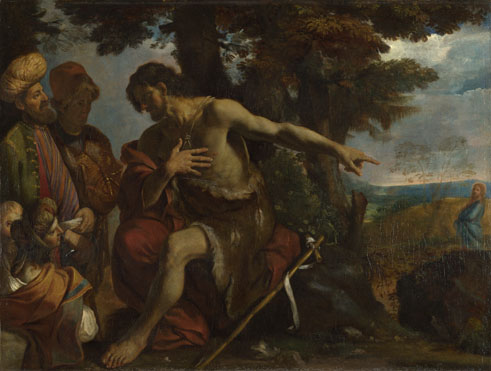
mola-saint-john-baptist-preaching-wilderness-NG69-fmA voice of one calling: “In the wilderness prepare the way for the Lord ; make straight in the desert a highway for our God.    Every valley shall be raised up, every mountain and hill made low; the rough ground shall become level, the rugged places a plain.   And the glory of the Lord will be revealed, and all people will see it together. For the mouth of the Lord has spoken.”   A voice says, “Cry out.” And I said, “What shall I cry?” “All people are like grass, and all their faithfulness is like the flowers of the field.   The grass withers and the flowers fall, because the breath of the Lord blows on them. Surely the people are grass.   The grass withers and the flowers fall, but the word of our God endures forever.”   You who bring good news to Zion, go up on a high mountain. You who bring good news to Jerusalem,  lift up your voice with a shout, lift it up, do not be afraid; say to the towns of Judah, “Here is your God!”   See, the Sovereign Lord comes with power, and he rules with a mighty arm. See, his reward is with him, and his recompense accompanies him.   He tends his flock like a shepherd: He gathers the lambs in his arms and carries them close to his heart; he gently leads those that have young.   Who has measured the waters in the hollow of his hand, or with the breadth of his hand marked off the heavens? Who has held the dust of the earth in a basket, or weighed the mountains on the scales and the hills in a balance?   Who can fathom the Spirit of the Lord , or instruct the Lord as his counselor?   Whom did the Lord consult to enlighten him, and who taught him the right way? Who was it that taught him knowledge, or showed him the path of understanding? – Isaiah 40:3-14

This passage of Isaiah is quoted by John the Baptist in the Gospels (Matthew 3:3, Mark 1:3, Luke 3:4, John 1:23).  Finally a truly familiar stretch of river here in the old testament!  John was of course describing his role in ushering in the coming Messiah, Jesus.  The portion of Isaiah quoted does not include the sentence “And the glory of the Lord will be revealed, and all people will see it together”.  This is the first time I can remember such an overt reference to God’s kingdom being extended beyond the people of Israel.

“All people” would seem to include all those willing to see God and the grace He extends.  This passage seems to remove all distinctions between people here on earth.  We are all “like grass, and all their faithfulness is like the flowers of the field. The grass withers and the flowers fall, because the breath of the Lord blows on them. Surely the people are grass. The grass withers and the flowers fall, but the word of our God endures forever.”  We all are born of dust and return to dust in the end.  It is the word of God (Jesus) that endures and only through Him can we find eternal life beyond this land of oblivion.

This prophetic description of the coming “good news to Jerusalem” is far more compelling that I realized from the portion quoted in the gospels.  This is the first clear point in my float through the bible where I can remember the grace of God being referred to as “good news” for all people.  “He tends his flock like a shepherd: He gathers the lambs in his arms and carries them close to his heart; he gently leads those that have young”.  God wants to carry all of us like a son or daughter — we are all God’s sheep, Jew and gentile alike.

God also says “his reward is with him, and his recompense accompanies him.”  When I first read this I was a bit confused.  What would constitute a “reward” for God?  How could He bring it with Him?  What kind of a reward was Jesus given as he was nailed to a cross?  Then it hit me like a two-by-four — the reward was us!  All those who choose to faithfully follow God (accompany God) as a result of His coming are His reward.  How amazing is that!  We are God’s reward.  This passage is a hidden well to be sure.

The One who “has measured the waters in the hollow of his hand” and “held the dust of the earth in a basket” chose to come for us.  Isaiah poses the question “Who can fathom the Spirit of the Lord”.  The incredible message of the Gospel of Jesus is that the answer is we can.  God has given us the incredible gift of knowing Him in an intimate way that is truly something new.  Our limited earthly bodies and minds cannot fathom how, or even why, God chose to come and sacrifice Himself, but we have been shown the “the path of understanding” and it is the Way of Jesus.

Prayer: God thank You for coming to be our Shepard so that we can follow Your way and become Your reward.

Posted in Christianity, Covenant, Death and Dying, Discernment, Discipleship, Following God, Free Will, God's Love for Us, Gospel, Isaiah, Jesus, Love for the Lost, Obedience, reconciliation, Redemption, religion, The Earthly Realm, The Nature of God, The Spiritual Realm, Trusting God | Tagged , , , , , , , | 9 Comments

I will defend this city

Is_HezekiahIllIn those days Hezekiah became ill and was at the point of death. The prophet Isaiah son of Amoz went to him and said, “This is what the Lord says: Put your house in order, because you are going to die; you will not recover.”   Hezekiah turned his face to the wall and prayed to the Lord , “Remember, Lord , how I have walked before you faithfully and with wholehearted devotion and have done what is good in your eyes.” And Hezekiah wept bitterly.   Then the word of the Lord came to Isaiah: “Go and tell Hezekiah, ‘This is what the Lord , the God of your father David, says: I have heard your prayer and seen your tears; I will add fifteen years to your life. And I will deliver you and this city from the hand of the king of Assyria. I will defend this city. – Isaiah 38:1-6

This passage completes the part of Isaiah that is a “rerun” of the account in 2 Kings.  When I looked back on this passage in 2 Kings it seems I missed it in my “net” capturing water references.  The water reference is actually tears that Hezekiah wept so one could argue that this is not strictly a water reference.  Either way, I will float this stretch now.

In many ways, Hezekiah reminds me of other flawed followers like Job, Moses, and David.  I consider myself a flawed follower too, so I am in good company.  It seems Hezekiah’s flaw was not leading His people in trusting God.  Hezekiah’s feels like he has led a good life.  He reminds God that he has “walked before you faithfully and with wholehearted devotion and have done what is good in your eyes.”  This is somewhat reminiscent of parts of the book of Job where Job pleads with God amidst the wave upon wave he was experiencing.  Apparently God is looking for something more than just looking good in His eyes.

Hezekiah bears his soul to God by shedding tears, samples of his soul, when he hears that he is going to die.  I am not sure what was going on in Hezekiah’s heart and soul that made him weep.  Was he lamenting the loss of his life here on earth?  Was he disappointed with himself and the ways that he had failed to lead while following God?  Was he simply afraid of crossing over into the unknown that death represents?

I don’t have any good answers to these questions, but I am sure when I approach my own crossing over I will likely have similar questions.  Here at the end of Hezekiah’s life God gives him extra time to learn how to trust Him.  God adds 15 years to his life and agrees to defend Jerusalem from the King of Assyria.  In a sense God was agreeing to defend Hezekiah’s earthly vessel from the slow war that we all lose in the end — death.

The take home message for me in this passage is that I need to make sure that I am leading by following and pouring out my soul along the way.  When I get to the end of my life I don’t want to feel like I need 15 more years to accomplish what God has set before me.

Prayer: God help me to faithfully follow You and accomplish the tasks You have for me so that when it is time to come home I am ready and eager to leave this earth.

Posted in Aging, Christianity, Death and Dying, Discernment, Following God, Free Will, God's Love for Us, Isaiah, Obedience, Redemption, The Earthly Realm, The Nature of God, The Spiritual Realm, Trusting God | Tagged , , , , | Leave a comment

Grass Sprouting on a Roof

My "cat grass" ready for winter :)

Grass sprouting in my kitchen — “cat grass” ready for winter 🙂

This is the word the Lord has spoken against him: “Virgin Daughter Zion despises and mocks you. Daughter Jerusalem tosses her head as you flee.   Who is it you have ridiculed and blasphemed? Against whom have you raised your voice and lifted your eyes in pride? Against the Holy One of Israel!   By your messengers you have ridiculed the Lord. And you have said, ‘With my many chariots I have ascended the heights of the mountains, the utmost heights of Lebanon. I have cut down its tallest cedars, the choicest of its junipers. I have reached its remotest heights, the finest of its forests.   I have dug wells in foreign lands  and drunk the water there. With the soles of my feet I have dried up all the streams of Egypt.’   “Have you not heard? Long ago I ordained it. In days of old I planned it; now I have brought it to pass, that you have turned fortified cities into piles of stone.   Their people, drained of power, are dismayed and put to shame. They are like plants in the field, like tender green shoots, like grass sprouting on the roof, scorched before it grows up. – Isaiah 37:22-27

This post recounts virtually word for word text from 2 Kings 19:20-24.  I reflected on that passage back in January in a post entitled indictments.  I was unaware of the extent of repetition in Isaiah.  I have done a little research into this and it seems these parts of Isaiah and Kings (2 Kings 18-20 and Isaiah 36-39) are recounting the same period of history and are virtually identical.  Some have suggested this supports the contention that Isaiah was the author of both 2 Kings and the book that bears his name.  Others have suggested that both accounts accessed some other common source.   This is out of my area of expertise so I will leave it to the biblical scholars to sort out.

The new testament definitely has many parallel stories in the synoptic gospels,  Perhaps the purpose is the same in both cases.  My sense is that repetition in the Gospels serves several purposes it: 1) emphasizes important stories in Jesus’ life; 2) provides accounts of a story from different author’s perspectives; and 3) lends credence to the historical authenticity of the event.

The event being described in this passage is clearly important in the life of the people of Israel.  The final few sentences sums up God’s perspective for those like the King of Assyria who would oppose the people of Israel and God: “Have you not heard? Long ago I ordained it. In days of old I planned it; now I have brought it to pass, that you have turned fortified cities into piles of stone.  Their people, drained of power, are dismayed and put to shame. They are like plants in the field, like tender green shoots, like grass sprouting on the roof, scorched before it grows up.”

The message is pretty clear for people like the King of Assyria.  God accomplished these things.  The humans involved, even kings and leaders, are merely accomplishing something that God’s plan intended.  The people of Israel were actually opposing God’s plan for them by not responding to His call.  Those who oppose God’s plan may succeed for a time, but in the end God wins.

There is a lesson here about opposing God.  It is not such a good idea.  If we choose to do so we will be like “grass sprouting on a roof”.  We may think we are growing fast and strong apart from God, but unless we are able to sink our roots deeply into the One River we will be scorched and dry up.

Prayer: God help us to sink our roots deeply into You so that we can avoid drying up when life gets hard.


Posted in Covenant, Discernment, Faith, Following God, Free Will, Isaiah, Obedience, reconciliation, The Spiritual Realm, Wisdom | Tagged , , , , , | Leave a comment

Assyrians at the Aqueduct Revisited

Screenshot from 2015-10-22 21:30:19In the fourteenth year of King Hezekiah’s reign, Sennacherib king of Assyria attacked all the fortified cities of Judah and captured them. Then the king of Assyria sent his field commander with a large army from Lachish to King Hezekiah at Jerusalem. When the commander stopped at the aqueduct of the Upper Pool, on the road to the Launderer’s Field, Eliakim son of Hilkiah the palace administrator, Shebna the secretary, and Joah son of Asaph the recorder went out to him.   The field commander said to them, “Tell Hezekiah: “ ‘This is what the great king, the king of Assyria, says: On what are you basing this confidence of yours? You say you have counsel and might for war—but you speak only empty words. On whom are you depending, that you rebel against me? Look, I know you are depending on Egypt, that splintered reed of a staff, which pierces the hand of anyone who leans on it! Such is Pharaoh king of Egypt to all who depend on him. But if you say to me, “We are depending on the Lord our God”—isn’t he the one whose high places and altars Hezekiah removed, saying to Judah and Jerusalem, “You must worship before this altar”?   “ ‘Come now, make a bargain with my master, the king of Assyria: I will give you two thousand horses—if you can put riders on them! How then can you repulse one officer of the least of my master’s officials, even though you are depending on Egypt for chariots and horsemen ? Furthermore, have I come to attack and destroy this land without the Lord ? The Lord himself told me to march against this country and destroy it.’ ”   Then Eliakim, Shebna and Joah said to the field commander, “Please speak to your servants in Aramaic, since we understand it. Don’t speak to us in Hebrew in the hearing of the people on the wall.”   But the commander replied, “Was it only to your master and you that my master sent me to say these things, and not to the people sitting on the wall—who, like you, will have to eat their own excrement and drink their own urine?”   Then the commander stood and called out in Hebrew, “Hear the words of the great king, the king of Assyria! This is what the king says: Do not let Hezekiah deceive you. He cannot deliver you! Do not let Hezekiah persuade you to trust in the Lord when he says, ‘The Lord will surely deliver us; this city will not be given into the hand of the king of Assyria.’   “Do not listen to Hezekiah. This is what the king of Assyria says: Make peace with me and come out to me. Then each of you will eat fruit from your own vine and fig tree and drink water from your own cistern, until I come and take you to a land like your own—a land of grain and new wine, a land of bread and vineyards.   “Do not let Hezekiah mislead you when he says, ‘The Lord will deliver us.’ Have the gods of any nations ever delivered their lands from the hand of the king of Assyria? Where are the gods of Hamath and Arpad? Where are the gods of Sepharvaim? Have they rescued Samaria from my hand? Who of all the gods of these countries have been able to save their lands from me? How then can the Lord deliver Jerusalem from my hand?”   But the people remained silent and said nothing in reply, because the king had commanded, “Do not answer him.”   Then Eliakim son of Hilkiah the palace administrator, Shebna the secretary and Joah son of Asaph the recorder went to Hezekiah, with their clothes torn, and told him what the field commander had said. – Isaiah 36:1-22

This passage is a retelling of the story back in 2 Kings 18:17-22 when the Assyrians were at the aqueduct, and the subsequent verse about the undiscovered country in 2 Kings 18:26-32.  It is almost word for word the same account.  I am not sure why this particular story is repeated word for word but let’s compare the accounts and see if there are any important differences.

I ran the two passages through a text comparison program and there are two major differences.  The first one is the section in the middle of the passage that reads “Come now, make a bargain with my master, the king of Assyria: I will give you two thousand horses—if you can put riders on them! How then can you repulse one officer of the least of my master’s officials, even though you are depending on Egypt for chariots and horsemen ? Furthermore, have I come to attack and destroy this land without the Lord ? The Lord himself told me to march against this country and destroy it.’”

This section that is different in Isaiah provides an important detail, namely that God Himself told the Assyrian King to attack King Hezekiah. This is a bit perplexing.  Why would God achieve His purposes through a King that did not even believe in Him? Perhaps this highlights God’s ability to intervene in human affairs to achieve an outcome that He desires.  In this case to get the attention of the people of Israel through the Assyrian King. It seems God can orchestrate events that involve both people who follow Him and people that do not,

The other part of the passage that differs is the end of the passage where the field commander says “Have the gods of any nations ever delivered their lands from the hand of the king of Assyria? Where are the gods of Hamath and Arpad? Where are the gods of Sepharvaim? Have they rescued Samaria from my hand? Who of all the gods of these countries have been able to save their lands from me? How then can the Lord deliver Jerusalem from my hand?” But the people remained silent and said nothing in reply, because the king had commanded, “Do not answer him.”

This addition would seem to be the Assyrian version of “smack talk” to impress or frighten the people of Israel into submitting to the Assyrian king’s rule and demands.  The people’s response was to tear their clothes and run to King Hezekiah.  It would have been nice if someone would have stood up for God to these thugs, but apparently Hezekiah had told them not to “answer him”.  We are not often called to stand up to thugs, but I hope that if I am ever put in that position that I would stand up for God over any earthly ruler.  Of course this is easy to say from my comfortable living room I suppose.  At the end of a sword or the muzzle of a gun it might not be so easy.

Prayer: God help me to stand up for You when those around me are calling for surrender and silence.

Posted in Christian Community, Christian Leadership, Christianity, Conflict, Discernment, Faith, Following God, Isaiah, The Nature of God, Trusting God | Tagged , , , , , , , | Leave a comment

Water in the Wilderness

IMGP6543The desert and the parched land will be glad; the wilderness will rejoice and blossom. Like the crocus, it will burst into bloom; it will rejoice greatly and shout for joy. The glory of Lebanon will be given to it, the splendor of Carmel and Sharon; they will see the glory of the Lord , the splendor of our God.   Strengthen the feeble hands, steady the knees that give way;   say to those with fearful hearts, “Be strong, do not fear; your God will come, he will come with vengeance; with divine retribution he will come to save you.”   Then will the eyes of the blind be opened and the ears of the deaf unstopped.   Then will the lame leap like a deer, and the mute tongue shout for joy. Water will gush forth in the wilderness and streams in the desert.   The burning sand will become a pool, the thirsty ground bubbling springs. In the haunts where jackals once lay, grass and reeds and papyrus will grow.   And a highway will be there; it will be called the Way of Holiness; it will be for those who walk on that Way. The unclean will not journey on it; wicked fools will not go about on it.   No lion will be there, nor any ravenous beast; they will not be found there. But only the redeemed will walk there,   and those the Lord has rescued will return. They will enter Zion with singing; everlasting joy will crown their heads. Gladness and joy will overtake them, and sorrow and sighing will flee away. – Isaiah 35:1-10

The book of Isaiah, and my schedule at the moment, are conspiring to make my walk on water more challenging.  For some reason the month of October is always like Velcro for my time and schedule.  Everything seems to happen in this month.  As a result I am finding it more challenging to “get on the water” as regularly as I would like.  I am sure God knows this and is willing to grant me some grace.  I am back on the water today though so lets hit the water and see where God leads.

I am continually surprised by the prophetic content of Isaiah.  This passage contains an amazing reflection of Him, the kernel of the Gospel here in the old testament: “your God will come, he will come with vengeance; with divine retribution he will come to save you.”  What does “divine retribution” mean?  Did Jesus come for “divine retribution”? I am not sure.  Perhaps Jesus came with divine reconciliation?  Perhaps they are not so different.

Reconciliation implies a restoration of relationship, whereas retribution for me implies giving someone what they have coming for some wrong they have committed.  Now that I have defined these terms I guess divine reconciliation and divine retribution from God’s perspective may not mean such different things. God’s “retribution” was accomplished through a divine act of reconciliation for a life of rejection by the people of Israel, and by modern God followers.

The passage continues to describe this divine reconciliation when it states that at the coming of the savior “the eyes of the blind will be opened and the ears of the deaf unstopped. Then will the lame leap like a deer, and the mute tongue shout for joy”.  This sounds very much like the young man from Galilee who gave sight to the blind and made the lame walk.  Jesus himself was the Water that “will gush forth in the wilderness” and form “streams in the desert”.  The living water on earth to quench our thirsty souls.

The passage continues with language straight out of the new testament: “And a highway will be there; it will be called the Way of Holiness; it will be for those who walk on that Way”.  As a follower of “the Way” of Jesus I have chosen this highway.  I am on the road.  That does not mean that there will not be detours and difficult times like the last few weeks where life just gets complicated, confusing, and hard.

Following “the Way” does not require that we are expert hikers or navigators.  It requires only that that we acknowledge that we have been redeemed and rescued, for “only the redeemed will walk there, and those the Lord has rescued”.  This is reassuring, especially at times when I feel like I am wandering in the wilderness desperately in need of water.  God delights in providing those who would be rescued with hidden wells and ever flowing streams in the desert.

Prayer: God thank You for coming to redeem and rescue us.  Help us to drink deeply of the living water that You offer here in the desert.


Posted in Christianity, Covenant, Discernment, Discipleship, Faith, Following God, Isaiah, Jesus, Obedience, reconciliation, Redemption, religion, The Earthly Realm, The Nature of God, The Spiritual Realm, Trusting God | Tagged , , , , , , , | 4 Comments

Streams Turned into Pitch

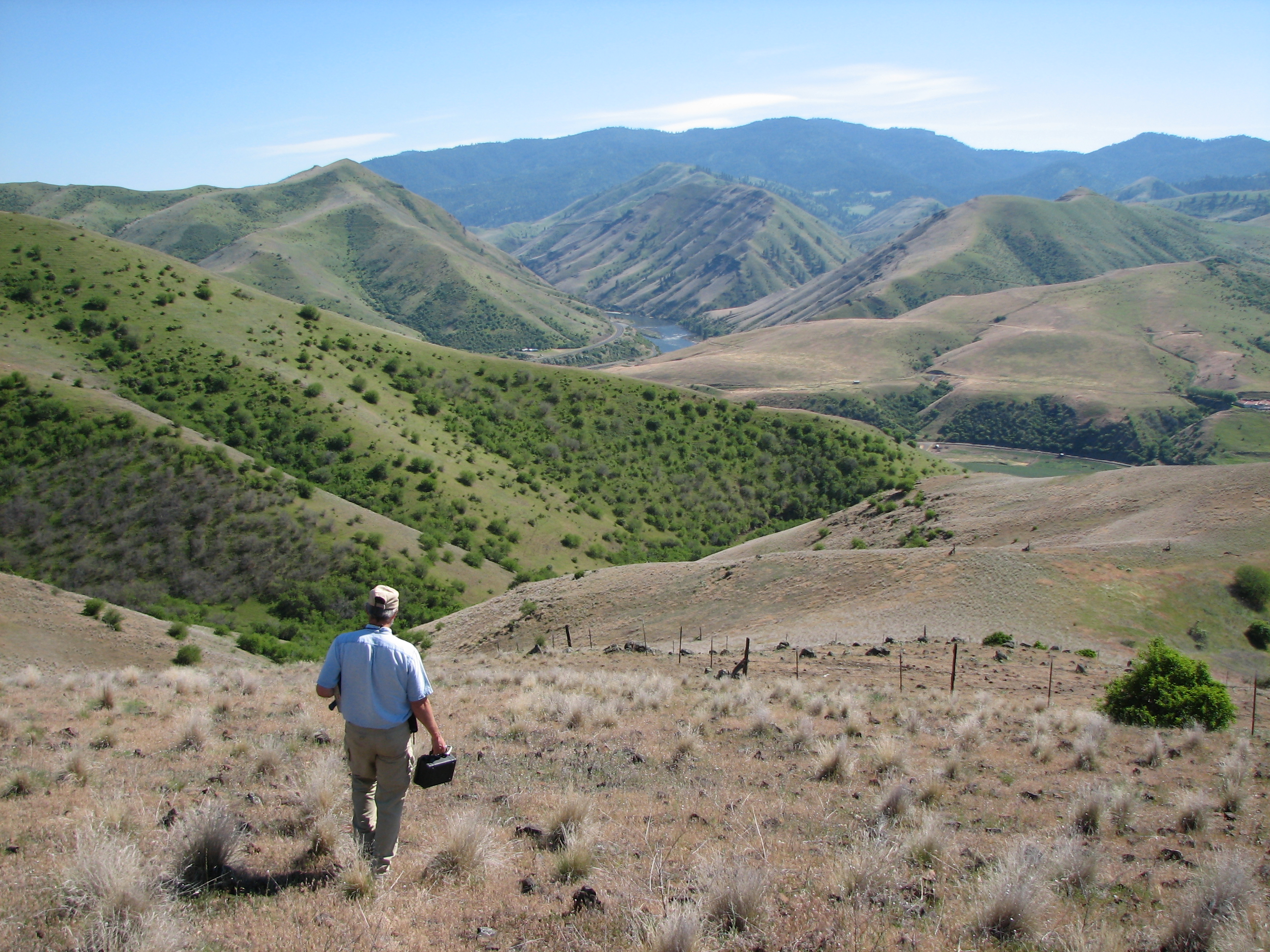
Salmon River, Idaho

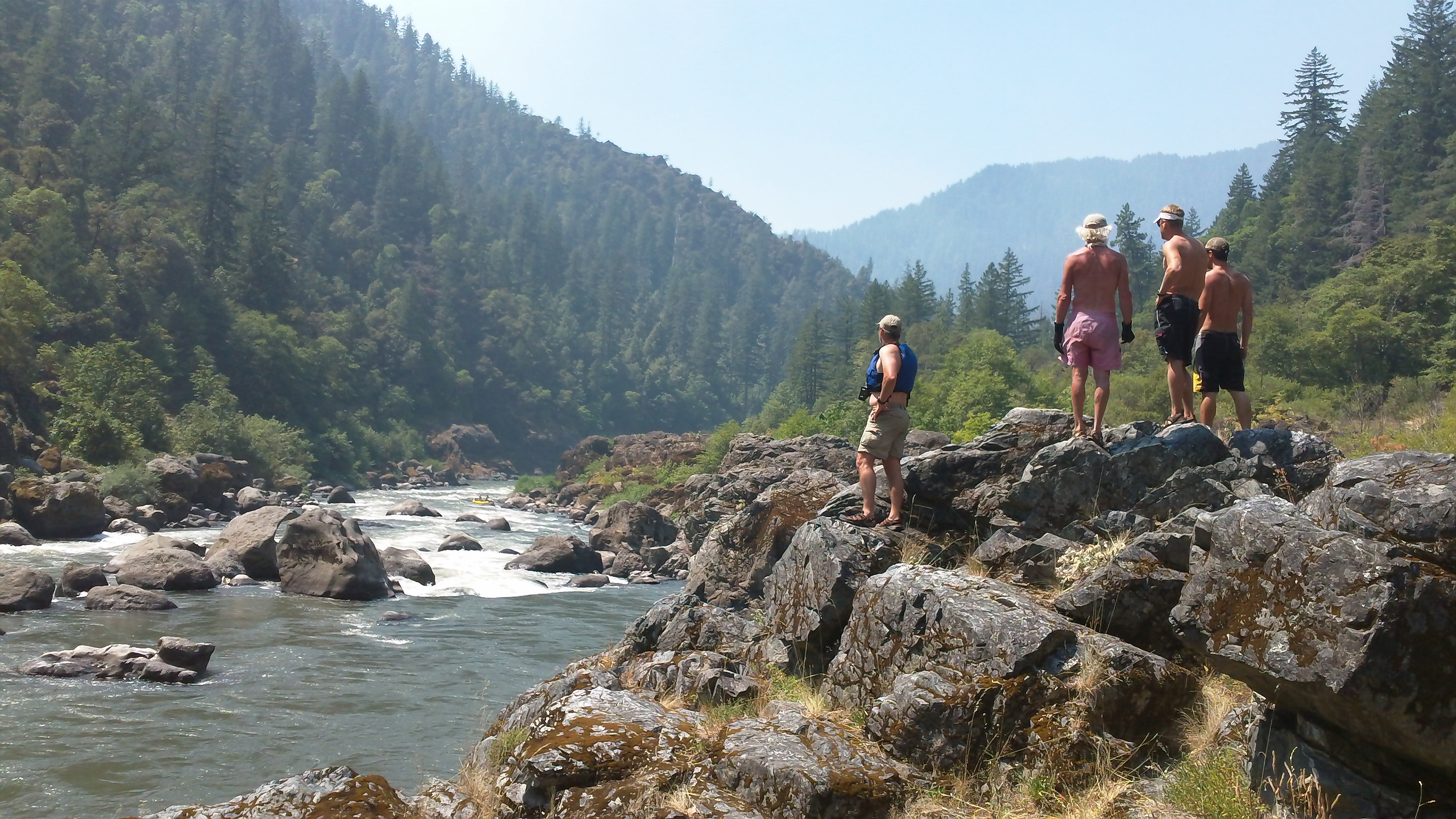
Salmon River, Idaho

For the Lord has a day of vengeance, a year of retribution, to uphold Zion’s cause. Edom’s streams will be turned into pitch, her dust into burning sulfur; her land will become blazing pitch! It will not be quenched night or day; its smoke will rise forever. From generation to generation it will lie desolate; no one will ever pass through it again. The desert owl and screech owl will possess it; the great owl and the raven will nest there. God will stretch out over Edom the measuring line of chaos and the plumb line of desolation. Her nobles will have nothing there to be called a kingdom, all her princes will vanish away. Thorns will overrun her citadels, nettles and brambles her strongholds. She will become a haunt for jackals, a home for owls. Desert creatures will meet with hyenas, and wild goats will bleat to each other; there the night creatures will also lie down and find for themselves places of rest. The owl will nest there and lay eggs, she will hatch them, and care for her young under the shadow of her wings; there also the falcons will gather, each with its mate. – Isaiah 34:8-15

This passage returns to the judgement of previous passages in Isaiah. In this case the judgement is on the land of Edom. There is some dispute about the exact boundaries of this land but apparently it was located southeast of the Dead Sea. This was some of the land through which the Israelites passed on their way to the promised land. What is being described here is a “year of retribution”. I am not sure what precisely the Edomites did to deserve this judgement but it must have been bad based on the severity of the consequences. “Edom’s streams will be turned into pitch, her dust into burning sulfur; her land will become blazing pitch!” What would a stream of pitch look like? It sounds like a sticky mess to me.

A couple of years ago I took two students to do research and mapping on the Salmon River in Idaho. It was an amazing trip with all kinds of adventure, including rattlesnakes, whitewater, and pine pitch. The pine pitch came into the picture when one of my students decided he wanted to make a homemade “candle” out of pine pitch. He diligently collected pine pitch for an hour in a pop can before he tried out his makeshift candle. The end result was a feeble flame that emitted clouds of black smoke, but he was very proud of his smoky beacon.

I cannot even imagine the smoke and choking fumes that would arise from a stream of burning pitch. It would also tend to stick to anything that came into contact with it making putting it out rather difficult. My student found this out the hard way when he tried to extinguish his candle. The result was a sticky smoldering mess. It sounds like this is what is being described here — a sticky smoldering mess in the land of Edom.

I am not sure if there are any deeper spiritual meanings buried in this passage about streams of pitch. It does serve as a reminder that there are consequences to choosing to go our own way rather than God’s way. The result often resembles a very sticky smoldering mess. These consequences have a way of sticking to those around us as well. King David found this out when he chose to go his own way in the epic fail with Bathsheba and Uriah. The consequences of his choices “stuck” to his family for generations and created all sorts of dysfunction and dissonance for David and his family.

Prayer: God help us to make good choices so that we can avoid messy consequences that may stick to us for years to come.

Posted in Conflict, Covenant, Discernment, Following God, Free Will, Isaiah, Obedience, reconciliation, Redemption, The Earthly Realm, The Nature of God, Wisdom | Tagged , , , , , , | 1 Comment