
Broad Rivers and Streams

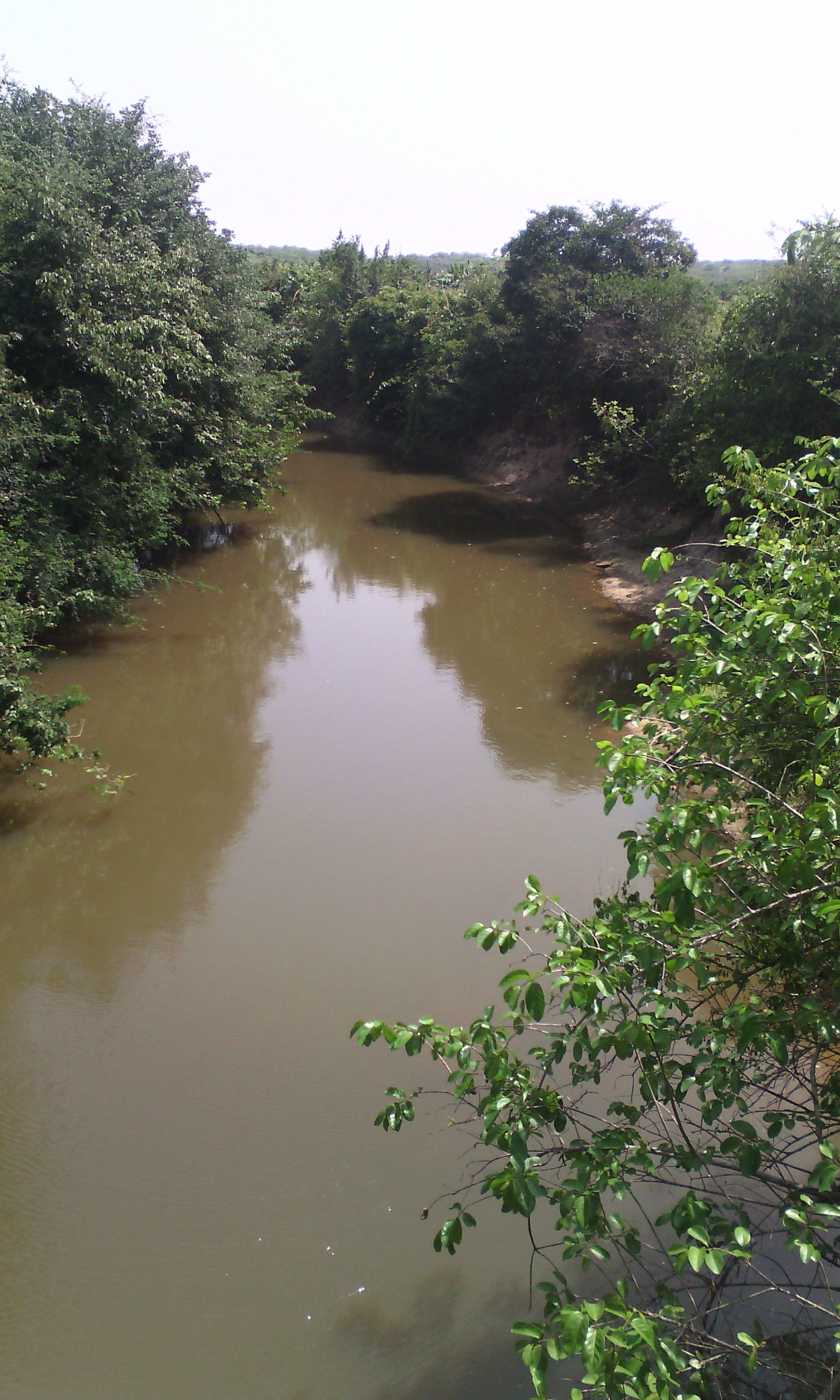
OLYMPUS DIGITAL CAMERAYou who are far away, hear what I have done; you who are near, acknowledge my power!   The sinners in Zion are terrified; trembling grips the godless: “Who of us can dwell with the consuming fire? Who of us can dwell with everlasting burning?”   Those who walk righteously and speak what is right, who reject gain from extortion and keep their hands from accepting bribes, who stop their ears against plots of murder and shut their eyes against contemplating evil—   they are the ones who will dwell on the heights, whose refuge will be the mountain fortress. Their bread will be supplied, and water will not fail them.   Your eyes will see the king in his beauty and view a land that stretches afar.   In your thoughts you will ponder the former terror: “Where is that chief officer? Where is the one who took the revenue? Where is the officer in charge of the towers?”   You will see those arrogant people no more, people whose speech is obscure, whose language is strange and incomprehensible.   Look on Zion, the city of our festivals; your eyes will see Jerusalem, a peaceful abode, a tent that will not be moved; its stakes will never be pulled up, nor any of its ropes broken.   There the Lord will be our Mighty One. It will be like a place of broad rivers and streams. No galley with oars will ride them, no mighty ship will sail them.   For the Lord is our judge, the Lord is our lawgiver, the Lord is our king; it is he who will save us. – Isaiah 33:13-22

This passage speaks specifically to those who are “far away” from God.  As one who was far away from God at one time, I can attest that God has a way of getting our attention if we are even remotely interested in seeking His face.  We do need to heed God’s admonition to “hear what I have done”.  This implies that 1) there are people “who are near” sharing about what He has done in their lives; and 2) we have the ears to hear when we hear these stories about God.

As followers of the Way, those “who are near”, we need to be both good listeners and good story tellers for those who are “far away”.  We need to acknowledge God’s power in our lives and ways that He loves and cares for us.  Those who openly reject God, the “sinners in Zion are terrified”.  “Trembling grips the godless: “Who of us can dwell with the consuming fire? Who of us can dwell with everlasting burning?”.  Those who run from God see only consuming fire, whereas those who stop and embrace His love are promised that “their bread will be supplied, and water will not fail them.”  They will have access to a limitless supply of living water.

For those who have eyes to see their “eyes will see the king in his beauty and view a land that stretches afar.”  I wonder if the “land that stretches afar” may be referring to something more than an earthly piece of property.  Maybe it is a metaphor for the undiscovered country that God has promised those who become adept at listening to His whisper.  In the land of Zion “the Lord will be our Mighty One. It will be like a place of broad rivers and streams. No galley with oars will ride them, no mighty ship will sail them.”

God is describing a place with living water so abundant that we cannot navigate it on our own.  We must seek and pursue God’s help for the “the Lord is our lawgiver, the Lord is our king; it is he who will save us.”  If we strike out on our own across these broad rivers and streams we may find that we are in over our head and subject to “turbulent water” that we cannot swim against.

Prayer: God Your love will help us to navigate broad rivers and streams.  Help us to trust in Your power and tell those still far from You about it.

Posted in Christian Community, Christianity, Discernment, Discipleship, Faith, Following God, Forgiveness, Isaiah, Love for the Lost, Obedience, Redemption, religion, Sharing the Gospel, The Nature of God, Trusting God | Tagged , , , , , , , | 1 Comment

The Envoys of Peace Weep

gettyimages-493071076-1-736x414The Lord is exalted, for he dwells on high; he will fill Zion with his justice and righteousness.   He will be the sure foundation for your times, a rich store of salvation and wisdom and knowledge; the fear of the Lord is the key to this treasure.    Look, their brave men cry aloud in the streets; the envoys of peace weep bitterly.   The highways are deserted, no travelers are on the roads. The treaty is broken, its witnesses are despised, no one is respected.   The land dries up and wastes away, Lebanon is ashamed and withers; Sharon is like the Arabah, and Bashan and Carmel drop their leaves.   “Now will I arise,” says the Lord . “Now will I be exalted; now will I be lifted up.   You conceive chaff, you give birth to straw; your breath is a fire that consumes you.   The peoples will be burned to ashes; like cut thornbushes they will be set ablaze.” – Isaiah 33:5-12

Well this is a passage right out of the newspapers and web pages across the world at the moment, or perhaps in a year or two when the Middle East really gets messy.  It seems we hear every day of Syria, Jordan, or Lebanon and the conflict that is happening there.  In this passage God reminds the Israelites that it is He that will fill Zion with justice and righteousness.

No matter how successful or affluent Israel becomes if the justice and righteousness they seek does not come from God it will probably not satisfy or last.  If they put their trust in God He “will be the sure foundation for your times, a rich store of salvation and wisdom and knowledge.”  I am sure there are many in modern day Israel who have heeded these words in Isaiah and placed God at the center of their lives, but there are also those who have placed their trust in either themselves or the products of their own hands.

The Jewish inhabitants of Israel here in Isaiah, and in Modern Israel, are not alone in this habit of misplacing priorities and unhealthy posture.  Many followers of the Way of Christ, myself included, often choose to place their trust in people and things other than God.  We build our foundation on what we think is stable ground only to find that when winds blow and storms arrive we find our “house” shifting on its foundation.  I suspect there are many people in the Middle East today that feel as though the “foundation” of their “house” is shifting and unstable.

The “brave men cry aloud in the streets; the envoys of peace weep bitterly”.  The leaders apparently know that something is not right and are shedding tears of the oppressed, samples of their souls.  What do these tears tell us about these envoys of peace?  Perhaps they are looking in the wrong place for the peace that they seek.  They are envoys of peace, but perhaps not a peace that comes from the Prince of Peace.

The “treaty is broken, its witnesses are despised, no one is respected”.  Wow that certainly sounds like it could be a current news story describing the recent discussion and debate around trying to make a nuclear agreement with Iran or Peace with the Palestinians.  I think God is trying to remind all those who read this passage that all treaties and agreements between people actually have a third party, God.

I reflected on this concept in a post called “Steadfast Spirit” from Psalm 51:1-12.  In that post I wrote: “All the sins for which we need to be washed clean are ultimately against God, not the people we commit those sins against”.  I think this applies to both people and nations.  We can create all the organizations, alliances, and treaties we want, but unless our efforts include God, and the peace and quiet confidence that come from Him, we will “conceive chaff”, “give birth to straw”, and our “breath” will be “a fire that consumes”.  The very efforts we put toward peace will inflame more conflict. Sounds eerily familiar doesn’t it?

Prayer: God You are the Prince of Peace in whom lasting peace is found.  Help us to acknowledge that all conflicts here on earth represent a failure to passionately pursue Your peace.


Posted in Christianity, Conflict, Covenant, Discernment, Following God, Healing, Isaiah, Life Together, Obedience, Peace, reconciliation, Sin, The Earthly Realm, The Nature of God, Trusting God | Tagged , , , , , , , | 1 Comment

Quietness and Confidence

ST.Wink of an EyeThe Lord ’s justice will dwell in the desert, his righteousness live in the fertile field.   The fruit of that righteousness will be peace; its effect will be quietness and confidence forever.   My people will live in peaceful dwelling places, in secure homes, in undisturbed places of rest.   Though hail flattens the forest and the city is leveled completely,   how blessed you will be, sowing your seed by every stream, and letting your cattle and donkeys range free. – Isaiah 32:16-20

Well this is a different picture than has been common for the last several passages.  The view of the future presented here is definitely more rosy.  One notable difference is that this coming peace, quietness, and confidence will be the fruit of God’s righteousness rather than anything we are doing.  This is in contrast to the last couple of passages which seem to be saying that actually we, flawed followers that we are, have an important role to play in bringing about the coming peace.  I suppose both can be true at the same time.

A couple of verses ago Isaiah shared that “in repentance and rest is your salvation, in quietness and trust is your strength” (Isaiah 30:12-17).  In this passage we are promised “quietness and confidence forever”.  This idea of quietness comes up in both passages.  What is meant by quietness?  Does it mean simply lack of noise?  Does it mean we are to sit in seclusion on a mountaintop in prayer?  Are we to be quiet in our demeanor and slow to speak?  Can we be quiet in our soul while all around us is anything but quiet?

Perhaps it means that we are to quiet all the noise and clamor in our souls so that we can experience God’s presence here in this land of oblivion.  We participate in His righteousness by slowing down and positioning our souls so that we can see it.  When we are successful with our posture and perspective we can experience the peace that comes from being in God’s presence here on earth.

I am a Star Trek fan and I grew up watching the original series on television with William Shatner as Captain Kirk.  We used to play elaborate games on the playground reenacting episodes.  At the time I was often cast as Captain Kirk — I had a big ego for a first grader.  There is an episode in the original series called “wink of an eye” where the waters of an alien planet result in accelerated humans that invade the Enterprise and kidnap captain Kirk.  The crew of the enterprise cannot see these invaders because they are travelling at such a speed that they cannot be perceived by the normal senses, except perhaps as an insect buzzing sound.

This is an imperfect analogy at best for our relationship to the spiritual world that God invites us to join.  Captain Kirk can only sense the different world of the aliens when he himself is accelerated to join them, which means that the crew perceive him to have disappeared.  Perhaps this is similar to the quietness that God is talking about.  When we are successful at quieting our souls enough to hear God’s whisper we may find that those around us may see a quiet and confident person that is able to weather hail that flattens the forest and the levels the city.

It is up to us to “sow our seed by every stream”.  We are to be connected to spring and sink our roots into the bank of the stream so that we can reach the living water that is God.  The promise provided here is that if we do this we will have the quietness and confidence that we are seeking.

Prayer: God help us to quiet our souls so that we can hear Your whisper with quietness and confidence.

Posted in Covenant, Discernment, Faith, Following God, Free Will, God's Love for Us, Isaiah, Obedience, Peace, reconciliation, religion, The Earthly Realm, The Nature of God, The Spiritual Realm | Tagged , , , , , , , | 2 Comments

The Fearful Heart will Know

Periodic_Table_8See, a king will reign in righteousness and rulers will rule with justice.   Each one will be like a shelter from the wind and a refuge from the storm, like streams of water in the desert and the shadow of a great rock in a thirsty land.   Then the eyes of those who see will no longer be closed, and the ears of those who hear will listen.   The fearful heart will know and understand, and the stammering tongue will be fluent and clear.   No longer will the fool be called noble nor the scoundrel be highly respected.   For fools speak folly, their hearts are bent on evil: They practice ungodliness and spread error concerning the Lord ; the hungry they leave empty and from the thirsty they withhold water.   Scoundrels use wicked methods, they make up evil schemes to destroy the poor with lies, even when the plea of the needy is just.   But the noble make noble plans, and by noble deeds they stand. – Isaiah 32:1-8

OK so this passage is confusing.  It starts out as if it is going to be a prophetic reference to a coming king, perhaps the Messiah, “a king will reign in righteousness and rulers will rule with justice”.  Then it rapidly changes to sound much more like it is referring to earthly kings that will provide “shelter from the wind and a refuge from the storm, like streams of water in the desert and the shadow of a great rock in a thirsty land”.  In previous passages in Isaiah it seemed like it was God who would fulfill the role of providing “shelter in the storm“.

The passage then continues with what appears to be prophetic references to someone who will give sight to the blind and hearing to the deaf: “the eyes of those who see will no longer be closed, and the ears of those who hear will listen”.  The meaning here seems to be at least partially metaphoric, in that the ones who will receive site and hearing are those that are listening and seeing, i.e seeking and knocking to use the metaphor from the new testament.  So there is at least some echoes of Jesus here in Isaiah, although they are layered with references to earthly rulers and kings.

It sounds like there will be a general restoration of the proper order to the world: “The fearful heart will know and understand, and the stammering tongue will be fluent and clear. No longer will the fool be called noble nor the scoundrel be highly respected”.  It sounds like this is describing God winning in the end over a world that has become comfortable with calling bad things good and treating lies like truth.  This sounds eerily like much of the relativism that is going on in American Society today.

Perhaps the layering here is to remind us that we are part of the restoration process.  Our decisions and actions can be part of the problem or they can contribute to the solution: “But the noble make noble plans, and by noble deeds they stand”.  This is a call to be noble.  As a scientist the term “noble” has special meaning.  On the periodic table of elements the “noble gases” are those that are stable.  Without getting into a lot of details their electrons are configured such that they do not react with other elements and are stable under most conditions.

So what does it mean to be “noble” and to make “noble plans”.  I think for us humans it means that we know clearly who we are, and we are “stable” in our beliefs.  We have a clear understanding of what is right and wrong from God’s perspective and we act accordingly.  Our plans and perspective are consistent with God’s plans.

Prayer: God help us to make noble plans that stand up in our culture so that others may see a clear difference between Your ways and the ways of this world.


Posted in Christian Community, Christianity, Conflict, Discernment, Following God, Free Will, Isaiah, Life Together, Obedience, reconciliation, religion, The Earthly Realm, The Spiritual Realm, Wisdom | Tagged , , , , , , , , | 4 Comments

Water of Affliction

IMG_20150302_134709People of Zion, who live in Jerusalem, you will weep no more. How gracious he will be when you cry for help! As soon as he hears, he will answer you. Although the Lord gives you the bread of adversity and the water of affliction, your teachers will be hidden no more; with your own eyes you will see them. Whether you turn to the right or to the left, your ears will hear a voice behind you, saying, “This is the way; walk in it.” Then you will desecrate your idols overlaid with silver and your images covered with gold; you will throw them away like a menstrual cloth and say to them, “Away with you!”   He will also send you rain for the seed you sow in the ground, and the food that comes from the land will be rich and plentiful. In that day your cattle will graze in broad meadows. The oxen and donkeys that work the soil will eat fodder and mash, spread out with fork and shovel. In the day of great slaughter, when the towers fall, streams of water will flow on every high mountain and every lofty hill. The moon will shine like the sun, and the sunlight will be seven times brighter, like the light of seven full days, when the Lord binds up the bruises of his people and heals the wounds he inflicted. – Isaiah 30:19-26

This passage is an assurance that if the people of Israel call for Help God will answer, but they must make the call.  I am reminded of a scene from the JRR Tolkein’s Return of the King.  The Beacons of Gondor were a means of calling for help if Minas Tirith was under attack.  In the movie depiction of Return of the King Denethor refuses to ask for help from Rohan because his pride and self-focus will not allow him to ask for help.  I think that is what the people of Israel need – His help – and they need to ask for it.

God is just waiting for the call, and as soon as He gets it He will come to aid of the people of Israel.  It sounds like help, “the teachers”, has been in front of the people of Israel the whole time, they just haven’t had the eyes to see them.  As a result, they have been partaking of the “bread of adversity and the water of affliction”.  Things have been hard and the walls of protection have been shattered into shards of pottery.  The very water they have been taking has caused them affliction.  That is probably because they have been drinking up evil like water rather than thirsting for the living water that God offers.

As a water scientist I have been in many situations where people were drinking “waters of affliction” in the form of water contaminated with pathogens that make them sick.  Many times they are unaware of the microbes in the water that are making them ill and often come up with other explanations for their illness.  I suspect that the people of Israel are adept at blaming everything but themselves for the afflictions that result from their decision to disconnect themselves from the spring of God’s love.

God is promising to lead the people if they are willing to be led, “Whether you turn to the right or to the left, your ears will hear a voice behind you, saying, “This is the way; walk in it.”  This kind of following is sometimes hard and requires that we trust in a path which we sometimes cannot see.  In the end it seems God will win and He will “send you rain for the seed you sow in the ground” and “streams of water will flow on every high mountain and every lofty hill”.  This is hope for the hopeless.  Our thirst will be quenched and we will find what we pursue, but we must first make the call for help.

Prayer: God help us to acknowledge our need for You and call out to You for Help.


Posted in Conflict, Faith, Following God, Free Will, God's Love for Us, Isaiah, Obedience, reconciliation, Redemption, religion, The Nature of God, Trusting God | Tagged , , , , , , , | Leave a comment

Broken Pieces of Pottery

wpid-wp-1444345505872.jpgTherefore this is what the Holy One of Israel says: “Because you have rejected this message, relied on oppression and depended on deceit, this sin will become for you like a high wall, cracked and bulging, that collapses suddenly, in an instant.  It will break in pieces like pottery, shattered so mercilessly that among its pieces not a fragment will be found for taking coals from a hearth or scooping water out of a cistern.”   This is what the Sovereign Lord , the Holy One of Israel, says: “In repentance and rest is your salvation, in quietness and trust is your strength, but you would have none of it.   You said, ‘No, we will flee on horses.’ Therefore you will flee! You said, ‘We will ride off on swift horses.’ Therefore your pursuers will be swift!   A thousand will flee at the threat of one; at the threat of five you will all flee away, till you are left like a flagstaff on a mountaintop, like a banner on a hill.” – Isaiah 30:12-17

This is an interesting passage. The words come from the mouth of the Holy One of Israel so they are probably worth chewing on for a while so I have taken a couple of days to think and reflect. God is rebuking the Israelites for ignoring the message.  They have “relied on oppression and depended on deceit”.  Since the rest of the passage is outlining the consequences of this transgression it seems appropriate to unpack the meaning of these two sins, oppression and deceit.

Oppression to me is about power and position.  It is using the power you have ultimately been granted by God to an end that is either inconsistent or incompatible with God’s purpose in granting the power.  It is producing bad fruit from a vigorous vine that God has provided for our care and feeding.  We often think of oppression in terms of physical aggression or conflict, but I think it applies equally well to the spiritual realm and our emotional and spiritual well-being.

Spiritual oppression comes in the form of tearing down a person’s beliefs – placing obstacles in the path toward pursuing and understanding God.    This type of oppression is much more subtle and secret.  It can be happening before our eyes and we may not realize it.  We can even be the oppressor and not realize we are doing it.  The only way to move past or overcome this type of myopia is to give those close to us permission to point out ways we are being oppressive.

The second sin identified, deceit, is similar to oppression, but it is in some ways a deeper corruption.  It is an attack on truth itself.  Calling good things bad and bad things good,  Leading others away from the truth and away from God.  This was what Moses and Aaron were guilty of when they failed the “Meribah test” back in Numbers.  They may not have set out to deceive the people they were leading, but the end result was deception.  They were not telling them the whole truth about what God was requiring of them.

So for the Israelites to be called out for oppression and deceit is in some ways more damming than idol worship or personal sin.  It was corporate sin that was infecting a whole people and their trajectory with God.  They were building a “high wall, cracked and bulging” that was going to collapse and cause great harm.  Not only will the wall collapse but it will do so in a spectacular way.  It will be “shattered so mercilessly that among its pieces not a fragment will be found for taking coals from a hearth or scooping water out of a cistern.”  They will not even be able to access water from the Great Cistern that has been provided them bread from heaven and water for our thirst.

For some reason I keep thinking of a nursery rhyme, Humpty Dumpty:

“Humpty Dumpty sat on a wall,
Humpty Dumpty had a great fall.
All the king’s horses and all the king’s men
Couldn’t put Humpty together again.”

God has given us the way to “put the pieces back together again” in our lives.  Even when the fragments are so small that they make it difficult to get water from the cistern.  It has nothing to do with king’s men or king’s horses.  It has everything to do with the One they called King of the Jews, Jesus.  He is our salvation — our “repentance and rest” and in Him we find the “quietness and trust” that is our strength.  We are to repent, rest in God and His salvation (Jesus), and we are to quietly trust God for His strength when life gets hard.

Prayer: God thank You putting the pieces of our lives back together when they become splintered and torn.

SDG
Posted in Christianity, Conflict, Covenant, Discernment, Following God, Forgiveness, God's Love for Us, Isaiah, Obedience, reconciliation, Redemption, religion, The Nature of God, Trusting God, Truth, Wisdom | Tagged , , , , , , , | 5 Comments

Dreams of Drinking

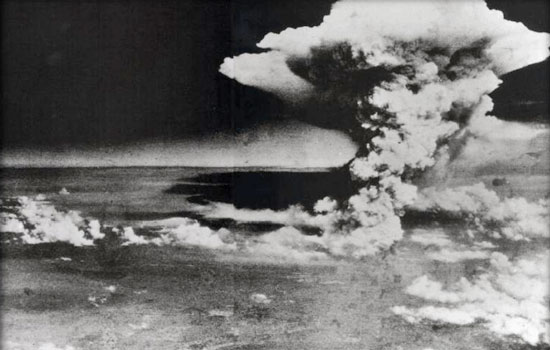
mushroom-cloudWoe to you, Ariel, Ariel, the city where David settled! Add year to year and let your cycle of festivals go on.   Yet I will besiege Ariel; she will mourn and lament, she will be to me like an altar hearth.    I will encamp against you on all sides; I will encircle you with towers and set up my siege works against you.   Brought low, you will speak from the ground; your speech will mumble out of the dust. Your voice will come ghostlike from the earth; out of the dust your speech will whisper.   But your many enemies will become like fine dust, the ruthless hordes like blown chaff. Suddenly, in an instant, the Lord Almighty will come with thunder and earthquake and great noise, with windstorm and tempest and flames of a devouring fire.   Then the hordes of all the nations that fight against Ariel, that attack her and her fortress and besiege her, will be as it is with a dream, with a vision in the night—   as when a hungry person dreams of eating, but awakens hungry still; as when a thirsty person dreams of drinking, but awakens faint and thirsty still. So will it be with the hordes of all the nations that fight against Mount Zion. – Isaiah 29:1-8

So this verse contains only a tangential reference to water in the form of thirst, but it was such an interesting passage I decided to explore it today.  I had no idea that the city of David, Jerusalem, was also referred to as Ariel.  I am pretty sure that this term has nothing to do with a scantily clad Disney character, so I did a little investigation into the meaning and background of the word Ariel and it was an interesting “dig“.

Apparently there is some dispute about the origin and meaning of the word.  According to the Jewish virtual library (www.jewishvirtuallibrary.org) Ariel, “ari-el, can mean “lion of God” or “Great Lion.”  I find this meaning intriguing in that one of my favorite fictional characters is Aslan the lion from the Chronicles of Narnia.  The other possible meaning which I uncovered is more disturbing.  According to the web site Arabim.com (http://www.abarim-publications.com) Arial can also mean hearth or altar.  In this sense it would mean a place where sacrifices, specifically burnt offerings, were made.  This has led some to interpret this passage as a description of a coming holocaust for Jerusalem which involves burning or incineration.  I do not claim to be an old testament scholar so I will leave the debate there and push on with the rest of this passage.

This passage seems to be describing God’s judgment against Israel in Jerusalem: “I will encamp against you on all sides; I will encircle you with towers and set up my siege works against you.”  The sense is that this judgment is to be a great humbling of the people of Israel so that they will ultimately turn to God.  They are to be beaten into “dust” in this coming calamity that involves “many enemies” who “will become like fine dust, the ruthless hordes like blown chaff.”  It sounds like the battle for Jerusalem will result in destruction for both the oppressor (enemies of Jerusalem) and the oppressed (people of Jerusalem).

As I read this I cannot help but get the uncomfortable feeling that everything being described here would fit a description of a nuclear conflict centered on Jerusalem, mutually assured destruction (MAD).  I certainly hope and pray that this is not the judgement that is being described here.  The passage ends with an interesting twist on this depressing depiction of devastation: “the hordes of all the nations that fight against Ariel…will be as it is with a dream, with a vision in the night— as when a hungry person dreams of eating, but awakens hungry still; as when a thirsty person dreams of drinking, but awakens faint and thirsty still.”

It sounds like in the end God wins and the forces that are arrayed against Jerusalem find that their “victory” was an illusion that disappears when they awaken from their sanguineous stupor.  The dreams of destruction that seemed to be at hand will turn out to be in the end nothing more than a dream that does not satisfy the hunger or thirst that these oppressors were feeling.  I think in the end that is because the oppressors and the people of Jerusalem are thirsting for the wrong thing.  They are not alone in this.

God wants all of us to hunger and thirst for Him and Him alone.  True inner peace and rescue from the type of calamity and conflict described in this passage comes from realizing this while we are still here in the “Land of Oblivion” we are to pursue God as passionately as He is pursuing us.

Prayer: God thank You for pursuing us and giving us peace.  Help us to pursue You as passionately as You pursue us.

SDG
Posted in Conflict, Covenant, Death and Dying, Discernment, Following God, Free Will, Heaven, Hell, Isaiah, Obedience, reconciliation, Redemption, religion, Sin, The Earthly Realm, The Spiritual Realm, Trusting God | Tagged , , , , , , , | Leave a comment

A Strange Work

So this is what the Sovereign Lord says: “See, I lay a stone in Zion, a tested stone, a precious cornerstone for a sure foundation; the one who relies on it will never be stricken with panic.  I will make justice the measuring line and righteousness the plumb line; hail will sweep away your refuge, the lie, and water will overflow your hiding place.  Your covenant with death will be annulled; your agreement with the realm of the dead will not stand. When the overwhelming scourge sweeps by, you will be beaten down by it.  As often as it comes it will carry you away; morning after morning, by day and by night, it will sweep through.” The understanding of this message will bring sheer terror.  The bed is too short to stretch out on, the blanket too narrow to wrap around you.  The Lord will rise up as he did at Mount Perazim, he will rouse himself as in the Valley of Gibeon— to do his work, his strange work, and perform his task, his alien task.  – Isaiah 28:16-21

I continue to be amazed at the amount of prophetic passages in Isaiah.  This passage contains prophetic references to a savior, “reflections of Him“, in the form of a “cornerstone” — “the one who relies on it will never be stricken with panic”.  Justice and righteousness will ensure that this foundation is true and good.

Then comes a confusing “bend in the river” that includes several water references: “hail will sweep away your refuge, the lie, and water will overflow your hiding place”.  I picture a person clinging to a rock for refuge as flood waters rise, hail pummels, and rain drenches.  I assume that the “refuge” here is a metaphor for all the things that we rely on in place of God, our true refuge and shelter in the storm.

When we trust in earthly shelter and comfort we are making a deal with death which God is saying will be annulled.  We give up a part of our soul in exchange for safety and comfort for our earthly bodies.  The earthly comfort we receive, which is apart from God, just does not compare to the love and comfort being offered by God: “The bed is too short to stretch out on, the blanket too narrow to wrap around you.”  When we put all our eggs in the basket of this world for refuge we will be disappointed.

God will rise up (perhaps rise from the dead) and “do his work, his strange work, and perform his task, his alien task”.  The work of Jesus on the cross would certainly qualify as mysterious and strange from our vantage point here in the land of oblivion.  For God it was a task in a world alien to Him in many ways.

So here in Isaiah is the kernel of the Gospel.  We are lost; hiding in our refuges built by dependence on ourselves and earthly things.  God sends One who will be the “Cornerstone” of a new refuge that is not of this world.  He Himself will accomplish this strange work to set us free from our comfortable coffin here on earth so that we can join Him in the “undiscovered country“. He will sweep away “the lie” with a truth far greater.

Prayer: God thank You for providing us with real refuge and setting us free from our false places of refuge here on earth.

Posted in Christianity, Covenant, Death and Dying, Discernment, Faith, Following God, Heaven, Hell, Isaiah, Obedience, reconciliation, Redemption, The Earthly Realm, The Nature of God, The Spiritual Realm | Tagged , , , , , , , | 5 Comments

Driving Rain and a Flooding Downpour

CQe0yxhWwAAKGDC.png-large-600x463Woe to that wreath, the pride of Ephraim’s drunkards, to the fading flower, his glorious beauty, set on the head of a fertile valley— to that city, the pride of those laid low by wine!  See, the Lord has one who is powerful and strong. Like a hailstorm and a destructive wind, like a driving rain and a flooding downpour, he will throw it forcefully to the ground.  That wreath, the pride of Ephraim’s drunkards, will be trampled underfoot.  That fading flower, his glorious beauty, set on the head of a fertile valley, will be like figs ripe before harvest— as soon as people see them and take them in hand, they swallow them.  In that day the Lord Almighty will be a glorious crown, a beautiful wreath for the remnant of his people.  He will be a spirit of justice to the one who sits in judgment, a source of strength to those who turn back the battle at the gate. – Isaiah 28:1-6

God is not being very complementary of Ephraim in this passage. They seem to be a town that has fallen from grace; once God’s glorious beauty, but now merely a faded flower.  I am not sure the significance of the wreath reference, whether it refers to an actual or metaphorical crown.  God seems to be saying that the people of Ephraim have become prideful and dependent on their own “hairy crowns” rather than God.

God does not pull any punches when describing the consequences of their choice to follow each other rather than God: “Like a hailstorm and a destructive wind, like a driving rain and a flooding downpour, he will throw it forcefully to the ground.”  This may be describing the destruction of physical parts of Ephraim and it also may be describing a spiritual dethroning that is a consequence of their actions.

This description of a “flooding downpour” is particularly poignant at the moment with the entire state of North Carolina experiencing rains and flooding not seen for 100’s of years.  There is a sense of inevitability when rains like this arrive.  There is simply no place to put all the water falling from the sky and it accumulates everywhere.  This can leave one feeling rather hopeless and like they are drowning, even if they are not in fact physically drowning.

God knows that the people of Ephraim will feel like this during the “wreath removal” process to come.  He wants them to ask for the wreath that comes from Him: “In that day the Lord Almighty will be a glorious crown, a beautiful wreath for the remnant of his people.  God wants the same of us today.  He wants to be our wreath, crown, and protection amidst life’s storms.  We need only ask and He will be “a source of strength to those who turn back the battle at the gate.”

What does it look like to “turn back the battle at the gate”?  I am reminded of the Lord of Rings battle in the Two Towers.  All seems lost in the battle for Rohan as they hold up in Helm’s Deep.  They have retreated to the last gate and wall.  Aragorn and King Théoden are discussing what to do and Aragorn proposes something the king did not expect:

Theoden: So much death. What can men do against such reckless hate?
Aragorn: Ride out with me. Ride out and meet them.
Theoden: For death and glory.
Aragorn: For Rohan. For your people.
Theoden: The Horn of Helm Hammerhand will sound in the deep, one last time!

All ends well as Gandalf and the riders of Rohan come to the rescue of the King and Aragorn and they are victorious.  I think this passage is asking us to act just as boldly in our pursuit of God.  We are to “ride out” of our comfortable coffins and return to Him.  He will take care of the rest.  In the end God wins.

Prayer: God You have our backs and will protect us when we boldly follow You.  Help us to ride out and face those things that would keep us from You.

Posted in Christianity, Covenant, Following God, Free Will, Isaiah, Obedience, religion, The Earthly Realm, The Spiritual Realm | Tagged , , , , , , | 4 Comments

Slaying Sea Monsters

knight

In that day, the Lord will punish with his sword— his fierce, great and powerful sword— Leviathan the gliding serpent, Leviathan the coiling serpent; he will slay the monster of the sea. In that day— “Sing about a fruitful vineyard: I, the Lord , watch over it; I water it continually. I guard it day and night so that no one may harm it. I am not angry. If only there were briers and thorns confronting me! I would march against them in battle; I would set them all on fire. Or else let them come to me for refuge; let them make peace with me, yes, let them make peace with me.” In days to come Jacob will take root, Israel will bud and blossom and fill all the world with fruit. Has the Lord struck her as he struck down those who struck her? Has she been killed as those were killed who killed her? By warfare and exile you contend with her— with his fierce blast he drives her out, as on a day the east wind blows. By this, then, will Jacob’s guilt be atoned for, and this will be the full fruit of the removal of his sin: When he makes all the altar stones to be like limestone crushed to pieces, no Asherah poles or incense altars will be left standing. The fortified city stands desolate, an abandoned settlement, forsaken like the wilderness; there the calves graze, there they lie down; they strip its branches bare. When its twigs are dry, they are broken off and women come and make fires with them. For this is a people without understanding; so their Maker has no compassion on them, and their Creator shows them no favor. In that day the Lord will thresh from the flowing Euphrates to the Wadi of Egypt, and you, Israel, will be gathered up one by one. And in that day a great trumpet will sound. Those who were perishing in Assyria and those who were exiled in Egypt will come and worship the Lord on the holy mountain in Jerusalem. – Isaiah 27:1-13

This is a funny bit of water. I took an extra day to chew on it. When rafting a river for the first time it is common to scout rapids to make sure that when you float the rapid you choose the best line. At some point one has to put their boat in the water and run the rapid — so here goes.

The mysterious beast from Job, Leviathan, returns in this passage. I am left with many of the same questions I had back in Job. Who or what is the Leviathan? Is it meant as a metaphor for something or someone? If so who or what? Back in Job the only sense I could make of Leviathan was that it was a metaphorical monster that represented the big and scary things of this world that will assail us.

As I read this passage another possibility occurs to me. What if “Leviathan” is a metaphor for all the scary and difficult spiritual demons that try to keep us from faithfully following God? Following this metaphor the “sea” would be the spiritual realm that our souls inhabit while our physical bodies make their way in this land of oblivion here on earth. We all have “sea monsters” that dwell in the “sea” which we are struggling to navigate. Thankfully God makes it clear that He will slay Leviathan. We need only allow Him the room to do so in our lives.

I am reminded of a somewhat bizarre and quirky movie that came out in the early 1990’s with Robin Williams and Jeff Bridges called “The Fisher King”. In the movie Jeff Bridge’s character is a radio personality who made a fatal mistake on the air and Robin Williams is a history professor who has become homeless and mentally unstable as a result of the same traumatic event.

I am pretty sure that the makers of this movie did not set out to create an allegory for our spiritual lives, but the “demon” that Robin William’s character faces is very much like the Leviathan. The resolution of the movie is far from spiritual with Jeff Bridges and Robin Williams laying naked in central park looking up at the clouds. Perhaps they would have both been better off if they had looked toward the “cloud” that showed up in Jerusalem to shelter us from storms and set us free from demons like the ones they encountered.

God wants to be there to slay our “Leviathans”. He continues in this passage to say: “Sing about a fruitful vineyard: I, the Lord , watch over it; I water it continually. I guard it day and night so that no one may harm it. I am not angry. If only there were briers and thorns confronting me! I would march against them in battle; I would set them all on fire. Or else let them come to me for refuge; let them make peace with me, yes, let them make peace with me.” We are His vineyard that he waters and cares for so that we can bear good fruit. God just wants us to make peace with Him. He wants to settle the matter.

God also makes it clear that He is not the only one who should be working to slay Leviathans. We have to do our part by cleaning up the idols and things in our lives that keep us from Him: “By this, then, will Jacob’s guilt be atoned for, and this will be the full fruit of the removal of his sin: When he makes all the altar stones to be like limestone crushed to pieces, no Asherah poles or incense altars will be left standing”. We need to be busy crushing false altars and splintering “Asherah poles” that are unique to each one of us.

God is willing to “go to bat” for us, and He did so in an amazing way when He came to earth and died on a cross for us, but we must also take responsibility to bear good fruit and accept the water supply He offers.

Prayer: God help us to both accept Your help in overcoming spiritual “demons” and take an active role in removing distracting idols that keep us from You.

Posted in Christianity, Discernment, Discipleship, Following God, Isaiah, The Earthly Realm, The Nature of God, The Spiritual Realm | Tagged , , , , , | Leave a comment