He whistles for those at the ends of the earth

DSCN3810Woe to those who call evil good and good evil, who put darkness for light and light for darkness, who put bitter for sweet and sweet for bitter.  Woe to those who are wise in their own eyes and clever in their own sight.  Woe to those who are heroes at drinking wine and champions at mixing drinks, who acquit the guilty for a bribe, but deny justice to the innocent.  Therefore, as tongues of fire lick up straw and as dry grass sinks down in the flames, so their roots will decay and their flowers blow away like dust; for they have rejected the law of the Lord Almighty and spurned the word of the Holy One of Israel.  Therefore the Lord’s anger burns against his people; his hand is raised and he strikes them down. The mountains shake, and the dead bodies are like refuse in the streets.  Yet for all this, his anger is not turned away, his hand is still upraised.  He lifts up a banner for the distant nations, he whistles for those at the ends of the earth. Here they come, swiftly and speedily!   Not one of them grows tired or stumbles, not one slumbers or sleeps; not a belt is loosened at the waist, not a sandal strap is broken.   Their arrows are sharp, all their bows are strung; their horses’ hooves seem like flint, their chariot wheels like a whirlwind.   Their roar is like that of the lion, they roar like young lions; they growl as they seize their prey and carry it off with no one to rescue.   In that day they will roar over it like the roaring of the sea. And if one looks at the land, there is only darkness and distress; even the sun will be darkened by clouds. – Isaiah 5:20-30

I took an “eddying out” day yesterday, partly because we are beginning a new term and partly because I am finding Isaiah downright confusing.  Perhaps it is because of the mixing of past, present, and future in the passages.  I am not sure.  But I am back on the water today so here goes.

This passage follows the description of God’s disappointment with the “bad fruit” that the nation of Israel is bearing.  The intervening passages are a list of “woes and judgments” describing in some detail ways that people are failing to faithfully follow and pursue God and the consequences that can be expected.  Things like “people will be brought low and everyone humbled, the eyes of the arrogant humbled.”

The “woes” fall especially on those who would turn God’s ways upside down – “those who call evil good and good evil, who put darkness for light and light for darkness, who put bitter for sweet and sweet for bitter.”  This warning seems particularly applicable to the current American culture. We seem to be very confused about good and evil, light and dark.

Yet despite all these grievances God still stands with his hand upraised and “whistles for those at the ends of the earth”.  I have to say this is an odd word picture — God putting two fingers in his mouth and letting out a powerful whistle to get our attention.  I suppose it is no more strange than the way God chose to the settle the matter.

Those who respond to God’s call will have power.  “In that day they will roar over it like the roaring of the sea”.  The sea can be really loud, resounding seas.  I was recently at a place on the Oregon Coast called Devil’s churn.  I could feel the low-pitched booming of the ocean in the depths of my body as the waves met the immovable rock at the shore.

The end of this passage is a little confusing.  The faithful will be responding to God’s call with power, I get that, but I am not sure who their “prey” is meant to be – “they growl as they seize their prey and carry it off with no one to rescue”.  Perhaps this is a mixture of spiritual and earthly events.  A spiritual battle combined with an earthly battle?  I am not sure.

I think this dual meaning is consistent with the final sentence “And if one looks at the land, there is only darkness and distress; even the sun will be darkened by clouds”.  The land will be a dark place both spiritually and physically.  The life-giving sun (Son) will even be hidden behind clouds.

In many ways this could describe many places in the world today.  The Son of God is often hidden by clouds of misunderstanding and darkness.  People who have not even investigated the person of Jesus are willing to take other people’s word and reject Him.

Prayer: God help us to heed your call and share both your power and light with those who need to meet your Son.


Posted in Christianity, Conflict, Discernment, Following God, God's Love for Us, Isaiah, Love for the Lost, Redemption, religion, The Earthly Realm, The Nature of God, The Spiritual Realm | Tagged , , , , , , , | 1 Comment

Bad Fruit

vinesbigI will sing for the one I love a song about his vineyard: My loved one had a vineyard on a fertile hillside.   He dug it up and cleared it of stones and planted it with the choicest vines. He built a watchtower in it and cut out a winepress as well. Then he looked for a crop of good grapes, but it yielded only bad fruit.   “Now you dwellers in Jerusalem and people of Judah, judge between me and my vineyard.   What more could have been done for my vineyard than I have done for it? When I looked for good grapes, why did it yield only bad?   Now I will tell you what I am going to do to my vineyard: I will take away its hedge, and it will be destroyed; I will break down its wall, and it will be trampled.   I will make it a wasteland, neither pruned nor cultivated, and briers and thorns will grow there. I will command the clouds not to rain on it.”   The vineyard of the Lord Almighty is the nation of Israel, and the people of Judah are the vines he delighted in. And he looked for justice, but saw bloodshed; for righteousness, but heard cries of distress. – Isaiah 5:1-7

This passage is a logical continuation of yesterday’s passage about severe pruning.  God is reminding the Israelites that He has done everything to make them a fruitful vineyard, but they are not bearing fruit.  In fact they are in some cases bearing bad fruit.

The “gardener” here is God.  He carefully planted and prepared a vineyard which is the nation of Israel.  The purpose of a vineyard is to bear fruit to make wine or to eat.  The problem that God is identifying here is that despite all His efforts to “clear the stones” and “plant the choicest vines” the vines are not producing.  Not only are they not producing the fruit intended but they are in fact using all this careful preparation and oversight by God to produce bad fruit.  God sounds a little like a very frustrated parent lamenting a child who despite all His efforts has chosen to squander His blessings.

I assume the bad fruit God is speaking about is the seemingly continual conflict, senseless sacrifice, and bloodshed that has been the norm for the Israelites since their exodus from Egypt.  The Israelites have also turned to other Gods and their idols for comfort and provision rather than God.  God is saying that He will withdraw His helping hand from Israel, “I will take away its hedge, and it will be destroyed; I will break down its wall, and it will be trampled. I will make it a wasteland, neither pruned nor cultivated, and briers and thorns will grow there”.  He will “command the clouds not to rain on it.”

God has used droughts and rain in the past to get the Israelite’s attention.  It is not clear whether this a reference to previous events or a prophetic reference about future events,  although I am not sure it matters from God’s perspective.  He wants faithful followers willing to go “all in” for Him and lead others to do the same.

There is a warning in the last couple of sentences that is as relevant today as it was when this was written…”he looked for justice, but saw bloodshed; for righteousness, but heard cries of distress.”  This certainly sounds like what is happening in the middle east today.  I will not take sides in the ongoing conflicts and bloodshed.  There is plenty of blame to go around for the seemingly endless pattern revenge and retribution, but God is saying in this passage that His patience will not last forever.

At some point there will be consequences for the failure to bear fruit and the production of bad fruit.  The “wasteland” that is promised will not be pretty.  There is much debate about the prophetic references in Isaiah about whether they predicted events that already happened or events that are yet to come.  Does it really matter?  God wants people who hunger and thirst for Him.  He has gone to great lengths to “settle the matter“, now it is our turn to bear good fruit.

Prayer: God help us to bear good fruit from the blessings you give us.

Posted in Christian Community, Christianity, Conflict, Covenant, Discernment, Following God, God's Love for Us, Isaiah, Life Together, Obedience, reconciliation, Redemption, religion, The Earthly Realm, The Nature of God, The Spiritual Realm, Trusting God | Tagged , , , , , , , | 19 Comments

Severe Pruning

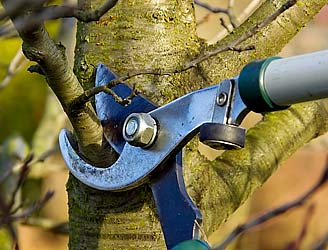
pruningIn that day the Branch of the Lord will be beautiful and glorious, and the fruit of the land will be the pride and glory of the survivors in Israel. Those who are left in Zion, who remain in Jerusalem, will be called holy, all who are recorded among the living in Jerusalem. The Lord will wash away the filth of the women of Zion; he will cleanse the bloodstains from Jerusalem by a spirit of judgment and a spirit of fire. Then the Lord will create over all of Mount Zion and over those who assemble there a cloud of smoke by day and a glow of flaming fire by night; over everything the glory will be a canopy. It will be a shelter and shade from the heat of the day, and a refuge and hiding place from the storm and rain. – Isaiah 4:2-6

The days being described here are not good for Jerusalem or the Israelites. It sounds  like the city has been sacked and many of Israel’s men have been killed.  Those that remain are mainly women.  In fact in the preceding verses there is said to be seven women for every man.  God will wash the women clean of their filth.  Israel was due for a pruning.

The sacking appears to be a judgement or consequence of the rebellion of the Israelites – a severe pruning if you will.  I am a part-time gardener and very unskilled pruner.  Even an unskilled pruner knows pruning is done to promote new growth by cutting out diseased or dying parts of the plant.  The process seems rather gruesome if you think about it.  We are basically dismembering the plant in order to encourage it to produce new growth and fruit.

God is doing that with the nation of Israel, and Jerusalem in particular.  They are undergoing severe pruning, presumably to encourage new growth.  The new buds and shoots that develop on a plant after pruning are vigorous and lush, but they are also tender and weak.  If a storm were to hit the plant just after pruning it could kill that plant.  God’s intention is not to “kill” Jerusalem or the nation of Israel.  So he builds a “canopy” to protect Zion until it can regrow and become strong again.  He protects it from the storms and rain that are swirling around it.

Severe pruning is something that the Israelites needed in order to grow into a healthy nation that bears fruit.  Sometimes the modern church requires severe pruning to remove dead and diseased parts.  The trick is to not be one of these parts of the Church.  How does one ensure that they are not prone to pruning?  I think the best way is to remain vibrant and growing – act like a bud.  Always be seeking God and trying to find ways to grow as a follower of Christ — grow toward the Son.  Do not be afraid to grow in new directions that may even be scary or uncomfortable.

Prayer: God help us to grow in ways that build a strong and vibrant community of God seekers.

Posted in Christian Community, Christianity, Conflict, Discernment, Following God, God's Love for Us, Isaiah, Life Together, religion, Sin, The Nature of God | Tagged , , , , , , , | 2 Comments

Eddying Out – Isaiah Interruption

DCIM100SPORTI am taking a day to “eddy out”
from my walk with water.  When I started down the reach of river called “Isaiah” I expected it to be a wild ride full of prophetic references and interesting rapids — s
o far not so much.  It has been more like a rocky reach of low water where I keep getting hung up on rocks, and I have to get out of the boat to push myself off.  

I am taking today to pray and reflect.  Perhaps the rest will revive my resolve.  I will be back on the water tomorrow pulling my boat off the rocks if that is what God requires of me.

Posted in Eddying Out, Isaiah | Tagged , , , , | Leave a comment

Supplies of Water

Keechelus Lake in Washington State

Keechelus Lake in Washington State

See now, the Lord, the Lord Almighty, is about to take from Jerusalem and Judah both supply and support: all supplies of food and all supplies of water,   the hero and the warrior, the judge and the prophet, the diviner and the elder,   the captain of fifty and the man of rank, the counselor, skilled craftsman and clever enchanter. – Isaiah 3:1-3

I was recently travelling in Washington state and experienced the forest fires and drought conditions of the west first hand.  They definitely are experiencing water supply issues.  Land without water is barren and prone to destruction by fire and disease.  I walked for about 30 minutes on the bed of what is normally a lake.  In fact last year I actually swam 10’s of feet above where I was walking this summer.  It is an exceptionally dry year.

This passage is describing God removing water and food supplies from Jerusalem and the land of Judah.  On one level it seems punitive and cruel to remove the water and food that the people need to survive.  I guess it is difficult to view the Israelites and their behavior from God’s perspective.  I get the sense God is really frustrated with the Israelite’s ability to run away from the one who just wants to protect and carry them.  Instead the Israelites turn to the sword and earthly kings to protect and provide.  In a sense, God is really saying to the Israelites “OK thy will be done” you can fend for yourself now and see how that goes.

I think modern followers of Christ also cut themselves off from their supply of “food” and “water” when they replace a dynamic pursuit of God with a permanent pew once a week.  God wants us to hunger and thirst for Him.  The water and food that God provides are not always what we want.  When God provided food for the Israelites in the desert in the form of Manna, bread from heaven, their first response was not “thank you” but rather “what is it?”  They grew tired of the daily provision of manna even though it was providing for their needs.  God also gave them water that was not to their liking.  They wanted something different than God was offering.

In this passage the Israelites are also wanting something different than God is offering.  It is ironic that the Jewish people have the same response when God provides a savoir to “settle the matter“.  Jesus came with love rather than a sword to free them from the bondage of the Romans.  They wanted something different than was offered.

God offered a freedom and citizenship far greater than the Romans or the Jewish leaders.  He offered rebirth into a whole new way of living for the kingdom of God here on earth.  God still offers each one of us this same freedom and citizenship, but He has also given us the freedom to refuse.  Our call.

Prayer: God thank You for providing us with the water and food we need; and providing a savoir to show us the way to be born again here on earth.

Posted in Christianity, Conflict, Covenant, Discernment, Faith, Following God, Forgiveness, Free Will, God's Love for Us, Isaiah, Love for the Lost, reconciliation, Redemption, religion, The Nature of God, Trusting God | Tagged , , , , , | 2 Comments

Wine Diluted with Water

wpid-wp-1440553526226.jpegSee how the faithful city has become a prostitute! She once was full of justice; righteousness used to dwell in her— but now murderers!   Your silver has become dross, your choice wine is diluted with water.   Your rulers are rebels, partners with thieves; they all love bribes and chase after gifts. They do not defend the cause of the fatherless; the widow’s case does not come before them. – Isaiah 1:21-23

In this passage there is a very real sense that the “wine” that God provides can become diluted.  In the new testament wine represented Christ’s blood which took away the sins of the world.  So to dilute the wine is to dilute the saving grace offered in Christ’s blood.

The “faithful city”, presumably Jerusalem or perhaps the nation of Israel, is compared to a prostitute.  The perception of a prostitute, at least at this time, is a woman who has sold out her virtue and body for money or material things.  This is what this passage is accusing the Israelites of doing, selling out their souls for material things.

“Your silver has become dross, your choice wine is diluted with water”.  This is saying that something that was once pure and beautiful has been contaminated with impurities, or in the case of the wine with water.  Normally water has been used to denote good things like the living water provided by God.  I think in this case it is used to “extend” the wine by adding more liquid without the flavour and complexity of the wine.

What can we glean from this passage spiritually?  Maybe nothing, but as I chew on it occurs to me that the spiritual analogue to “adding water to wine” would be watering down the gospel.  This is something some people and churches do when they make the message Jesus came to share more palatable by ignoring some of the hard teachings, such as loving your enemies.  It also happens when we try to make gathering together in community very comfortable and convenient.  I sometimes wonder whether some of the conveniences we have come up with in churches like espresso bars are a watering down of the essential reasons we are called to gather together.

It seems to me the reasons we gather in community with other followers of Jesus are to: 1) discuss our journey and the Good News of Christ; 2) encourage and pray for one another; 3) learn from each other how to love one another and God; and 4) serve one another.  These things represent the “wine” of our “city”, the church.  If anything we are doing detracts from achieving these things it would be considered “water” that dilutes our main purpose for gathering.  So the questions we should ask ourselves is does having an espresso bar dilute any of these four reasons for gathering?  If the answer is yes it should probably go, along with anything else distracting us from faithfully following God together.

Prayer: God help us to gather together for the right reasons and with a proper perspective so that we do not dilute the Gospel.


Posted in Christian Community, Christian Leadership, Christianity, Discernment, Following God, Isaiah, Life Together, Love for the Lost, Obedience, religion, The Earthly Realm | Tagged , , , , , , , | 3 Comments

Come Now, Let us Settle the Matter

The

The “pieta” by Michelangelo

When you spread out your hands in prayer, I hide my eyes from you; even when you offer many prayers, I am not listening. Your hands are full of blood! Wash and make yourselves clean. Take your evil deeds out of my sight; stop doing wrong. Learn to do right; seek justice. Defend the oppressed. Take up the cause of the fatherless; plead the case of the widow. “Come now, let us settle the matter,” says the Lord . “Though your sins are like scarlet, they shall be as white as snow; though they are red as crimson, they shall be like wool. If you are willing and obedient, you will eat the good things of the land; but if you resist and rebel, you will be devoured by the sword.” For the mouth of the Lord has spoken. – Isaiah 1:15-20

Well this is a raucous entry into the book of Isaiah. God is not listening to the Israelites because their hands are “full of blood”. This is probably a reference to the senseless sacrifice and retribution that took place under the kings of Israel like David. Some would argue this type of bloodshed and conflict is still going on in the middle east today. One does not need to look very deeply into the headlines to find someone killing someone else in the middle east. Perhaps God is still “hiding His eyes” from those who refuse to “wash themselves clean”.  I do not know.

God wants the Israelites and us to “stop doing wrong”, i.e. sinning.  Though the sins of the Israelites, and us, are like scarlet they shall be as white as snow. How does this happen? How can the unclean be made clean? The dark be made light?

God has provided us a solution and a saviour to “settle the matter”.  He has settled the matter not by force or might as the Israelites have become accustomed to doing. He settles the matter with a fiery and unquenchable love for us. He settles the matter once and for all by sending His Son Jesus to sacrifice Himself for our sins.

What does the Lord require of us? What is to be our response to God’s solution? We are to be “willing and obedient”. If we are willing and obedient we will eat good things, i.e. our bodies and souls will be fed what they need (not necessarily what they want) as we toil in this land of oblivion.  If we resist and rebel then we will be devoured by the sword. Our earthly lives will be defined by physical and spiritual turmoil. So what do these two perspectives and postures look like?

A person who is willing and obedient is a person who knows their place in eternity. They are willing to give up their own free will to the God who wants to carry them like a son or daughter and protect them like Mad Max. They are willing to be obedient even when the path ahead is unclear. They are able to faithfully follow God even when they cannot see Him clearly and His voice comes only as a whisper. When they are called upon to lead, they lead while following God.

Resisting and rebelling is using our free will to oppose the clear leading and directions of God.  Leading others away from God rather than toward Him. He has allowed us this freedom to rebel — to be free of Him if we choose.  This choice may seem exhilarating and “freeing” at first but in the long run we will tire of running away from God, and we may be very far away and exhausted before we realize we have been running the wrong direction with our lives.  The amazing thing is that no matter how far we run from God He can find us if we are willing to be found.

Prayer: God help us to use our free will wisely to faithfully follow You rather than running away.

SDG
Posted in Christian Leadership, Christianity, Conflict, Covenant, Discernment, Discipleship, Faith, Following God, Free Will, God's Love for Us, Isaiah, Love for the Lost, Obedience, reconciliation, Redemption, religion, Sin, The Earthly Realm, The Nature of God, The Spiritual Realm, Trusting God | Tagged , , , , , , , , | 18 Comments

Fiery love than cannot be dowsed

IMGP1746Who is this coming up from the wilderness leaning on her beloved? Under the apple tree I roused you; there your mother conceived you, there she who was in labor gave you birth.   Place me like a seal over your heart, like a seal on your arm; for love is as strong as death, its jealousy unyielding as the grave. It burns like blazing fire, like a mighty flame.    Many waters cannot quench love; rivers cannot sweep it away. If one were to give all the wealth of one’s house for love, it would be utterly scorned. – Song of Solomon 8:5-7

This is the last water-related passage in the Song of Solomon.  It has been an interesting book.  If I had to sum up the entire book in one sentence it would be “Love is a powerful thing.”  As powerful a thing as it is between a man and woman the love that God has for us, and we are to have for God, is even more powerful. Can we describe our love for God as a “blazing fire” or a “mighty flame”?  If I am honest I do not think I can claim that level of passion and pursuit of God on a consistent basis.

The passage begins with an interesting sentence.  Someone emerges from the wilderness leaning on their beloved.  The destination is an apple tree.  This is a very busy apple tree. It is the site of rousing, conception, and childbirth all under the same tree.  “love is as strong as death”.  In the case of Jesus, love is even stronger than death.  I think it would be appropriate to describe Jesus’ love for His disciples, and us, as “like blazing fire, like a mighty flame”.  What he called on His disciples and us to do is to return this love in kind.  But this is hard.

We are constantly allowing “many waters” to dowse our passion and pursuit of God.  Our love is often “swept away” by rivers of distraction in the form of earthly pain and pleasures.  Job was an example of a person whose passion for God survived many waters and wave upon wave of distraction.  It is difficult to maintain a fiery love of God amidst a constant dowsing with water, but that is what God has asked of us.  Fiery love that will not be dowsed.

Prayer: God You love us with passion and fire, help us to love You with a blazing fire that cannot be dowsed by many waters.

Posted in Conflict, Covenant, Discernment, Following God, Free Will, God's Love for Us, Love for the Lost, Obedience, reconciliation, Redemption, religion, Song of Solomon, The Nature of God | Tagged , , , , , , , , , | 2 Comments

Eyes like Doves?

206h264-071632800999457975

Topaz (www.mindat.org)

My beloved is radiant and ruddy, outstanding among ten thousand.  His head is purest gold; his hair is wavy and black as a raven.  His eyes are like doves by the water streams, washed in milk, mounted like jewels.  His cheeks are like beds of spice yielding perfume. His lips are like lilies dripping with myrrh.  His arms are rods of gold set with topaz. His body is like polished ivory decorated with lapis lazuli. – Song of Solomon 5:10-14

I have been “stuck” on this passage for two days.  It is time to get paddling and move on.  This passage is truly a confusing morass of mixed metaphors…”his lips are like Lillie’s dripping with myrrh”? “Eyes washed in milk and mounted like jewels?” It is almost as if these metaphors were strung together for effect rather than to describe an actual person. How could his head be purest gold and his hair raven black at the same time?

I am not sure I can glean any nuggets from this stretch of river, but I will give it my best shot. At least there are a lot of minerals to satiate my geological interests. The passage begins by describing a man who sounds a bit like King David – “My beloved is radiant and ruddy, outstanding among ten thousand”, but then the description begins to sound more like Solomon – his arms of gold set with topaz.

I am not sure what “eyes like doves by the water streams” look like. Maybe doves have a cultural significance at this time of which I am not aware.  The most memorable reference  to a dove I have encountered so far was when Noah sent out doves to see if God’s Rain was ended.  In that instance, the doves became a sign of peace.  Perhaps the male figure being described here is intended to contain contrasting characteristics.  For example elements of being a military leader “outstanding among ten thousand”; and a man of peace with “eyes like doves”.

If we take this description to be allegorically describing the bridegroom, God, then it would mean that God has contrasting and seemingly contradictory characteristics.  This certainly fits with the complicated picture of God that I have encountered in my float so far.  A God who can both carry us like a son and daughter and refuse to allow Moses to cross over the Jordan River into the promised land.  It also fits with the seemingly contradictory statements we floated through in Ecclesiastes 3:1-8 — a time for everything.

I am not sure I have plumbed the depths of this passage, but rather than spin in this whirlpool I will press on down the river and see where God leads.

Prayer: God my understanding of You is imperfect and sometimes confusing just like this passage.  Help me to faithfully follow You despite my confusion.

SDG
Posted in Covenant, Discernment, Discipleship, Following God, Obedience, religion, Song of Solomon, The Nature of God, Wisdom | Tagged , , , , , , , | 1 Comment

When to Wait and When to Wander

I slept but my heart was awake. Listen! My beloved is knocking: “Open to me, my sister, my darling, my dove, my flawless one. My head is drenched with dew, my hair with the dampness of the night.”  I have taken off my robe— must I put it on again? I have washed my feet— must I soil them again?  My beloved thrust his hand through the latch-opening; my heart began to pound for him.  I arose to open for my beloved, and my hands dripped with myrrh, my fingers with flowing myrrh, on the handles of the bolt.  I opened for my beloved, but my beloved had left; he was gone. My heart sank at his departure.  I looked for him but did not find him. I called him but he did not answer.  The watchmen found me as they made their rounds in the city. They beat me, they bruised me; they took away my cloak, those watchmen of the walls!  Daughters of Jerusalem, I charge you— if you find my beloved, what will you tell him? Tell him I am faint with love. – Song of Solomon 5:2-8

This passage starts off with a very interesting statement “I slept but my heart was awake”.  I sometimes feel like this in the watches of the night when I am having trouble sleeping.  Since the heart is often used as a metaphor for our souls it is almost like saying my body is asleep but my soul is awake.  It seems to me that usually it is the other way around, our bodies are awake and our souls are sleeping.

The male figure arrives, apparently in the early morning, drenched with dew.  Dew is an interesting form of water that has shown up several times during my journey so far.  In the book of Judges Gideon used the dew to help discern the will of God (Judges 6:33-40); and in Deuteronomy dew was described as “precious dew from heaven above” (Deuteronomy 33:13-17).  Dew seems to have a metaphorical connection to the Holy Spirit, at least in other parts of the old testament.  It was the dew that brought the bread from heaven (manna) to feed the Israelites in the desert. (Exodus 16:13-16).

The scene is a bit surreal.  It sounds like the male figure is waiting naked (“I have taken off my robe”) outside the door of his lover, the female figure.  He has washed his feet in preparation for entering the house.  He prepares to enter the house by thrusting his hand through the latch opening.  His lover, in eager anticipation, goes to open the door and let him in and… finds that he has gone.  That was not what I expected to happen.  She searches the city for him and cannot find him.  She ends up beaten and bruised (and perhaps worse reading between the lines) by the city watchmen.  Those who are supposed to be guarding the city walls and protecting those inside.

OK so this passage is confusing on many levels.  It has plot twists and intrigue that Hollywood would probably love to include in a movie or television series.  Is there deeper meaning here that we can plumb?  Is there something we can learn about our relationship with God by viewing this story metaphorically?

Metaphorically speaking the male figure is God or Christ.  So the first part of the passage is a bit like saying something heretical — that God is waiting naked for us, covered with dew, outside our door.  When we, metaphorically the Israelites and the Church, go to the door to “let Him in” he is not there.  We go wandering the city and end up battered and bruised.

This sounds like the experience the Israelites are having with God.  They often feel he is distant, like clouds high up in the sky, and difficult to find even when he is providing tangible evidence of his presence in form of a cloud by day and pillar of fire by night.  I think the modern day followers of Christ (the Church) sometimes experience the similar confusion when they feel like God is distant.  In both cases it is often we who have moved rather than God.  The woman in this passage moves from her house in search of her lover and the end result is not good.  Perhaps the lesson is that when we feel like God has left us we should remain “in our house” rather than going “wandering”.

I think there is a difference between wandering and seeking.  In a spiritual sense remaining “in the house” is trusting that God knows us and desires to carry us like a son or daughter even when it feels like he has left us.  We are called to be active seekers after God, but we need to discern when to wait and when to pursue Him so that we do not find ourselves “wandering the city”, vulnerable to unscrupulous “guards”.

Prayer: God help us to discern when to wait and when to wander.  When we should seek after You and when we should await your return.

SDG
Posted in Christian Community, Christianity, Covenant, Discernment, Faith, Following God, Free Will, God's Love for Us, Love for the Lost, Obedience, reconciliation, religion, Song of Solomon, The Earthly Realm, The Nature of God, The Spiritual Realm, Trusting God | Tagged , , , , , | Leave a comment