An Enclosed Spring

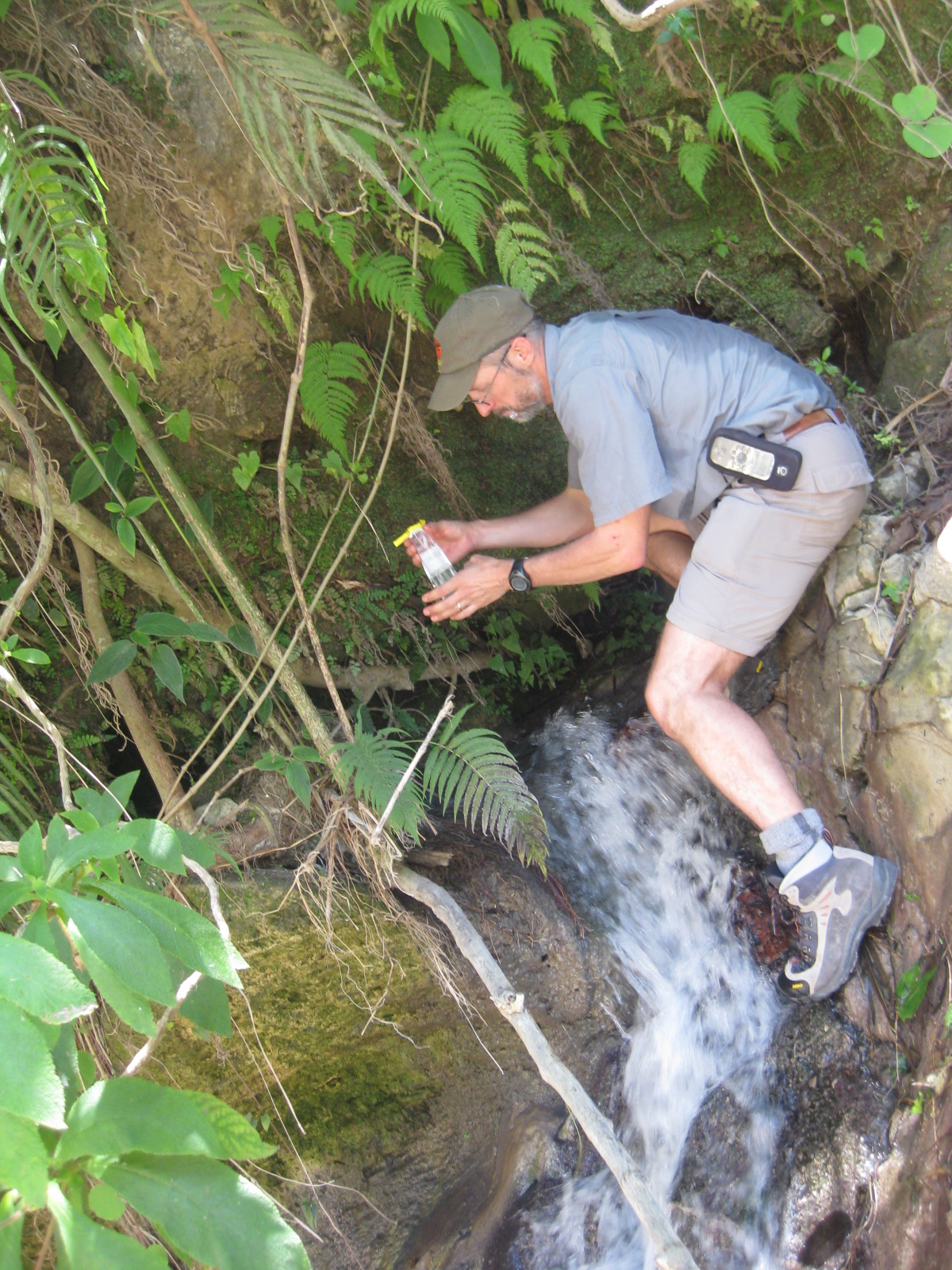
Natural spring in Haiti, 2011

Natural spring in Haiti, 2011

You have stolen my heart, my sister, my bride; you have stolen my heart with one glance of your eyes, with one jewel of your necklace.  How delightful is your love, my sister, my bride! How much more pleasing is your love than wine, and the fragrance of your perfume more than any spice!  Your lips drop sweetness as the honeycomb, my bride; milk and honey are under your tongue. The fragrance of your garments is like the fragrance of Lebanon.  You are a garden locked up, my sister, my bride; you are a spring enclosed, a sealed fountain.  Your plants are an orchard of pomegranates with choice fruits, with henna and nard,  nard and saffron, calamus and cinnamon, with every kind of incense tree, with myrrh and aloes and all the finest spices.  You are a garden fountain, a well of flowing water streaming down from Lebanon. – Song of Solomon 4:9-15

This is an intriguing passage on several levels.  I have prayed and chewed on it for the last day or so.  I am still not sure I have a clue what is hidden in the depths of this passage.  The passage describes in some detail the male figure talking about his love for the female figure.  He does this in a way many men would love to be able to emulate….”how delightful is your love, my sister, my bride! How much more pleasing is your love than wine, and the fragrance of your perfume more than any spice!”.  This is raw passionate and intimate love.

Physical love is more implied than specifically mentioned.  It comes with the first water reference, “You are a garden locked up, my sister, my bride; you are a spring enclosed, a sealed fountain.”  It sounds to me like this is referring to the virtue of the bride, her chastity.  She has “locked up” her virtue for only the bridegroom to share and no one else.  This is a good thing and I think it is the way God intended us to share this most intimate part of our physical bodies.  So although she clearly is a very desireable woman who he later compares to “a well of flowing water streaming down from Lebanon” she has “enclosed her spring” for him.  If she locks up her “spring” so tightly that she is unable to unlock it for her lover when the time and place is appropriate that is a problem.

This passage holds special meaning for me as a result of the work I do with water in Haiti.  In Haiti springs are contaminated with pathogens (bacteria, viruses, and parasites).  Although they look clean they are often unsafe to drink.  One of the ways people have attempted to solve this problem is to cover the spring – “enclose it” in a concrete box called a spring cap to protect the water from contamination.  In principle this is a sound idea as animals often visit the spring and defecate near the spring causing contamination.  It turns out that in Haiti the limestone rock is riddled with cavities and open cracks so that it looks a little like swiss cheese.  The end result is that water in springs is often contaminated not where it emerges from the ground but sometimes 100’s of meters away — enclosing it at the place it emerges does not work to prevent contamination.

So given that context and background about springs what can we learn about our relationship with God from this passage.  If we take this passage to be an allegory the man would be God or Christ; and the woman is either the Israelites or the Church (modern day Christ followers).  The bridegroom (God or Christ) seems to be telling the Israelites and the Church that they have “enclosed the spring”.  They have boxed up the living water God has provided.  They may have done this for good reasons, i.e. to prevent “contamination” and protect their virtue, but the end result is that they have isolated themselves from the people around them that need some of the living water they possess.

What God seems to be saying is that both the Israelites, and by implication the modern Church, is that they have have dammed up the “well of flowing water streaming down from Lebanon”.  They are not using the gifts and fruit of their intimate relationship with God to find and care for the lost sheep around them.  In the case of the Isrealites this looked like Pharisaic extremism, and for the modern Church it looks like liturgical legalism.

Both the Isrealites and modern day Christ followers have been given a special gift from God.  An intimate relationship that I believe is unique and exclusive, just like the physical relationship between a husband and wife.  In one of the many paradoxes in the bible it seems this exclusive relationship was meant to be shared.  He wants our love for Him to be intimate and passionate, just as He loves us intimately and passionately; but God wants us to share the living water He provides with others.  He does not want us to “enclose the spring”.  This passage is an interesting stretch of river — deep water to be sure.  I may have gotten it all wrong, but I am pretty sure God loves me anyway.

Prayer: God You love us with passion and intimacy.  Help us to both protect this exclusive relationship and share it with others.

SDG
Posted in Christian Community, Christian Leadership, Christianity, Covenant, Discernment, Following God, Free Will, God's Love for Us, Haiti, Life Together, religion, Sin, Song of Solomon, The Nature of God, Wisdom | Tagged , , , , , , , , , , | Leave a comment

Leaping Across Mountains

mountainsListen! My beloved! Look! Here he comes, leaping across the mountains, bounding over the hills.  My beloved is like a gazelle or a young stag. Look! There he stands behind our wall, gazing through the windows, peering through the lattice.  My beloved spoke and said to me, “Arise, my darling, my beautiful one, come with me.  See! The winter is past; the rains are over and gone.  Flowers appear on the earth; the season of singing has come, the cooing of doves is heard in our land.  The fig tree forms its early fruit; the blossoming vines spread their fragrance. Arise, come, my darling; my beautiful one, come with me.” – Song of Solomon 2:8-13

This passage marks my entry into the tumultuous and potentially turbulent water that is the Song of Solomon or Songs of Songs.  As I understand it this book was part of the original “wisdom” literature and it is read as an allegory of the relationship between God and Israel by many moderns Jewish people.  Christianity has viewed the book as an allegory of the relationship between the Christ (bridegroom) and the Church (bride).  As I explore this book I will try to prayerfully explore these allegorical meanings as well as the more obvious descriptions of male/female relationships — potentially choppy and turbulent water to be sure.

Why has springtime always been associated with love?  It seems that in the springtime everyone’s thoughts turn to love.  Perhaps it is the new life that is bursting forth all around us in the form of flowers and young animals.  There is a sense that spring is the “right” time for love and having young.  This passage read like the first flowers of spring…”The winter is past; the rains are over and gone. Flowers appear on the earth; the season of singing has come, the cooing of doves is heard in our land.”

Winter in Michigan where I am from can be very cold and hard.  The first spring warmth is truly a welcome arrival after months of snow and ice.  In this passage the woman is in her house and her lover arrives and peers into her house and announces the end of winter…he has arrived.  The necessary rains have come and gone and now the “the season of singing has come”.  This reminds me of some of the rejoicing that the Israelites did after experiencing hard or challenging times.  For example, when Moses sang songs to the Lord after the parting of the Red Sea.

Taking this as an allegory for our relationship with God is challenging.  It seems somehow wrong to associate God with the physical love and desire.  I am not sure why this is.  God certainly knows way more about physical love and how that love interacts with your souls than I do.  Perhaps it is the way our culture has used or misused sexual love that makes it difficult.  God made us as sexual beings — our souls inhabiting physical bodies full of hormones and desires.  Perhaps this book will provide some insights into the dynamic nature of our souls and how they interact with the strong desires and chemistry of our physical bodies here on earth.

I think that we sometime want to avoid the emotional side of our relationship with God because it is confusing and messy.  My hope and prayer is that in floating through the Song of Solomon I will gain a better understanding of the dynamic and emotional side of our relationship with God.

Prayer: God grant me wisdom and insights into the dynamic nature of love between a man and woman.  Help me to understand ways our relationship with You is to be like this.

Posted in Discernment, Faith, Following God, Life Together, Obedience, religion, Song of Solomon, The Earthly Realm, The Nature of God, The Spiritual Realm, Wisdom | Tagged , , , , , , , , | 1 Comment

Eddying Out after Ecclesiastes

DSCN3845I finished the last water-related passage in Ecclesiastes yesterday and I am spending some time with my family this week so it seemed a good time to “eddy out”.  I was a little surprised by the lack of water references in Ecclesiastes, but I have been surprised so many times on this journey so far that the unexpected is actually expected.

I will be starting the Song of Solomon tomorrow and I am curious to see what water imagery is to be found there among the more salacious parts about love between a man and woman.


Posted in Ecclesiastes, Eddying Out | Leave a comment

Remember Him

Remember your Creator in the days of your youth, before the days of trouble come and the years approach when you will say, “I find no pleasure in them”—   before the sun and the light and the moon and the stars grow dark, and the clouds return after the rain;   when the keepers of the house tremble, and the strong men stoop, when the grinders cease because they are few, and those looking through the windows grow dim;   when the doors to the street are closed and the sound of grinding fades; when people rise up at the sound of birds, but all their songs grow faint;   when people are afraid of heights and of dangers in the streets; when the almond tree blossoms and the grasshopper drags itself along and desire no longer is stirred. Then people go to their eternal home and mourners go about the streets. Remember him—before the silver cord is severed, and the golden bowl is broken; before the pitcher is shattered at the spring, and the wheel broken at the well,   and the dust returns to the ground it came from, and the spirit returns to God who gave it. – Ecclesiastes 12:1-7

Here in the last water-related passage in Ecclesiastes the author finally finds the meaning in this “meaningless” world.  The “clouds return after the rain” and there is a time for everything under the sun.  We sometimes feel oppressed by the worries of our lives here on earth but God has sent a comforter.  It is up to us to find and remember Him.

This passage is expressing something that I have observed in people I have known and myself.  When we grow older we become a more extreme version of ourselves when we were younger.  This can be good or bad depending on how we invest our time and energy when we are young.  If we invest in our relationship with God and our spiritual DNA then we are more likely to become closer to God and more like Him as we grow older.  If we invest in this world and become bitter and separated from God then we will be come more so as we grow older.

It is up to us to “Remember him—before the silver cord is severed, and the golden bowl is broken; before the pitcher is shattered at the spring, and the wheel broken at the well”  The water imagery here is amazing and rich.  Let’s step into these waters and see what hidden wells may be here.

The pitcher is “shattered at the spring” sound like a metaphor for crossing over when we die.  There is a very real sense that if we do not get experience fetching water from the spring while we have a pitcher, i.e. while we are alive on this earth, we may find it really hard to obtain water when that pitcher is broken (after we die).  It is almost as if we need to get practice seeking God while we are here on earth so that when we go to the “undiscovered country” it comes naturally.

The phrase “The wheel broken at the well” is similar to a “shattered pitcher at the spring”.  It is really difficult to obtain water from a well if you have a “broken wheel”, especially if you have never had to obtain water from the well with a “broken wheel”.  I think in a spiritual sense we have a “broken wheel” while our souls inhabit bodies here on earth.  It is difficult to obtain water from the “well” that is God while we are here on earth.  It takes persistence, creativity, and tenacity — just like trying to get water from a well with a broken wheel.

In the end we all die…”and the dust returns to the ground it came from, and the spirit returns to God who gave it.”  We must get good at accessing the One River and the well of eternal life while we are here in the land of Oblivion so that when our spirit returns to “the God who gave it” we are able to find Him.

Prayer: God thank you for teaching us to find water here on earth so that we can find You when our spirit returns to You.


Posted in Death and Dying, Discernment, Ecclesiastes, Faith, Following God, Heaven, Hell, Love for the Lost, Obedience, reconciliation, Redemption, religion, The Earthly Realm, The Nature of God, The Spiritual Realm, Wisdom | Tagged , , , , , , | 2 Comments

Watch the Wind and Look to the Cloud

Ship your grain across the sea; after many days you may receive a return.   Invest in seven ventures, yes, in eight; you do not know what disaster may come upon the land.   If clouds are full of water, they pour rain on the earth. Whether a tree falls to the south or to the north, in the place where it falls, there it will lie.   Whoever watches the wind will not plant; whoever looks at the clouds will not reap.   As you do not know the path of the wind, or how the body is formed in a mother’s womb, so you cannot understand the work of God, the Maker of all things. – Ecclesiastes 11:1-5

This is another passage that really sounds like it could have been written or inspired by King Solomon. The focus on investment and trade is very much the focus of King Solomon’s life and energy…”ship your grain across the sea”. Solomon did this very thing back in 2 Chronicles 2:12-18 where he traded grain for lumber and gold. He placed his trust in things (bronze basins and such) rather than the creator of those things.

“If clouds are full of water, they pour rain on the earth.”. The author acknowledges that we will experience challenges and calamities here on earth, “God’s rain” but he has difficulty identifying and trusting the Father of the rain, God.

As we go about our lives things will happen that are beyond our control, like whether a “tree falls to the south or to the north,”. What are we to think of these things? Should we ponder the loving deeds of the Lord or rely on our own wisdom and understanding?

The author, perhaps king Solomon, concludes that “Whoever watches the wind will not plant; whoever looks at the clouds will not reap.”  In other words he does not think we should rely on God’s spirit (the wind), or look to God (the clouds) for help when it comes to planting and reaping.  I disagree. The logic behind this conclusion is a bit contorted and convoluted in my opinion.

“As you do not know the path of the wind, or how the body is formed in a mother’s womb, so you cannot understand the work of God, the Maker of all things.”  Instead of standing in awe and wonder at the creativity of the Creator the author questions whether the Maker of all things can be trusted with the details of our lives (planting and reaping).

This has been the persistent theme in Ecclesiastes….”everything is meaningless” When faced with perplexing people or the pounding waves of life the author would rather conclude that “life is meaningless, a chasing after the wind” than seek after the God who has offered to carry us like a son or daughter.

I choose to chase after “the wind” — seek after God, even though I do not have a complete understanding of the works of God and this seeking sometimes feels like playing tag with God. He has demonstrated His love for us on the cross, now it is my turn to “watch the wind” and “look to the cloud”.

Prayer: God help me to rely on You rather than my own skills, knowledge, and understanding.

SDG
Posted in Christianity, Conflict, Covenant, Death and Dying, Discernment, Discipleship, Ecclesiastes, Faith, Following God, Life Together, Obedience, religion, The Earthly Realm, The Nature of God, The Spiritual Realm, Trusting God, Wisdom | Tagged , , , , , , , | Leave a comment

Tears of the Oppressed

Again I looked and saw all the oppression that was taking place under the sun: I saw the tears of the oppressed— and they have no comforter; power was on the side of their oppressors— and they have no comforter.   And I declared that the dead, who had already died, are happier than the living, who are still alive.   But better than both is the one who has never been born, who has not seen the evil that is done under the sun. – Ecclesiastes 4:1-3

There have not been as many water-related passages in Ecclesiastes as I would  have thought.  There are only a few more and this one is somewhat tangential.  There are some interesting “Reflections of Him” in here so let’s get our paddles in the water and see where we end up.

This passage is all about oppression. The author sees “the tears of the oppressed”.  He sees their emotional hurt and pain through these samples of their souls.  When I think of oppression I think of someone in a position of power imposing their will on someone “below them” on the social or economic ladder.  The “haves” ruling the “have nots”.  This has given rise to some amazing uprisings of anger and angst throughout history.  Everything from the French revolution to the occupy wall street demonstrations.

The missing solution to help the oppressed in this passage is a “comforter” rather than an angry crowd with a guillotine.  The author laments at the lack of a “comforter” to the point that they feel like it would be better to have never been born than to endure the injustice of oppression…”better than both is the one who has never been born, who has not seen the evil that is done under the sun”.

I disagree with the author’s pessimism and conclusion; although I have the advantage of knowing the “Comforter” who is missing from this passage.  Jesus was, and is, the ultimate comforter and champion of the oppressed.  He came to free the “captives” from oppressors of all kinds, both human and spiritual.  So from the perspective of a Follower of the Way  of Jesus it is far better to be born again than to have never been born at all.

Prayer: God thank You for being our comforter and coming to the aid of all who are oppressed by both spiritual and human oppressors.

Posted in Christianity, Covenant, Death and Dying, Ecclesiastes, Faith, Following God, God's Love for Us, Healing, Heaven, Life Together, reconciliation, religion, Sin, The Earthly Realm, The Nature of God, The Spiritual Realm, Trusting God | Tagged , , , , , , , , | 6 Comments

A Time for Everything

220px-TheByrdsTurnTurnTurnThere is a time for everything, and a season for every activity under the heavens:   a time to be born and a time to die, a time to plant and a time to uproot,   a time to kill and a time to heal, a time to tear down and a time to build,   a time to weep and a time to laugh, a time to mourn and a time to dance,   a time to scatter stones and a time to gather them, a time to embrace and a time to refrain from embracing,   a time to search and a time to give up, a time to keep and a time to throw away,   a time to tear and a time to mend, a time to be silent and a time to speak,   a time to love and a time to hate, a time for war and a time for peace. – Ecclesiastes 3:1-8

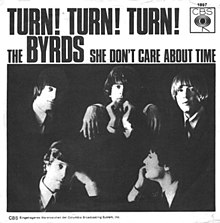
This is very familiar water to be sure.  It was even set to music in a popular song by Pete Seeger called “Turn, turn, turn (To Everything There Is a Season)”.  This song became an international hit the year I was born, 1965.  It apparently has the distinction of being the number one hit with the oldest lyrics, most of which were taken verbatim from this passage.

The passage is so familiar that it is tempting to blow right through this water and move on to more challenging rapids, but I have been surprised many times in the past by seemingly “boring” rapids…so let see where this one, and God, leads.

This passage sets out several pairs of opposites, suggesting that there is a time for all things, even opposite ends of the spectrum like peace and war.  The tricky part, and the part that this passage does not include, is how we are to discern when the time is right for each opposite end of the pendulum swing.  I am too young to remember, but apparently this song was used to advocate, for peace during the Vietnam war.  I will not delve into the murky and dangerous waters of politics and war, but it seems that this passage could be used to justify war or peace.

Water comes in somewhat tangentially through the verse about weeping…”a time to weep and a time to laugh”.  In past reflections I have explored the fact that tears, and weeping, often describe soul-wrenching emotional outpourings…samples of our souls.  This is alluding to something that I have found true in my experience as a Christian.  Our walk with God is not a linear journey, but rather non-linear with many hills and valleys that we must traverse.  If we choose to dwell only in the valley we never experience the majesty of the mountain tops.  The key is seeking God at the center of our seemingly tortured path.

So how do we get good at discerning the proper timing for events in our lives…when to laugh and when to cry? I think the only hope we have is to seek God’s face daily amidst the uncertainty of our journey.  He will provide us with the confidence to “choose our line” to borrow from river rafting terminology.  We must get good at reading the “river”, the One River from which true wisdom flows.

Prayer: God help us to discern the timing for events in our lives and have confidence that there is a time for everything.

Posted in Christianity, Covenant, Death and Dying, Discernment, Discipleship, Ecclesiastes, God's Love for Us, Obedience, The Earthly Realm, The Nature of God, The Spiritual Realm, Trusting God | Tagged , , , , , , , | 5 Comments

Reservoirs

Akosombo Dam and Lake Volta in Ghana

Akosombo Dam and Lake Volta in Ghana

I said to myself, “Come now, I will test you with pleasure to find out what is good.” But that also proved to be meaningless. “Laughter,” I said, “is madness. And what does pleasure accomplish?” I tried cheering myself with wine, and embracing folly—my mind still guiding me with wisdom. I wanted to see what was good for people to do under the heavens during the few days of their lives.   I undertook great projects: I built houses for myself and planted vineyards. I made gardens and parks and planted all kinds of fruit trees in them. I made reservoirs to water groves of flourishing trees. I bought male and female slaves and had other slaves who were born in my house. I also owned more herds and flocks than anyone in Jerusalem before me. I amassed silver and gold for myself, and the treasure of kings and provinces. I acquired male and female singers, and a harem as well—the delights of a man’s heart. I became greater by far than anyone in Jerusalem before me. In all this my wisdom stayed with me. – Ecclesiastes 2:1-9

There is apparently some debate about the authorship of the book of Ecclesiastes.  Based on this passage alone it certainly sounds like King Solomon.  Back in 1 Kings we learned about some of Solomon’s riches and flamboyant excesses.  The author, whether it is indeed Solomon or some other rich king, seems to be trying everything under the sun — wine, women, wealth — to fill a spiritual void in their life.

This is not unique to this time or generation.  I think that the modern culture in America is all about filling the spiritual void with anything and everything except what the void was  made for — God.  There is a quote attributed to a famous scientist and mathematician, Blaise Pascal, that I really like “There is a God shaped vacuum in the heart of every man which cannot be filled by any created thing, but only by God, the Creator, made known through Jesus.”

Our bodies and spirits were designed to have God installed as our operating system to help us navigate this “land of oblivion”, but we are often not comfortable relying on God to fill us up.  We seek after all sorts of other “water” to satisfy our thirsty souls, but the only water that provides lasting refreshment is that which comes from the great cistern, the One River, God.

The author’s solution to his “thirst” is to “build reservoirs”.  The reservoirs were built to provide water for “groves of flourishing trees”.  There is nothing in this verse that indicates that these reservoirs were unsuccessful at raising healthy trees and fruit, but the trees and fruit they were producing were apparently not satisfying on deeper spiritual or eternal level.

I think this is the experience of many who chase after wealth and possessions.  They often end up with many “reservoirs” to replace their reliance on the One who is supposed to provide us with living water on a daily basis.    The reservoirs appear on the surface to provide water for all kinds of “flourishing trees”, but inside the soul is often starving for sustenance.

Prayer: God You want to provide all the water we need to live and flourish.  Help us to seek out Your living water daily. 


Posted in Christianity, Covenant, Discernment, Discipleship, Ecclesiastes, Faith, Following God, God's Love for Us, Life Together, Obedience, religion, The Earthly Realm, The Spiritual Realm, Trusting God, wealth | Tagged , , , , , , , | 2 Comments

Raindrops – All Streams Flow into the Sea

The words of the Teacher, son of David, king in Jerusalem:   “Meaningless! Meaningless!” says the Teacher. “Utterly meaningless! Everything is meaningless.”   What do people gain from all their labors at which they toil under the sun?   Generations come and generations go, but the earth remains forever.   The sun rises and the sun sets, and hurries back to where it rises.   The wind blows to the south and turns to the north; round and round it goes, ever returning on its course.   All streams flow into the sea, yet the sea is never full. To the place the streams come from, there they return again.   All things are wearisome, more than one can say. The eye never has enough of seeing, nor the ear its fill of hearing.   What has been will be again, what has been done will be done again; there is nothing new under the sun.   Is there anything of which one can say, “Look! This is something new”? It was here already, long ago; it was here before our time.   No one remembers the former generations, and even those yet to come will not be remembered by those who follow them. – Ecclesiastes 1:1-11

What a way to start a dialogue…if I started class this way I think my enrollment might suffer….”everything I will talk about in this class is meaningless… “.  I guess this is a fitting entry in ecclesiastes as I anticipate that this book will contain plenty of rapids and deep water.

On one level this feels like a depressing passage…all we do here on earth is meaningless…all streams flow into the sea, yet the sea is never full…but there is another layer here and it is fleshed out by the water metaphor.

What this passage is describing is the hydrologic cycle…” All streams flow into the sea, yet the sea is never full. To the place the streams come from, there they return again.”…water evaporates from the ocean, is carried by the wind across the earth to the mountains, where it falls to earth as rain, and returns to the place it started.

One could look upon this cycle and think…”what a waste of effort”…”all things are wearisome, more than one can say.”…but to view it this way is to miss the beauty that this cycle, and the cycle of life, possesses as a consequence of this circularity.

Some might conclude that passages like this argue for reincarnation, but when I think of circularity I am not thinking of reincarnation per se.  Can our souls “precipitate” into a body more than once?  I honestly do not know whether our souls get more than one chance at the “river” here on earth.  Perhaps from God’s point of view it does not matter…it seems clear that our souls remain distinct despite joining the great sea when we die.

I have reflected previously on the similarity between the hydrologic cycle and the spiritual cycle that seems to exist, at least in my experience.  Our souls are like water…we move from “the secret place”, the spiritual realm, into a human body in our mother’s womb….we are “precipitated” if you will. We move from the realm of the clouds (heaven?) as a mere helpless drop of water…a baby. We begin our life journey toward “the sea”…the secret place from which we originated.

Along the way our soul joins many other “drops” to shape the landscape (all human experience here on earth), just as raindrops combine to become rivers that are constantly shaping the landscape. If one were to stop the hydrologic cycle the landscape would quickly become a pretty boring place….it is the journey that defines the raindrop’s purpose.  Just as it is the spiritual cycle, and the work of our souls, that defines our journey here on earth, not the body in which our soul is travelling.

Prayer: Thank You God for designing both the hydrologic cycle and the spiritual cycle that governs our souls.  Help us to see the journey we are on as a blessing.

Posted in Christianity, Death and Dying, Ecclesiastes, Following God, God's Love for Us, Heaven, Redemption, religion, The Earthly Realm, The Nature of God, The Spiritual Realm | Tagged , , , , , , , , | 7 Comments

Eddying Out – Entering Ecclesiastes

DSCN3707Yesterday I finished the book of proverbs, and I also celebrated my 28th wedding anniversary with my wife.  We spent the day kayaking and just enjoying creation together.  I decided that today would be a good day to take a break and “eddy out” before I start exploring Ecclesiastes.

The book of Proverbs was both challenging and rewarding.  There were far more prophetic references hidden there than I remember.

I am looking forward to the deep waters that lie ahead in the book of Ecclesiastes.  I anticipate that this book will contain complex and deep pools of water imagery to explore.  I will push out into the stream again tomorrow and see where God leads.

Prayer: God prepare my heart and spirit for the book of Ecclesiastes as I explore what hidden wells you have for me there.

Posted in Eddying Out, Following God | Tagged , , , , | Leave a comment