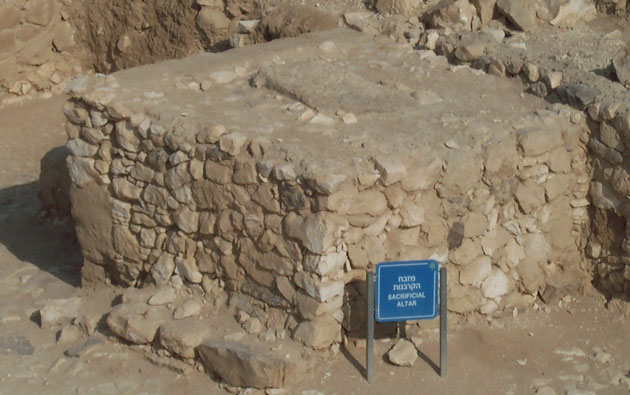
Decorating the Altar

Moses and the elders of Israel commanded the people: “Keep all these commands that I give you today. When you have crossed the Jordan into the land the Lord your God is giving you, set up some large stones and coat them with plaster. Write on them all the words of this law when you have crossed over to enter the land the Lord your God is giving you, a land flowing with milk and honey, just as the Lord , the God of your ancestors, promised you. And when you have crossed the Jordan, set up these stones on Mount Ebal, as I command you today, and coat them with plaster. Build there an altar to the Lord your God, an altar of stones. Do not use any iron tool on them. Build the altar of the Lord your God with fieldstones and offer burnt offerings on it to the Lord your God. Sacrifice fellowship offerings there, eating them and rejoicing in the presence of the Lord your God. And you shall write very clearly all the words of this law on these stones you have set up.” – Deuteronomy 27:1-8

We revisit the idea of standing stones in this passage.  God is preparing the Israelites for their crossing of the Jordan River.  The Israelites are instructed to erect a special standing stone after they cross the Jordan River into the Promised Land.  This particular standing stone was to be created from large flagstones covered with plaster.  This is to be the place where the law given to Moses is to be prominently displayed.  This law represents the covenant between God and the Israelites in the promised land.

I am not sure what to make of the instruction not to use iron tools on the altar.  Certainly, this would have made it more difficult to work with stone and mortar.  Perhaps this is somehow similar to the instruction to sacrifice a heifer near a stream and an unplowed and unplanted field from the passage that was in yesterday’s post.

Christian’s have altars, big ones, little ones, altars made of wood and rarely made of stone.  In my church experiences the altar has been a place for communion elements, crosses, offering plates, banner, and candles.  I have not experienced an altar with the commandments given to Moses written on it.

Jesus said He came to fulfill the law rather than replace it.  So perhaps placing symbols of Christ’s sacrifice and love for us on the altar, like the communion elements and the cross, is similar to what was going on in this passage.  As important as these symbols are, I wonder if Jesus is more interested in having His followers write His law on their hearts.  I can’t help but wonder if inscribing God’s love on our hearts is more important than placing items on an altar.  Then again, if items on the altar lead to changed hearts and love for God then they are worthy decorations.

Prayer: God help me to write your law on my heart. 

Posted in Covenant, Deuteronomy | Tagged , , , , , , , | Leave a comment

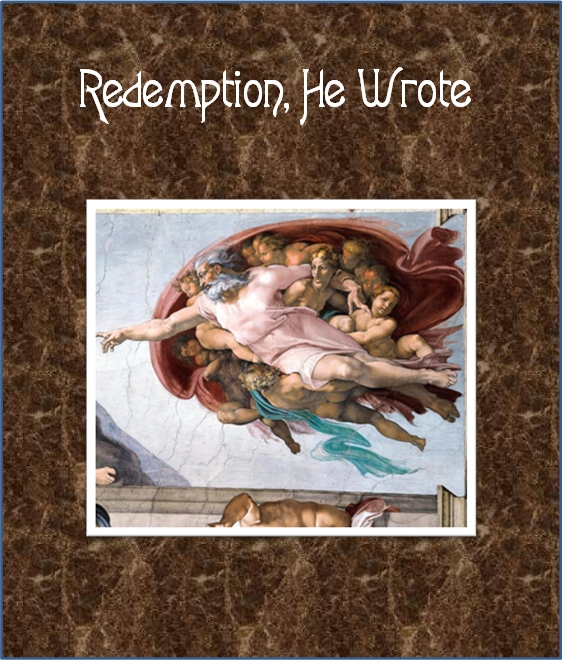
Redemption He Wrote

Redemption He WroteIf someone is found slain, lying in a field in the land the Lord your God is giving you to possess, and it is not known who the killer was, your elders and judges shall go out and measure the distance from the body to the neighboring towns. Then the elders of the town nearest the body shall take a heifer that has never been worked and has never worn a yoke and lead it down to a valley that has not been plowed or planted and where there is a flowing stream. There in the valley they are to break the heifer’s neck. The Levitical priests shall step forward, for the Lord your God has chosen them to minister and to pronounce blessings in the name of the Lord and to decide all cases of dispute and assault. Then all the elders of the town nearest the body shall wash their hands over the heifer whose neck was broken in the valley, and they shall declare: “Our hands did not shed this blood, nor did our eyes see it done. Accept this atonement for your people Israel, whom you have redeemed, Lord , and do not hold your people guilty of the blood of an innocent person.” Then the bloodshed will be atoned for, and you will have purged from yourselves the guilt of shedding innocent blood, since you have done what is right in the eyes of the Lord. – Deuteronomy 21:1-9

OK so this is an odd passage.  There are several aspects that have me puzzled.   Why would atonement be required for an unsolved murder?  Why a heifer that has never been worked?  Why a broken neck in a stream?  Why in a field that has never been plowed or planted?  How does the neck-breaking action of the priests atone for the Israelites?  How does having someone else do the dirty deed of killing the heifer purge the Israelites of guilt in the neck-breaking of the heifer?

So many questions so little time….I have another Netflix confession.  I have been watching episodes of the 80’s drama Murder She Wrote for the last couple of weeks.  This passage sounds like a teaser for an episode…”Murder and the Heifer with a broken neck”.  Jessica Fletcher would probably already have this passage figured out, but I am left feeling like the inept local sheriff.  She probably would have worked with the local elders to solve the murder rather than rush to cold cock a young heifer, but alas God has called me to “walk on water” even when the passages feel like wobbly waves….so here goes.

Since we know nothing about the murdered person we are not likely to solve the murder, and perhaps that is not the real point of this passage.  It does seem odd that the people are told to trust the priests and ignore the fact that their is a guilty person running around, literally getting away with murder.  Unless what God is communicating here is that it is the atonement that is the important part not the guilt or innocence of a murderer.

This reminds me of the seemingly odd accounting when it comes to the atonement provided by Jesus’ death on the cross for our sins.  The main point of Jesus dying on a cross for us is not what we have done to require atonement, but what He has sacrificed for us regardless of our sins that require atonement.

Our sins come as a result of choices, just like the slain person in the field was there because someone chose to murder them.  I think this passage is about redemption not retribution.  From a human, J.B. Fletcher, perspective we want to know who done it, but what God seems to be saying is that it does not matter “who done it”.  What matters is that “He done it” — He accepted the atonement and relationship that occurs through the ritual with the heifer, and later with Jesus on the cross.

I admit the details of the location of the atonement, by a stream, in a field not plowed or planted, are still somewhat confusing to me.  Unless God is trying to get across the idea that atonement is something we cannot achieve by any work of plowing or planting.  It is part of the spiritual realm and fabric that required God to send Jesus to die on a cross. Something that just is, rather something we as humans can build, plant, or influence by any amount of clever sleuthing, sorry J.B.

The details of the heifer are also confusing.  Perhaps there is a cultural context I am ignorant about.  What seems clear is that the atonement actions they are describing with the heifer are very different than the extensive blood letting and animal parsing that has characterized atonement offerings on the altar at the tent of meeting up to this point.  It is not clear to me why shedding blood in this “natural” setting is prohibited while it is required on the altar.  Hopefully this is one of those passages that will become more clear later as I continue my journey. What does seem clear is that God is more interested in redemption than retribution, and if God were to star in His own TV drama it would probably be called “Redemption He Wrote”.

Prayer: God your gift of atonement is an amazing and awesome mystery. Help us to accept it regardless of our reason for needing it.

Posted in Covenant, Deuteronomy, Forgiveness, God's Love for Us, Redemption | Tagged , , , , , , , , , , | Leave a comment

Blood like Water

image

Nevertheless, you may slaughter your animals in any of your towns and eat as much of the meat as you want, as if it were gazelle or deer, according to the blessing the Lord your God gives you. Both the ceremonially unclean and the clean may eat it. But you must not eat the blood; pour it out on the ground like water. You must not eat in your own towns the tithe of your grain and new wine and olive oil, or the firstborn of your herds and flocks, or whatever you have vowed to give, or your freewill offerings or special gifts. Instead, you are to eat them in the presence of the Lord your God at the place the Lord your God will choose—you, your sons and daughters, your male and female servants, and the Levites from your towns—and you are to rejoice before the Lord your God in everything you put your hand to. Be careful not to neglect the Levites as long as you live in your land.   When the Lord your God has enlarged your territory as he promised you, and you crave meat and say, “I would like some meat,” then you may eat as much of it as you want. If the place where the Lord your God chooses to put his Name is too far away from you, you may slaughter animals from the herds and flocks the Lord has given you, as I have commanded you, and in your own towns you may eat as much of them as you want. Eat them as you would gazelle or deer. Both the ceremonially unclean and the clean may eat. But be sure you do not eat the blood, because the blood is the life, and you must not eat the life with the meat. You must not eat the blood; pour it out on the ground like water. Do not eat it, so that it may go well with you and your children after you, because you will be doing what is right in the eyes of the Lord. – Deuteronomy 12:15-25

What can we take away from this passage?  This is one of those passages that I am struggling to find deeper meaning within, however, the distinction made between flesh (meat) and blood may hold some interesting hidden gems.  Maybe there is a concept embedded there about maintaining your body and spirit in different ways.  Body maintenance is relatively straightforward… a burger and fries will do in a pinch (or a PBJ if you are a Calvin and Hobbes fan).  Maintaining our spirits, our true life blood, and is much more complicated and difficult.

God is telling the Israelites about what it is OK to eat on their way to the Promised Land.  God says it is OK to eat everything but the blood of animals, and any part you have already committed to God (like a tithe).  The blood is to be discarded “like water on the ground”.  The usage of the words blood and water is interesting and somewhat puzzling.  This passage has equated blood with life, what keeps a living being alive. Water is the vehicle for life sustaining nutrients and minerals.

Maybe it would be instructive to think about what happens to water when it is poured on the ground since God has asked the Israelites to discard the blood this way. Water discarded on the ground: 1) seeps into the soil or rock to eventually join the groundwater; 2) may be used by plants to sustain their lives; 3) may evaporate right back into the atmosphere; and 4) may pool up or join a stream to provide life for other creatures.

In this passage the blood is to be treated like water. If our bodies are like flesh and our souls are like blood perhaps the things that happen to water when it is poured on the ground can happen to our spirits or souls:  1) Our souls can mingle with others like groundwater in the ground, this mingling can sometimes make us lose sight of who we are and who God needs us to be — we can get lost in someone else’s soul; 2) our souls and spirits can sometimes feel used up by those around us, like plants use water. This can be because of dysfunctional relationships, poor communication, or because others are so needy that they take “sips” from our soul to maintain their own; 3) Our soul can be so “free” that we float like a leaf on the wind ready to join some omnipresent vapor, which is not God but rather some replacement we have fashioned to take His place; and 4) we can join movements and causes (streams and ponds), many of which may be very good, which keep us from being fully joined to God’s spirit to accomplish his movement in people’s hearts and minds.

Phew….that was hard.  I may have stretched that verse too far, but there are some interesting things the “chew on”.

Prayer: God help us to guard our souls, the life blood of our relationship with you.

Posted in Deuteronomy, Discipleship, Following God | Tagged , , , , , , | Leave a comment

Tattoos of Trust

OLYMPUS DIGITAL CAMERABe careful, or you will be enticed to turn away and worship other gods and bow down to them. Then the Lord ’s anger will burn against you, and he will shut up the heavens so that it will not rain and the ground will yield no produce, and you will soon perish from the good land the Lord is giving you. Fix these words of mine in your hearts and minds; tie them as symbols on your hands and bind them on your foreheads. Teach them to your children, talking about them when you sit at home and when you walk along the road, when you lie down and when you get up. Write them on the doorframes of your houses and on your gates, so that your days and the days of your children may be many in the land the Lord swore to give your ancestors, as many as the days that the heavens are above the earth. – Deuteronomy 11:16-21

God will shut up the heavens so it will not rain — the definition of a drought, but a drought from God’s living water that can refresh our soul in a way unlike any earthly water can.  What God is telling the Israelites is something he has told them before…remember.  God tells the Israelites, and us, to put so many reminders of God’s love for us in our lives that we cannot forget.  I am sorry to say that I am not sure attending 3 church services a week is what God had in mind.  I could be wrong, but it seems one should ask oneself, is the investment of time and treasure I am making helping me remember God’s love?  This is a little bit like a personal “Meribah test“.

However we choose to “fix these things in our hearts and minds” we must stay connected to the spring and planted by the river to be successful in our walk with God as Christians.  Have you ever felt like you were spinning your wheels in your Christian walk?  I know I have at times and it is often traceable to a disconnection from spending time with God — fixing things about God in my heart and mind.  I often operate on auto pilot, just doing the things that are familiar and comfortable.  For me it helps if I intentionally step outside traditions at times to force my reliance on God.  This does not include stepping into sin of course, but into places where I feel God calling me where I may not want to go.

This passage says we will be enticed to turn away, it will be tempting and easy compared to the path of following God which can be hard and even discouraging at times.  I have known people who seemed to careen from one life disaster to the next.  These people seemed to be earnestly following God, but somehow they were disconnected from the spring and the heavens were not giving them rain.  I am not sure how these people fit into the picture of this passage.  I am content to accept this gap in my understanding for the moment, perhaps God will provide insight further along in the journey.

What I glean from this passage is that if I want to have consistent “rain from the heavens” so I can be “productive” in my Christian walk I need to: 1) be knowledgeable about what God said and what it means to me and those around me; 2) be open about my faith in God, not in a “bible thumper” sort of way, but as a confident, loving, expression of who I am am and Who animates my life; 3) share what I know about God with my children often and in all parts of my life; 4) make it clear that my household and everything in it belongs to God.

Prayer: God help me to fix your words and the knowledge of who You are in my heart and mind so that I can boldly share this part of my life with others.

Posted in Christian Community, Covenant, Deuteronomy, Following God, God's Love for Us | Tagged , , , , , , , | Leave a comment

Drinking Rain from Heaven

OLYMPUS DIGITAL CAMERAObserve therefore all the commands I am giving you today, so that you may have the strength to go in and take over the land that you are crossing the Jordan to possess, and so that you may live long in the land the Lord swore to your ancestors to give to them and their descendants, a land flowing with milk and honey. The land you are entering to take over is not like the land of Egypt, from which you have come, where you planted your seed and irrigated it by foot as in a vegetable garden. But the land you are crossing the Jordan to take possession of is a land of mountains and valleys that drinks rain from heaven. It is a land the Lord your God cares for; the eyes of the Lord your God are continually on it from the beginning of the year to its end. – Deuteronomy 11:8-12

I really like this verse.  It feels like a refreshing rain from heaven.  Yesterday’s post was not particularly challenging, but it also did not feel particularly inspiring.  One thing I am learning as I continue my journey with God exploring water in the Bible is that every day does not have to be a gushing spring of insight or knowledge.  Some days are dramatic and wild like a class IV rapids and others are like floating on a raft in a quiet mountain lake.  Today feels more like a mountain lake.

I remember once when I was little growing up near Seattle Washington (no stranger to rain).  It was an unusually warm summer day and my best friend and I were playing in our cul-de-sac.  We had social media back then…it was called outdoors :).  All of a sudden it began to rain, not damp drizzle or a light rain, but a deluge of drops the size of dimes.  The unusual thing about this rain is that it was warm and when the rain collected in the gutters it felt like bathtub water….well what does one do with a bathtub…why you climb in of course.  We had the most amazing time sitting in the street gutters letting the warm water wash over us.  It was a good day.

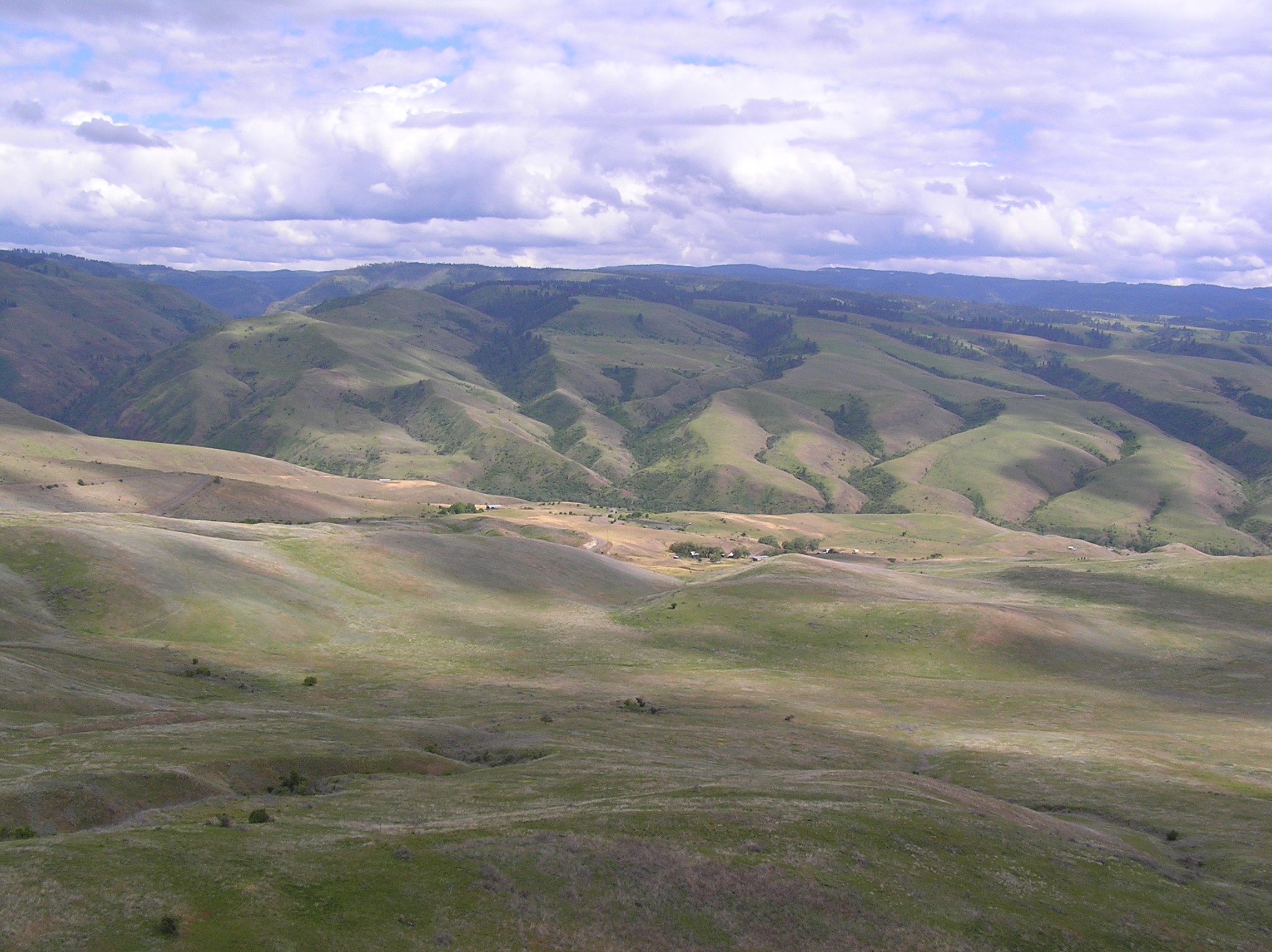
God is describing for the Israelites what life will be like after they  cross the Jordan into the Promised Land.  Life was hard in Egypt, they had to carefully irrigate their crops by foot.  I assume this means lots of ditches, canals, and hard work to produce a crop to eat.  God says the Promised Land will be different.  This land will drink rain from heaven.  Interestingly, from a geologic perspective the mountains and valleys actually are a product of the rain.  As the rain falls and collects it forms the valleys and then erodes those valleys to create a beautiful landscape. One cannot have the mountains without the rain that is trying to wear them down. In fact the very presence of the mountains causes the air to rise and lose it’s moisture as rain or snow. This is why western Washington state is wet and green and eastern Washington is dry and desert like. The Cascade mountains “drink up all the moisture”.

So if you want to drink rain from heaven go to the mountains.  Seek challenges in your walk with God – even when some of the places God takes you feel like difficult roads. There is no doubt that the Israelites are in for mountains and valleys as they set out to follow God in the Promised Land. As Christians God calls us to inhabit a land of spiritual mountains and valleys. Sometimes we feel like we are on the mountain top with God and other times we can feel like we are alone in a dark valley. What is encouraging is that both the mountains and the valleys receive God’s life-giving rain–God is with us and provides for us on the mountain tops and in the valleys.


Prayer: God quench our thirst with Your rain as we climb mountains and toil through valleys to follow You
.

SDG
Posted in Christian Community, Deuteronomy, Faith, Following God, God's Love for Us | Tagged , , , , , , | Leave a comment

Trading Hidden Wells for Brooks of Water

sau d'eau waterfall in Haiti

The people of Israel journeyed from Beeroth Bene-jaakan to Moserah. There Aaron died, and there he was buried. And his son Eleazar ministered as priest in his place.  From there they journeyed to Gudgodah, and from Gudgodah to Jotbathah, a land with brooks of water.  At that time the Lord set apart the tribe of Levi to carry the ark of the covenant of the Lord to stand before the Lord to minister to him and to bless in his name, to this day.  Therefore Levi has no portion or inheritance with his brothers. The Lord is his inheritance, as the Lord your God said to him.  “I myself stayed on the mountain, as at the first time, forty days and forty nights, and the Lord listened to me that time also. The Lord was unwilling to destroy you.  And the Lord said to me, ‘Arise, go on your journey at the head of the people, so that they may go in and possess the land, which I swore to their fathers to give them.’ – Deuteronomy 10:6-11

The Israelites have gone from the desert wilderness of Hagar’s hidden wells to the land of brooks of water in this passage.  This is a metaphor for the relationship transformation between God and the Israelites. They went from relying on God for everything including food (manna) and water (from rock) to a land where water flowed constantly — there was no longer a need to rely daily on God if one is living in land of “brooks of water”.

The preceding passages described the reestablishing of the ten commandments to replace the ones that were broken when Moses descended from the mountain to find the Israelites worshipping an idol.  God is interested in reestablishing a covenant, while the Israelites seem to be content to access the brooks of water rather than the living water offered by God.

Why is the provision of hidden wells and water from rock less palatable to the Israelites than “brooks of water”?  Why do we prefer the equivalent of “brooks of water” — a regular paycheck and security over the dynamic adventure to which God invites us when he asks us to follow Him?

From a scientific point of view the wells are a better source of water than the brooks of water that are preferred by the Israelites.  The very ease of access of the brooks makes them prone to contamination from other animals and people using the water.

It seems there is a life lesson here.  Things that are easy and regular are sometimes deadly for our souls.  For example, regular forms of worship and traditions can become comfortable coffins for our souls if they replace a dynamic and vibrant relationship with God.  A relationship based on total dependence on God rather than dependence on “brooks of water”.

Prayer: God help us to rely on your provision for our lives and welcome the adventure and dynamic relationship that You want for us.

Trading Hidden Wells for Brooks of Water was originally published on Walking on Water

Posted in Christian Community, Covenant, Deuteronomy, Following God, God's Love for Us | Tagged , , , , , , | 2 Comments

Dust to Dust…

So I turned and went down from the mountain while it was ablaze with fire. And the two tablets of the covenant were in my hands. When I looked, I saw that you had sinned against the Lord your God; you had made for yourselves an idol cast in the shape of a calf. You had turned aside quickly from the way that the Lord had commanded you. So I took the two tablets and threw them out of my hands, breaking them to pieces before your eyes.   Then once again I fell prostrate before the Lord for forty days and forty nights; I ate no bread and drank no water, because of all the sin you had committed, doing what was evil in the Lord ’s sight and so arousing his anger. I feared the anger and wrath of the Lord , for he was angry enough with you to destroy you. But again the Lord listened to me. And the Lord was angry enough with Aaron to destroy him, but at that time I prayed for Aaron too. Also I took that sinful thing of yours, the calf you had made, and burned it in the fire. Then I crushed it and ground it to powder as fine as dust and threw the dust into a stream that flowed down the mountain. – Deuteronomy 9:15-21

Moses returns from the Mountain of God, which is ablaze with fire to find that the Isrealites have turned away from God…again.  Moses breaks the tablets with the commandment on them, symbolic of the covenant that the Isrealites have broken.  Moses forsakes bread and water, and God is rightfully mad at the Israelites.  Moses takes the idol in the form of a calf and burns it to charcoal, crushes it into dust and throws it into a stream which flows down the mountain….dust to dust…ashes to ashes.

The fate of the Israelite’s calf idol is interesting, confusing, and a bit scary.  It was converted back to dust and added to a stream flowing down the mountain…the Mountain of God.  I always thought that the Israelites were worshiping a golden calf, but it would hardly be possible to burn a golden calf and put the dust in a stream.  This fate for the idol is the fate of all the things we place before God and all the items we use on this earth to replace God…they become dust and are added to the river of God.

How often do we, dust that we are, fashion things to take the place of God.  The list of possible forms is long: movies, possessions, appearance, television, wealth, security, etc.  Even family and religion can be shaped into something to replace God if we are not careful.  Why did the Israelites feel the need to replace God?  Why do we feel the need to replace Him?

For the Israelites it seems they needed something more tangible than what God was providing.  Sometimes a cloud or fire is just not as real as a chunk of wood or metal in the shape of a calf.  Sometimes tangible things and traditions in our lives take the place of our relationship with God.  I am sometimes guilty of replacing a dynamic relationship with God with regular traditions and the comfortable conventions that often populate Sunday morning gatherings.  A fiery God who is unpredictable and scary is much harder to follow.  Sometimes he calls us to rappel to church or carry His love to the lost.  It is almost always harder than cuddling with a calf in a comfortable pew.

Prayer: God help me to keep you first in my life amid all the tempting replacements.

Posted in Christian Community, Christian Leadership, Covenant, Deuteronomy, Love for the Lost | Tagged , , , , , | Leave a comment

Eddying Out

IMGP4592Yesterday’s passage felt like a class IV rapid to me.  I feel drenched and drained.  I needed to take a drying out day…it also happens to be the sabbath which seems an appropriate day to rest and reflect, and eddy out.

My wife and I took our dog for a walk in a beautiful beech forest near our house this morning.   The leaves on the maple trees are beginning to turn as the trees prepare for winter.  It is amazing how the trees pull all their sap, their life blood, back into their roots every fall to prepare for the coming winter.  It turns out our human bodies do something similar. When we are stressed all our blood goes to our heart and essential functions. There is a life lesson we can learn from our bodies and the trees…when stressful times come pull back to your roots.

Posted in Eddying Out | Tagged , , , | Leave a comment

Someone Else’s Story

Hear, Israel: You are now about to cross the Jordan to go in and dispossess nations greater and stronger than you, with large cities that have walls up to the sky. The people are strong and tall—Anakites! You know about them and have heard it said: “Who can stand up against the Anakites?” But be assured today that the Lord your God is the one who goes across ahead of you like a devouring fire. He will destroy them; he will subdue them before you. And you will drive them out and annihilate them quickly, as the Lord has promised you.   After the Lord your God has driven them out before you, do not say to yourself, “The Lord has brought me here to take possession of this land because of my righteousness.” No, it is on account of the wickedness of these nations that the Lord is going to drive them out before you. It is not because of your righteousness or your integrity that you are going in to take possession of their land; but on account of the wickedness of these nations, the Lord your God will drive them out before you, to accomplish what he swore to your fathers, to Abraham, Isaac and Jacob. Understand, then, that it is not because of your righteousness that the Lord your God is giving you this good land to possess, for you are a stiff-necked people. – Deuteronomy 9:1-6

This is a challenging passage. I have reflected and prayed most of the day over it and I am still not sure what God is telling me here. In this passage we have the warrior God, with more in common with Mad Max than Jesus. The duel nature of God, as the lion and the lamb, remains both mysterious and amazing to me. There is a tension between the God of this passage who tells the Israelites to cross the Jordan River and dispossess great nations; and Jesus who told His followers to give their cloak even when only a shirt was required of them (Matthew 5:40).

There is also an interesting twist here in that God tells the Israelites that the “gift” of the Promised Land will come at the expense of those who currently own it; not as a reward for the Israelites but as a consequence of the wickedness of the Anakites.  The details of  what the Anakites did and why God calls them “wicked” is their story — not the Isrealites story.  God makes it clear that the Isrealites do not deserve it and have not really earned it, but they will benefit from the consequences of the poor choices of the Anakites.  We don’t know what the poor choices were, but we can infer from nearby passages that it probably had something to do with having other gods in place of God.

There are consequences for not following God, as we saw in the case of Moses and Aaron.  They did not get to go to the Promised Land.  What God seems to be saying here is that there are other nations and people who will also have consequences for their not following God, but ultimately that is their story with God.

Why is this verse hard? Part of me thinks everyone should have a chance and God is not being “fair” to the Anakites, but of course I do not know their story.  I think this sort of thing happens to Christians and Christian communities as well.  I think sometimes we pass judgement on our fellow Christians without knowing their story and what God is doing in their life.  Perhaps we can build healthier Christian community by sharing our own story and learning about other peoples stories.

For God there are many stories going on at once.  Sometimes God may need to send storms and hardships into our lives and the lives of others to get our attention.  The Anakites would certainly have perceived the invasion by the Isrealites as a very big storm in their lives.  I think maybe God’s main point here is that the Isrealites need to focus on faithfully following God and take care of their ongoing story with God rather than focus on the wickedness and defeat of the Anakites.

Prayer: God help us to focus on faithfully following You and our story with You; and help us to learn the stories of others.


Posted in Christian Community, Christian Leadership, Deuteronomy, Following God, Obedience | Tagged , , , , , , , | Leave a comment

Humility in Abundance

OLYMPUS DIGITAL CAMERAWhen you have eaten and are satisfied, praise the Lord your God for the good land he has given you. Be careful that you do not forget the Lord your God, failing to observe his commands, his laws and his decrees that I am giving you this day. Otherwise, when you eat and are satisfied, when you build fine houses and settle down, and when your herds and flocks grow large and your silver and gold increase and all you have is multiplied, then your heart will become proud and you will forget the Lord your God, who brought you out of Egypt, out of the land of slavery. He led you through the vast and dreadful wilderness, that thirsty and waterless land, with its venomous snakes and scorpions. He brought you water out of hard rock. He gave you manna to eat in the wilderness, something your ancestors had never known, to humble and test you so that in the end it might go well with you. You may say to yourself, “My power and the strength of my hands have produced this wealth for me.” But remember the Lord your God, for it is he who gives you the ability to produce wealth, and so confirms his covenant, which he swore to your ancestors, as it is today. – Deuteronomy 8:10-18

God knows the Israelites well.  He knows that they have difficulty remembering when times are good and their herds and flocks are large.  What changes in our minds and spirits when we experience abundance?  According to this passage we begin to get puffed up about our own abilities and forget where those abilities came from; “my power and the strength of my hands have produced this wealth for me”.

Our ego is an interesting thing.  I came out of high school and entered college with an ego the size of a Mack Truck.  As an early Christian this is one of the first things God began to work on and He still has work to do in me today.  God began the ego deflation process with a job working as a pizza delivery person.  Now there is nothing wrong with this job and it actually payed pretty well, but in a college town pizza delivery people get about as much respect as a tax collector.  It was a humbling experience for me.

The next stage of the deflation process was when my roommate and I decided to move in with a student confined to a wheelchair with Muscular Dystrophy.  This was partly due to our desire to care for this student, but it also had something to do with the fact that he lived in a really cool corner room (still some growing to do :).  We became full-time room mates and part-time caregivers.  Seeing the physical and emotional challenges of this student did much to let the air out of my ego in a short time.  I learned much that year about how to maintain a proper posture and perspective toward God and my ego.  I also had to rely on God for wisdom and patience in caring for this special needs roommate.

A vast and dreadful wilderness and a thirsty and waterless land.  God does not pull any punches in describing what it was that He led the Israelites through to get to the Promised Land.  These Desert People were given water and manna from the very hands of God in their wanderings in the desert yet when they acquired stability and abundance they tended to forget.  We can encounter the same thing in our lives when we pass through desert times and emerge to find a comfortable place of abundance.

A number of years ago my wife and I were “drafted” to start a youth group for our church.  We did not really know what we were doing and the first year we had one faithful member of our youth group.  We continued to pray and seek God’s wisdom and eventually the group grew to the point where we hired a youth pastor, or maybe we were just so bad at it the church thought we needed help :).  Either way our “herd and flock had grown large”.  It was a real temptation to believe that the youth group success was due to our own abilities rather than God’s.  This must be a temptation for pastors of large and successful churches too.  How does one keep from losing perspective in the face of success?

I think doing what I ended up doing in college may be a good strategy.  Intentionally placing ourselves in humbling situations which require our dependence on God can help keep our egos in check.  It also helps to give trusted friends and fellow Christians the permission to “take us down a notch” if our ego gets inflated.

Prayer: God help me to be thankful in abundance and quick to recognize the source of our abundance.

Posted in Christian Community, Christian Leadership, Covenant, Deuteronomy, Discernment, Following God, Trusting God | Tagged , , , , , , , | Leave a comment