Rabbit Trail #4 – God’s Ice Bucket Challenge

snowSo this is my 90th post! It is hard to believe it has been almost 4 months. I continue to learn new things about myself and God. There are times when I feel like I am following a cloud by day and fire by night. Some days God pours down like a waterfall, others days He is like a gentle rain. On rare occasions His presence is like a bucket of ice water.

The other night I was having a hard time sleeping so I decided to pray for those God was leading to read the Walking on Water blog. All of a sudden like a bucket of ice God showered me with his love and presence. It took my breath away.   I had been praying that if even one person discovered God’s love and forgiveness through reading a blog post it would be worth it…splash…God reminded me that he feels the same way about me.  He would have come and died on the cross – even if it was just for me.  Needless to say I found it difficult to sleep after this.

My family used to have an odd tradition when I was growing up.  We called it the “Polar Bear Club”.  On camping trips and outings we would don our swimsuits and jump into freezing cold alpine lakes…sort of a reverse ice bucket challenge.  I was pretty young when we were doing this so my memories are pretty hazy, but I do remember the feeling of shock and panic when I hit the water and my body told me it was going to stop moving!  I survived the Polar Bear Club and all of my siblings did too.  The Polar Bear Club taught me how to leap.  God is teaching me how to swim, and one day Jesus will help me walk on water.

So here is an ice bucket challenge for you…pray that God would surprise you with an “ice bucket” of his presence.  It may not happen in the middle of the night, but no matter where and when God drenches you, I pray that it will be amazing and breathtaking!

Posted in Covenant, Discipleship, God's Love for Us, Rabbit Trails | Tagged , , , , , , | Leave a comment

Desert People

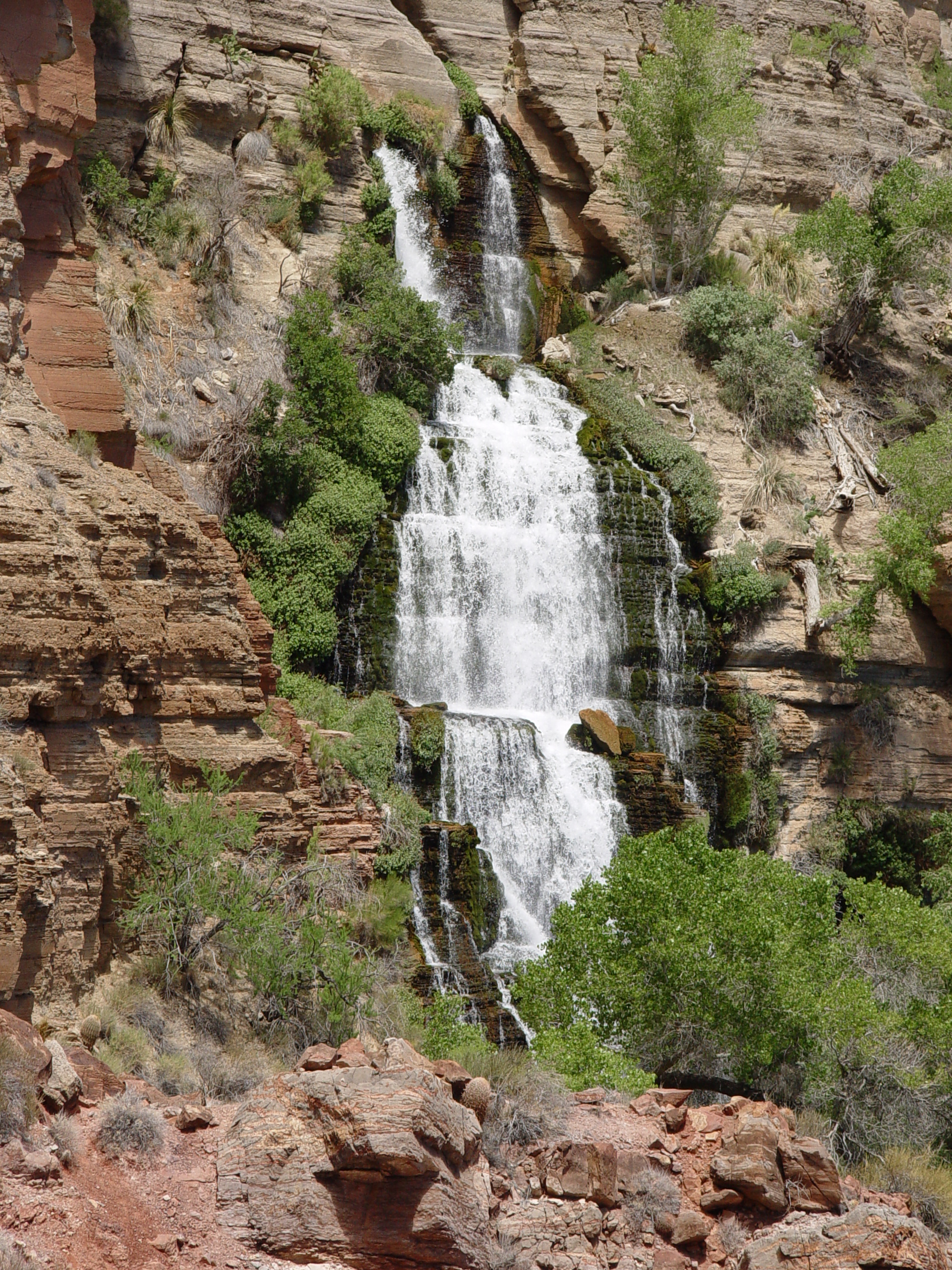
0701-thunder_riverObserve the commands of the Lord your God, walking in obedience to him and revering him. For the Lord your God is bringing you into a good land—a land with brooks, streams, and deep springs gushing out into the valleys and hills; a land with wheat and barley, vines and fig trees, pomegranates, olive oil and honey; a land where bread will not be scarce and you will lack nothing; a land where the rocks are iron and you can dig copper out of the hills. – Deuteronomy 8:6-9

I really like this verse.  The water imagery is rich and enticing.  There are also some intriguing parts for the hard rock geologist in me:).  The preceding chapters of Deuteronomy were a series of what seemed like rather harsh treatment for the people who were not following God, Israelites and non-Israelites included.  The God of the previous couple of chapters came across more like the “Mad Max” God of earlier in the old testament than the living water God we find in Jesus.  This passage provides a welcome breather and preview of things to come…deep gushing springs of living water raining down on the hapless, and sometimes confused, disciples.

For people of the desert like the Israelites this reference to brooks, streams, and gushing springs must have been particularly meaningful.  In the desert water is life.  Interestingly, the items listed next, wheat, barley, etc. would not be possible without the water.  From a spiritual perspective this is true of the living water we receive from God through his Son Jesus.   Without God at the center the most elaborate riches on earth lose their meaning and value.  God must come first so that other blessings can follow.

I think God desires for us to view the living water offered by Jesus like the “desert people” in this passage viewed the water.  We are in a sense spiritual “desert people” wandering from day to day searching for gushing springs of spiritual living water to quench our thirsty souls.  Why do we sometimes lack this hunger and thirst for something our soul needs so badly?  Perhaps we are settling for bottled water when we could have gushing spring water provided by God.  We must be dependent on God.  The only way to become dependent on God is to depend on God. It is only when we step out of our comfort zones into scary, sometimes desert-like, places that we realize the inadequacy of bottle water to truly quench our deep spiritual thirst.

O.K. Geo-geek warning….I have to reflect a bit on the references to rocks. I can’t resist. Rocks are thought of by most non geo-geeks as hard things which seem to be of little value — if they think of them at all.  Some rocks are actually very valuable for the metals, such as iron and copper, they contain.  I worked as an exploration geologist for several years after I got my bachelor of science degree in geology long ago. This passage describes an exploration geologist’s dream….rocks made of iron and copper you can dig out of the hills.  There is a saying among exploration geologists, “gold is where you find it”.  Meaning all the fancy ideas and models of where to find gold are trumped by tripping over a real live nugget of gold.  Perhaps Christians could borrow this saying and modify it a bit….”God is where you find Him”.  The tricky thing about finding God is that you have to be looking for Him.

Prayer: God help us to hunger and thirst for You like desert people thirst for water.

Posted in Christian Community, Deuteronomy, Following God | Tagged , , , , , , , , , | Leave a comment

Wells you did not Dig

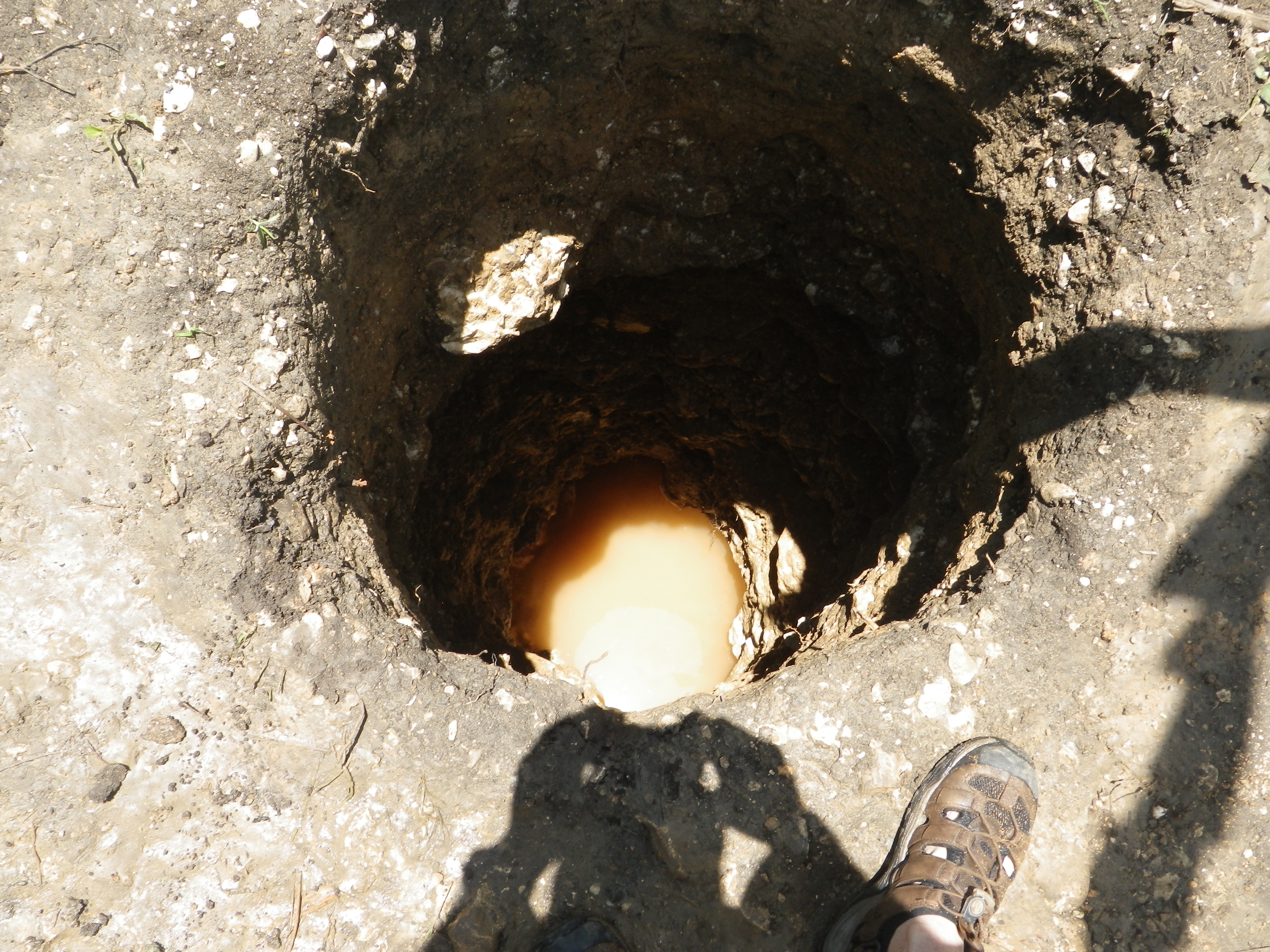
Hand-dug well in Haiti

Hand-dug well in Haiti

When the Lord your God brings you into the land he swore to your fathers, to Abraham, Isaac and Jacob, to give you—a land with large, flourishing cities you did not build, houses filled with all kinds of good things you did not provide, wells you did not dig, and vineyards and olive groves you did not plant—then when you eat and are satisfied, be careful that you do not forget the Lord , who brought you out of Egypt, out of the land of slavery. – Deuteronomy 6:10-12

Wells you did not dig…vineyards and olives you did not plant. Sounds like the Israelites had a very good inheritance of many things they did not build or plant in the Promised Land. God reminds the Israelites that they should eat and be satisfied, but they need to be careful and remember God. How often do we inherit wells we did not dig? I think one of the most obvious examples of this in the Christian community is when we benefit from the hard work and groundwork done by those who came before us. This groundwork can take the form of bricks and mortar in a church building, but it also applies to the spiritual and relational heritage left by others.

Part of our inheritance as Christians is a rich fabric of creeds, hymns, and writings which we did not “build” or “plant” yet we can partake of them and be satisfied….or not. Many newer Christian churches strive to be culturally relevant and “hip” in order to reach out to God-seekers who have not grown up going to church. These churches are very important and form a necessary part of the Christian ecosystem (I attend one myself). Sometimes in an effort to be modern and relevant they jettison the hymns, creeds, and other spiritual inheritance we share as Christians. Other churches hold tight to tradition and refuse to reach out to spiritually curious God-seekers. Then there is a middle ground where traditional hymns and creeds are transmogrified into more modern versions.

For example, one of my favorite song writers and singers is Rich Mullins. Unfortunately he was killed in an auto accident many years ago, but he took the Apostle’s Creed and put it to music in a song called Creed. He created an amazing song that was more palatable for many Christians, especially new ones like I was when I first heard it. There are those who think he took something away from the creed by putting it to music the way he did…I humbly disagree. Another of my favorite songs is Amazing Grace, originally a poem written for a sermon in 1773 by John Newton, and published as a song in 1779.

There is room in the Christian ecosystem for a range of styles and forms so that all can find the niche that God has prepared for them. At a previous church they mixed old and new styles and forms together to serve a congregation of mixed ages and preferences. This worked to a point and had the advantage of requiring members of the church to experience ways of worship that were not their preference. I think this bred healthy discussion and conflict about what it means to worship and what, or more correctly Who, motivated many of those who came before us to create the creeds and hymns.

Prayer: God help us to appreciate the rich inheritance we have as Christians and the many forms it takes.

Posted in Christian Community, Deuteronomy, Life Together, Love for the Lost | Tagged , , , , , , , , , , | 5 Comments

Free of God if We Choose

You saw no form of any kind the day the Lord spoke to you at Horeb out of the fire. Therefore watch yourselves very carefully, so that you do not become corrupt and make for yourselves an idol, an image of any shape, whether formed like a man or a woman, or like any animal on earth or any bird that flies in the air, or like any creature that moves along the ground or any fish in the waters below.  And when you look up to the sky and see the sun, the moon and the stars—all the heavenly array—do not be enticed into bowing down to them and worshiping things the Lord your God has apportioned to all the nations under heaven.  But as for you, the Lord took you and brought you out of the iron-smelting furnace, out of Egypt, to be the people of his inheritance, as you now are.  The Lord was angry with me because of you, and he solemnly swore that I would not cross the Jordan and enter the good land the Lord your God is giving you as your inheritance.  I will die in this land; I will not cross the Jordan; but you are about to cross over and take possession of that good land.  Be careful not to forget the covenant of the Lord your God that he made with you; do not make for yourselves an idol in the form of anything the Lord your God has forbidden.  For the Lord your God is a consuming fire, a jealous God. – Deuteronomy 4: 15-24

We don’t need no stinking idols…perhaps this is a bit flippant..but it pretty much summarizes the sentiment that Moses is sharing with the Israelites.  God led them through the desert in fire and cloud, they should not need anything more tangible after they cross over the Jordan River.  Yet God knows their hearts and how they yearn for a more tangible God.  Moses is telling them that they have everything they need in the commandments God gave Moses and their “jealous God” — a consuming fire.

Fire has always intrigued me…not in pyromaniac kind of way but just in a scientifically curious way.  Fire is not really a thing as much as a reaction — the oxidation of easily “burnable” substances like wood or paper.  Once something has caught fire the heat generated by the reaction actually makes the reaction proceed more easily and quickly.  God wants the Israelites and us to be consumed by Him.  He is the firestarter and we are the fuel.  We are meant to become engulfed in the flame of the Holy Spirit and become part of the blazing Kingdom of God.

This idea of a “jealous God” is a bit difficult to understand.  My brother and I actually had a long discussion about it not long ago.  My brother could not understand how God could be jealous.  What could God possibly be jealous about?  He is omnipotent right  — how could there be something that he could not have?  Perhaps it will help to think about what it means for humans to be jealous of something or someone.

Typically we as humans feel jealous when we 1) want something that we cannot get or achieve; or 2) we want someone that seems to belong to someone else either mentally or physically.  In what sense could God be jealous about the Israelites or us?  Certainly God could simply force his hand and make the Israelites follow Him, but I do not think that is the freedom God has granted the Israelites or us.  God has granted us the freedom to be free of God if we choose.  This is an amazing mystery.  In essence God wants us, but he has given us the freedom not to want Him.

The second reason for jealousy is when someone belongs to someone else spiritually or physically.  I think this is where we as Christians often invoke God’s jealousy.  Even when we have chosen to follow Christ we still have the freedom to give ourselves to things and people other than God.  We give him only part of ourselves and retain those parts that we are either afraid, or unwilling, to give up.  God wants all of us, even those parts we might want to hide away and pretend do not exist.  He believes in us even when we do not believe in Him.

Prayer: Thank you God that you want all of us and that you have given us the freedom to choose You.  May we choose wisely.

Posted in Covenant, Deuteronomy, Following God, God's Love for Us, Obedience, The Nature of God | Tagged , , , , , , , | Leave a comment

Training our Replacements

AP PHOTO/ALPENGLOW EXPEDITIONS, ADRIAN BALLINGER

AP PHOTO/ALPENGLOW EXPEDITIONS, ADRIAN BALLINGER

At that time I commanded Joshua: “You have seen with your own eyes all that the Lord your God has done to these two kings. The Lord will do the same to all the kingdoms over there where you are going. Do not be afraid of them; the Lord your God himself will fight for you.”   At that time I pleaded with the Lord : “Sovereign Lord , you have begun to show to your servant your greatness and your strong hand. For what god is there in heaven or on earth who can do the deeds and mighty works you do? Let me go over and see the good land beyond the Jordan—that fine hill country and Lebanon.”   But because of you the Lord was angry with me and would not listen to me. “That is enough,” the Lord said. “Do not speak to me anymore about this matter. Go up to the top of Pisgah and look west and north and south and east. Look at the land with your own eyes, since you are not going to cross this Jordan. But commission Joshua, and encourage and strengthen him, for he will lead this people across and will cause them to inherit the land that you will see.” So we stayed in the valley near Beth Peor. – Deuteronomy 3:21-29

It’s not my fault…Han Solo says to Princess Leia in Star Wars. The hyperdrive is still not working and Han Solo does not think it is his fault. There is a hint of the same desperation here as Moses pleads with God to let him go across the Jordan into the promised land. I can almost hear Moses saying to God “it’s not my fault these Israelites are such a rebellious and grumbly lot, but you God are awesome…can’t I please go with them across the Jordan?” God again says no and seems to be getting a little tired of Moses asking…”that is enough”!  You can’t blame Moses for trying I suppose.  It is a hard thing to be this close to and be told you don’t get to go.

Moses pleads with God in the hope that He will relent and let him go with the Israelites into the Promised Land. What I find a little surprising and puzzling about the conversation between Moses and God is Moses’ statement that God had begun to show him his strong hand. It seems to me that events like the plagues in Egypt, manna in the desert, water from rock, and parting the Red Sea should have made an indelible impression on Moses about God’s strength.

So why the selective amnesia for Moses?  Why was he having difficulty remembering? I am not sure I have a good answer except to admit that I am guilty of similar selective amnesia at times.  Why do I sometimes fail to remember?  How can I get better at remembering?  The only remedy seems to be to erect monuments, standing stones, often to make sure we do not forget.  I think it also helps to remind each other about the amazing things God does in our lives.  This is best done in community with other Christians.

Perhaps Moses lacked these ways of remembering.  Other than Aaron it does not seem like Moses had many people in his community he could enlist to help him remember.  It might also be problematic to devise some sort of mobile standing stone, although it seems that is partly the role of the tent of meeting.  God does an even harder thing after telling Moses he can’t go across the Jordan — he is asked to train his replacement.

In asking Moses to commission Joshua and encourage and strengthen him God was asking Moses to train his replacement.  I suspect if one has to train their replacement for a job it might not be so bad as long as you were moving on to a different job.  In this case Moses is not moving on to a different job, God is forcing him into retirement.  I am confident that God has amazing things planned for Moses in “retirement”, even though he is not allowing him to pass into the Promised Land. I believe God has amazing things in store for all those who follow Him, it just may not always be obvious while we are here on earth.

In a way Christians are called to train their replacements through the process of discipleship and faithful following.  The disciples who were with Jesus trained many followers, but only saw some of the fruits of the work they were putting in to disciple them. I would venture to say that most Christians do not expect Jesus to come back while they are alive on this earth. So on one level we are all in the same position as Moses.

We may not see the ultimate promised land while we are on earth, and just like Moses we are called to train our replacements to help lead others after we are gone from this earth. This is a bit like leading a team on an ascent of a high mountain knowing that you will have to tell the team somewhere along the way that you will not make it to the top with them.  It can be really hard to maintain a posture and perspective of faithfully following God when from an earthly perspective you very likely will not reach “the summit”.  Of course from an eternal perspective all those who have placed their trust in Jesus are at the summit already, but that does not always make it easier to take that next step up the mountain.

Prayer: God help us to faithfully train our replacements through discipleship so that we may all find the top of the mountain when you return.

Posted in Christian Leadership, Deuteronomy, Discernment, Discipleship, Following God, The Nature of God | Tagged , , , , , , , , , | Leave a comment

Going to War Over “Land”

Then we turned back and set out toward the wilderness along the route to the Red Sea,[a] as the Lord had directed me. For a long time we made our way around the hill country of Seir.  Then the Lord said to me, “You have made your way around this hill country long enough; now turn north.  Give the people these orders: ‘You are about to pass through the territory of your relatives the descendants of Esau, who live in Seir. They will be afraid of you, but be very careful.  Do not provoke them to war, for I will not give you any of their land, not even enough to put your foot on. I have given Esau the hill country of Seir as his own.  You are to pay them in silver for the food you eat and the water you drink.’”  The Lord your God has blessed you in all the work of your hands. He has watched over your journey through this vast wilderness. These forty years the Lord your God has been with you, and you have not lacked anything.  So we went on past our relatives the descendants of Esau, who live in Seir. We turned from the Arabah road, which comes up from Elath and Ezion Geber, and traveled along the desert road of Moab.  – Deuteronomy 2:1-8

This passage begins a long description of interactions between the Israelites and various people who are occupying the land through which they are travelling.  The descendants of Esau are just the first of a long list of people groups who they will encounter.  God instructs them to pay them for the food and water and not provoke war.  God will not give them this land.

This verse seems timely as the entire world seems to be on the brink of war at the moment.  God clearly had no interest in the Israelites going to war over land that was not intended for them.  The history of the Christian church is unfortunately punctuated by some epic wars which I am not sure were wars over land that God had promised to Christians.  One example which I think still reverberates to this day is the crusades.  Medieval knights, with the best of intentions, guarded the Holy land and pilgrims travelling there from Muslim warriors.  I am not convinced that this was land that God asked us to go to war over.  Determining what God wants us to be willing to fight for is very hard.

How often do we as Christians “go to war” over land that is not intended for us?  Unfortunately I think it happens more often than we think.  What sort of land do we fight over as Christians?  Often it is spiritual or theological ground we are unwilling to yield, but sometimes it can be things that seem downright silly.  I remember a time when I was serving as an elder in a church and there was an issue that was dividing people.  It seems ridiculous as I reflect on it, but the issue was over whether our church should re-install a steeple that had been removed in the past.  We spent way more time than I thought was warranted and in the end people’s feelings were still hurt and people were divided.  Looking back now I think this was “land” that we should not have “gone to war” over.  It was not worth it for anyone.

How do we discern what spiritual and theological “land” is worth going to war over?  Perhaps it would help if we were willing to openly discuss this when this type of issue comes up.  Perhaps before we even discuss an issue we should have the discussion about whether the issue is “land” worth “going to war” over.  Maybe in the process of this discussion God will intervene and make it more clear which issues are worth, as my dad used to say, a “knock down drag out”.  My dad had lots of interesting sayings for which I would love to know the origin.  The take home message seems to be to talk it out before duking it out over some issue that may not be land God intends for us.

Prayer: God help us to discern which spiritual battles to fight and when to make peace. 

Posted in Christian Community, Deuteronomy, Discernment, Life Together | Tagged , , , , , , | Leave a comment

Carried Like a Son (or Daughter)

backpackBut you were unwilling to go up; you rebelled against the command of the Lord your God. You grumbled in your tents and said, “The Lord hates us; so he brought us out of Egypt to deliver us into the hands of the Amorites to destroy us. Where can we go? Our brothers have made our hearts melt in fear. They say, ‘The people are stronger and taller than we are; the cities are large, with walls up to the sky. We even saw the Anakites there.’ ”   Then I said to you, “Do not be terrified; do not be afraid of them. The Lord your God, who is going before you, will fight for you, as he did for you in Egypt, before your very eyes, and in the wilderness. There you saw how the Lord your God carried you, as a father carries his son, all the way you went until you reached this place.”   In spite of this, you did not trust in the Lord your God, who went ahead of you on your journey, in fire by night and in a cloud by day, to search out places for you to camp and to show you the way you should go.   When the Lord heard what you said, he was angry and solemnly swore: “No one from this evil generation shall see the good land I swore to give your ancestors, except Caleb son of Jephunneh. He will see it, and I will give him and his descendants the land he set his feet on, because he followed the Lord wholeheartedly.”   Because of you the Lord became angry with me also and said, “You shall not enter it, either. But your assistant, Joshua son of Nun, will enter it. Encourage him, because he will lead Israel to inherit it. And the little ones that you said would be taken captive, your children who do not yet know good from bad—they will enter the land. I will give it to them and they will take possession of it. But as for you, turn around and set out toward the desert along the route to the Red Sea. ”   – Deuteronomy 1:26-41

Well our walk with water in the bible has emerged from numbers and passed into Deuteronomy.  If I thought that it was time for an easy book…I was wrong.  This is a hard teaching.  God basically tells the Israelites that their kids will inherit the land, but they will not.  What did the kids have that the Israelites lacked?  God says that they did not yet “know good from bad”.  Not knowing good from bad would seem to be problematic, unless the children are accepting what is bad or good based on some higher authority in their lives — like their parents.  This would seem to imply that the Israelites were not accepting God as an authority about what is bad or good, which would also be problematic.

The teaching about children here reminds me of Jesus’ instruction that we must be like little children to enter the Kingdom of God.  What is it about the character and posture of children that makes them able to enter the promised land and the Kingdom of God?   Kids lack experience, which could be a good thing or a bad thing depending on what that experience is.  I am reminded of the movie Forrest Gump and the Jenny character.  Her childhood experience was very bad…”sometimes there are just not enough rocks”.   Her life was a series of bad choices which she seemed unable to prevent.  I remember feeling very sorry for Forrest as Jenny kept making poor life choices while he steadfastly loved her.  Kids usually recognize authority — when that authority betrays them it is very damaging.

The Israelites seem equally unable to shake their mistrust and lack of faith in God and the consequences are not good.  The Israelites are told to turn around and head back to the desert along the route to the Red Sea.  In a sense the Israelites had already chosen the desert by not “wholeheartedly following God.  Deserts are hard places to live, water is scarce, food is hard to come by, and days are hot.

How often do we “choose the desert”, when God stands ready to offer us abundant living water to quench our thirst?  Why did the Israelites do this?  Why do we do this?  Perhaps part of us does not think we deserve living water even though God offers it freely.  I think that was part of what was going with Jenny in Forrest Gump.  She did not think she deserved a good life because of the actions of her evil father.  The important difference for the Israelites is that their “Father”, God, was not evil and did not betray them, although it seems like they are acting as if He did.

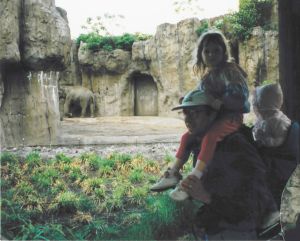
God reminds the Israelites that He faithfully led them through the desert and even carried them “as a father carries his son”.  When my daughters were little I carried them before they could walk on their own, when they were tired, when they got hurt, when they encountered something unsafe, and when they just wanted to ride on dad’s shoulders for fun.  I think God carried the Israelites in the desert, and I think God carries all of us now, for similar reasons.

How does one carry a child?   Carefully, tenderly, with great love, and with great perseverance.  God carried the Israelites like a father carries his son when they were in the wilderness and the Israelites responded by rejecting and rebelling against God.   God was going out of his way to show the Israelites the way they should go and yet they were unable to trust Him.  This is a bit like a child rejecting a parent’s love, it happens, but it is heartbreaking when it does.  There is a difference between choosing the desert and God calling us to walk for a time in the desert with the assurance that he is right there to carry us if needed.

Prayer: God thank you for carrying us when we are hurting, scared, or just tired.  Help us to follow you wholeheartedly.
Posted in Deuteronomy, Following God, Obedience, The Nature of God, Trusting God | Tagged , , , , , | Leave a comment

Lines in the Sand

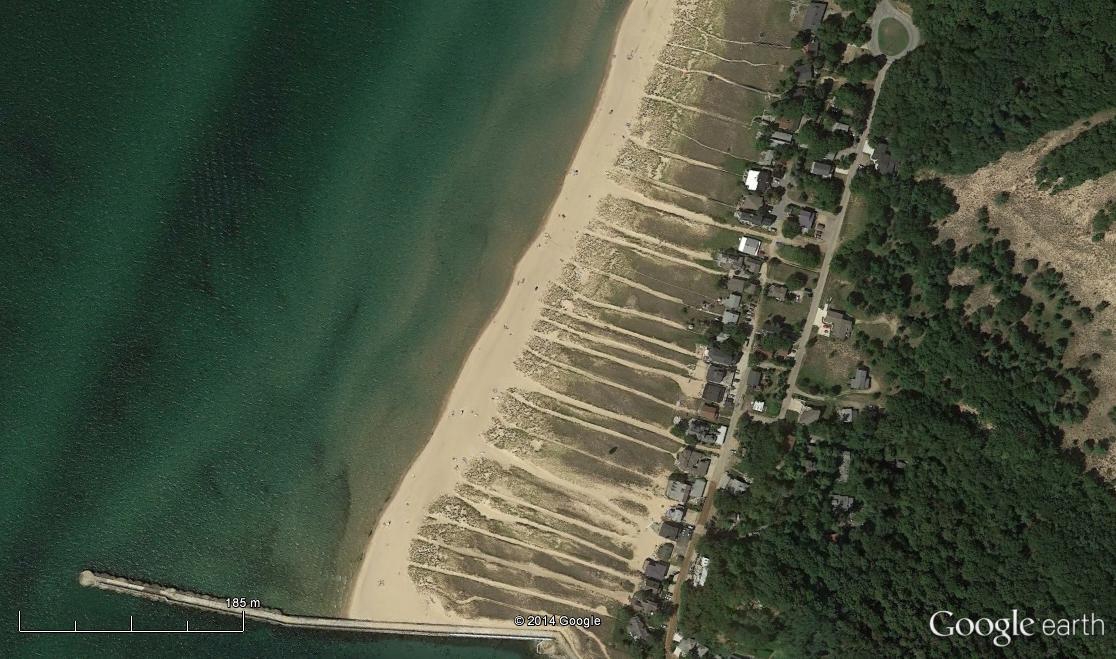
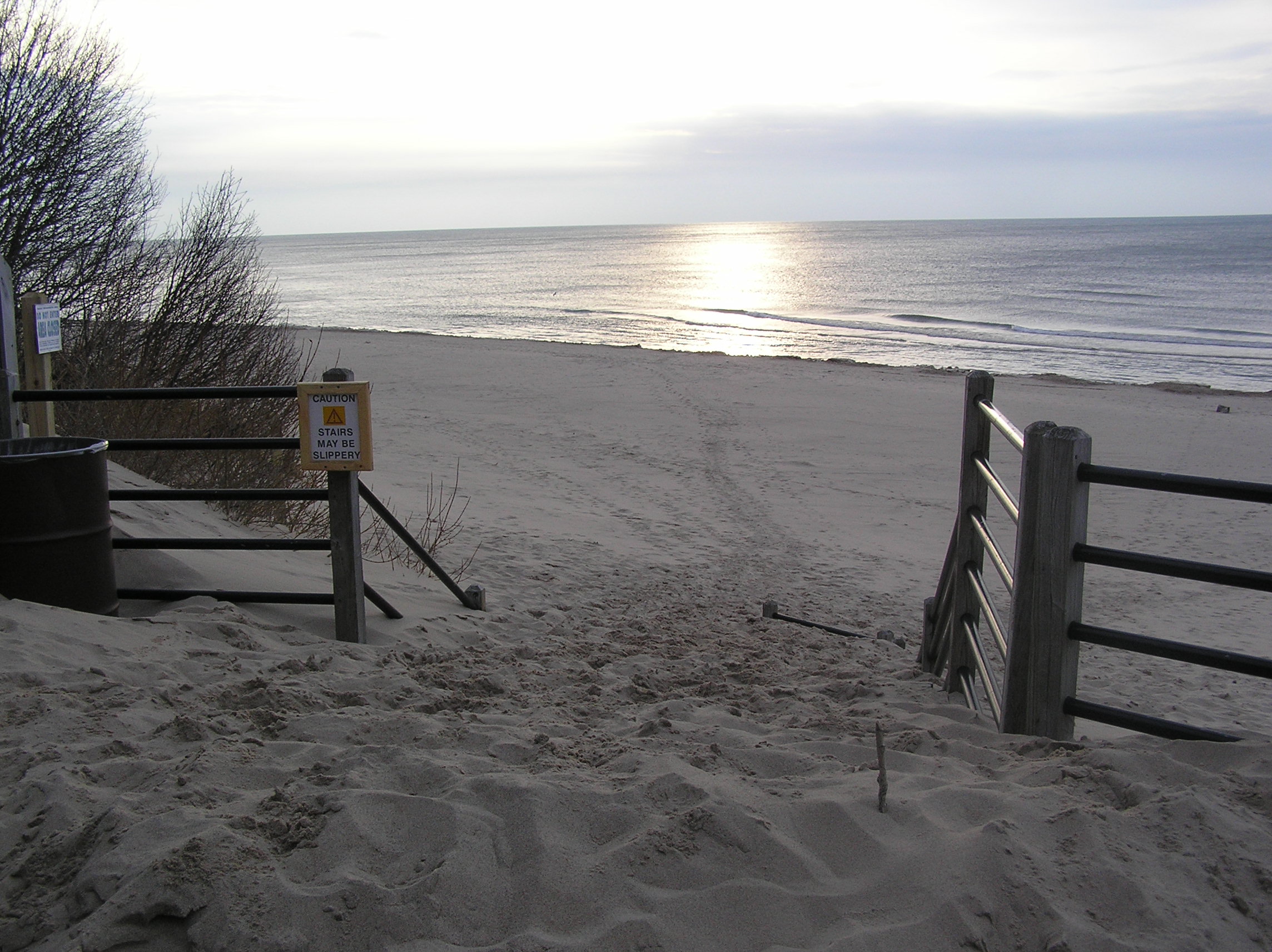
Beach trails along Lake Michigan

“lines in the sand” along Lake Michigan

Command the Israelites and say to them: ‘When you enter Canaan, the land that will be allotted to you as an inheritance is to have these boundaries:   “ ‘Your southern side will include some of the Desert of Zin along the border of Edom. Your southern boundary will start in the east from the southern end of the Dead Sea, cross south of Scorpion Pass, continue on to Zin and go south of Kadesh Barnea. Then it will go to Hazar Addar and over to Azmon, where it will turn, join the Wadi of Egypt and end at the Mediterranean Sea.   “ ‘Your western boundary will be the coast of the Mediterranean Sea. This will be your boundary on the west.   “ ‘For your northern boundary, run a line from the Mediterranean Sea to Mount Hor and from Mount Hor to Lebo Hamath. Then the boundary will go to Zedad, continue to Ziphron and end at Hazar Enan. This will be your boundary on the north.   “ ‘For your eastern boundary, run a line from Hazar Enan to Shepham. The boundary will go down from Shepham to Riblah on the east side of Ain and continue along the slopes east of the Sea of Galilee.  Then the boundary will go down along the Jordan and end at the Dead Sea. “ ‘This will be your land, with its boundaries on every side. – Numbers 34:2-12

This passage sets the boundaries of the land God set aside for the Israelites.  Many of them are related either to the presence of a body of water, or in the case of the deserts, a lack of water.  These “lines in the sand” were probably controversial and contentious then and they are certainly contentious now.  There has been conflict over land, inheritance (oil), and religious beliefs in the middle east pretty much since the time of this passage.  It seems odd that what was in essence an act of love and covenant on God’s part has resulted in so much bloodshed and conflict.  I understand God wanting to provide for His people and keep His promise of providing a land for the Israelites, but I am having difficulty with the outcomes of this gifting.

There seems to be a dissonance between the loving God of manna and hidden springs, and the God whose gift created millennia of conflict.  So what are the options here…1) God intended the conflict when he gave the land to the Israelites; 2) God gave the Israelites the land out of love and the behaviour of the Israelites toward God, each other, and their neighbors resulted in conflict; 3) the Israelites misinterpreted God’s intent or direction with regard to their borders and behavior toward neighbors; 4) something else is going on here that I have not thought of or figured out yet.

Of these options I favor a combination of #2 and #3, although #4 is always possible.  When God showed up as Godly condensate in Jesus He spent a lot of time talking and teaching about who our neighbors are and how we are to treat them.  Interestingly, he spent almost no time that I recall talking about borders and land.  When he did talk about possessions it was usually to tell people that these were things keeping them from a deeper relationship with God rather than a gifted inheritance.  This leads me to the conclusion that the Israelites misinterpreted and misused the lines in the sand drawn by God out of love.

I do not think the Israelites are alone in their tendency to misinterpret God’s boundaries. Jesus set all sorts of spiritual “lines in the sand” when he walked and talked with his disciples.  These spiritual boundaries were given in love to keep us from hurting each other and to help us grow closer to God.  I think it is safe to say these boundaries, given in love, have resulted in behavior toward God, each other, and our neighbors that has caused conflict.  The list of divisive issues is long: sexuality and sexual sins, marriage and divorce, worship styles and traditions, God’s grace versus God’s judgement….I am sure there are many others we could name.  I think the way the Israelites treated the land they were given, and the way we often treat the spiritual “land” we as Christians were given by Jesus fails the Meribah Test.  In other words the actions lead people away, rather than toward, God.

Prayer: God help me to honor the boundaries you have set for me without causing conflict that would lead people away from You.

Posted in Christian Community, Christian Leadership, Following God, Life Together, Love for the Lost, Numbers, Obedience | Tagged , , , , , , , , , | Leave a comment

Stages in the Journey

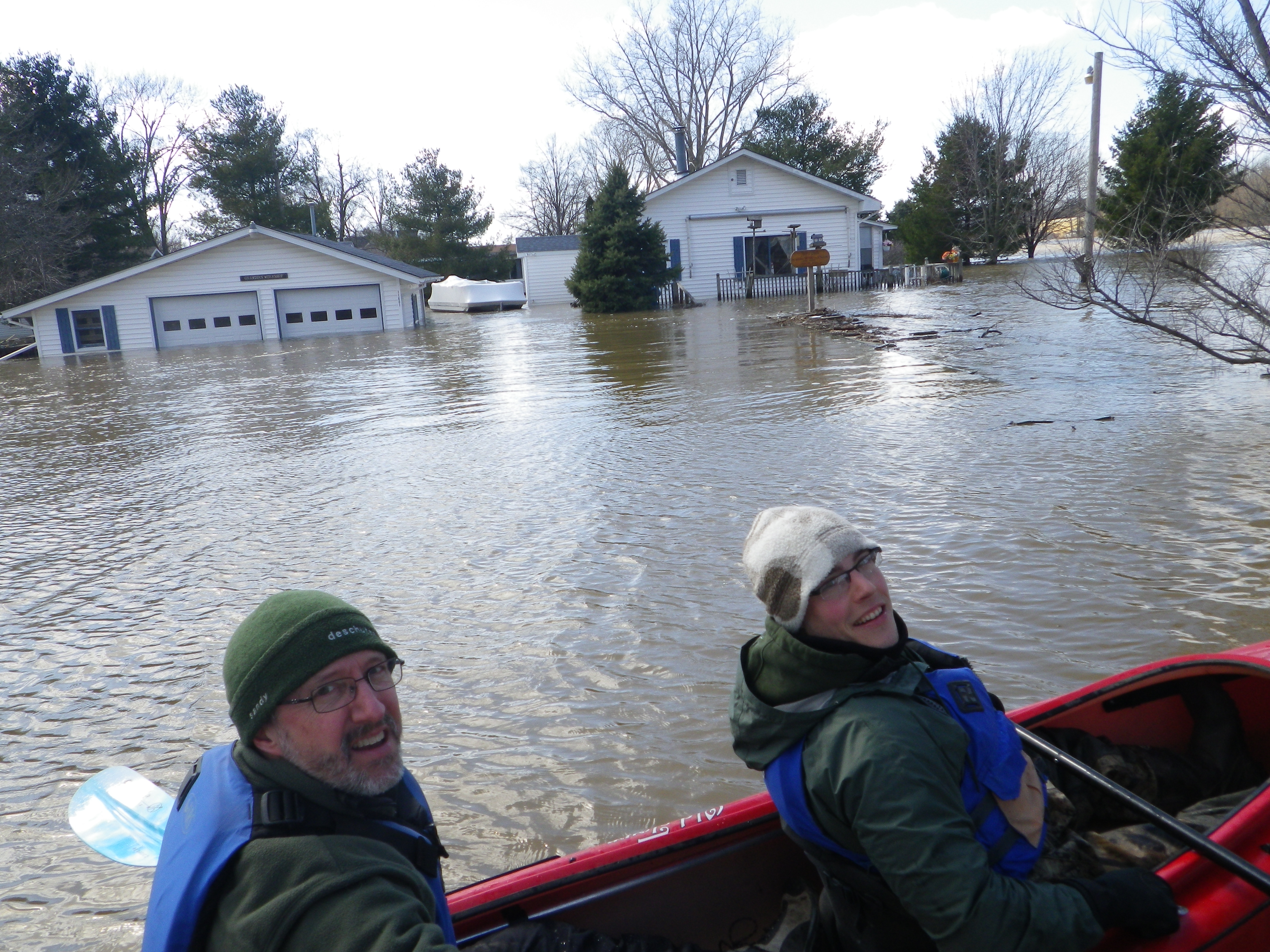
Flooding on the Grand River in April 2013

Flooding on the Grand River in April 2013

Here are the stages in the journey of the Israelites when they came out of Egypt by divisions under the leadership of Moses and Aaron. At the Lord’s command Moses recorded the stages in their journey. This is their journey by stages: The Israelites set out from Rameses on the fifteenth day of the first month, the day after the Passover. They marched out defiantly in full view of all the Egyptians, who were burying all their firstborn, whom the Lord had struck down among them; for the Lord had brought judgment on their gods… They left Marah and went to Elim, where there were twelve springs and seventy palm trees, and they camped there…They left Elim and camped by the Red Sea. They left the Red Sea and camped in the Desert of Sin…They left Alush and camped at Rephidim, where there was no water for the people to drink….Aaron the priest went up Mount Hor, where he died on the first day of the fifth month of the fortieth year after the Israelites came out of Egypt. Aaron was a hundred and twenty-three years old when he died on Mount Hor…on the plains of Moab they camped along the Jordan from Beth Jeshimoth to Abel Shittim…On the plains of Moab by the Jordan across from Jericho the Lord said to Moses “Speak to the Israelites and say to them: ‘When you cross the Jordan into Canaan, drive out all the inhabitants of the land before you. Destroy all their carved images and their cast idols, and demolish all their high places. Take possession of the land and settle in it, for I have given you the land to possess. Distribute the land by lot,according to your clans. To a larger group give a larger inheritance, and to a smaller group a smaller one. Whatever falls to them by lot will be theirs. Distribute it according to your ancestral tribes….But if you do not drive out the inhabitants of the land, those you allow to remain will become barbs in your eyes and thorns in your sides. They will give you trouble in the land where you will live. And then I will do to you what I plan to do to them. Number 33: 1-56 (selected verses)

I think God has a sense of humor. Day before yesterday I just finished my “circling back” and here God does his own version of “circling back”! These verses recount the various highlights of the Israelite’s journey from bondage in Egypt to freedom in the promised land. As we found out yesterday not all the Israelites chose to cross the Jordan to receive their inheritance.

This accounting of the journey consists of many descriptions of camping out here or there followed by God’s provision and care in the form of springs or water in the desert. This is an apt description of what the Christian journey has been like for me. There are large swaths of time where I feel like I am “camped” out where God needs me to be. But there have also been times when I felt like God called me to strike my tents and move.

About ten years ago I was finishing my PhD in geology at Oregon State University. My family and I were praying about where we should go and what was next in our lives. We had a large map of the United States on the wall with stickers for all the places where I was applying for jobs. We of course would have preferred to stay in the Pacific Northwest where my family and my wife’s family live, but we were willing to go where we were needed. After much prayer and discussion we accepted a job at Grand Valley State University in Michigan.

We packed our stuff and loaded up the U-haul and headed out. We arrived in August and moved into a new house, with new schools, and a new place. For the first several years we felt somewhat like we were adrift on an ocean in a new place with few family and friends. My wife and I would have what we referred to as “tossed out of the boat experiences” when we felt like there were waves crashing over the bow and tossing us out of the boat. We wanted to pack up and move back home at times, but we have persevered and God has provided for us here in Michigan.

There are things that we have done that would not have happened if we had remained in the comfortable land on the “other side of the Jordan”. I suspect the Israelites, even after arriving in the Promised Land, had “out of the boat” experiences where they wanted to go back to the known commodity of Egypt. I am increasingly convinced that the key to riding out the waves and turbulence is keeping God at the Center, with the understanding that waves will crash over the bow once in a while – and that is OK.

Prayer: God comfort those who feel displaced from the place they call home. Help us to find our home in You.

Posted in Following God, Numbers, Obedience | Tagged , , , , , , | Leave a comment

The wrong side of the Jordan

OLYMPUS DIGITAL CAMERAThen they came up to him and said, “We would like to build pens here for our livestock and cities for our women and children. But we will arm ourselves for battle and go ahead of the Israelites until we have brought them to their place. Meanwhile our women and children will live in fortified cities, for protection from the inhabitants of the land. We will not return to our homes until each of the Israelites has received their inheritance. We will not receive any inheritance with them on the other side of the Jordan, because our inheritance has come to us on the east side of the Jordan. – Numbers 32:16-19

What a contrast this account is to the crossing of the Red Sea.  Fortified cities for protection…What happened to trusting God for protection?  These Israelites are giving up their inheritance, which in this case is covenant and relationship with God.  They are satisfied with the inheritance that has come to them on east side of the Jordan.  They are settling for the secure and safe at the expense of the Kingdom of God.

My sense is that even at the time of this passage God would have welcomed these Israelites back if they had chosen to cross the Jordan with God.  Their choosing to accept a substitute for God is the latest in a series of God-substitutions both in the past and those to come.  Including one of the most amazing substitutions during the time of Jesus when the jewish leaders chose to release a criminal rather than Jesus when they were given a clear chance to “cross over the Jordan”.

So now it is time for some hard reflection…are there ways that I am holed up in my “fortified cities” accepting my “inheritance” on the wrong side of the Jordan?  What parts of my life am I holding on to that are keeping me from following God where He needs me to go.  I think my “fortifications” are mostly related to my pride and my “inheritance” is tied up with how I am viewed by others.  I sometimes trade obedience for security.

Prayer: God help me to see those areas of my life that are keeping me from trusting you more deeply.  

Posted in Discipleship, Following God, Numbers, Obedience | Tagged , , , , , , , | Leave a comment