Calamity in the Clouds

Look! He advances like the clouds, his chariots come like a whirlwind, his horses are swifter than eagles. Woe to us! We are ruined!   Jerusalem, wash the evil from your heart and be saved. How long will you harbor wicked thoughts?   A voice is announcing from Dan, proclaiming disaster from the hills of Ephraim.   “Tell this to the nations, proclaim concerning Jerusalem: ‘A besieging army is coming from a distant land, raising a war cry against the cities of Judah.   They surround her like men guarding a field, because she has rebelled against me,’ ” declares the Lord. “Your own conduct and actions have brought this on you.  This is your punishment.  How bitter it is!  How it pierces to the heart!”- Jeremiah 4:13-18

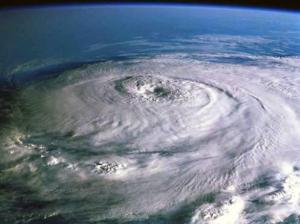
It is amazing how much meaning can be conveyed by one word – “look!”.  Such a seemingly simple command, but so difficult in practice.  Why is it so difficult for the people of Israel, and us, to look to God for our strength and courage?  It think it is tied up with how we view God and how we view ourselves.  Do we view Him as clouds high above us, separate and distant or do we feel his presence like a permeating cloud?

The people of Israel tend to view God as a distant cloud that may or may not bring rain.  The rain may be destructive like the rain in the time of Noah, or it may be more like rain on tender plants, gently feeding our thirsty souls.  At this point in history the people of Israel and Judah are more inclined to see calamity in the clouds than comfort.  They clearly feel like God is out of control (perhaps out of their control), “like a whirlwind, his horses are swifter than eagles. Woe to us! We are ruined!”

The recent tornadoes across the United States are a pretty good reminder of the way the people of Israel probably felt.  They are beset by storms and wave upon wave.  They blame the Father of the Rain, God, rather than themselves for the position in which they find themselves.  God asks Jerusalem to “wash the evil from your heart and be saved”.  It turns out that they cannot accomplish this “washing” on their own and they do not know it yet.

The passage then turns to specific prophecy about an invader from a “distant land”.  Presumably this is alluding to one of the many large powers surrounding them a this time, “They surround her like men guarding a field, because she has rebelled against me”.  It does not really matter which invader this passage is talking about as God makes it clear that the real problem lies with the people of Israel.  This is a result of their act of rebellion from God, “Your own conduct and actions have brought this on you”.

God finishes his rebuke with a lament “How bitter it is! How it pierces to the heart!”.  I cannot help but wonder whether the “heart piercing” goes both ways.  God’s heart is deeply saddened by the estrangement with His children, and his children deeply miss their Father.  It is this mutual soul sickness that led God to settle the matter, and which should lead us to turn from our rebellious ways and follow Him.

Prayer: God You have sacrificed much to show is the way to your country.  Help us to be willing to sacrifice our own wills to be with You.


Posted in Christianity, Covenant, Discernment, Following God, Free Will, Jeremiah, Obedience, reconciliation, Redemption, The Nature of God | Tagged , , , , , , , | 2 Comments

Weeping and Pleading

A cry is heard on the barren heights, the weeping and pleading of the people of Israel, because they have perverted their ways and have forgotten the Lord their God.   “Return, faithless people; I will cure you of backsliding.” “Yes, we will come to you, for you are the Lord our God.   Surely the idolatrous commotion on the hills and mountains is a deception; surely in the Lord our God is the salvation of Israel.   From our youth shameful gods have consumed the fruits of our ancestors’ labor— their flocks and herds, their sons and daughters.   Let us lie down in our shame, and let our disgrace cover us. We have sinned against the Lord our God, both we and our ancestors; from our youth till this day we have not obeyed the Lord our God. – Jeremiah 3:21-25

The water reference in today’s passage is weeping, tears of anguished souls.  Both God and the people of Israel are sad that their relationship is broken.  The people know their mission has become corrupted by idols and ideas from the cultures around them.  They remain unsure what to do about it.

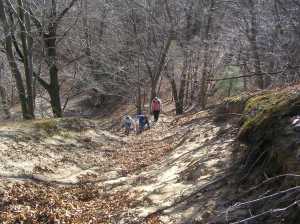
The conversation continues with God asking the people of Israel to return and He will “cure you of backsliding”.  The concept of backsliding is an interesting one.  It conjures an image in my mind of someone trying to climb up a huge sand dune.  Every step forward results in a slide back down the slope in a discouraging effort to reach the top. This is the same sort of desperation and discouragement that is leading the people of Israel to weep in this passage.  They feel like they are trying but they keep on failing.

The people resolve to return to God “yes, we will come to you, for you are the Lord our God”.  That is the fundamental resolve God asks of all those who would follow Him.  It is not a guarantee that we will never backslide again.  It is merely a commitment to keep climbing in spite of the inevitable backsliding that occurs as we navigate this land of oblivion in our earthly bodies.

The people of Israel seem to genuinely get it here “the idolatrous commotion on the hills and mountains is a deception; surely in the Lord our God is the salvation of Israel”.  They know, at least with their heads, that the idols and ideas that are leading them away from God are deceptions.  I think the conflict is between their heads and their hearts.  God knows that if we allow our hearts to live for Him our bodies will eventually follow.

The passage ends with a litany of laments that the people share with God about their wayward ways.  All of these shortcomings have made the people of Israel feel like they want to “lie down in our shame, and let our disgrace cover us.” God has a different plan.  He will come and settle the matter.  He plans to allow His grace to cover all those who faithfully follow Him by sending Jesus to be pierced for our transgressions.

Prayer: God thank You for coming to cover us with grace rather than disgrace. 


Posted in Christianity, Covenant, Following God, Forgiveness, Free Will, God's Love for Us, grace, Jeremiah, Jesus, Love for the Lost, reconciliation, Redemption, The Nature of God | Tagged , , , , , , , | 2 Comments

Like a Nomad in the Desert

Noman“If a man divorces his wife and she leaves him and marries another man, should he return to her again? Would not the land be completely defiled? But you have lived as a prostitute with many lovers— would you now return to me?” declares the Lord .   “Look up to the barren heights and see. Is there any place where you have not been ravished? By the roadside you sat waiting for lovers, sat like a nomad in the desert. You have defiled the land with your prostitution and wickedness.   Therefore the showers have been withheld, and no spring rains have fallen. Yet you have the brazen look of a prostitute; you refuse to blush with shame.   Have you not just called to me: ‘My Father, my friend from my youth,   will you always be angry? Will your wrath continue forever?’ This is how you talk, but you do all the evil you can.” – Jeremiah 3:1-5

God continues his marriage metaphor in rebuking the people of Israel in this passage.  The word picture is of an unfaithful wife who has been with many lovers that were not her husband.  She has been partaking of “stolen water” rather than the living water that God is offering.  The “she” in this passage is clearly God’s people and they are behaving like a “nomad in the desert” with no permanent home.  They are wandering without direction or purpose, or perhaps their purpose has become muddled and corrupted by others.

When I think of the term “nomad” it does not conjure up desert Bedouins.  I am a little ashamed to admit it, but it conjures up an episode from the original Star Trek series called “The Changeling”.  The episode was about a computer probe that was sent out by earth to collect biological samples for research.  Through an encounter (collision) with an alien probe it’s original purpose was altered or bent so that it was now on a mission to find and sterilize (destroy) imperfection.  Unfortunately Nomad views most of the crew of the enterprise as imperfect and plans to “sterilize” them.  Captain Kirk comes to the rescue, of course, when he is mistaken for the probes inventor Dr. Jackson Roykirk.  As a result, Captain Kirk is able to convince the probe that it is, in fact, imperfect for making this mistake and should be sterilized by self-destructing.

What, you may ask, does this have to do with the book of Jeremiah?  Interesting, I think there is actually quite a lot.  God created his covenant with the people of Israel for a purpose.  Their original “mission” if you will was to love Him, follow His commands, and share the abundance God was providing with all nations.  The people of Israel collided with other cultures as they moved into the promised land and their mission became so corrupted that it is destroying their own souls and leading others away from God.  Where is Captain Kirk when you need him :)?

God did not send Captain Kirk, thank goodness, but He decided to settle the matter by coming Himself to reveal how the original “mission” of His people, and us, has become warped, bent, and corrupted.  Those that have the eyes to see and ears to hear can understand.  Those that do not remain blind and deaf, devoting their energy and lives to completing a mission for which they were not designed or sent.  They can cause great destruction along the way, “You have defiled the land with your prostitution and wickedness”.

God removes the source of growth and prosperity to get the people’s attention, “the showers have been withheld, and no spring rains have fallen.”  God withholds the rain in order to allow the people to see what life disconnected from the spring looks like.  I do not think God does this because he enjoys making life hard for the people of Israel, but He does want them to devote their energy and lives to Him rather than the idols and gods that only serve to bend and warp their original purpose.

It sounds like the people of Israel talk like they want to restore their relationship with God, “My Father, my friend from my youth, will you always be angry”, but their actions speak louder than their words.  So what is the take-home message here?  I think it is that we should be seeking to know and carry out whatever God has called us to do here on earth, our mission.  This mission, or call, should be obvious to others we encounter by our actions.  We should be careful that our mission does not become corrupted by the plans and purposes of others that may have a different purpose that is incompatible or inconsistent with God’s plans.

Prayer: God You have a plan and purpose for each one of us.  Help us to know your plans and act upon them.

Posted in Christianity, Covenant, Following God, Free Will, Jeremiah, Mission, Obedience, religion, The Nature of God, Trusting God | Tagged , , , , , | 1 Comment

A Swift She-Camel Running Here and There

camels

“Long ago you broke off your yoke and tore off your bonds; you said, ‘I will not serve you!’ Indeed, on every high hill and under every spreading tree you lay down as a prostitute. I had planted you like a choice vine of sound and reliable stock. How then did you turn against me into a corrupt, wild vine? Although you wash yourself with soap and use an abundance of cleansing powder, the stain of your guilt is still before me,” declares the Sovereign Lord . “How can you say, ‘I am not defiled; I have not run after the Baals’? See how you behaved in the valley; consider what you have done. You are a swift she-camel running here and there, a wild donkey accustomed to the desert, sniffing the wind in her craving— in her heat who can restrain her? Any males that pursue her need not tire themselves; at mating time they will find her. Do not run until your feet are bare and your throat is dry. But you said, ‘It’s no use! I love foreign gods, and I must go after them.’ – Jeremiah 2:20-25

God is not pulling any punches in this passage. He is comparing Israel to a prostitute or a whore that will “lay down” with anyone. God is very angry with the people of Judah and Jerusalem for exchanging their relationship with Him for idols. God planted the people as “a choice vine of sound and reliable stock”, but they are now bearing nothing but bad fruit.

It seems the people of Israel are attempting to “clean themselves” when in fact they need to submit themselves for cleansing by God. In the time of Moses there were elaborate traditions and practices to ensure that people were clean before God. No amount of “cleansing powder” or “soap” can make us clean from our prideful disobedience of God’s call to love and follow Him.

It also sounds like the people of Israel are pointing fingers of blame and responsibility at everything and everyone but themselves, “How can you say, ‘I am not defiled; I have not run after the Baals’?” It is almost like a child caught with their hand in the cookie jar asking their parent “what cookie jar”.

God then continues with more unflattering metaphors: “You are a swift she-camel running here and there, a wild donkey accustomed to the desert, sniffing the wind in her craving”. There is a sense here that the people are unwilling to restrain the urges and drives of their physical bodies at the expense of their souls. The people of Israel are running and they do not know where or why they are running, “Do not run until your feet are bare and your throat is dry”.

This reminds me of the part of the movie Forrest Gump when the main character decides to run across the United States — twice. He even collects a cult following of people who run along with him, apparently because if someone is running they must know where they are headed right? They must have some important purpose for running right? Turns out not so much:

Forrest Gump: [running] I had run for 3 years, 2 months, 14 days, and 16 hours.
[he stops and turns around]
Young Man Running: Quiet, quiet! He’s gonna say something!
Forrest Gump: [pause] I’m pretty tired… I think I’ll go home now

The people of Israel are running away from God as fast as their feet, and souls, will carry them. They are sniffing at the wind for direction and purpose – trying to find their next “mate” or idol. In the end they appear to give up trying to resist these earthly urges to run from God, “It’s no use! I love foreign gods, and I must go after them”.

It is actually rather sad. It is as if they know what they should be doing but they find themselves unable to overcome the beckoning of their biology. Alas I am guilty of the same thing at times. It is a constant act of will to keep from running at times, sniffing the wind for something more tangible and tantalizing than God. Perhaps that is why God decided to settle the matter in the way He did.

He was pierced for our transgressions because our souls are stuck in a body that beckons us to run. This amazing sacrifice does not let us off trying, but the cleansing has been accomplished for all who are willing to be cleaned in this way. God’s sacrifice, paradoxically, makes me hunger and thirst for God’s Living water even more. The biological urges and drives of our bodies remain, but now we have something much stronger than soap and cleansing powders to make us “clean”.

Prayer: God thank You for helping us overcome the urge to run as our biology and bodies beckon us to replace You with idols and substitutes.

Posted in Christianity, Discernment, Discipleship, Following God, Forgiveness, Free Will, God's Love for Us, Jeremiah, Obedience, reconciliation, Redemption, Sin, The Earthly Realm, The Spiritual Realm | Tagged , , , , , , | Leave a comment

Spring of Living Water

DSCN0891“Therefore I bring charges against you again,” declares the Lord . “And I will bring charges against your children’s children.   Cross over to the coasts of Cyprus and look, send to Kedar and observe closely; see if there has ever been anything like this:   Has a nation ever changed its gods? (Yet they are not gods at all.) But my people have exchanged their glorious God for worthless idols.   Be appalled at this, you heavens, and shudder with great horror,” declares the Lord .   “My people have committed two sins: They have forsaken me, the spring of living water, and have dug their own cisterns, broken cisterns that cannot hold water.   Is Israel a servant, a slave by birth? Why then has he become plunder?   Lions have roared; they have growled at him. They have laid waste his land; his towns are burned and deserted.   Also, the men of Memphis and Tahpanhes have cracked your skull.   Have you not brought this on yourselves by forsaking the Lord your God when he led you in the way?   Now why go to Egypt to drink water from the Nile  ? And why go to Assyria to drink water from the Euphrates?   Your wickedness will punish you; your backsliding will rebuke you. Consider then and realize how evil and bitter it is for you when you forsake the Lord your God and have no awe of me,” declares the Lord, the Lord Almighty. – Jeremiah 2:9-19

This is the first of what I suspect will be many rebukes of the people of Judah and Israel.  God gets right down to business calling the people out on their unfaithfulness – “my people have exchanged their glorious God for worthless idols”.  The very heavens are appalled at this state of affairs.  We should be equally appalled, but I am not sure that is always the case.  Modern-day God followers are just as adept at exchanging God for “worthless idols”.  The idols we use to replace God may look different than the golden calves, Ashtaroth Poles, and wood idols of this time, but they are not so different.  Our idols are things like television, the internet, perpetual youth, beauty, and many other modern gods.

God is very specific about what the people are doing wrong.  He suggests that His people have committed two sins: “They have forsaken me, the spring of living water, and have dug their own cisterns, broken cisterns that cannot hold water.”  Both of these sins relate to water, the first is related to a spring and the second to a cistern.  Let’s explore them one at a time.

What does God mean when He refers to Himself as “a spring of living water”?  Any time God provides a metaphor for Himself it is worth a hard look.  There are two parts to God’s metaphor, a spring and living water.  For a water scientist the term “spring” has a specific scientific meaning.  It is a place where groundwater emerges from the ground naturally without aid of pumps or wells.  It is water that comes naturally from an unseen place (a secret place).  Springs can provide some of the most clean and consistent water available that can serve a community for centuries.  Since the book of Genesis God has been asking people who would follow Him to remain connected to the spring (Genesis 49: 22-26).

The second part of God’s metaphor, the term “living water”, is not exactly a technical term, but it is one very familiar to Christ followers.  Jesus used the term to refer to Himself (John 4:10) when He met the Samaritan woman at the well; and He used the term to refer to something that His followers would receive (John 7:37-39).  When Jesus met the Samaritan woman at the well He asked her “Will you give me a drink?”  She responded that it was not allowed for her, a Samaritan woman, to give a Jew, Jesus, a drink.  His response was “If you knew the gift of God and who it is that asks you for a drink, you would have asked him and he would have given you living water.” The Living Water is available to all who ask for it.

God, like Jesus at the well, has been asking the people of Israel for a “drink” for some time now and their response has been to not only refuse to give God a drink and partake of the Living Water He offers, but they have chosen to seek their own water supply through idols and false gods.  They have “dug their own cisterns, broken cisterns that cannot hold water.”  So instead of relying on the Great Cistern of living water they sought to create their own way to get water.  They preferred to drink water from their own cistern.

A cistern is a human invention to capture and store rain water that is intended to reduce reliance on natural springs and provide water while a city is under siege.  They are a spiritual metaphor for our prideful reliance on ourselves rather than God.  The cisterns that the people of Israel have fashioned do not work.  They are broken and do not hold water.  When we attempt to satisfy our spiritual thirst with anything but God we are likely to be equally disappointed.  It is only the Living Water that God offers that can consistently quench our thirsty souls.

In the final parts of the passage the spiritual wandering becomes a physical wandering as God describes the people going to great lengths to replace the living water He has offered. They will “go to Egypt to drink water from the Nile…and go to Assyria to drink water from the Euphrates”.  This is really a striking prediction.  The people would rather return to a place of slavery and bondage to get water than return to the One River who loves them and wants to carry them like a son or daughter.

Prayer: God You are the Great Cistern and the One River.  Help us to drink deeply from Your spring of Living Water. 


Posted in Discernment, Following God, Free Will, God's Love for Us, Jeremiah, Jesus, Love for the Lost, Obedience, The Nature of God, The Spiritual Realm, Trusting God | Tagged , , , , , , , | 60 Comments

A Pot that is Boiling

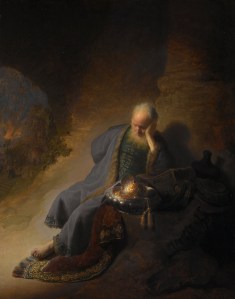
Rembrandt version of Jeremiah

Rembrandt’s version of Jeremiah

The word of the Lord came to me, saying, “Before I formed you in the womb I knew you, before you were born I set you apart; I appointed you as a prophet to the nations.”  “Alas, Sovereign Lord,” I said, “I do not know how to speak; I am too young.”  But the Lord said to me, “Do not say, ‘I am too young.’ You must go to everyone I send you to and say whatever I command you. Do not be afraid of them, for I am with you and will rescue you,” declares the Lord. Then the Lord reached out his hand and touched my mouth and said to me, “I have put my words in your mouth. See, today I appoint you over nations and kingdoms to uproot and tear down, to destroy and overthrow, to build and to plant.”  The word of the Lord came to me: “What do you see, Jeremiah?”  “I see the branch of an almond tree,” I replied. The Lord said to me, “You have seen correctly, for I am watching to see that my word is fulfilled.” The word of the Lord came to me again: “What do you see?”  “I see a pot that is boiling,” I answered. “It is tilting toward us from the north.” The Lord said to me, “From the north disaster will be poured out on all who live in the land. I am about to summon all the peoples of the northern kingdoms,” declares the Lord. – Jeremiah 1:4-15

I debated about whether to start Jeremiah now or wait for the new year to start this stretch of river, but I decided to push on into Jeremiah this morning.  From what I have learned about Jeremiah he was a prophet somewhat similar to Isaiah.  I am looking forward to this part of my journey as I have not really spent much time reflecting on the book of Jeremiah.  The book starts by placing the prophecies into a historic context.

Jeremiah began his prophetic mission under king Josiah (about 627 BC) and finished in the eleventh year of king Zedekiah (586 BC).  Judah was being fought over by regional superpowers, Babylon, Egypt, and Assyria.  Judah attempted to revolt against this outside oppression but was eventually defeated and sent into exile in Babylon after Jerusalem was destroyed.

This passage begins by alluding to the “secret place” described in Psalm 139:1-18.  God wants to assure Jeremiah that He is a God who sees him and He has set him apart for a very important purpose — to be a prophet to a stubborn and recalcitrant people.  Jeremiah thinks maybe God has the wrong man, “I do not know how to speak; I am too young.”  This seems like the height of vanity to believe that we know ourselves better than the God who made us, but alas I think we all harbor similar thoughts at times.

As we dwell in this land of oblivion the knowledge that was so clear in the “secret place” prior to being born becomes muddled and unclear.  We behave like cave dwellers suddenly thrust into the blinding light of the world.  God seems to become more difficult to see.  God reassures Jeremiah that “Do not be afraid of them, for I am with you and will rescue you”.  This is the same reassurance that is extended to all who faithfully follow God.

God puts his words in Jeremiah’s mouth and begins to provide visions and prophecies.  The very first vision God provides Jeremiah is “the branch of an almond tree”.  This is apparently a reminder for Jeremiah that he is only a branch connected to the much larger tree which is God.  God says “I am watching to see that my word is fulfilled”.  I think this would be both reassuring and scary for Jeremiah.  God has his back, but it is important that Jeremiah not confuse the abilities given by God with his own abilities.  This first vision seems like it was a “test” of sorts to be sure that Jeremiah understands his role as the mouthpiece of God.

The next vision is the one that contains a water reference and led me to this stretch of water.  Jeremiah describes what he sees: “I see a pot that is boiling,” I answered. “It is tilting toward us from the north.”  This sounds like a clear prophecy about an invasion from the north, probably by the Babylonians.  Isaiah shared a prophecy about boiling water in Isaiah 64:1-7.  In that instance it seemed to have a metaphoric meaning that shed some light on the spiritual realm.  This instance seems to be more tied to the physical aspects of boiling water.

Boiling water can scald you if you are not careful to avoid spilling it on yourself.  This prophecy seems to be alluding to the pouring of boiling water on the nation on Judah from the north.  This will undoubtedly result in the scalding of many, great discomfort, and pain.  It seems God will either allow this to happen or even assist in the tipping process.  This is somewhat confusing, but God seems almost desperate to get the attention of a people that have not only forgotten Him, but are actively replacing him with other gods and idols.

This makes me wonder what it will take to get the attention of our current generation who often seem to be hard at work replacing God with idols and false gods.  I hope it will not take a similar brush with boiling water to get our attention, but it may.

Prayer: God you want to have our full attention and love.  Help us to find a way to give it to you without the need for painful “boiling water”.

SDG


Posted in Conflict, Following God, God's Love for Us, Jeremiah, Obedience, Prophecy, The Spiritual Realm, Trusting God | Tagged , , , , , , | 1 Comment

Rabbit Trail #13 – The Gospel of Isaiah

12219495_10102916792765935_6243168120663063339_n

I have been in Isaiah for several months now. I had no idea that it contained so many water references, about 70 by my count. I spent the last couple of days on an Isaiah Iditarod. It has been both grueling and enlightening. I am blown away by the ways in which the gospel is present in the book of Isaiah. Not just in the well-known reference to a virgin birth and other verses quoted by Jesus and John the baptist, but woven throughout the book of Isaiah. There is truly a “New Song” that God is teaching to the people of Israel. I feel like this is the true beginning of the Gospel of Jesus Christ who will come many centuries later as we humans measure time.

The first post in Isaiah, back on August 24, was one called “come now, let us settle the matter“. A lot has happened in the world, and in my life, since that post, but the core message remains. God has settled the matter and His arrival is what we are celebrating today, Christmas day 2015.

Clearly God values His relationship with the people of Israel. He wants to be in community with them and for them to be in community with each other. Why did God create community? Why does He value it? This was explored in Isaiah 1:21-23. It was not so we could be comfortable with each other or provide dinner parties for one another. It was so we could more effectively accomplish what God has asked us to do. If our community is not achieving this end perhaps we need to rethink and retool this community.

God has many words for the nation of Israel, and all those who follow Him, about the importance of being like a bud of new life on a plant. New buds sometimes only come after severe pruning and that is what much of the early part of the book of Isaiah is about — pruning. The vineyard that God carefully prepared is simply not producing fruit, or in some cases it is actually producing bad fruit.

What can God do to get the attention of a distracted and dysfunctional people? God tips His hand at the aqueduct near Jerusalem. He promises to come and be with us through a young man who will eat curds and honey. Many of us will call this young Man the Messiah, Jesus. The grace that will sweep over the land of Judah and Jerusalem had its origins in the “gently flowing waters of Shiloah” long before the time of Jesus, but Jesus will come like a flood and cover great kings and nations “up to their necks”.

This new thing that God is doing will be unlike anything previously imagined. The earthly order will be turned on it’s head and “The wolf will live with the lamb” and we will all be “Filled with the Knowledge of the Lord“. This knowledge will be different than the earthly knowledge many of us are familiar with that originates in books and on the internet. God is introducing the idea that not only are we to share in this new knowledge, but we are to be a part of the ushering in of this new order to come. In my post from September 12 I said it this way:

“We should not make the error of being a passive spectator, but neither should we be a distracted disciple trusting too much in our own knowledge and skills. We are to be bold and curious children helping to lead all we meet further up and further into God’s Kingdom.”

In Isaiah God makes it clear, for the first time that I can remember, that His grace and love will extend beyond His chosen people. He will call all people to Himself and use all available “scraps of cloth” to construct a beautiful new quilt of many colors and cultures.

We are to draw our strength and wisdom from the well that is God. In Isaiah 12:1-6 God tells us to “draw water from the wells of salvation“. We are to 1) seek salvation from the well of water that is God no matter how hard we have to search and dig; 2) Be joyful and thankful when we find salvation; 3) share what we have found with the world.

The book of Isaiah is honest about how difficult following God can be. There will be weeping and “waters full of blood” along the way. In the midst of hardship and the storms of life God has promised to “send the lamb” to comfort us. Isaiah provides some amazing details about “the lamb”. He will be one who will “sit in faithfulness in the tent of David one who judges and seeks justice and is swift to do righteousness”.

The idea that God can be distant, yet present, is explored in Isaiah 18:1-7. God says “I will remain quiet and will look on from my dwelling place, like shimmering heat in the sunshine, like a cloud of dew in the heat of harvest.” This reveals the dynamic and elusive nature of God’s presence. We are sometimes unsure He even exists, like a mirage on the desert. The fact that God acknowledges these “dry times” actually makes me love Him more not less.

God is speaking to many people groups through Isaiah, including Egypt and many other contemporary nations of the day. God is asking many of these people and nations to follow Him and love one another, even those who are enemies. The focus of this grace will be, Jerusalem, City of David. A region described in Isaiah 22:1-11 as the “Valley of Vision“. God is concerned that many people, both then and now, are giving up their souls without a fight. He desires that we look to Him for our water supply and protection rather than walls, reservoirs, and earthly leaders. All of us God followers who are to come may be in a sense “lesser vessels” for His spirit, but He wants to fill us none the less.

The dual and eternal nature of God is also explored in many places in Isaiah. God is both Lion and Lamb at the same time. He brings both the storm and provides shelter from it. He will provide a shelter during the storm and remove “the shroud that enfolds all peoples”. The process of coming close to God will not be a Hallmark reunion, it will not be without pain and writhing. The means by which God will remove the veil is truly a strange work.

We are all broken pieces of pottery trying to scoop water from the Great Cistern to satisfy our thirst. There is a promise of Peace like a River for those who can figure out how to maintain both a fearful heart and a heart that is quiet and confident. There are also very real consequences to choosing to go our own way rather than God’s way, like smoldering streams of burning pitch for example. God wants to be our Water in the Wilderness and provide a way of holiness amidst what sometimes looks like a very messy world.

The “Good News” shared in Isaiah is clearly meant to extend beyond the previous borders of God’s chosen people. In Isaiah 40:3-14 God makes it clear that we are all “in the hollow of His hand” and He is the hope of all who “search for water”. He summons us by name and for those who pay close attention to His commands He promises peace like a river. He will sprinkle many nations and will be pierced for our transgressions. Like a flooding stream God will accomplish the strange work described in great detail throughout Isaiah. It is fitting to end with one of the most famous of Isaiah passages (even though it is not a water-related reference).

For to us a child is born, to us a son is given, and the government will be on his shoulders. And he will be called Wonderful Counselor, Mighty God, Everlasting Father, Prince of Peace. Of the greatness of his government and peace there will be no end. He will reign on David’s throne and over his kingdom, establishing and upholding it with justice and righteousness from that time on and forever. The zeal of the Lord Almighty will accomplish this.” – Isaiah 9:6-7

Merry Christ-Mass!

Posted in Uncategorized | Leave a comment

Eddying Out – Isaiah Iditarod

DSCN1190I have been struggling to balance the demands of the end of the semester with the demands of the book of Isaiah.  Yesterday was the last water reference in Isaiah so rather than start the book of Jeremiah I decided to take an extended “Eddy Out” to prepare an extended “Rabbit Trail” entitled “The Gospel of Isaiah”.

There has been so much territory covered in this amazing book that I am going to go back and retrace all my posts and see what I  can learn.  Look for the new Rabbit Trail to post of Christmas Day.

Posted in Eddying Out, Isaiah | Leave a comment

Like a Flooding Stream

The "pieta" by Michelangelo

The “pieta” by Michelangelo

Hear the word of the Lord , you who tremble at his word: “Your own people who hate you, and exclude you because of my name, have said, ‘Let the Lord be glorified, that we may see your joy!’ Yet they will be put to shame.   Hear that uproar from the city, hear that noise from the temple! It is the sound of the Lord  repaying his enemies all they deserve.   “Before she goes into labor, she gives birth; before the pains come upon her, she delivers a son.   Who has ever heard of such things? Who has ever seen things like this? Can a country be born in a day or a nation be brought forth in a moment? Yet no sooner is Zion in labor than she gives birth to her children.   Do I bring to the moment of birth and not give delivery?” says the Lord . “Do I close up the womb when I bring to delivery?” says your God.   “Rejoice with Jerusalem and be glad for her, all you who love her; rejoice greatly with her, all you who mourn over her.   For you will nurse and be satisfied at her comforting breasts; you will drink deeply and delight in her overflowing abundance.”   For this is what the Lord says: “I will extend peace to her like a river, and the wealth of nations like a flooding stream; you will nurse and be carried on her arm and dandled on her knees. ; and you will be comforted over Jerusalem. – Isaiah 66:5-13

Well this is the last water-related verse in Isaiah.  It has taken me a few days to get to it with the end of term exams and grading.  I have been floating through Isaiah since August 25, when I reflected on God’s promise to settle the matter of our estrangement form Him.  Since that day I have reflected done 71 posts on water-related passages in Isaiah and I have gained a new appreciation for truly deep water and reflections of Jesus that are found here.

Today’s passage is appropriate as it seems to describe with some specificity a people who have become estranged from God. “Your own people who hate you, and exclude you because of my name”.  It also seems God has become estranged from them, “Hear that uproar from the city, hear that noise from the temple! It is the sound of the Lord repaying his enemies all they deserve”.  I am a little confused by who is meant by “enemies” here.  On one level it could merely be referring to one of the many conquerors of the City of David like the Assyrians.

I wonder, based on the what comes before and after this, whether this reference is intended to refer to all those who fail to follow and seek after God, including modern-day God followers like myself.  God goes on to describe a way to “settle the matter” of this mutual estrangement this way: “Before she goes into labor, she gives birth; before the pains come upon her, she delivers a son. Who has ever heard of such things? Who has ever seen things like this”.  This sounds very much like the mysterious and miraculous event that we will be celebrating in a week — the birth of a son named Jesus.  Emmanuel, God with us, something that few people had heard of or seen prior to this time.

We are all to be glad of this blessed arrival, Jews and gentiles alike: “Rejoice with Jerusalem and be glad for her, all you who love her; rejoice greatly with her, all you who mourn over her. For you will nurse and be satisfied at her comforting breasts; you will drink deeply and delight in her overflowing abundance.”  I do not think the abundance and sustenance God is comparing to breast feeding is a physical provision, but rather a new kind of spiritual relationship, the new song, that God has been singing throughout the book of Isaiah.  A relationship with a God who is like a loving mother, faithful father, and saving son.

This new relationship will provide “peace like a river” and “wealth of nations like a flooding stream“.  Very similar language was used in Isaiah 48:17-22 and Isaiah 59:12-21.  I think the “wealth of nations” referred to here is not gold and silver, but rather is a savior that transcends all earthly things to build a bridge with our souls.  This is a great way to end my float through Isaiah as it is actually where it began.  God has clearly explained how He intends to “settle the matter” between us and Him.  I am thankful that I can follow a God who will protect me like a superhero, save me from sin, and comfort me like my mother: ” As a mother comforts her child, so will I comfort you”.

Prayer: God thank You for all the insights you have shared with me in the book of Isaiah.  I have learned much about the new song you sing for us.

SDG
Posted in Covenant, Discernment, Discipleship, Faith, Following God, God's Love for Us, Isaiah, Jesus, Love for the Lost, Obedience, Peace, reconciliation, Redemption, religion, The Nature of God, The Spiritual Realm, Trusting God | Tagged , , , , , , , , | 1 Comment

Broth of Impure Meat

Bone_Broth_8_largeI revealed myself to those who did not ask for me; I was found by those who did not seek me. To a nation that did not call on my name, I said, ‘Here am I, here am I.’   All day long I have held out my hands to an obstinate people, who walk in ways not good, pursuing their own imaginations—   a people who continually provoke me to my very face, offering sacrifices in gardens and burning incense on altars of brick;   who sit among the graves and spend their nights keeping secret vigil; who eat the flesh of pigs, and whose pots hold broth of impure meat;   who say, ‘Keep away; don’t come near me, for I am too sacred for you!’ Such people are smoke in my nostrils, a fire that keeps burning all day. – Isaiah 65:1-5

Well, I have once again been off the water for an extended stretch, but rather than feel guilty I am going push on down the river and see where today’s passage leads.  I did not realize broth was a thing in the middle east, but I guess it makes sense that anywhere people eat meat there would be broth.  Broth is basically water steeped in meat, kind of like meat tea I guess.  I feel like there is lot of hidden meaning and metaphors just beneath the surface of this passage.  Let’s dive in and see what we can find.

The passage starts out with a somewhat cryptic and confusing reference.  God says, “I revealed myself to those who did not ask for me; I was found by those who did not seek me”.  This would seem to be the opposite of what God desires of His followers.  He wants seekers and searchers.  It sounds like He is specifically speaking to the people of Israel.  They were in fact not doing a very good job of Seeking God.  They were busy “pursuing their own imaginations”.

This idea of pursuing our own imaginations is somewhat different than the golden calfs and idols that God has rebuked them for in the past.  This rebuke is about the thought life of the people of Isreal — their imagination.  It is really hard to reign in one’s thought life.  Our imagination is both our greatest strength and potentially our greatest weakness when it comes to faithfully following God.  One minute it allows us to understand an eternal God with whom we can dwell, and the next it takes us straight into the wilderness of idolatry.

The people that God is describing have allowed their thoughts to steer their actions which are clearly leading them away from God into doing all sorts of things that were considered very “unclean”.  They were “offering sacrifices in gardens and burning incense on altars of brick; who sit among the graves and spend their nights keeping secret vigil; who eat the flesh of pigs, and whose pots hold broth of impure meat”. It is difficult for me to place myself into this cultural context, but I the actions that God is accusing the people of Israel of would be the cultural equivalent of a modern Christian urinating in the corner of the church every Sunday morning– not a pretty picture.

There is also a sense that their piety was actually keeping them from God “Keep away; don’t come near me, for I am too sacred for you”.  This is an amazing and scary thought.  Are there ways that our modern practices as God followers are keeping us separated from God?  Have we decorated the altar so much that there is sometimes no place for God?  Are we using the equivalent of impure meats to make our own broth rather than rely upon the daily bread that God has promised? Something to think about…

Prayer: God You reached down to us so that we could fly.  Help us to seek our daily bread from You rather than substitutes.


Posted in Christian Community, Christianity, Discernment, Following God, Isaiah, Life Together, Obedience, The Earthly Realm, The Nature of God | Tagged , , , , , , | Leave a comment