Send the Lamb

Cheviot_lamb_on_the_Isle_of_LewisSend the lamb to the ruler of the land, from Sela, by way of the desert, to the mount of the daughter of Zion.  Like fleeing birds, like a scattered nest, so are the daughters of Moab at the fords of the Arnon.  “Give counsel; grant justice; make your shade like night at the eight of noon; shelter the outcasts; do not reveal the fugitive; let the outcasts of Moab sojourn among you; be a shelter to them from the destroyer. When the oppressor is no more, and destruction has ceased, and he who tramples underfoot has vanished from the land, then a throne will be established in steadfast love, and on it will sit in faithfulness in the tent of David one who judges and seeks justice and is swift to do righteousness.” We have heard of the pride of Moab—how proud he is!—of his arrogance, his pride, and his insolence; in his idle boasting he is not right. Therefore let Moab wail for Moab, let everyone wail. Mourn, utterly stricken, for the raisin cakes of Kir-hareseth. For the fields of Heshbon languish, and the vine of Sibmah; the lords of the nations have struck down its branches, which reached to Jazer and strayed to the desert; its shoots spread abroad and passed over the sea. Therefore I weep with the weeping of Jazer for the vine of Sibmah; I drench you with my tears, O Heshbon and Elealeh; for over your summer fruit and your harvest the shout has ceased. And joy and gladness are taken away from the fruitful field, and in the vineyards no songs are sung, no cheers are raised; no treader treads out wine in the presses; I have put an end to the shouting. Therefore my inner parts moan like a lyre for Moab, and my inmost self for Kir-hareseth. – Isaiah 16:1-11

This passage is a rainbow after the storm and drought that Moab has been experiencing; a promise from God for a different future. The destruction that they face is coming to an end and God has promised to “send the lamb to the ruler of the land”.  This may very well have been a reference to a specific event or prophecy around the time of the book of Isaiah, but it is also a pretty clear “reflection of Him“.

The Moabites were probably looking for a military rescue.  They had a preconceived notion about what the help should look like when it arrived.  God sends “the Lamb”, something that they did not expect.  Jesus, the lamb, was also not expected. The parallel between these Moabites looking for a military solution and the Jewish leaders looking for a military leader to rescue them from the Roman oppression is striking.

God is also speaking to those who live around Moab.  Directing them to provide help and aide: “be a shelter to them from the destroyer”.  This part really speaks to me as a contemporary God follower.  We are all to be looking for “outcasts” so that we can lead them to the one who sent the Lamb to die for them.  Giving them shelter and letting them “sojourn” among us.

The passage then provides an amazing picture of the coming “lamb” and the reign His coming will bring on earth: “a throne will be established in steadfast love, and on it will sit in faithfulness in the tent of David one who judges and seeks justice and is swift to do righteousness”.  All of these characteristics, prophesied here in Isaiah, would equally apply to the young man from Nazareth who would become the Lamb for all of us — a decedent of David who judges with faithfulness, justice, righteousness and love.  One who came for all of us outcasts — “scraps of cloth” so that we could figure out how to make our way into God’s kingdom.

It sounds like the core problem that God is addressing in Moab is pride, “his arrogance, his pride, and his insolence; in his idle boasting he is not right”.  God is attempting to help Moab with their posture and perspective — an important reminder that we need to be mindful of how we position ourselves in relation to God.

The Moabites had moved away from God.  The fields and vines were languishing.   There was much wailing and weeping.  It seems God also mourns this loss of relationship with the Moabites: “therefore I weep with the weeping of Jazer for the vine of Sibmah;  I drench you with my tears”.  God does not want the Moabites to suffer this separation any more than the Moabites want the judgement that has befallen them.  God also mourns for our separation from Him.  The only way forward for the Moabites, and us, is to turn around and return to the one who loves us and wants to carry us like a son or daughter.

Prayer: God thank You for sending us a Lamb and rescuing all of us outcasts by sending your Son Jesus.

Posted in Christianity, Conflict, Covenant, Discernment, Discipleship, Faith, Following God, Forgiveness, God's Love for Us, Isaiah, Jesus, Love for the Lost, Obedience, reconciliation, Redemption, religion, The Nature of God, The Spiritual Realm, Trusting God | Tagged , , , , , , , | 14 Comments

Waters Full of Blood

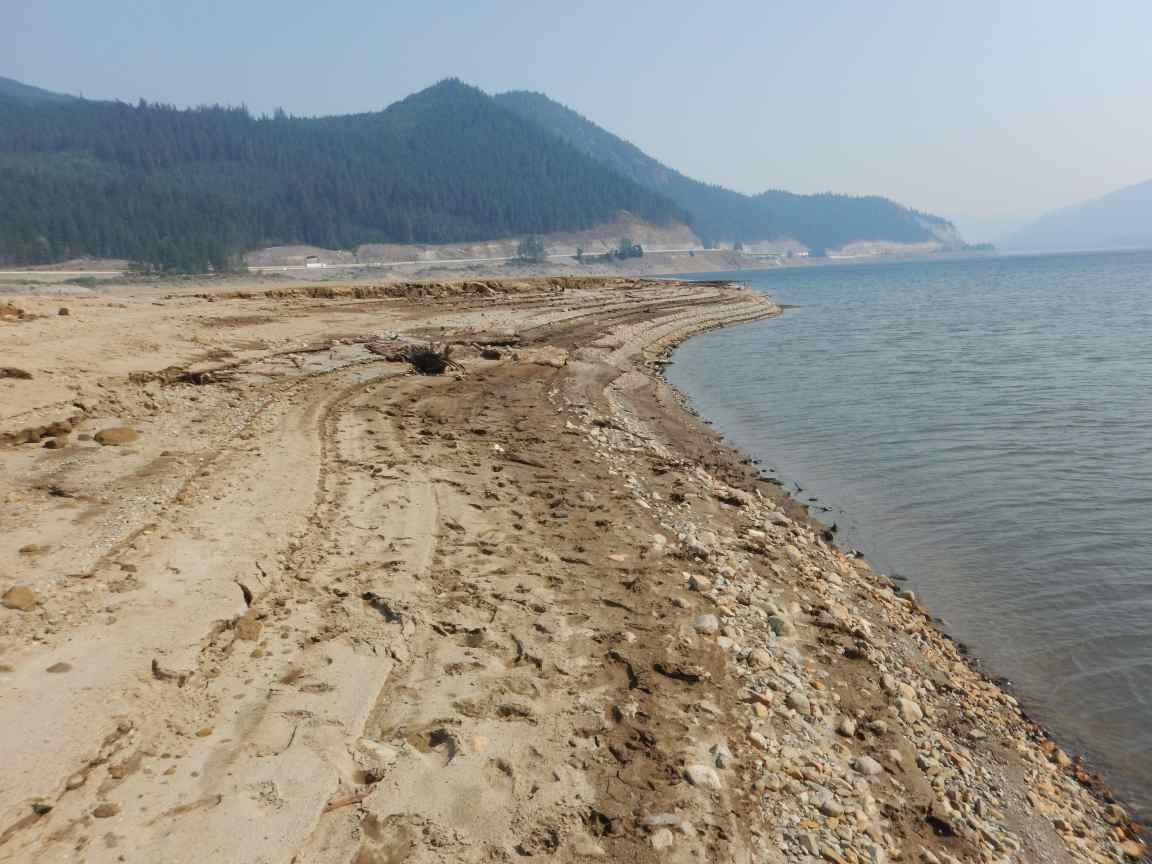
Keechelus Lake in Washington State

Keechelus Lake in Washington State

My heart cries out over Moab; her fugitives flee as far as Zoar, as far as Eglath Shelishiyah. They go up the hill to Luhith, weeping as they go; on the road to Horonaim they lament their destruction.   The waters of Nimrim are dried up and the grass is withered; the vegetation is gone and nothing green is left.   So the wealth they have acquired and stored up they carry away over the Ravine of the Poplars.   Their outcry echoes along the border of Moab; their wailing reaches as far as Eglaim, their lamentation as far as Beer Elim.   The waters of Dimon are full of blood, but I will bring still more upon Dimon — a lion upon the fugitives of Moab and upon those who remain in the land. – Isaiah 15:5-9

This passage is a continuation of yesterday’s passage about Moab and the judgement that was to befall them.  There is more weeping here from a heart-sick people who feel like God has forsaken them.  Apparently God’s judgement for Moab is not over yet.  The Moabites are fleeing both from their earthly oppressors and God, weeping and lamenting as they went.

The waters of Nimrim are dried up.  The very thing that allows them to survive in this sometimes harsh and dry land God has seemingly been taken away from them.  God does not even provide bitter water for the Moabites.  They, and those around them, were probably left asking “where is there God?”  The Moabites are experiencing a “dry time” both physically and figuratively – “the grass is withered; the vegetation is gone and nothing green is left”.

I have reflected several times before about the spiritual cycle that we experience as modern day followers of God.  We have both droughts and drenching rains and it is sometimes difficult to make sense of their pattern and purpose. I am pretty sure the deluge the Moabites are facing is hard and confusing, but sometimes God needs us to walk difficult roads to get our attention. In the case of this passage God not only dries up the waters of Nimrim, but the “The waters of Dimon are full of blood”.  The trials for those who choose to “remain in the land” are going to get even worse.

The act of choosing to “remain in the land” is like modern day God followers choosing to pursue earthly passions and pursuits rather than thirsting for God.  Investing energy and time in this land of oblivion rather than the undiscovered country to come.

Prayer: God help us to thirst for You and know that droughts and drenching rains may be part of a path You need us to follow.

SDG


Posted in Christianity, Covenant, Discernment, Discipleship, Following God, Free Will, Isaiah, Love for the Lost, Obedience, reconciliation, religion, The Earthly Realm, The Nature of God, The Spiritual Realm, Trusting God | Tagged , , , , , , | 2 Comments

Prostrate with Weeping

A prophecy against Moab: Ar in Moab is ruined, destroyed in a night! Kir in Moab is ruined, destroyed in a night!   Dibon goes up to its temple, to its high places to weep; Moab wails over Nebo and Medeba. Every head is shaved and every beard cut off.   In the streets they wear sackcloth; on the roofs and in the public squares they all wail, prostrate with weeping.   Heshbon and Elealeh cry out, their voices are heard all the way to Jahaz. Therefore the armed men of Moab cry out, and their hearts are faint. – Isaiah 15:1-4

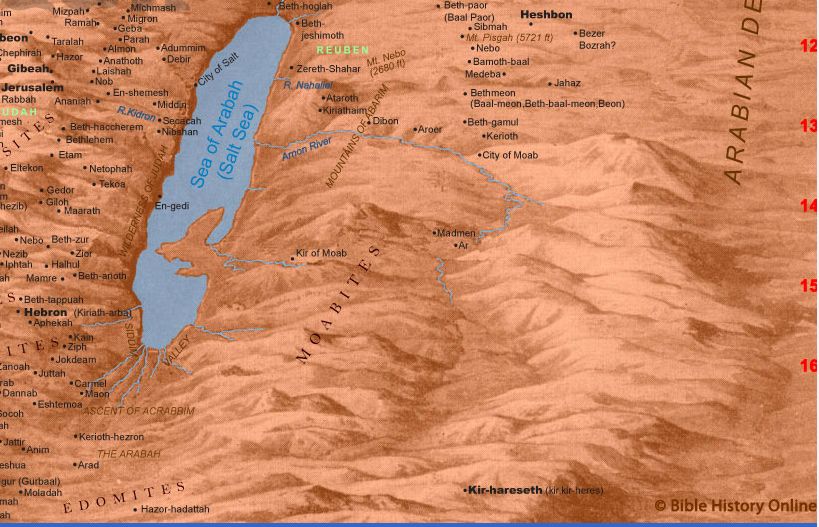
I confess I had to have a little geography lesson to keep this passage straight.  I honestly lost track of where Moab was in relation to more familiar places like Jerusalem.  So after a little investigation I learned that Moab and the cities described in this passage is a very mountainous region southeast of the Dead Sea.  It is bordered on the east by the Arabian Desert and on the west by the Dead Sea.

The passage is describing a devastating rout of the major cities of Moab in what could only be described as an old testament shock and awe campaign.  Cities taken in a night, men’s beards and heads shaved.  It is not a pretty picture.  The response of the Moabites is to go “to its high places to weep”.  Weeping up to this point on my float through the old testament has typically been associated with soul sickness and emotional turmoil.  The Moabites are clearly experiencing strong emotions about what has happened to them and their cities.

I suspect they were asking questions like “where is our God?  What did we do to deserve this punishment?  They are casting about for a way forward.  What should we do?  Should we fight or pray?  Some choose a path of humility, “they wear sackcloth; on the roofs and in the public squares they all wail, prostrate with weeping”  These people either know that they have done something to displease God or they are taking this posture just to “cover their bases”.

There is another group of Moabites who respond differently.  The “armed men of Moab cry out, and their hearts are faint”.  So the trained military men crying out rather than weeping, perhaps these men were unwilling or unable to bear their souls through weeping, I am not sure.  These men apparently feel like they have “hearts like water“.  I think God would prefer that they had “hearts that live“.

So what is the take away message here?  I guess for me it is the idea that when we encounter hardships we can choose to look, even weep, to the one who has offered to carry us like a son or daughter or we can choose to go it alone and wonder why God has left us.

Prayer: God no matter how much the world around us is crumbling and hard, help us to trust and know that You love us and have our backs.

Posted in Christianity, Conflict, Covenant, Death and Dying, Faith, Following God, Free Will, God's Love for Us, Isaiah, Obedience, reconciliation, Redemption, religion, The Nature of God, Trusting God | Tagged , , , , , , | 2 Comments

Draw Water from the Wells of Salvation

June 6th

In that day you will say: “I will praise you, Lord . Although you were angry with me, your anger has turned away and you have comforted me. Surely God is my salvation; I will trust and not be afraid. The Lord , the Lord himself, is my strength and my defense ; he has become my salvation.” With joy you will draw water from the wells of salvation. In that day you will say: “Give praise to the Lord , proclaim his name; make known among the nations what he has done, and proclaim that his name is exalted. Sing to the Lord , for he has done glorious things; let this be known to all the world. Shout aloud and sing for joy, people of Zion, for great is the Holy One of Israel among you.” – Isaiah 12:1-6

This passage is a refreshing change. The imagery is deep and refreshing, just like the well to which the passage alludes. The passage begins with “in that day”. The implication is that this is a time after God’s wrath has been lifted. On one level this could refer to any number of times in Israel’s past or future, but I wonder if it does not equally apply to all who turn and embrace God after running away from Him.

All those who acknowledge that God is their salvation are comforted, even when we feel as though God’s judgement is upon us. We need only “trust and not be afraid”. This sounds relatively straightforward, but in practice, it is not so easy. Why do we find it difficult to trust God and why do we fear Him? Perhaps it is because we are from a foreign land in relation to God. Our souls inhabit imperfect and emotional bodies here in the Land of Oblivion, while God exists beyond all lands in the undiscovered country.

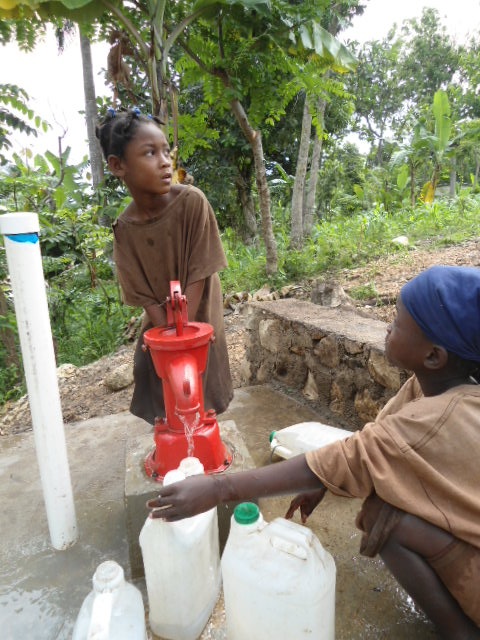
We are to “draw water from the wells of salvation” with joy. God himself is the well of salvation and we are to draw our strength and satisfy our thirst from Him. A well is an interesting choice of metaphors for salvation. Water wells tap water that is unseen and usually quite pure and good. Water in a well is distinct from spring water in that it takes work and planning to access the water. It also requires some level of trust that when you start to dig your well you will, in fact, hit water. You have to start digging before you have water, and you may have to dig for some time before it becomes clear whether you will obtain water.

Seeking salvation is both similar and distinct from a water well. God in this passage promises that if we seek we will find. He does not promise that it will not be hard or difficult, only that we will be successful in obtaining the water we need if we do not give up. When we finally “hit water” we are to “proclaim his name; make known among the nations what he has done, and proclaim that his name is exalted”.

We are not supposed to keep the amazing water we have found in the well of salvation a secret. We are supposed to share it with the world: “Shout aloud and sing for joy, people of Zion, for great is the Holy One of Israel among you”. I am not sure who the passage is referring to as the “Holy One of Israel among you”. It sounds a bit like the reference to Immanuel from a few passages ago. Perhaps it is a reference to the coming Messiah I do not know. Either way, the take home message seems clear: 1) seek salvation from the well of water that is God no matter how hard you have to search and dig; 2) Be joyful and thankful when you find salvation; 3) share what you have found with the world.

Prayer: God thank You for providing a well of salvation from which we can drink and be refreshed.

Posted in Christianity, Discernment, Faith, Following God, Isaiah, reconciliation, Redemption, The Earthly Realm, The Nature of God, The Spiritual Realm, Trusting God | Tagged , , , , , , , , | 6 Comments

Scraps of Cloth

IMG_8936_1024In that day the Root of Jesse will stand as a banner for the peoples; the nations will rally to him, and his resting place will be glorious. In that day the Lord will reach out his hand a second time to reclaim the surviving remnant of his people from Assyria, from Lower Egypt, from Upper Egypt, from Cush, from Elam, from Babylonia, from Hamath and from the islands of the Mediterranean.   He will raise a banner for the nations and gather the exiles of Israel; he will assemble the scattered people of Judah from the four quarters of the earth.   Ephraim’s jealousy will vanish, and Judah’s enemies will be destroyed; Ephraim will not be jealous of Judah, nor Judah hostile toward Ephraim.   They will swoop down on the slopes of Philistia to the west; together they will plunder the people to the east. They will subdue Edom and Moab, and the Ammonites will be subject to them.   The Lord will dry up the gulf of the Egyptian sea; with a scorching wind he will sweep his hand over the Euphrates River. He will break it up into seven streams so that anyone can cross over in sandals.   There will be a highway for the remnant of his people that is left from Assyria, as there was for Israel when they came up from Egypt. Isaiah 11:10-16

This passage sounds like a mixture of prophesy about events in the relatively near future and a time yet to come. The root of Jesse is understood by both Christ’s early disciples (Romans 15:12), and modern day Christ followers, as a reference to Jesus.  Paul, a person of Jewish descent, also interpreted “all peoples” to include both Jews and gentiles.  Are all followers of Christ honorary “people of Judah” and part of the “remnant” that this passage is talking about? That is my understanding and I think most of the early followers of Jesus would agree. So what is God telling all who choose to faithfully follow Him in this passage?

First a little rumination on the word “remnant”.  When I hear the word remnant I think of something left over.  For example, a piece of carpet or cloth.  The meaning here is obviously different, but perhaps there is a useful metaphor in the idea of cloth remnants.

Scraps of cloth with many different patterns by themselves may not be much use, but sewn together they can make incredibly beautiful and useful quilts.  I think that is what God is really talking about here.  He wants to sew together the faithful remnant of the Jewish people and the gentiles who have chosen to become part of this remnant.  We are all imperfect scraps of cloth but together we can make a beautiful thing.

On a secular level this passage seem to be describing the Jewish people successfully reassembling in the “promised land”.  They will battle those around them and subdue them. They will move past the infighting and clan warfare that has characterized much of the history of the people of Judah up to this point.

God promises to “dry up the gulf of Egypt and the Euphrates River. The reason God gives for this promise is that a substantial barrier to the returning remnant will be removed. God will transform a mighty river, the Euphrates, into something that can be crossed by a person walking in sandals. This is where this passage speaks to me as a modern day follower of the Way of Christ. God is promising to make a way for all to return to Him.  God is promising to knit together a quilt of many colors.

Upon His arrival on earth Jesus “dried up” all barriers keeping us from returning home to be with God.  He also attempted to remove all the barriers keeping us from being with one another.  The One River provided a bridge for all comers, Jew and gentile, rich and poor, sick and healthy.  It is up to us to choose to return to the “promised land”. God has created “a highway” for the us. We need only acknowledge God the Father; the root of Jesse, His son Jesus; and the Holy Spirit, the “scorching wind” that helps dry up all barriers.

Prayer: God help us to love one another and appreciate the varied and beautiful quilt that we can make when we all come together for You. 

Posted in Christianity, Conflict, Covenant, Following God, Free Will, God's Love for Us, Isaiah, Jesus, Life Together, Love for the Lost, reconciliation, Redemption, religion, The Earthly Realm, The Nature of God, Trusting God | Tagged , , , , , , , , , , , | 7 Comments

Filled with the Knowledge of the Lord

The-wolf-will-live-with-the-lamb1The wolf will live with the lamb, the leopard will lie down with the goat, the calf and the lion and the yearling together; and a little child will lead them.   The cow will feed with the bear, their young will lie down together, and the lion will eat straw like the ox.   The infant will play near the cobra’s den, and the young child will put its hand into the viper’s nest.   They will neither harm nor destroy on all my holy mountain, for the earth will be filled with the knowledge of the Lord  as the waters cover the sea. – Isaiah 11:6-9

I stalled out the last couple days and was off the water.  I kept saying to myself “I should get back on the water”, but alas I just found myself lazily hanging out on the shore. I am back at it today – a bit groggy and ” sleepy-eyed ” but diving in none the less.

This is a really interesting verse.  It provides a picture of God that is both mesmerizing and puzzling in some ways.  There is clearly a change in the “natural” order that is to occur at some time in the future to the point where a “wolf will live with the lamb”.  Perhaps most interesting is the statement “and a little child will lead them”.  This verse has been interpreted to be a prophetic reference to Jesus.  I get that interpretation, but I wonder if there may be something else going on here.

A “child” is referred to twice in this passage: “a little child will lead them”; and “The infant will play near the cobra’s den, and the young child will put its hand into the viper’s nest”.  The second two references seem imperfect references to Jesus.  The more I look at this and chew on it the more I wonder if perhaps there is a dual meaning to the child or infant.  What if it is referring to both Jesus and followers of the Way of Christ (Christians)?

All those who follow God and Christ have been referred to as infants before in the old testament in the book of Psalms (Psalms 8:1-9), and certainly Jesus said we were to become as children to enter the kingdom of God (Matthew 18:3).  If this is true then we as followers of Christ are to play a role in the ushering in of this new order – God’s Kingdom.

This is both scary and amazing at the same time.  It is much easier to think of the kingdom of God arriving when Jesus returns.  Our commitment to faithfully follow Him has reserved us a front row seat, right?  This passage seems to be saying we are actually “in the game” not just watching it.  Not only are we in the game but we are going to “play near the cobra’s den” and put our hands “into the viper’s nest”.

The water reference occurs in the final sentence, where there is reassurance to be found: “They will neither harm nor destroy on all my holy mountain, for the earth will be filled with the knowledge of the Lord as the waters cover the sea”.  The take home message I get is that although we need to take responsibility and be “in the game” the outcome is ultimately not up to us.  The knowledge of the Lord will cover all like an expansive ocean.

We should not make the error of being a passive spectator, but neither should we be a distracted disciple trusting too much in our own knowledge and skills.  We are to be a bold and curious children helping to lead all we meet further up and further into God’s Kingdom.

Prayer: God you have made us Your children.  Help us to lead others boldly toward Your kingdom and participate in its arrival.


Posted in Christian Community, Christian Leadership, Christianity, Covenant, Discernment, Discipleship, Faith, Following God, God's Love for Us, Heaven, Isaiah, Jesus, Love for the Lost, Obedience, reconciliation, Redemption, religion, The Earthly Realm, The Nature of God, The Spiritual Realm, Trusting God | Tagged , , , , , , | 4 Comments

Sands by the Sea

wp-1435676441973In that day the remnant of Israel, the survivors of Jacob, will no longer rely on him who struck them down but will truly rely on the Lord , the Holy One of Israel.   A remnant will return, a remnant of Jacob will return to the Mighty God.   Though your people be like the sand by the sea, Israel, only a remnant will return. Destruction has been decreed, overwhelming and righteous.   The Lord, the Lord Almighty, will carry out the destruction decreed upon the whole land.   Therefore this is what the Lord, the Lord Almighty, says: “My people who live in Zion, do not be afraid of the Assyrians, who beat you with a rod and lift up a club against you, as Egypt did.   Very soon my anger against you will end and my wrath will be directed to their destruction.” The Lord Almighty will lash them with a whip, as when he struck down Midian at the rock of Oreb; and he will raise his staff over the waters, as he did in Egypt. In that day their burden will be lifted from your shoulders, their yoke from your neck; the yoke will be broken because you have grown so fat. – Isaiah 10:20-27

The Holy One of Israel is speaking to “the remnant”.  Those that survived the flood from the north which was unleashed by God as a judgement against Judah.  Though the people of Israel may “be like the sand by the sea, Israel, only a remnant will return”.  Only some, the remnant, will choose to faithfully follow God in the face of the conquering Assyrians.

God makes it clear that although the judgement happened at the hands of the Assyrian king, God was the one to “carry out the destruction decreed upon the whole land”.  The “Assyrians, who beat you with a rod and lift up a club against you, as Egypt did” were merely the instrument God used to get the attention and discipline a stubborn and stiff-necked people.

God’s wrath will soon end and so will the rule of the Assyrians.  The flood waters will recede and God will take the remnant to Himself.  God is assuring the faithful remnant that He has their back just like he did when Moses was leading the people out of Egypt through the Red Sea.  God will provide for those who are faithfully following Him. In fact they apparently will grow so fat with God’s provision that the yoke that the Assyrians had placed around their necks will literally break: “the yoke will be broken because you have grown so fat”.  Perhaps there is a metaphorical meaning here that eludes me.

I am not sure there is a take home message here.  Maybe it is just an example of a time where God chose to hold the people of Israel accountable for their choices.  God has done this before and I suspect He will do it again in the future.  The important thing is to be part of the “remnant” as opposed to the ones washed away in the flood.

Prayer: God help us to be seeking You so that when floods come we will choose to be part of the remnant that remains.


Posted in Christianity, Discernment, Discipleship, Following God, Free Will, Isaiah, Obedience, reconciliation, Redemption, religion, The Earthly Realm, The Nature of God, Trusting God | Tagged , , , , , , | 1 Comment

Gently Flowing Waters

The Lord spoke to me again:   “Because this people has rejected the gently flowing waters of Shiloah and rejoices over Rezin and the son of Remaliah,   therefore the Lord is about to bring against them the mighty floodwaters of the Euphrates— the king of Assyria with all his pomp. It will overflow all its channels, run over all its banks   and sweep on into Judah, swirling over it, passing through it and reaching up to the neck. Its outspread wings will cover the breadth of your land, Immanuel !” – Isaiah 8:5-8

This passage follows on the heals of yesterday’s passage about water holes.  The topic is similar.  God is rebuking the Israelites for choosing earthly leaders who often lead them away from God rather than relying on the “gently flowing waters of Shiloah” that God is offering.  It seems God is referring to the spring and pool located near the ancient city of Jerusalem.  This spring provided the main water source for the city.  Without it Jerusalem would probably not have become the “City of David“.

God is reminding the Israelites that the “water supply” that has made Jerusalem and them successful and fruitful is in fact Himself.  He is going to allow a “flood” from the north “the mighty floodwaters of the Euphrates— the king of Assyria with all his pomp” to invade Jerusalem and take over Judah and the city of Jerusalem.  This seems harsh punishment, but the Israelites made their choice when they got behind “Rezin and the son of Remaliah”.  They chose their water source and it was not the One that promised to come and dwell with them.

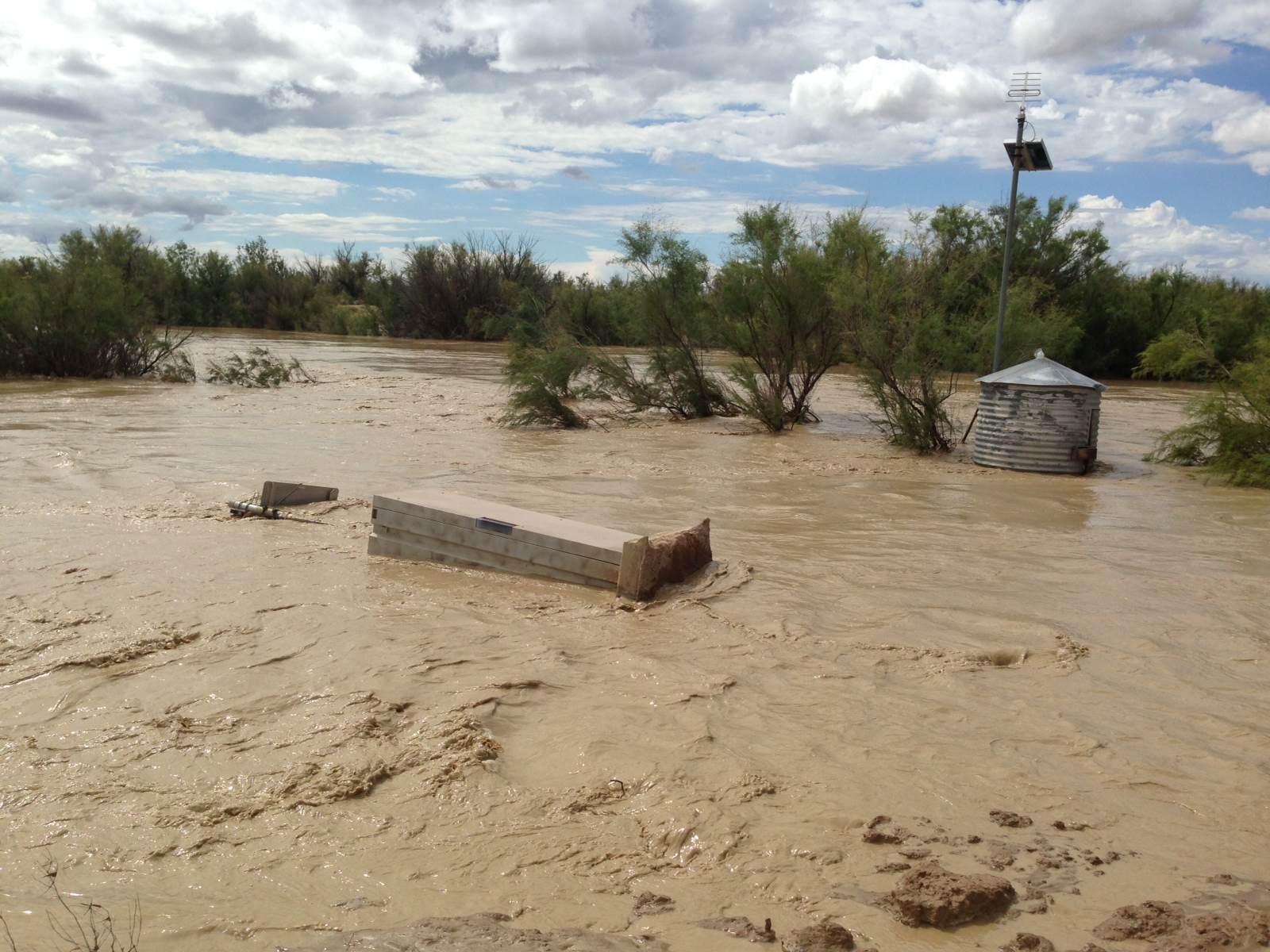
The water imagery describing this flood from the north is powerful and vivid: “It will overflow all its channels, run over all its banks and sweep on into Judah, swirling over it, passing through it and reaching up to the neck.”  It sounds as if this flood will affect all those who dwell in Judah.  This seems somewhat unfair to those who are following God, but there are consequences when leaders fail to lead while following.

The last sentence of this passage has me confused.  It reads “Its outspread wings will cover the breadth of your land, Immanuel !”  It seems like the “its” is referring to this flood of judgement from the north, but the reference to “outspread wings” seems like a murky metaphor at best.  Then it gets really confusing it ends with “Immanuel” – God with us.  This was just discussed a few passages ago when we heard about Immanuel at the aqueduct.  So this judgement that comes like a flood from the north is “God with us”?  I am not sure what this means.

I guess one could view Jesus’ arrival as “Immanuel” as a judgement of sorts, and He did come from Nazareth which is in fact north of Jerusalem.  His word and followers did grow like a flood throughout Judah.  It is interesting that the mixed metaphor provides for both judgement (a flood) and reconciliation (the outspread wings of Immanuel).  That is my understanding of Jesus.  He is the lion and lamb at the same time.  He came to show us the way to be with God, but we are still free to choose the flood.

Prayer: God some passages are more confusing than others.  Help me to understand the many ways that you are Immanuel – God with us.  

Posted in Christian Community, Discernment, Discipleship, Following God, Isaiah, Jesus, reconciliation, Redemption | Tagged , , , , , | 1 Comment

Water Holes

SamsonDestroyTempleIn that day the Lord will whistle for flies from the Nile delta in Egypt and for bees from the land of Assyria. They will all come and settle in the steep ravines and in the crevices in the rocks, on all the thornbushes and at all the water holes. In that day the Lord will use a razor hired from beyond the Euphrates River—the king of Assyria—to shave your heads and private parts, and to cut off your beards also. In that day, a person will keep alive a young cow and two goats. And because of the abundance of the milk they give, there will be curds to eat. All who remain in the land will eat curds and honey. In that day, in every place where there were a thousand vines worth a thousand silver shekels, there will be only briers and thorns. Hunters will go there with bow and arrow, for the land will be covered with briers and thorns. As for all the hills once cultivated by the hoe, you will no longer go there for fear of the briers and thorns; they will become places where cattle are turned loose and where sheep run. – Isaiah 7:18-25

I am struggling a bit with Isaiah.  I am not sure why.  I have missed a few days of my daily walk with water.  For some reason Isaiah is hard, but and I have been missing my time “on the water” so I am putting my boat back in the water.  My paddling feels a little shaky and I am unsure of the proper line, but it is better to be on the river, and uncertain, than waiting on the shore.

This passage again finds the Lord whistling, which is still an odd word picture.  In this instance God is whistling for flies and bees rather than followers from the ends of the earth.  Metaphorically God is calling on the Assyrians from the north to get the attention of the incalcitrant Israelites.  The “bees” and “flies” from the north will descend and fill every crevice and will inhabit the Israelites “water holes”.

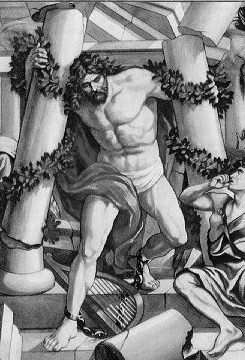
The “razor” God is employing to “shave” the proud Israelites is the king of Assyria from beyond the Euphrates.  This would be near modern day Iraq and Iran.  The shaving that God describes is not a gentle trim from a careful barber, but a wholesale removal of all the hair from the Israelites heads, private parts, and beards.  Hair and beards were a metaphor for power in the eyes of the Isrealites.  Their hair was their pride and strength, Samson was a case in point (judges 13-16).  In Judges Samson’s hair was cut by delilah and he lost his strength.  His hair grew while he was in prison and he eventually pulled a “Rhambo” with a donkey’s jawbone and routed the Philistines.

Then the passage turns to a part which I am not sure I understand.  Those that remain under the siege and keep alive “a young cow and two goats” will have abundant curds and honey to eat.  The vines and vineyards will be devastated, turned into briers and thorns.  There seems to be a distinction being drawn here between those who have invested in vines and vineyards and those who keep animals (specifically a cow and two goats).  Perhaps there is a cultural context here that I am missing.  Maybe God is rebuking the Isrealites for their reliance on vines and vineyards (wealth) rather than Him.  Perhaps this will become more clear further down the river.

Prayer: God our strength comes from You rather than vines, vineyard, or our hair.  Help us to trust You for our “curds and honey”.


Posted in Conflict, Covenant, Discernment, Following God, Isaiah, Trusting God, wealth, Wisdom | Tagged , , , , , | 1 Comment

Immanuel at the Aqueduct

When Ahaz son of Jotham, the son of Uzziah, was king of Judah, King Rezin of Aram and Pekah son of Remaliah king of Israel marched up to fight against Jerusalem, but they could not overpower it.   Now the house of David was told, “Aram has allied itself with Ephraim”; so the hearts of Ahaz and his people were shaken, as the trees of the forest are shaken by the wind.   Then the Lord said to Isaiah, “Go out, you and your son Shear-Jashub, to meet Ahaz at the end of the aqueduct of the Upper Pool, on the road to the Launderer’s Field. Say to him, ‘Be careful, keep calm and don’t be afraid. Do not lose heart because of these two smoldering stubs of firewood—because of the fierce anger of Rezin and Aram and of the son of Remaliah. Aram, Ephraim and Remaliah’s son have plotted your ruin, saying, “Let us invade Judah; let us tear it apart and divide it among ourselves, and make the son of Tabeel king over it.” Yet this is what the Sovereign Lord says: “ ‘It will not take place, it will not happen,   for the head of Aram is Damascus, and the head of Damascus is only Rezin. Within sixty-five years Ephraim will be too shattered to be a people.   The head of Ephraim is Samaria, and the head of Samaria is only Remaliah’s son. If you do not stand firm in your faith, you will not stand at all.’ ”   Again the Lord spoke to Ahaz, “Ask the Lord your God for a sign, whether in the deepest depths or in the highest heights.”   But Ahaz said, “I will not ask; I will not put the Lord to the test.”   Then Isaiah said, “Hear now, you house of David! Is it not enough to try the patience of humans? Will you try the patience of my God also? Therefore the Lord himself will give you a sign: The virgin will conceive and give birth to a son, and will call him Immanuel.  He will be eating curds and honey when he knows enough to reject the wrong and choose the right, for before the boy knows enough to reject the wrong and choose the right, the land of the two kings you dread will be laid waste. The Lord will bring on you and on your people and on the house of your father a time unlike any since Ephraim broke away from Judah—he will bring the king of Assyria.” – Isaiah 7:1-17

There is a lot going on in this passage and it ends with one of the most familiar prophetic verses in Isaiah.  I feel like I am staring at a class IV rapid and I am not sure my raft is up to the task…but here goes.  This passage apparently occurs near the time described back in 2 Kings 18:17-22, when there were Assyrians at the same aqueduct trying to convince Hezekiah that he should follow them rather than God.

Isaiah and his son are asked by God to meet King Ahaz at the aqueduct to discuss what he should do about the conflict and clan warfare swirling around him: ““Go out, you and your son Shear-Jashub, to meet Ahaz at the end of the aqueduct of the Upper Pool, on the road to the Launderer’s Field”.  It is interesting that God directs Isaiah and his son to meet Ahaz at an important water supply for the city.  The conversation they have is very much about where Jerusalem, and all those who seek to follow God, are to get their “water”.

King Ahaz is leading the people in Jerusalem and he is under siege from fellow Israelites from the north and the Assyrians from the northeast (present day Iraq and Iran).  The fellow Israelites want Ahaz to join their alliance to fight the Assyrians.  Just like Hezekiah, Ahaz is given a choice to trust God or the power of this world in the form of armies and weapons.  God predicts the failure of the coalition from the north, but Ahaz is hesitant to believe this prediction.  God offers to provide a sign for Ahaz, but Ahaz does not want to put God to the test: ““I will not ask; I will not put the Lord to the test.”  This is interesting logic.  It seems to me by rejecting the prophecy Ahaz is saying he does not trust Isaiah or God.  He is not willing to believe God and Isaiah.

This is where it gets familiar.  Isaiah says a sign will be given: “The virgin will conceive and give birth to a son, and will call him Immanuel. He will be eating curds and honey when he knows enough to reject the wrong and choose the right, for before the boy knows enough to reject the wrong and choose the right”.  This verse is familiar to most followers of Christ as a prophetic reference to the Messiah, Jesus.  It is not at all clear when this event was to occur, just that it is to be a sign.  It is implied that the sign was meant for Ahaz, but that does not mean that it was not meant for future readers of these words as well.

The idea that God could be with us, Immanuel, is not exactly new.  God has been with the Israelites and caring for them all along.  His presence has been in the form of a cloud most of the time, and occasionally in the form of a burning bush.  What is new here is that the “God with us” will do something as mundane as eating curds and honey.  He will also apparently be subject to the same spiritual battle over right and wrong that we all experience as our souls ride along in our earthly vessels: “before the boy knows enough to reject the wrong and choose the right”.

It is still a bit of a mystery to me why God chose to arrive in this way, but I am convinced that He did, in fact, do so and it was for a very important reason.  God came to show us the way to pilot and navigate using these earthly containers for our souls we call bodies.  He felt pain, chose between right and wrong, and did so in a way that teaches us how to navigate through this land of oblivion so that we can arrive safely some day at the undiscovered country that is with Him.

Prayer: God thank You for coming to be with us and showing us the way to steer our earthly vessels so that we arrive at Your desired destination.

Posted in Christianity, Conflict, Death and Dying, Discernment, Discipleship, Following God, Free Will, God's Love for Us, Isaiah, Love for the Lost, reconciliation, Redemption, religion, The Earthly Realm, The Nature of God, The Spiritual Realm | Tagged , , , , , , , | 9 Comments