Turbulent Water

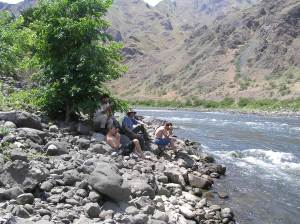
Snake River, IdahoThen Jacob called for his sons and said: “Gather around so I can tell you what will happen to you in days to come.  “Assemble and listen, sons of Jacob;  listen to your father Israel.  “Reuben, you are my firstborn,  my might, the first sign of my strength,  excelling in honor, excelling in power.  Turbulent as the waters, you will no longer excel, for you went up onto your father’s bed, onto my couch and defiled it. – Genesis 49:1-4

This is one of the first times I recall water being spoken of with a somewhat negative connotation.  Turbulent water can be very powerful and dangerous.  I have almost drowned twice in turbulent water.  The first time was when I was doing field work on the Clackamas River for my PhD.  I was surveying and decided I could swim across the river with a survey rod.  The river was very deep and turbulent, not really white water,but it was enough to remove my ability to swim with a survey rod 🙂  Long story short I made it across the river very tired and feeling very stupid.  The second time turbulence almost killed me was on the Snake River in Idaho.  I had two students with me and we decided to float down what appeared to be a relatively tame rapids.  We got to the bottom of the rapid and encountered what rafters refer to as “funny water” which is basically turbulent water which is moving up, down, sideways, and slantways.  The funny thing about “funny water” is that if you are in a patch of water that is headed down it does you no good to tread water.  You and the water are headed down until the turbulence decides it is time to come up.  Me and the students survived this encounter with turbulence, but we all learned an important lesson about the unpredictability of turbulent water in a big river.

In this passage “turbulent water” is used to describe the spirit and actions of Reuben, Jacob’s first born. In reflecting on turbulent waters several things come to mind, firstly they have a mind of their own (as I found out in the Snake River), they do not seem to be directed by any force that “organizes” them, they are wild. Secondly, they are virtually impossible to predict or quantify. Thirdly turbulent water is really not on a path to anywhere in particular, it is expending energy without any real result or benefit.  This was a somewhat harsh assessment of Rueben by Jacob, but given his and his brothers actions toward Joseph I can’t blame him.

As I reflect on this passage I find myself somewhat convicted.  Do any of the ways that Rueben was like ‘turbulent waters” apply to me?  How often am I engaged in “turbulent” activity which is not directed toward a purpose, God’s purpose.  Do I allow myself to float along without intentionality, cast about by life’s turbulence?  How much energy do I expend without any real result or benefit?

Prayer: God please quiet the turbulence in my soul and direct the flow of my life today so that I may arrive where you need me to be.

 

Posted in Discernment, Discipleship, Following God, Genesis, Obedience | Tagged , , , , , , , , | 1 Comment

I cannot do it…but God will

When two full years had passed, Pharaoh had a dream: He was standing by the Nile,  when out of the river there came up seven cows, sleek and fat, and they grazed among the reeds.  After them, seven other cows, ugly and gaunt, came up out of the Nile and stood beside those on the riverbank.   And the cows that were ugly and gaunt ate up the seven sleek, fat cows. Then Pharaoh woke up.  He fell asleep again and had a second dream: Seven heads of grain, healthy and good, were growing on a single stalk.  After them, seven other heads of grain sprouted—thin and scorched by the east wind.  The thin heads of grain swallowed up the seven healthy, full heads. Then Pharaoh woke up; it had been a dream.  In the morning his mind was troubled, so he sent for all the magicians and wise men of Egypt. Pharaoh told them his dreams, but no one could interpret them for him.  Then the chief cupbearer said to Pharaoh, “Today I am reminded of my shortcomings.  Pharaoh was once angry with his servants, and he imprisoned me and the chief baker in the house of the captain of the guard.  Each of us had a dream the same night, and each dream had a meaning of its own.  Now a young Hebrew was there with us, a servant of the captain of the guard. We told him our dreams, and he interpreted them for us, giving each man the interpretation of his dream.  And things turned out exactly as he interpreted them to us: I was restored to my position, and the other man was impaled.”  So Pharaoh sent for Joseph, and he was quickly brought from the dungeon. When he had shaved and changed his clothes, he came before Pharaoh.  Pharaoh said to Joseph, “I had a dream, and no one can interpret it. But I have heard it said of you that when you hear a dream you can interpret it.”  “I cannot do it,” Joseph replied to Pharaoh, “but God will give Pharaoh the answer he desires.”  Then Pharaoh said to Joseph, “In my dream I was standing on the bank of the Nile,  when out of the river there came up seven cows, fat and sleek, and they grazed among the reeds.  After them, seven other cows came up—scrawny and very ugly and lean. I had never seen such ugly cows in all the land of Egypt.  The lean, ugly cows ate up the seven fat cows that came up first.  But even after they ate them, no one could tell that they had done so; they looked just as ugly as before. Then I woke up.  “In my dream I saw seven heads of grain, full and good, growing on a single stalk.  After them, seven other heads sprouted—withered and thin and scorched by the east wind.  The thin heads of grain swallowed up the seven good heads. I told this to the magicians, but none of them could explain it to me.”  Then Joseph said to Pharaoh, “The dreams of Pharaoh are one and the same. God has revealed to Pharaoh what he is about to do.  The seven good cows are seven years, and the seven good heads of grain are seven years; it is one and the same dream.  The seven lean, ugly cows that came up afterward are seven years, and so are the seven worthless heads of grain scorched by the east wind: They are seven years of famine.  “It is just as I said to Pharaoh: God has shown Pharaoh what he is about to do.  Seven years of great abundance are coming throughout the land of Egypt, but seven years of famine will follow them. Then all the abundance in Egypt will be forgotten, and the famine will ravage the land.  The abundance in the land will not be remembered, because the famine that follows it will be so severe.  The reason the dream was given to Pharaoh in two forms is that the matter has been firmly decided by God, and God will do it soon. – Genesis 41: 1-31

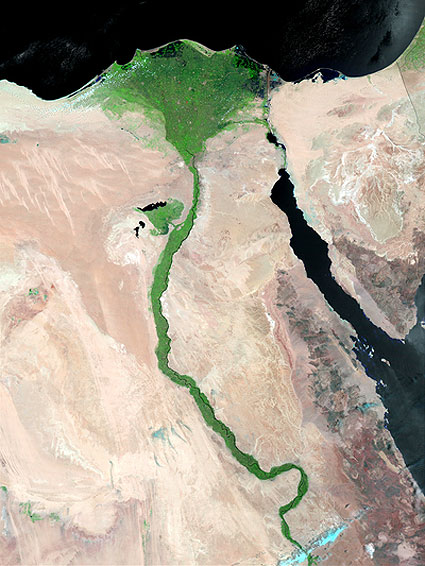
In this passage we find Joseph in Egypt as an advisor to pharaoh, not bad for a guy who almost ended up drowned in a cistern.   Pharaoh has a dream that features the Nile River.  The Nile River is the longest river in the world and must have been a God-like figure to the Egyptians.  It’s mouth was the location of one of the most advanced civilizations on earth, Alexandria.  The water the Nile provided contributed to the affluence and splendor of Egypt and Alexandria. The Nile, like many large rivers, is dependent on weather patterns which are cyclic.  Some years, or sets of years, can be dry and others wet.  We are still subject to wet and dry seasons, but we have dams and other human devices to provide water for our needs when “nature” or God does not do so.

I think that we often search for replacements for God’s provision.  It is clear that Pharaoh was not able to conceive of a God larger than the Nile that could in fact see beyond the periodic droughts and floods that seemed to occur at random.  The God of Israel, Joseph, and those who follow Christ are able to see a much larger picture both in time and space.  God knows the needs we will have in the future as well as those we have at the moment.  Our limited view often leads us to respond to life’s droughts and floods in ways that are not always glorifying to God.

The other aspect of this story that I like is Joseph’s response to Pharaoh when he asks if he can interpret his dream.   Joseph responds “I cannot do it,….but God will give Pharaoh the answer he desires”.  Joseph could have relied on his own skills and knowledge and told Pharaoh that he could interpret his dream, but he deflected Pharaoh’s confidence toward God.  As a university professor I have spent much of my life learning about things and being the “person who knows”.  I have much to learn from Joseph about giving God credit for my gifts and knowledge.

Prayer: God may we trust your provision and know that you are in control of our lives.  Help me to be quick to give you credit for the gifts, skills, and knowledge that I share with others.

Posted in Faith, Following God, Genesis, The Nature of God | Tagged , , , , , , , | Leave a comment

Checking our Posture and Perspective

“They have moved on from here,” the man answered. “I heard them say, ‘Let’s go to Dothan.’”  So Joseph went after his brothers and found them near Dothan.  But they saw him in the distance, and before he reached them, they plotted to kill him.  “Here comes that dreamer!” they said to each other.  “Come now, let’s kill him and throw him into one of these cisterns and say that a ferocious animal devoured him. Then we’ll see what comes of his dreams.”  When Reuben heard this, he tried to rescue him from their hands. “Let’s not take his life,” he said. “Don’t shed any blood. Throw him into this cistern here in the wilderness, but don’t lay a hand on him.” Reuben said this to rescue him from them and take him back to his father.  So when Joseph came to his brothers, they stripped him of his robe—the ornate robe he was wearing— and they took him and threw him into the cistern. The cistern was empty; there was no water in it.  As they sat down to eat their meal, they looked up and saw a caravan of Ishmaelites coming from Gilead. Their camels were loaded with spices, balm and myrrh, and they were on their way to take them down to Egypt.  Judah said to his brothers, “What will we gain if we kill our brother and cover up his blood?Come, let’s sell him to the Ishmaelites and not lay our hands on him; after all, he is our brother, our own flesh and blood.” His brothers agreed.  So when the Midianite merchants came by, his brothers pulled Joseph up out of the cistern and sold him for twenty shekels of silver to the Ishmaelites, who took him to Egypt.  When Reuben returned to the cistern and saw that Joseph was not there, he tore his clothes. He went back to his brothers and said, “The boy isn’t there! Where can I turn now?”  Then they got Joseph’s robe, slaughtered a goat and dipped the robe in the blood. They took the ornate robe back to their father and said, “We found this. Examine it to see whether it is your son’s robe.”  – Genesis 37: 17-31

This passage resonates with me…I tend to think of myself as a bit of a dreamer.  I am always having ideas and theories about how things could be done.  As Lewis Carol put it in Alice’s Adventures in Wonderland “Why, sometimes I’ve believed as many as six impossible things before breakfast.”  Joseph, Jacob’s favorite son, was not liked by his brothers.  They lacked his posture and perspective toward God.

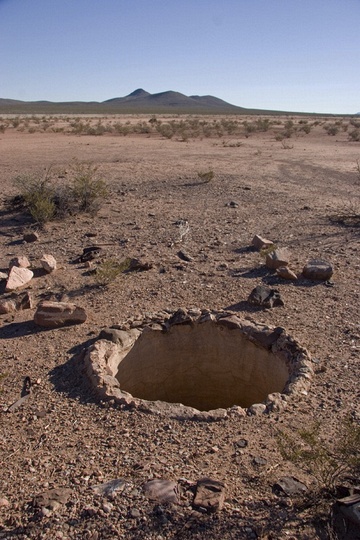
This passage is a good example of humans using something that God intended for good and blessing, the cistern to collect rainwater, for evil and cursing.  The cistern would typically be a “God send” for the people in the desert providing water during times of drought, but to Joseph’s brothers it was merely a convenient location to hide their sin.  The primary sin which his brothers were guilty of is covetousness.  They wanted what Joseph had.  The brother’s were not content with who they were and felt the need to “put Joseph in his place”.  It just so happened that the cistern was dry and God had other plans.

Humans have an amazing ability to take what was given by God for good and blessing and turn it toward evil.  I am reminded of inventions like atomic power and electricity.  Why do we misuse the blessings God gives us?  I think it comes down to perspective and posture.  We lack God’s perspective and we have a posture which places our needs and purposes above God’s.  How do we keep the proper perspective and posture?  I think we have to continually be “checking our posture”.  What is our perspective?  Are we looking toward God or in the mirror?  Does our posture put us in a position to see blessings and ways that those blessings can be shared?

Prayer: God help us to maintain the proper perspective and posture so that we can recognize your blessings and use them for your purposes.

Posted in Discernment, Following God, Genesis | Tagged , , , , , , , | Leave a comment

God Always Wins

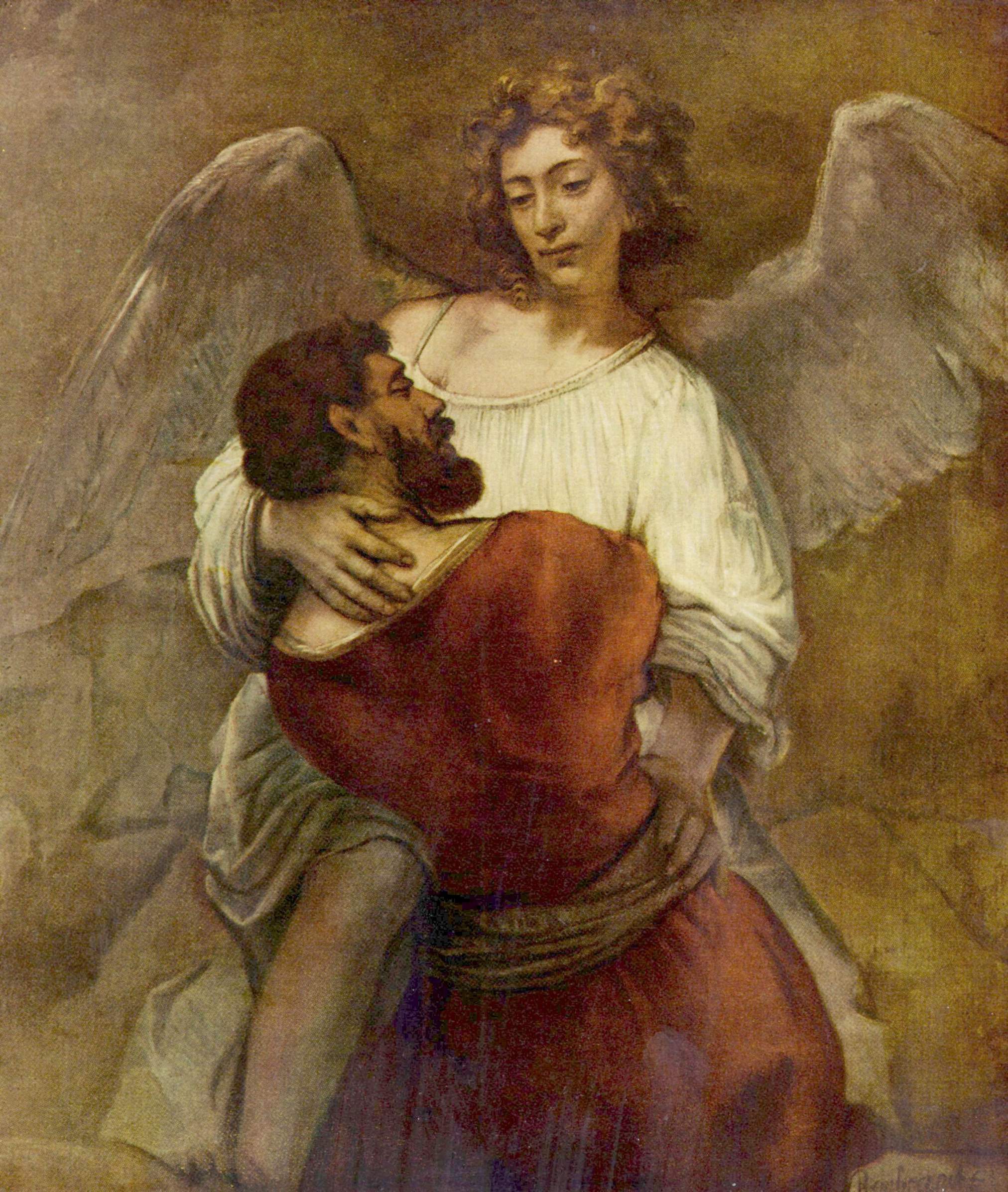
That night Jacob got up and took his two wives, his two female servants and his eleven sons and crossed the ford of the Jabbok. After he had sent them across the stream, he sent over all his possessions. So Jacob was left alone, and a man wrestled with him till daybreak. When the man saw that he could not overpower him, he touched the socket of Jacob’s hip so that his hip was wrenched as he wrestled with the man. Then the man said, “Let me go, for it is daybreak.” But Jacob replied, “I will not let you go unless you bless me.” The man asked him, “What is your name?” “Jacob,” he answered. Then the man said, “Your name will no longer be Jacob, but Israel, because you have struggled with God and with humans and have overcome.” Jacob said, “Please tell me your name.” But he replied, “Why do you ask my name?” Then he blessed him there. So Jacob called the place Peniel, saying, “It is because I saw God face to face, and yet my life was spared.” The sun rose above him as he passed Peniel, and he was limping because of his hip. Therefore to this day the Israelites do not eat the tendon attached to the socket of the hip, because the socket of Jacob’s hip was touched near the tendon. – Genesis 32:22-32

So the connection to water is a bit weak in this passage but I found it so interesting that I had to comment. The water connection is obviously the crossing of the Jabbok River. Jacob appears to have sent all his family over the stream with his possessions then had an epic battle with “a man” which later turns out to be God or an angel of God. As I was reflecting on this passage it occurred to me that the disciples may have felt a bit like this at times with Jesus. For example, when Jesus was walking on the water and Jesus calmed the storm; Peter was wrestling with his perception of who God is and how he could interact with his people.

It is not clear to me how Jacob could “best” God or an angel in a wrestling match unless of course God allowed Jacob to best him in the wrestling match for a purpose. I guess on one level Jesus let the Roman and Jewish leaders “best” him in a wrestling match when he was crucified. This also was for a purpose. In the case of Jacob the end result was the renaming of Jacob, the founding of the nation of Israel, and God’s blessing on the decedents of Jacob.

In the case of Jesus a whole new covenant and all subsequent followers of Christ (including me) were founded. The take home message that the Jewish people took from this wrestling is somewhat interesting and bizarre, i.e. “don’t eat hip tendons”. Perhaps the take home message that would have saved them much heartache and struggle would have been “God always wins even when we think we won”. Lest we as Christians feel smug we sometimes reduce Christ’s death and resurrection to something akin to “don’t eat hip tendons”, i.e. a set of rules like “don’t do X”. I think God had something so much bigger in mind during both wrestling matches.

Do I wrestle with God? If I am honest I have to admit that I do. It may be something as simple as talking to a friend about what God has done in my life or serving in a way that is outside my comfort zone. Who wins? I think just like Jacob and the disciples it may seem like God has “lost” a given wrestling match, but I believe that in the end God wins.

Prayer: May our own wrestling with you God be focused on better understanding our right relationship with You and not on how we can “win”.

Posted in Genesis, God's Love for Us, Obedience, The Nature of God | Tagged , , , , , , | 1 Comment

Sailor or Savior?

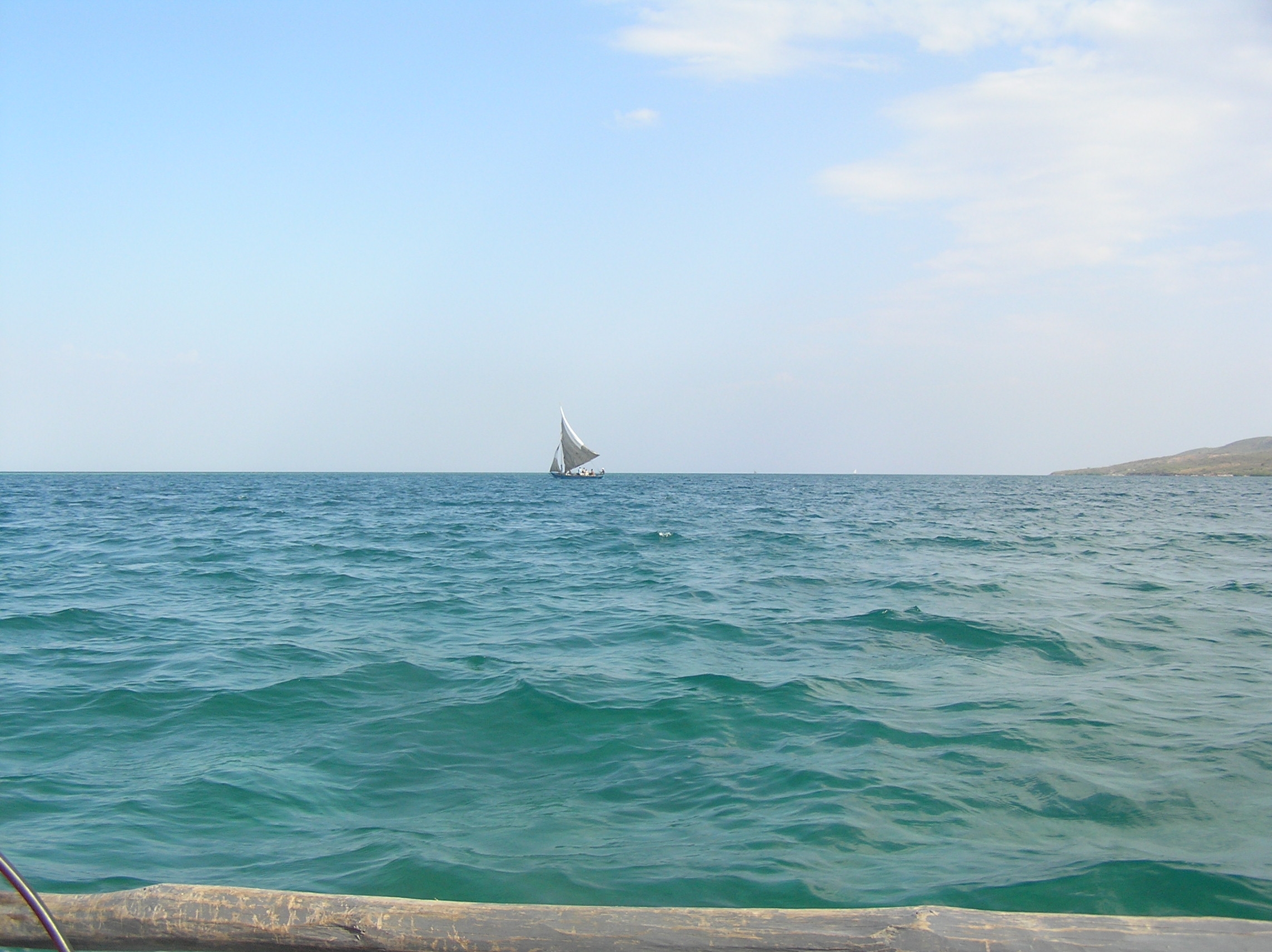
Haitian Sailboat

Sailboat in the Caribbean Sea off Haiti

Jacob, however, took fresh-cut branches from poplar, almond and plane trees and made white stripes on them by peeling the bark and exposing the white inner wood of the branches. Then he placed the peeled branches in all the watering troughs, so that they would be directly in front of the flocks when they came to drink. When the flocks were in heat and came to drink, they mated in front of the branches. And they bore young that were streaked or speckled or spotted. Jacob set apart the young of the flock by themselves, but made the rest face the streaked and dark-colored animals that belonged to Laban. Thus he made separate flocks for himself and did not put them with Laban’s animals. Whenever the stronger females were in heat, Jacob would place the branches in the troughs in front of the animals so they would mate near the branches, but if the animals were weak, he would not place them there. So the weak animals went to Laban and the strong ones to Jacob. In this way the man grew exceedingly prosperous and came to own large flocks, and female and male servants, and camels and donkeys. – Genesis 30:37-43 (NIV)

This is my 26th post to the Walking on Water blog. God has faithfully met me every day to chew on passages and I have learned a lot about myself, God, and how God uses water in the bible. Today is my Birthday and God has given me a bit of a strange passage as a present :).

It seems to suggest that Jacob was engaged in chemically enhanced selective breeding and branding. He apparently was using the watering troughs to introduce natural chemicals into the water from herbs and tree bark. The passage describes Jacob placing the peeled branches in the watering troughs which suggests an herbal infusion from the tree and/or bark. The connection between the herbs and bark and the production of spotted animals is not clear to me, perhaps the local lore connected eating of these items with the random production of spotted animals.

I am very ignorant of biology so I had an extensive discussion about what causes spots in animals with my college-age daughter and her friends (who are all much more familiar with biology than I). We came to the tentative conclusion that spotting is a result of “codominance” in the genes transferred from parent to offspring. For example, as I understand it, if you have a black cow who mates with a white cow the genes of the black cow mix with the genes of the white cow to produce a spotted cow. The latter part of the passage clearly describes selective breeding using the spotting and streaking as a way to distinguish Jacob’s stock from Laban’s. Selective breeding is used to this day for breeding of milk cows and other livestock.

As I prayerfully consider this passage it is a struggle to understand what God is communicating to me through it. The aspect that keeps coming back to me is the way Jacob seems to have taken it upon himself to improve his stock rather than trusting God. I can relate because there is a tension in my life between “fixing” things myself and trusting God to solve my problems. Where is the balance? When should I proactively try to “fix” and improve my “stock”, as Jacob was doing, and when should I wait on God to act?

The analogy that I find helpful is a sailboat. In order to get anywhere in a sailboat one needs to understand how they work; know the basics of knots, rigging, and trimming sails; and how to direct or navigate the boat to where you want to go. Sailboats are guided by a rudder, but they are also subject to the wind. No matter how good a sailor or navigator you are you cannot sail against the wind or sail if you have no wind. The “wind” in the lives of Christians is the Holy Spirit. The Holy Spirit provides the energy and direction for moving us in the direction God needs us to go. Does that mean we should not be really good sailors with rigging, trimming, and navigating skills? I don’t think so. The only way to find the right balance then is to become really good at sensing and responding to the “wind” of the Holy Spirit so that our “fixing” does not work against where God wants us to go.

Prayer: God help me to respond to your Holy Spirit to guide my life and strike the right balance between being a sailor and following a savior.

Posted in Discipleship, Following God, Genesis, Obedience | Tagged , , , , , , , , | Leave a comment

Rolling Stones

Then Jacob continued on his journey and came to the land of the eastern peoples. There he saw a well in the open country, with three flocks of sheep lying near it because the flocks were watered from that well. The stone over the mouth of the well was large.  When all the flocks were gathered there, the shepherds would roll the stone away from the well’s mouth and water the sheep. Then they would return the stone to its place over the mouth of the well.  Jacob asked the shepherds, “My brothers, where are you from?”  “We’re from Harran,” they replied.  He said to them, “Do you know Laban, Nahor’s grandson?” “Yes, we know him,” they answered.  Then Jacob asked them, “Is he well?” “Yes, he is,” they said, “and here comes his daughter Rachel with the sheep.”  “Look,” he said, “the sun is still high; it is not time for the flocks to be gathered. Water the sheep and take them back to pasture.”  “We can’t,” they replied, “until all the flocks are gathered and the stone has been rolled away from the mouth of the well. Then we will water the sheep.”  While he was still talking with them, Rachel came with her father’s sheep, for she was a shepherd. When Jacob saw Rachel daughter of his uncle Laban, and Laban’s sheep, he went over and rolled the stone away from the mouth of the well and watered his uncle’s sheep. Then Jacob kissed Rachel and began to weep aloud.  He had told Rachel that he was a relative of her father and a son of Rebekah. So she ran and told her father.  As soon as Laban heard the news about Jacob, his sister’s son, he hurried to meet him. He embraced him and kissed him and brought him to his home, and there Jacob told him all these things.  Then Laban said to him, “You are my own flesh and blood.” – Genesis 29:1-14 (NIV)

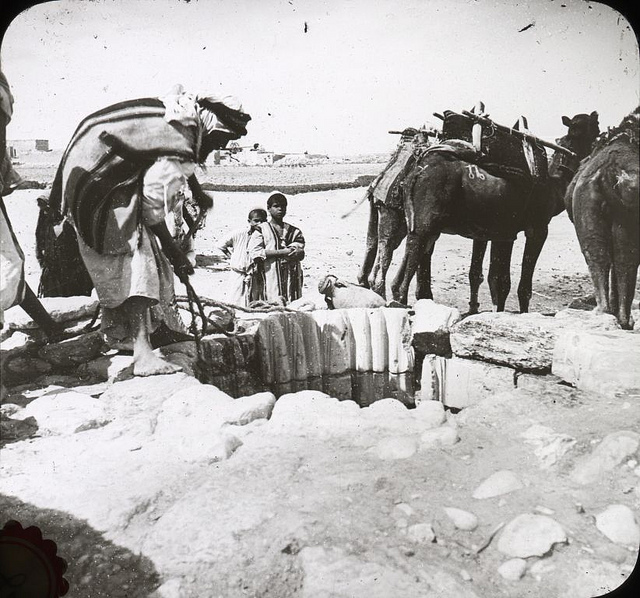
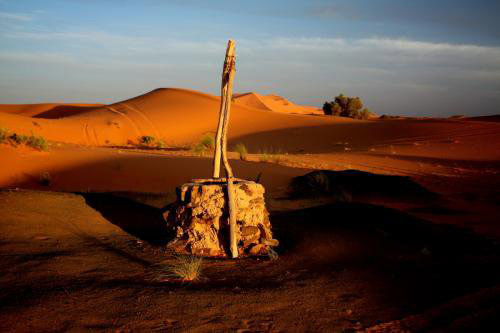
Once again a well is the focal point of a story and the central location around which people and animals gather. Jacob was sent to this region and well by Isaac to find a wife from his relatives.  The well was covered with a stone.  Presumably the stone was to keep it from getting contaminated with things that could fall into it and/or to prevent casual use of the water.

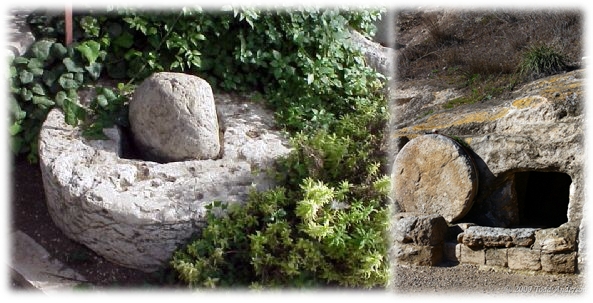
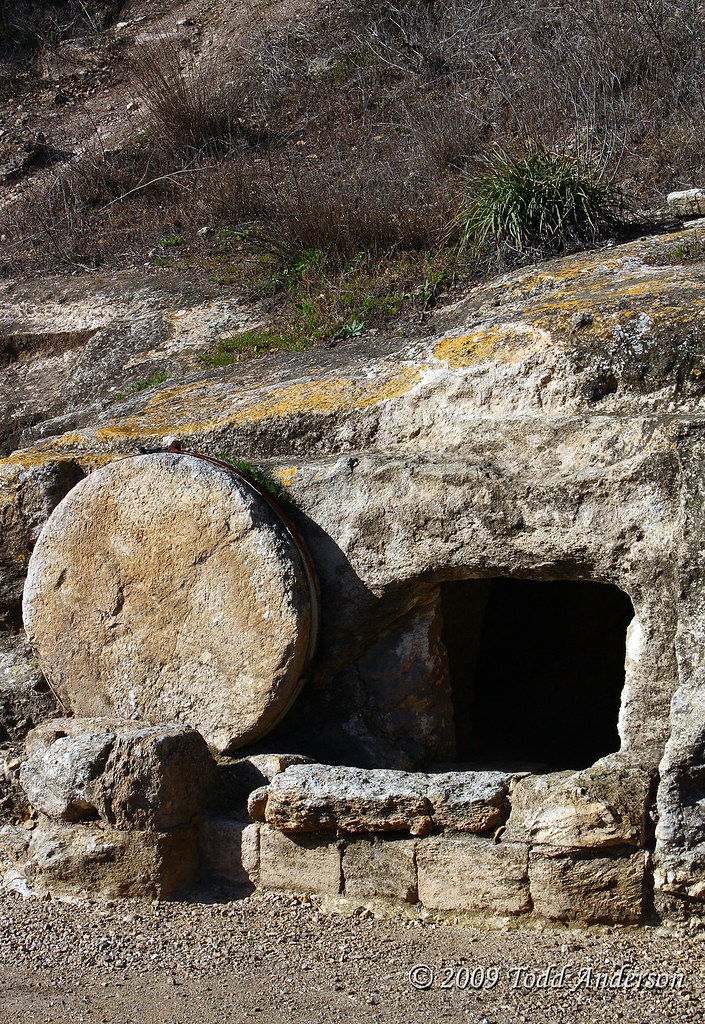
The description of the shepards rolling away the stone to access the well is an interesting parallel or foreshadowing of the stone being rolled away from the tomb where Jesus was placed.  The stone these Shepard’s moved gave them access to life-giving water.  The stone that was rolled away from Jesus’ tomb gave everyone in the world access to the living water that is present in Christ Jesus.

It sounds like moving the stone from the well was not a one person job and thus required several strong people to accomplish. This seems like a good metaphor for our role as Christians in sharing the Good News of Christ’s resurrection. We cannot accomplish the task on our own, it must be done in community with other Christians.

Prayer: God grant us the wisdom and patience to seek out other Christians who we can work with the “roll away the stone” to reveal and share the Good News of Christ.

Posted in Christian Community, Genesis, Life Together | Tagged , , , , , , , | Leave a comment

Installing New Wells

Gold Creek Pond, Snoqualmie Pass Washington

Gold Creek Pond, Snoqualmie Pass Washington

Isaac planted crops in that land and the same year reaped a hundredfold, because the LORD blessed him.  The man became rich, and his wealth continued to grow until he became very wealthy.  He had so many flocks and herds and servants that the Philistines envied him.  So all the wells that his father’s servants had dug in the time of his father Abraham, the Philistines stopped up, filling them with earth.  Then Abimelek said to Isaac, “Move away from us; you have become too powerful for us.”  So Isaac moved away from there and encamped in the Valley of Gerar, where he settled.  Isaac reopened the wells that had been dug in the time of his father Abraham, which the Philistines had stopped up after Abraham died, and he gave them the same names his father had given them.   Isaac’s servants dug in the valley and discovered a well of fresh water there. But the herders of Gerar quarreled with those of Isaac and said, “The water is ours!” So he named the well Esek,[c]because they disputed with him.  Then they dug another well, but they quarreled over that one also; so he named it Sitnah. He moved on from there and dug another well, and no one quarreled over it. He named it Rehoboth, saying, “Now the LORD has given us room and we will flourish in the land.”   From there he went up to Beersheba. That night the LORD appeared to him and said, “I am the God of your father Abraham. Do not be afraid, for I am with you; I will bless you and will increase the number of your descendants for the sake of my servant Abraham.”   Isaac built an altar there and called on the name of the LORD. There he pitched his tent, and there his servants dug a well.  Meanwhile, Abimelek had come to him from Gerar, with Ahuzzath his personal adviser and Phicol the commander of his forces.  Isaac asked them, “Why have you come to me, since you were hostile to me and sent me away?”   They answered, “We saw clearly that the LORD was with you; so we said, ‘There ought to be a sworn agreement between us’—between us and you. Let us make a treaty with you that you will do us no harm, just as we did not harm you but always treated you well and sent you away peacefully. And now you are blessed by the LORD.”  Isaac then made a feast for them, and they ate and drank.  Early the next morning the men swore an oath to each other. Then Isaac sent them on their way, and they went away peacefully.  That day Isaac’s servants came and told him about the well they had dug. They said, “We’ve found water!”   He called it Shibah, and to this day the name of the town has been Beersheba.   – Genesis 26:12-32 (NIV)

It sounds like Isaac has made his fortunes and is now returning to his roots and the land of his father.  The philistines are envious and apprehensive.  It is somewhat interesting that the Philistines would fill the wells that Abraham made instead of simply commandeering them for their own use.  Perhaps this was the equivalent of passive aggressive behavior on the part of the Philistines since they had made a treaty with Abraham.  Clearly there is something cultural involved which is probably lost on my 21st century understanding of water and wells.  It seems odd that they would be willing to destroy (by filling wells in) a thing that could provide them with valuable water.  I have run into people in my life who were more interested in tearing things down than building them up.  They are some of the most difficult people to love as Jesus called us to love.

It is not at all clear why the residents of the valley were not able to find and install their own wells just as Isaac and Abraham had done.  Perhaps they could not manage it due to a lack of servants, or the wealth of Abraham and Isaac that allowed them to “invest” in the needed wells to be more prosperous.  Maybe they simply lacked the skill and knowledge to accomplish it or they lacked God’s blessing that allowed Abraham and Isaac to be successful. In this culture and geographic location digging a well seems to be an indication that one is settled in a region and is willing to invest in developing long term resources and relationships.  It is like a tree putting down roots to obtain the needed resources for growth.

I think we all choose whether to invest in “new wells”, both physical and spiritual, as we move through life.  The “wells” could be getting to know other Christians, building a relationship with a non-Christian, or simply meeting with God on a regular basis. As we move into the hard and challenging areas of life we should pause to make sure we take time to install “wells” and ask for God’s blessing so that we can have the resources necessary to do what God has called us to do in that place.  As followers of Christ we have all “found water” in the living water provided by God.  We are called to drink deeply of his water, be refreshed, and share it with others.

Prayer: God help me to install new wells in those areas of my life into which you have called me today so that I have the “water” I need to  accomplish the tasks you have for me.

Posted in Christian Community, Christian Leadership, Discipleship, Following God, Genesis, Love for the Lost | Tagged , , , , , , , | Leave a comment

Meeting Daily at the Well

DSCN2200

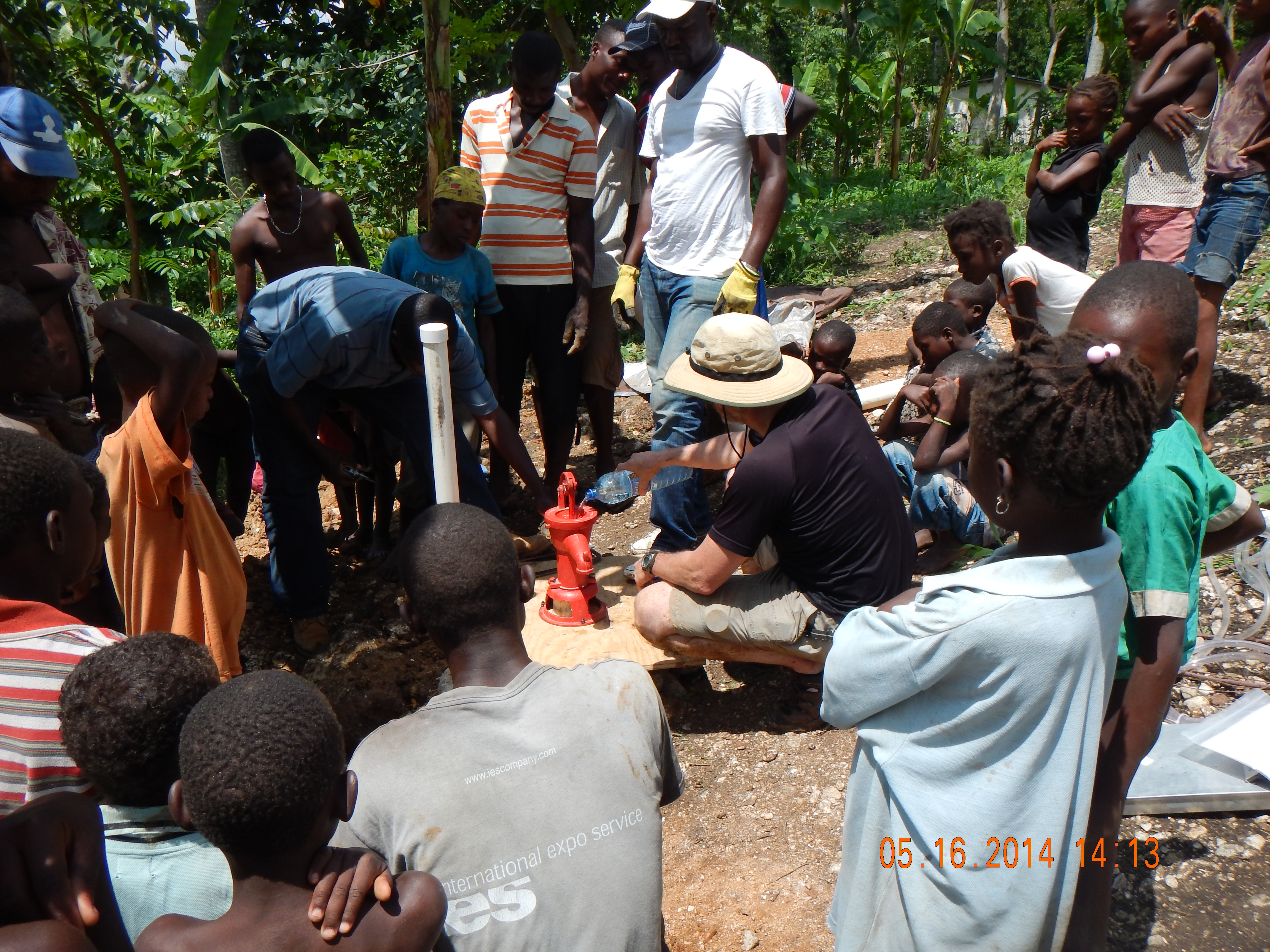
Water well in Haiti 2014

Then the servant left, taking with him ten of his master’s camels loaded with all kinds of good things from his master. He set out for Aram Naharaim and made his way to the town of Nahor.  He had the camels kneel down near the well outside the town; it was toward evening, the time the women go out to draw water.  Then he prayed, “LORD, God of my master Abraham, make me successful today, and show kindness to my master Abraham.  See, I am standing beside this spring, and the daughters of the townspeople are coming out to draw water.  May it be that when I say to a young woman, ‘Please let down your jar that I may have a drink,’ and she says, ‘Drink, and I’ll water your camels too’—let her be the one you have chosen for your servant Isaac. By this I will know that you have shown kindness to my master.”  Before he had finished praying, Rebekah came out with her jar on her shoulder. She was the daughter of Bethuel son of Milkah, who was the wife of Abraham’s brother Nahor. The woman was very beautiful, a virgin; no man had ever slept with her. She went down to the spring, filled her jar and came up again.  The servant hurried to meet her and said, “Please give me a little water from your jar.”  “Drink, my lord,” she said, and quickly lowered the jar to her hands and gave him a drink.  After she had given him a drink, she said, “I’ll draw water for your camels too, until they have had enough to drink.” So she quickly emptied her jar into the trough, ran back to the well to draw more water, and drew enough for all his camels. Without saying a word, the man watched her closely to learn whether or not the LORD had made his journey successful. – Genesis 24:10-19 (NIV)

The description of the wells for these communities are somewhat like modern day shopping malls or coffee shops, places where people gather to connect with each other and their community.  As part of my research as a geologist, I have worked in Haiti for a number of years on groundwater quality and safe and sustainable water for Haiti.  The springs and wells in Haiti serve the same function as the well described in this passage.  The women and children visit the wells and springs to get water for the household each day and have the opportunity to connect and communicate with others in the community.  In the case of this well God used water to demonstrate his provision for Abraham and Isaac in the form of identifying a wife, Rebekah.  The servant who was sent to observe was faithful in prayer and trusted that God would provide, just as God provided a ram in the thicket for Abraham so that he did not need to sacrifice his only son, Isaac.

This teaches me a couple of things; “stop, drop, and pray” when I encounter situations where the outcome is unsure or I am anxious about the “plan”.  It also teaches me that God has a plan that is often in motion and God can use seemingly innocuous events to achieve his desire for our lives.   Lastly, I need to listen and look intently to make sure that I do not miss God’s provision within an event that seems something akin to “just a woman getting water from a well”.

As I was praying and reflecting on this post, while not sleeping at 3:30 in the morning, God brought it to my attention that over the past several weeks I have been meeting Him at the “well” daily — so far at least.  A few have joined me on this journey I am on as blog “followers” for which I am thankful and humbled.  I am a fellow follower.  Sometimes I feel like my Christian journey is like a raft trip.  There are times when I hang on for dear life as God leads me through a class IV rapids (for non rafters read big scary whitewater).  Other times I am eddying out in a quiet pool to reflect, dry off, and recover.  But as one of my favorite singers/songwriters, Michael Card, put it in the song “Joy in the journey“:

There is a joy in the journey
There’s a light we can love on the way
There is a wonder and wildness to life
And freedom for those who obey.


The longer I walk with God the more this idea — that there is Joy in the journey — rings true in my soul.  How can one be successful on the Christian journey?  I think it comes down to having a sense of adventure, praying, looking, listening, and loving with the knowledge that God has a plan for us and our lives.

Prayer: God show me the subtle plans you have in motion and help me to slow down so that I can see and acknowledge your plan.  Be with me in times of whitewater rapids and quiet pools of reflection.

Posted in Discipleship, Following God, Genesis, Obedience | Tagged , , , , , , , , , , | Leave a comment

Abraham’s well or God’s well?

Then Abraham complained to Abimelek about a well of water that Abimelek’s servants had seized.  But Abimelek said, “I don’t know who has done this. You did not tell me, and I heard about it only today.”  So Abraham brought sheep and cattle and gave them to Abimelek, and the two men made a treaty.  Abraham set apart seven ewe lambs from the flock, and Abimelek asked Abraham, “What is the meaning of these seven ewe lambs you have set apart by themselves?”  He replied, “Accept these seven lambs from my hand as a witness that I dug this well.”  So that place was called Beersheba, because the two men swore an oath there. After the treaty had been made at Beersheba, Abimelek and Phicol the commander of his forces returned to the land of the Philistines.  Abraham planted a tamarisk tree in Beersheba, and there he called on the name of the LORD, the Eternal God. And Abraham stayed in the land of the Philistines for a long time.  – Genesis 21:25-32 (NIV)

It strikes me that that water and control over water was the ultimate status and power symbol of this time and region.  Those who possessed water could have more livestock and thus more status and power.  The treaty that was struck between Abimelek and Abraham may be the first treaty related to water described in the bible.  It appears that the control of water, in this case groundwater in a well, was tied to access and whoever installed the means to access the water (in this case Abraham).  This means that those with the technology, expertise, and resources could install wells and thus maintain control of the water.   Was the well Abraham’s or was it actually God’s? The way Abraham viewed the well would seem to be an early form of stepping away from the Lordship of God and his provision. Should not all have access to the water that is needed for life and prosperity?  Should some have the power to distribute this fundamental resource?  Are some resources such as food and water fundamentally different than others in terms of redistribution and power?

There is also an interesting message here about how we should view the “wells” God has given us.  In our time and culture the “wells” we control might look like a second home, a BMW, an expensive house, stocks, IRAs, etc.  I think God wants us to hold these things with an open hand — cede control of these things to God. That does not mean I believe in, or support, government-driven redistribution of wealth. Forced redistribution does not allow God to change our hearts and minds.  The process and how we get there is as important as the end result. Where this line of reasoning gets more complicated and muddy is for resources such as water, food, and access to healthcare.  Some form of redistribution of these resources seems warranted.

Prayer: God help me to place the things in my life in proper perspective and to cede control of them to you.

Posted in Following God, Genesis, Obedience, The Nature of God, The Spiritual Realm | Tagged , , , , , , | Leave a comment

Hidden wells

Early the next morning Abraham took some food and a skin of water and gave them to Hagar. He set them on her shoulders and then sent her off with the boy. She went on her way and wandered in the Desert of Beersheba. When the water in the skin was gone, she put the boy under one of the bushes.  Then she went off and sat down about a bowshot away, for she thought, “I cannot watch the boy die.” And as she sat there, she began to sob. God heard the boy crying, and the angel of God called to Hagar from heaven and said to her, “What is the matter, Hagar? Do not be afraid; God has heard the boy crying as he lies there. Lift the boy up and take him by the hand, for I will make him into a great nation.”  Then God opened her eyes and she saw a well of water. So she went and filled the skin with water and gave the boy a drink. God was with the boy as he grew up. He lived in the desert and became an archer. While he was living in the Desert of Paran, his mother got a wife for him from Egypt. – Genesis 21:14-21 (NIV)

Hagar and her son Ishmael were perhaps one of the first single parent families. Abraham did not seem to be overly concerned for his son and Hagar as he must have known that the amount of food and water he gave them were not adequate to survive for long in the desert. When Abraham sent them off he was sentencing them to death unless God intervened.  Perhaps since God said he would be the father of a great nation Abraham trusted God to provide for Hagar and her son.  A less gracious reading would be that he was merely getting rid of a problem that was causing family strife, but either way it was pretty harsh treatment from the father of two great nations.

When the water in the water skin was gone Hagar must have been hopeless and sure that they would parish from thirst. By the grace of God I have never had to be a single parent trying to raise children, but I can imagine there are times when single parents feel a bit like Hagar in the desert.  What I can’t imagine is how she must have felt leaving her son under a bush to die.  She must have felt that the “God who sees me” had somehow lost sight of her.

What is interesting is that it seems that Hagar had also lost sight of God.  God opened Hagar’s eyes and the well of water was visible. This implies to me that the water well was always there but she could not see it.  She was not standing in the right spot or her eyes were not open wide enough.  All groundwater is in fact hidden –it is there but we cannot see it.  Sometimes God’s hand in our lives can be a bit like groundwater.  I think there are many times when God provides “hidden wells” for us that we miss because we are either not willing to see them or we are too distracted to notice.  We careen through our days with our water skins almost empty while God is busy placing “hidden wells” across our path hoping we will see them and fill our water skins with living water to refresh our souls as well as our bodies.

Prayer: God open our eyes to see the hidden wells and blessings you are providing for us.

Posted in Genesis, God's Love for Us | Tagged , , , , , , , , , | Leave a comment