Rage Like Great Waters

IMGP4950The sound of a cry comes from Babylon, the sound of great destruction from the land of the Babylonians.    The Lord will destroy Babylon; he will silence her noisy din. Waves of enemies will rage like great waters; the roar of their voices will resound.   A destroyer will come against Babylon; her warriors will be captured, and their bows will be broken. For the Lord is a God of retribution; he will repay in full.   “I will make her officials and wise men drunk, her governors, officers and warriors as well; they will sleep forever and not awake,” declares the King, whose name is the Lord Almighty.   This is what the Lord Almighty says: “Babylon’s thick wall will be leveled and her high gates set on fire; the peoples exhaust themselves for nothing, the nations’ labor is only fuel for the flames.”   This is the message Jeremiah the prophet gave to the staff officer Seraiah son of Neriah, the son of Mahseiah, when he went to Babylon with Zedekiah king of Judah in the fourth year of his reign. Jeremiah had written on a scroll about all the disasters that would come upon Babylon—all that had been recorded concerning Babylon. He said to Seraiah, “When you get to Babylon, see that you read all these words aloud. Then say, ‘ Lord , you have said you will destroy this place, so that neither people nor animals will live in it; it will be desolate forever.’ When you finish reading this scroll, tie a stone to it and throw it into the Euphrates. Then say, ‘So will Babylon sink to rise no more because of the disaster I will bring on her. And her people will fall.’ ” The words of Jeremiah end here.  – Jeremiah 51:54-64

We are nearing the end of the book of Jeremiah with this passage.  In fact this passage ends with “The words of Jeremiah end here”.  I am not sure what the remainder of the book of Jeremiah represents if the prophetic words of Jeremiah end here.  Perhaps it is like the “things left out” back in 1 Chronicles.  The overall theme of the passage is one of continued rebuke and retribution for the people of Babylon.

God describes Babylon as having a “noisy din”.  Presumably this reference is largely metaphorical.  The “noise” God is talking about here is probably not the kind that your neighbor produces when they gather their garage band to practice at 1 am. God is implying that Babylon is a little like the “land of whirring wings” described back in Isaiah 18:1-7 — a place of pursuit without purpose or direction, a restless sea.  The people are probably scurrying about convinced they are accomplishing great things.

God is predicting that “Waves of enemies” that “will rage like great waters” will overtake Babylon and crush it, leaving only dry springs.  Anyone who has swam in heavy surf and waves knows the fatigue and sense of desperation that fighting against waves can bring.  God is describing this same sort of devastation for the Babylonians.  They will be caught in rip currents and raging torrents unlike any they have experienced.  They will not be able to swim their way out — “the peoples exhaust themselves for nothing, the nations’ labor is only fuel for the flames.”

The passage ends with some insight into how these prophetic words of Jeremiah, recorded on a scroll, are to be shared with the people of Babylon.  They are to be read to the Babylonians by a staff officer named Seraiah: “When you get to Babylon, see that you read all these words aloud”.  After Seraiah is finished reading the scroll he is to “tie a stone to it and throw it into the Euphrates.  Apparently this is to serve as a metaphor for the sinking of Babylon into destruction, “So will Babylon sink to rise no more because of the disaster I will bring on her. And her people will fall.”

I am struck by the last couple of words of this passage “her people will fall”.  I cannot help feeling that this is the fate of all the nations and people that are in “pursuit without purpose”.  God wants us to pursue Him.  If we invest our lives in pursuing passions other than God we also will fall (and fail).

Prayer: God You have built into us a passion for the pursuit of You.  Help us to pursue this passion above all others.


Posted in Covenant, Discernment, God's Love for Us, Jeremiah, Obedience, Redemption, Sin, The Nature of God | Tagged , , , , , , , | 1 Comment

Dry Springs

486443_10101096791328405_1102373657_nTherefore this is what the Lord says: “See, I will defend your cause and avenge you; I will dry up her sea and make her springs dry.   Babylon will be a heap of ruins, a haunt of jackals, an object of horror and scorn, a place where no one lives.   Her people all roar like young lions, they growl like lion cubs.   But while they are aroused, I will set out a feast for them and make them drunk, so that they shout with laughter— then sleep forever and not awake,” declares the Lord .   “I will bring them down like lambs to the slaughter, like rams and goats.   “How Sheshak will be captured, the boast of the whole earth seized! How desolate Babylon will be among the nations!   The sea will rise over Babylon; its roaring waves will cover her.   Her towns will be desolate, a dry and desert land, a land where no one lives, through which no one travels.   I will punish Bel in Babylon and make him spew out what he has swallowed. The nations will no longer stream to him. And the wall of Babylon will fall. – Jeremiah 51:36-44
I feel like this passage is giving me water whiplash. First the sea and springs are dried up; then the sea rises over Babylon, and in the end “Her towns will be desolate, a dry and desert land.”  Why such a mixing of metaphors?  What is it about Babylon that warrants a punishment of such an unusual mixture of thirst and drowning?

In the last couple of verses of Jeremiah I have explored the idea that Babylon is a metaphor for all those who reject God. If we accept this metaphorical equivalency then the juxtaposition of drought and flood makes more sense.  This passage is describing a nation and a people out of equilibrium, oscillating from one extreme to another, drought and flood.   One of the benefits I have realized since I began my pursuit of God is that he provides stability to my emotions and my spirit that I was lacking before.

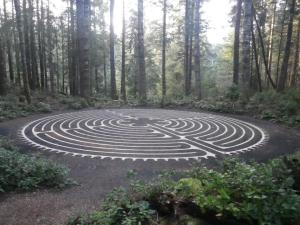
Perhaps God is making the point here that without him life is full of spiritual and emotional extremes.  The only remedy to this is to keep God at the center of our lives no matter how twisted and confusing the path becomes.  The Labyrinth in Chartres Cathedral, which was the model for the one pictured above in the forests of Oregon, was a symbolic way of looking at our journey through life.  Life is full of twists and turns and it only when we have a clear destination that we can see these twists as a positive things leading us toward the ultimate goal of being with God in the “center”.

The Babylonians lack a center to provide stability in their lives and so do the people of Israel.   God has continually shown the people of Israel a different way.  In the midst of hardship, droughts, and floods God has asked them to plant themselves near the River and send their roots deep into the water table so they can access the Living Water that is the only true source of lasting stability and equilibrium.  They are still in the process of grabbing a clue here.

The take home message for me is that no matter how dry I feel or how much I feel like I am being inundated by life’s floods it is always going to be easier with God at the center.

Prayer: God thank You for being my center of stability and equilibrium in times of adversity and undcertainty


Posted in Death and Dying, Discernment, Discipleship, Faith, Following God, God's Love for Us, Jeremiah, Obedience, religion, The Earthly Realm, The Nature of God, The Spiritual Realm, Trusting God | Tagged , , , , , , | 1 Comment

River Crossings

57263_25

Lift up a banner in the land! Blow the trumpet among the nations! Prepare the nations for battle against her; summon against her these kingdoms: Ararat, Minni and Ashkenaz. Appoint a commander against her; send up horses like a swarm of locusts. Prepare the nations for battle against her— the kings of the Medes, their governors and all their officials, and all the countries they rule. The land trembles and writhes, for the Lord ’s purposes against Babylon stand— to lay waste the land of Babylon so that no one will live there. Babylon’s warriors have stopped fighting; they remain in their strongholds. Their strength is exhausted; they have become weaklings. Her dwellings are set on fire; the bars of her gates are broken. One courier follows another and messenger follows messenger to announce to the king of Babylon that his entire city is captured, the river crossings seized, the marshes set on fire, and the soldiers terrified.” – Jeremiah 51:27-32

This passage describes the end of the the siege that God has directed at Babylon. Many armies will come and “lay waste to the land of Babylon so that no one will live there”. It sounds like a pretty bleak and dark time for the Babylonians. They are exhausted and beaten. A parade of messengers inform the king of Babylon that the city is lost, “the river crossings seized, the marshes set on fire, and the soldiers terrified.”

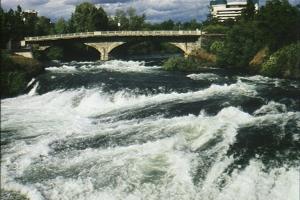
The water reference here is to the “river crossings” that are seized. In this part of the world if you seize the river crossings you win the war. The river crossings represented a victory over nature and God is saying that these will fall. This is consistent with the tone of yesterday’s passage about God being the creator of everything and ruler of all creation. He controls all the river crossings, both spiritual and physical.

God has used the idea of crossing a river several times before to represent a new covenant with the people of Israel as they crossed over the Jordan into the promised land. Crossing over has also been used metaphorically to allude to crossing from this life into death as was the case when Moses crossed over before crossing over the Jordan River. In a sense God is reminding the people of Babylon, and us, that He ultimately controls whether, and how, we “cross over” from this physical life to undiscovered country to come. Even when we think we have constructed earthly “bridges” that will last forever they are subject to seizure.

In the not too distant future God will “cross over” for all of us to form a final bridge which can never be seized. The bridge that God creates when He is pierced for our transgressions is unlike any human bridge over earthly rivers. This bridge has no gatekeepers to prevent our crossing. The only thing that can prevent our crossing is our own unwillingness to faithfully follow God across the bridge. We can choose to remain on the far side of the river – apart from God.

Prayer: God thank You for providing a bridge that can never be seized and path that we can follow.

Posted in Covenant, Death and Dying, Faith, Following God, Free Will, God's Love for Us, Jeremiah, Obedience, The Earthly Realm, The Nature of God, The Spiritual Realm, Trusting God | Tagged , , , , , , | Leave a comment

By Many Waters

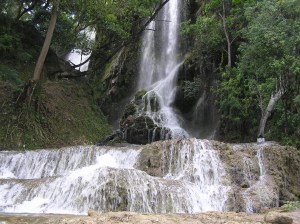
Saut d'eau waterfall in Haiti

sau d’eau waterfall in Haiti

Sharpen the arrows, take up the shields! The Lord has stirred up the kings of the Medes, because his purpose is to destroy Babylon. The Lord will take vengeance, vengeance for his temple.   Lift up a banner against the walls of Babylon! Reinforce the guard, station the watchmen, prepare an ambush! The Lord will carry out his purpose, his decree against the people of Babylon.   You who live by many waters and are rich in treasures, your end has come, the time for you to be destroyed.   The Lord Almighty has sworn by himself: I will surely fill you with troops, as with a swarm of locusts, and they will shout in triumph over you.   “He made the earth by his power; he founded the world by his wisdom and stretched out the heavens by his understanding.   When he thunders, the waters in the heavens roar; he makes clouds rise from the ends of the earth. He sends lightning with the rain and brings out the wind from his storehouses. – Jeremiah 51:11-16

This passage continues the description of the fall of Babylon that was the topic of yesterday’s post about God stirring up armies from the north to take on Babylon. God is stirring up the kings of the Medes.  The Medes were the people in what is now northwestern Iran and apparently the modern people of Iran are their descendants.

God is describing the consequences of the Babylonian attacks on Jerusalem and the temple, “The Lord will take vengeance, vengeance for his temple.”  I admit it is somewhat confusing to have God seek vengeance for something that He allowed as a consequence for the stubborn people of Jerusalem and Judah.  Rather than dwell on this perplexing behavior I am willing to accept that God sees and knows much more that I do about what these people need and the path they are following, both the Babylonians and the Israelites.  God sees more of the spiritual and physical landscape than I can and as a result He may do things that from my perspective seem arbitrary or confusing.

I cannot shake the feeling that God is talking about more that just the Babylonians and this time and place when He says He will “carry out his purpose, his decree against the people of Babylon.”  I wonder if the people of Babylon are a metaphor for all those who stand apart from God by choice.  This would include me at times, and it was definitely where I was at before I committed to following the Way of Jesus.

God’s description of the seemingly prosperous people of Babylon as those who “live by many waters and are rich in treasures” would fit many people in modern affluent countries, like the United States and Europe.  People in these countries are rich in treasures and have concluded that their affluence and power is solely a result of their own intellect and power — no need for a “higher power” to direct their lives.  This state of affairs will not stand in Babylon and it will probably not stand forever in our modern “Babylons” either.

God then says something odd, “The Lord Almighty has sworn by himself, I will surely fill you with troops, as with a swarm of locusts, and they will shout in triumph over you.”  So God makes a vow to Himself to follow through with the dire consequences for Babylon.  I guess this makes sense, but it is another example of perplexing pronouns that must have made the people who wrote down these words scratch their heads.

The justification God provides for this exercise of power is to say, about Himself, “He made the earth by his power; he founded the world by his wisdom and stretched out the heavens by his understanding. When he thunders, the waters in the heavens roar; he makes clouds rise from the ends of the earth. He sends lightning with the rain and brings out the wind from his storehouses.”  This is hearkening back to the very beginning when God’s logos, or reason, gave rise to the very spiritual and physical reality in which all these events are taking place.  God is saying who can know how this should all work out better than I, the Great I Am?

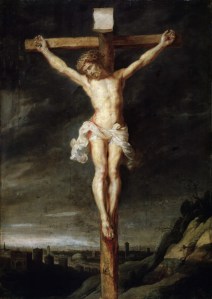
Even the seemingly vengeful actions God is taking against Babylon are part of the “Spiritual Cycle” that includes both rain on tender plants and the deadly driving rainstorm that God is unleashing here.  This is sometimes difficult to understand from where we stand now — in the shadow of the cross.

Prayer: You bring both storms and gentle rain.  Help us to accept both when they come and the grace that You shower on all who follow You.


Posted in Conflict, Discernment, Following God, Jeremiah, Nature, The Earthly Realm, The Nature of God, The Spiritual Realm | Tagged , , , , , , | 1 Comment

Stirred Up

bald-faced_hornet_nest_08-02-13Look! An army is coming from the north; a great nation and many kings are being stirred up from the ends of the earth.   They are armed with bows and spears; they are cruel and without mercy. They sound like the roaring sea as they ride on their horses; they come like men in battle formation to attack you, Daughter Babylon.   The king of Babylon has heard reports about them, and his hands hang limp. Anguish has gripped him, pain like that of a woman in labor.   Like a lion coming up from Jordan’s thickets to a rich pastureland, I will chase Babylon from its land in an instant. Who is the chosen one I will appoint for this? Who is like me and who can challenge me? And what shepherd can stand against me?” – Jeremiah 50:41-44

It has been a while since I have been “on the water”.  It was a chapter from a book called The Pursuit of God by A.W. Tozer that finally got me out of my lounge chair and back on the water.  I am just finishing a study of Tozer’s book with my siblings,  It has been a true blessing both to share this experience with them, and to dwell in the wisdom that Tozer reveals.  The last chapter of the book is called a “The Sacrament of Living” and it is about how we reconcile our spiritual and physical lives.

Tozer puts it this way “One of the greatest hindrances to internal peace which the Christian encounters is the common habit of dividing our lives into two areas, the sacred and the secular.”  This merging of the secular and the sacred streams of my life is one of the reasons I started this blog.  For the last several weeks I have effectively maintained a levee separating these two streams.  It is time to breach the levee and “free the river”.  It is ironic that the language of today’s verse includes the idea of God “stirring up” something.  He has certainly given me a good “stir” today.

When I think of something being “stirred up” what immediately comes to mind is a beehive or a hornet’s nest. When I was in High School I worked doing lawn maintenance and landscaping.  This entailed lots and lots of grass cutting and, occasionally, pruning trees and bushes.  I can still remember distinctly one day when I was pruning a large fruit tree on a warm spring day.  I was happily clipping away when out of the corner of my eye I sensed movement in the tree.  As I looked toward the movement I remember seeing a very angry hornet heading straight for my head.  It seemed to grow larger as it approached.  The hornet that I had “stirred up” was successful in finding my head and delivering a very painful sting.

I almost immediately began itching and breaking out in hives.  It was then that I discovered that I am in fact allergic to bee and hornet stings.  I was never allergic to bees as a child but I suspect my becoming so had something do do with an encounter with a beehive in third grade. We were on a field trip in the mountains and several of us boys headed into the woods to relieve ourselves.  Four boys tromped down the path, the last one in line stepped on a beehive, and the end result was that each of us had 20-30 stings each before we made it back to the school bus.  I am convinced that this occurrence is what made me allergic to bees stings later in life.

So…back to the passage.  The word picture of God “stirring up” enemies from the north Conjures in my mind is an angry bunch of bees or hornets descending on Babylon.  God, with his mighty hand, is shaking the hive of armies to the North and then allowing them to descend on Babylon.  These armies are described as sounding “like the roaring sea as they ride on their horses”.  My concept of a roaring sea is something wild, dangerous, and out of our control.  A roaring sea can be a scary thing, especially if you are not comfortable with your position and safety in relation to this force of nature.  I am pretty sure the Babylonians were feeling very insecure.

In the final part of the passage God uses a somewhat confusing mixed metaphor: “like a lion coming up from Jordan’s thickets to a rich pastureland, I will chase Babylon from its land in an instant. Who is the chosen one I will appoint for this? Who is like me and who can challenge me? And what shepherd can stand against me?”  God compares Himself to a lion, which makes sense.  Then God seems to be saying that He alone can accomplish the overthrow of Babylon.

I suppose one could view this metaphor in a broader sense, referring to the overthrow of the ruler of this world through a “chosen one”.  Perhaps this is stretching this metaphor to the breaking point, but it is certainly sounds like God is saying He will send a chosen one to overthrow this world and this Shepherd will be without equal.  Not a bad description of the Good Shepherd, Jesus.

Prayer: God help me to merge the sacred and the secular streams of my life in a way that will allow me walk upon the water wherever you may lead me.

Posted in Christianity, Conflict, Discernment, Discipleship, Following God, Jeremiah, Jesus, Obedience, The Nature of God | Tagged , , , , , | 2 Comments

A Strong Redeemer

slide_346099_3632589_freeThis is what the Lord Almighty says: “The people of Israel are oppressed, and the people of Judah as well. All their captors hold them fast, refusing to let them go.   Yet their Redeemer is strong; the Lord Almighty is his name. He will vigorously defend their cause so that he may bring rest to their land, but unrest to those who live in Babylon.   “A sword against the Babylonians!” declares the Lord — “against those who live in Babylon and against her officials and wise men!   A sword against her false prophets! They will become fools. A sword against her warriors! They will be filled with terror.   A sword against her horses and chariots and all the foreigners in her ranks! They will become weaklings. A sword against her treasures! They will be plundered.   A drought on her waters! They will dry up. For it is a land of idols, idols that will go mad with terror.   “So desert creatures and hyenas will live there, and there the owl will dwell. It will never again be inhabited or lived in from generation to generation.   As I overthrew Sodom and Gomorrah along with their neighboring towns,” declares the Lord , “so no one will live there; no people will dwell in it. – Jeremiah 50:33-40

God shows up for the people of Judah and Israel in this passage.  They are oppressed and captives in a strange land.  Kind of like all of us I suppose.  We are all captives to the ruler of this land of oblivion that we walk and live within.  God comes as a redeemer for the people of Judah and Israel, and He does the same for us.  Once again the kernel of the Gospel is buried here in Jeremiah.

The captors will be conquered and the captives set free.  God promises to bring “A drought on her waters! They will dry up. For it is a land of idols, idols that will go mad with terror.” Babylon is a land of water and rivers so to say that these waters will dry up is a devastating prediction.  It would be like someone saying to a modern city or state that all their money will become worthless and they will no longer be able to trade.

The land of Babylon is a land of idols.  These idols come in many shapes and sizes, but all will be overcome by the sheer might and power of God when He takes on the Babylonians.  The lush and successful land of the Babylonians will be reduced to a place that will “never again be inhabited or lived in from generation to generation”.  In the end God will win.

The part of this passage that resonates for me is early on when God says “All their captors hold them fast, refusing to let them go. Yet their Redeemer is strong; the Lord Almighty is his name. He will vigorously defend their cause so that he may bring rest to their land.”  I am not sure what meaning the people of Judah and Israel would have attached to the term “redeemer”.  They were probably not thinking of a young man who would show up in Galilee. A god-man who would would be pierced for our transgressions and die to redeem all of us.

It is reassuring that our redeemer is strong, stronger than anyone or anything that holds us captive.  No matter what idol, habit, practice, or sin holds us captive.  He has broken all the snares that hold us tight around the ankles and keep us from finding the eternal rest that God desires for us.  He will “vigorously defend” our cause against the powers of this world, but His defense was not what people expected.

Prayer: God thank You for being our Redeemer and setting us free from all that would bind us and prevent us from resting in You.

Posted in Christianity, Covenant, Following God, God's Love for Us, Jeremiah, Jesus, reconciliation, Redemption, The Earthly Realm, The Nature of God, The Spiritual Realm | Tagged , , , , , , , | Leave a comment

A Resting Place for Lost Sheep

Cheviot_lamb_on_the_Isle_of_Lewis

In those days, at that time,” declares the Lord , “the people of Israel and the people of Judah together will go in tears to seek the Lord their God. They will ask the way to Zion and turn their faces toward it. They will come and bind themselves to the Lord in an everlasting covenant that will not be forgotten. “My people have been lost sheep; their shepherds have led them astray and caused them to roam on the mountains. They wandered over mountain and hill and forgot their own resting place. Whoever found them devoured them; their enemies said, ‘We are not guilty, for they sinned against the Lord , their verdant pasture, the Lord , the hope of their ancestors. – Jeremiah 50:4-7

The language of this passage is reminiscent of the new testament in its reference to lost sheep (Luke 15:3-7). Jesus spoke often of people as lost sheep and of Himself as the Shepherd, “I am the good shepherd. The good shepherd lays down his life for the sheep.” (John 10:11). This passage is a prequel to the new song that God will be singing in the future through His son Jesus.

The key part of this passage, and the reference to water, is in the beginning: “the people of Israel and the people of Judah together will go in tears to seek the Lord their God”. The people of Judah seem to have finally gotten the message that God loves them, and they choose to go, together, to seek Him out. The people are thirsty and hungry for God. Their souls are sick and they are shedding tears because they know there is something missing from their lives.

They are ready to take concrete actions to find their way back to God. They will “ask the way to Zion and turn their faces toward it.” The people of Israel seek, ask, and turn in order to find their way back to God. All three of these actions remain the most effective way to find our way back to God today. The last step in their return involves a commitment and a covenant, “they will come and bind themselves to the Lord in an everlasting covenant that will not be forgotten.”

It is not enough to be ever seeking, we must, at some point, arrive at our destination and act upon what we find. The people of Judah are to turn and make a new covenant with God. This sounds very much like the act of repentance and baptism practiced by modern followers of Christ.

This passage makes it clear that although the people must shoulder the consequences of their choices they also had help in becoming lost sheep. Their leaders were failing the “Meribah Test” miserably by leading them away from God: “My people have been lost sheep; their shepherds have led them astray and caused them to roam on the mountains. They wandered over mountain and hill and forgot their own resting place.”

The people forgot their proper “resting place” beside the quiet waters where peace like a river can be found. As a result they “wandered over mountain and hill and forgot their own resting place. Whoever found them devoured them.” The people were reaping the fruit of the fact that their leaders were not leading and they were not seeking to put God at the center of their lives. It is reassuring that they have finally found their way home and we can choose to do the same.

Prayer: God we are all lost sheep in need of a Shepard. Help us to seek, ask, turn, and make a lasting commitment to follow You.

Posted in Christianity, Conflict, Covenant, Discernment, Following God, Jeremiah, Jesus, Obedience, reconciliation, Redemption, The Nature of God, Trusting God | Tagged , , , , , , , | 2 Comments

A Restless Sea

DSCN3437

Edom will become an object of horror; all who pass by will be appalled and will scoff because of all its wounds. As Sodom and Gomorrah were overthrown, along with their neighboring towns,” says the Lord , “so no one will live there; no people will dwell in it. “Like a lion coming up from Jordan’s thickets to a rich pastureland, I will chase Edom from its land in an instant. Who is the chosen one I will appoint for this? Who is like me and who can challenge me? And what shepherd can stand against me?” Therefore, hear what the Lord has planned against Edom, what he has purposed against those who live in Teman: The young of the flock will be dragged away; their pasture will be appalled at their fate. At the sound of their fall the earth will tremble; their cry will resound the Red Sea. Look! An eagle will soar and swoop down, spreading its wings over Bozrah. In that day the hearts of Edom’s warriors will be like the heart of a woman in labor. Concerning Damascus: “Hamath and Arpad are dismayed, for they have heard bad news. They are disheartened, troubled like the restless sea. Damascus has become feeble, she has turned to flee and panic has gripped her; anguish and pain have seized her, pain like that of a woman in labor. Surely, her young men will fall in the streets; all her soldiers will be silenced in that day,” declares the Lord Almighty. – Jeremiah 49:17-26

The Edomites are the target of Jeremiah’s prophecy in this passage. The people of Edom are traditionally thought to descend from Esau, son of the Isaac. They apparently made an alliance with the Babylonians and helped in the sacking and slaughter of the people of Judah. God has some dire consequences for this people group that live at the south end of the dead sea, “Like a lion coming up from Jordan’s thickets to a rich pastureland, I will chase Edom from its land in an instant.”

It is interesting that the imagery used to describe the judgement of Edom involves a lion emerging from the Jordan River. God himself has taken on the mantle of lion and lamb in saying that He himself will bring this judgement. He asks the rhetorical questions: “Who is like me and who can challenge me? And what shepherd can stand against me”. I think God is reminding the leaders of Edom that they have been standing against Him and they have abandoned their sheep and led their people astray.

As a result of the people’s choices the lion will come and devour them, “The young of the flock will be dragged away; their pasture will be appalled at their fate. At the sound of their fall the earth will tremble; their cry will resound the Red Sea.” This sounds pretty bad, and part of me wants to ask why would God act in this way, but what is to occur is actually the consequences of the choices of the people and leaders of Edom. God is giving them what they desired, namely to Shepard their own flock and make their own way.

The warriors in response to this coming judgement are compared to the heart of a woman in labor, “In that day the hearts of Edom’s warriors will be like the heart of a woman in labor.” Since I am not a woman and have not experienced child birth it is difficult to place this metaphor in context. My wife gave birth to two wonderful daughters and in discussing the experience with her it seems that the experience is both terrible and wonderful at the same time. She said that the time before labor is filled with a sense of mixed sense of anticipation and trepidation about what will happen when the baby comes and the pain that will accompany the baby’s arrival.

I am not sure that the warriors of Edom would describe this coming calamity as wonderful, but in God does still love them and I am pretty sure that if they repented of their previous choices God would forgive them and God’s “arrival” would end up being a blessing. They have to experience the consequences of their actions and God is telling them that it will be painful. The end result can either bring them closer to God or separate them further from Him.

The prophecy then turns to Damascus to the north. The response of the people of Damascus is somewhat different than Edom. They are “disheartened, troubled like the restless sea”. The metaphor conjures in my mind a foaming, churning, sea with waves moving in all directions. This sea has energy but no direction or purpose. The people of Damascus are fleeing, but they do not have a clear idea where or to whom they should flee.

I am not sure what the take-home message is from this passage. Perhaps it is that even when things seem bleak and we are reaping the consequences of poor choices we should not be afraid to turn around and turn to God. He will meet us if we do. The people of Edom and Damascus do not really figure this out and it is their loss.

Prayer: God help us to remember when we have made poor choices that You still love us and want to meet us on the road to return to You.

Posted in Christianity, Conflict, Covenant, Discernment, Discipleship, Following God, Forgiveness, God's Love for Us, grace, Jeremiah, Love for the Lost, reconciliation, Redemption, The Nature of God | Tagged , , , , , , | 1 Comment

A Jar No One Wants

wpid-wp-1444345505872.jpg“We have heard of Moab’s pride— how great is her arrogance!— of her insolence, her pride, her conceit and the haughtiness of her heart.   I know her insolence but it is futile,” declares the Lord , “and her boasts accomplish nothing.   Therefore I wail over Moab, for all Moab I cry out, I moan for the people of Kir Hareseth.   I weep for you, as Jazer weeps, you vines of Sibmah. Your branches spread as far as the sea ; they reached as far as Jazer. The destroyer has fallen on your ripened fruit and grapes.   Joy and gladness are gone from the orchards and fields of Moab. I have stopped the flow of wine from the presses; no one treads them with shouts of joy. Although there are shouts, they are not shouts of joy.   “The sound of their cry rises from Heshbon to Elealeh and Jahaz, from Zoar as far as Horonaim and Eglath Shelishiyah, for even the waters of Nimrim are dried up.   In Moab I will put an end to those who make offerings on the high places and burn incense to their gods,” declares the Lord .   “So my heart laments for Moab like the music of a pipe; it laments like a pipe for the people of Kir Hareseth. The wealth they acquired is gone.   Every head is shaved and every beard cut off; every hand is slashed and every waist is covered with sackcloth.   On all the roofs in Moab and in the public squares there is nothing but mourning, for I have broken Moab like a jar that no one wants,” declares the Lord . – Jeremiah 48:29-38

The prophecy concerning Moab continues in this passage.  Yesterday’s post ended with the Moabites becoming a “bush in the desert”. Here they will become a “jar that no one wants”.  It paints a bleak picture of the consequences of  “Moab’s pride— how great is her arrogance.”  Moab has a “haughtiness of her heart”.

What does it mean to have a haughty heart?  The heart has been used to represent our inner self, or soul, in previous passages I have floated past (Proverbs 21:1-3Psalm 69:30-36Joshua 7:3-9). Haughty is an interesting word, apparently it comes from an Old French word “haut”, which literally means “lofty”.  So God is accusing these people of having lofty souls which, on the face of it, would not seem to be bad.  I think the trouble is the source of the people’s “loftiness”.  They feel like they are high and mighty. but they are not gaining this height through God almighty.  They are elevating themselves by their possessions and pride.

The next several sentences are devoted to a description of the despair and destruction that will come to Moab.  There will be much weeping and wailing.  All the features of their life and culture will be altered and/or removed, “even the waters of Nimrim are dried up.” This statement about drying up the waters of Nimrim sounded very familiar to me.  It turns out that there is a very similar description of destruction provided back in Isaiah 15:5-9.

The passage continues by providing an insight into the heart of God, “So my heart laments for Moab like the music of a pipe; it laments like a pipe for the people of Kir Hareseth.”  I had to pray and think hard about this murky metaphor before I gained even a shard of understanding.  God’s heart, or soul, laments the loss of the people of Moab in some fashion like the music of a pipe.  The pipe or flute is one of my favorite instruments.  I wish I had musical talent to play, but alas I have almost no musical talent.

A flute or pipe is a wind instrument, meaning it is human breath that makes the music.  So for God to compare His sense of spiritual loss to the music from a pipe is to say that the this event in Moab, and what appears to be an earthly mess, is also a profound spiritual battle in which God is lamenting the spiritual loss of the people of Moab.  It is almost as if God regrets Moab being so completely broken, “I have broken Moab like a jar that no one wants”.

There is really no “happy ending” within the passage.  The happy ending comes much later when Jesus comes to make it clear that there is no such thing as a jar that no one wants.  We are all broken pieces of pottery in need of a Savior.

Prayer: God Your heart sings for us out of the darkness.  Thank You for accepting all of us “broken jars”.

Posted in Christianity, Covenant, Following God, God's Love for Us, Jeremiah, Jesus, Love for the Lost, Obedience, reconciliation, The Nature of God, The Spiritual Realm, Trusting God | Tagged , , , , , | Leave a comment

Like a Bush in the Desert

182737_870188233865_3761969_nConcerning Moab: This is what the Lord Almighty, the God of Israel, says: “Woe to Nebo, for it will be ruined. Kiriathaim will be disgraced and captured; the stronghold will be disgraced and shattered.   Moab will be praised no more; in Heshbon people will plot her downfall: ‘Come, let us put an end to that nation.’ You, the people of Madmen, will also be silenced; the sword will pursue you.   Cries of anguish arise from Horonaim, cries of great havoc and destruction.   Moab will be broken; her little ones will cry out.    They go up the hill to Luhith, weeping bitterly as they go; on the road down to Horonaim anguished cries over the destruction are heard.   Flee! Run for your lives; become like a bush in the desert.   Since you trust in your deeds and riches, you too will be taken captive, and Chemosh will go into exile, together with his priests and officials.   The destroyer will come against every town, and not a town will escape. The valley will be ruined and the plateau destroyed, because the Lord has spoken.   Put salt on Moab, for she will be laid waste ; her towns will become desolate, with no one to live in them. – Jeremiah 48:1-9

The kingdom of Moab, the subject of this prophetic verse uttered by Jeremiah, is located across the Dead Sea from Judah and Jerusalem.  According to the book of Genesis (Genesis 19:30-37) the people of Moab are the offspring of Lot and his daughters.  His daughters did not think they would be able to find other men and so took it upon themselves to solve this problem by tricking Lot into sleeping with them, thus creating a strange beginning to the Moabite family tree.

Moab’s people are described as “the people of Madmen”.  I am not sure what this means exactly, but I find it interesting given that the people may have had their origin in what amounts to inbreeding in Lot’s family.  Given what we know now about genetics and the dangers of a shallow gene pool perhaps there were more “madmen” than in other populations.

This passage is warning Moab that they will be overthrown and destroyed, “Moab will be broken; her little ones will cry out. They go up the hill to Luhith, weeping bitterly as they go; on the road down to Horonaim anguished cries over the destruction are heard.”  This sounds like a scene from present day Syria or Iraq with displaced populations weeping for a home and stability.  The people are shedding tears of anguish at the seemingly hopeless situation they find themselves in.

The only hope these people apparently to “Flee! Run for yomaxresdefaultur lives; become like a bush in the desert.”  For some reason this reminds me of a scene from Return of the King when Denethor, the steward of Gondor, emerges from his hall and strolls out to the wall only to see an army far beyond his imagination arrayed on the plain below the city of Minas Tirith ready to attack.  Denethor’s response is to yell “My sons are spent. My line has ended. Rohan has deserted us. Theoden’s betrayed me. Abandon your posts! Flee, flee for your lives!”. Gandalf thankfully whacks him in the head with his staff and yells more loudly “prepare for battle!”

Battle was not what God had in mind for the the Moabites — they needed someone to yell “prepare for exile!”.  The people of Moab are to flee and become like a bush in the desert.  What Jeremiah is telling them is that they are about to be “transplanted”, sent into exile, just like the people of Judah: “Since you trust in your deeds and riches, you too will be taken captive, and Chemosh will go into exile, together with his priests and officials.”

So their fundamental problem is the same as the people of Judah.   There is no room in their hearts for God and they are making all of their decisions as if God did not exist.  Are there ways that my heart is “sealed up” and keeping God out?  Do I behave as if God does not exist at times?  I wish I could say “no” in answer to both of these questions, but if I am honest I confess the answer is “yes” to both at times.  That is part of the droughts and rains that are my experience in following God.  I am pretty sure God know this about me and loves me anyway.  That is the truth that sets us free.

Prayer: God help us to hold firmly to the truth that You love us even when we doubt and our hearts are hard to Your love and care.


Posted in Christianity, Covenant, Discipleship, Following God, Free Will, God's Love for Us, grace, Jeremiah, Obedience, Redemption, The Nature of God, Truth | Tagged , , , , , , | 3 Comments