Stone by Stone

IMG_2014

Wall Building in Carrefour, Haiti

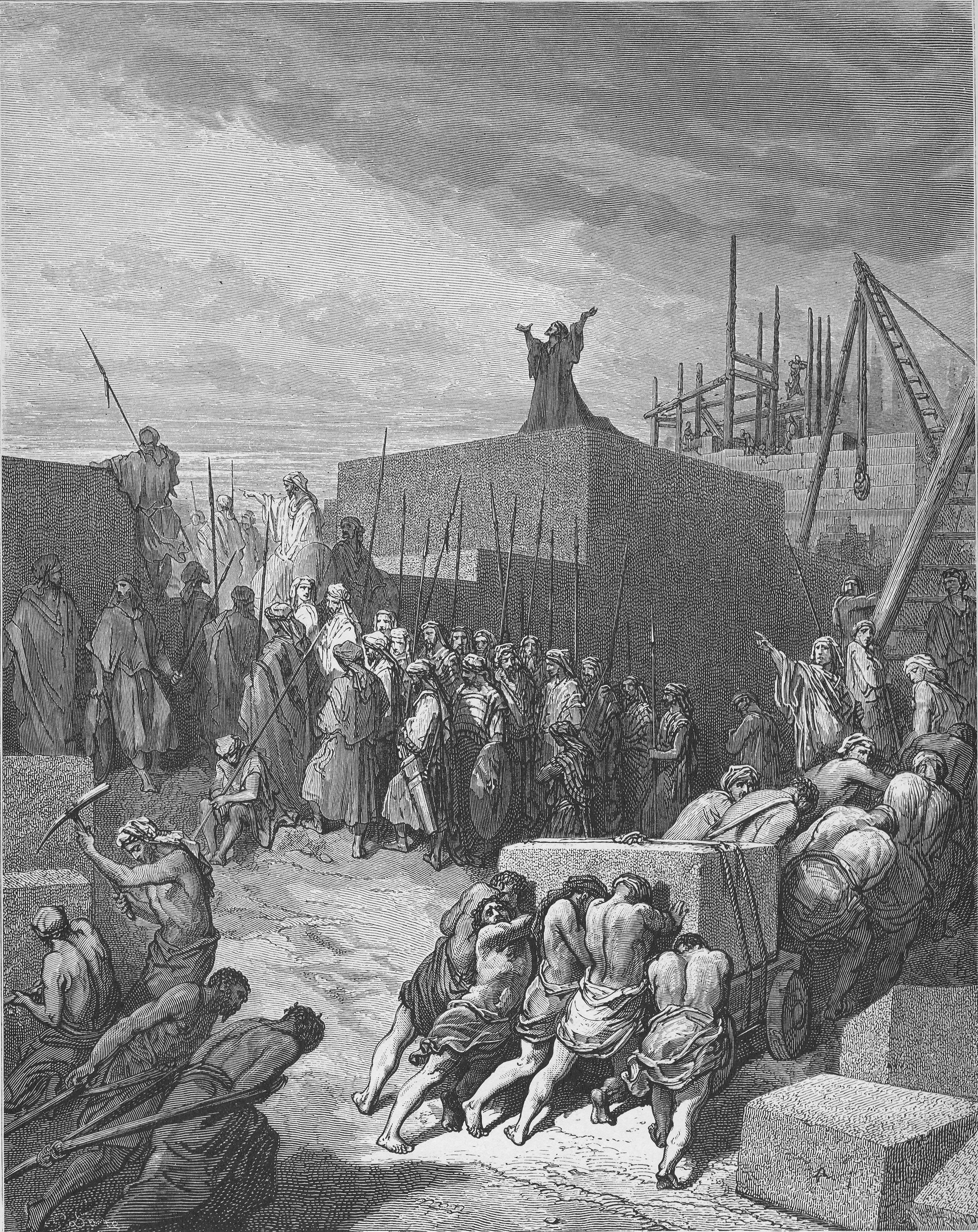
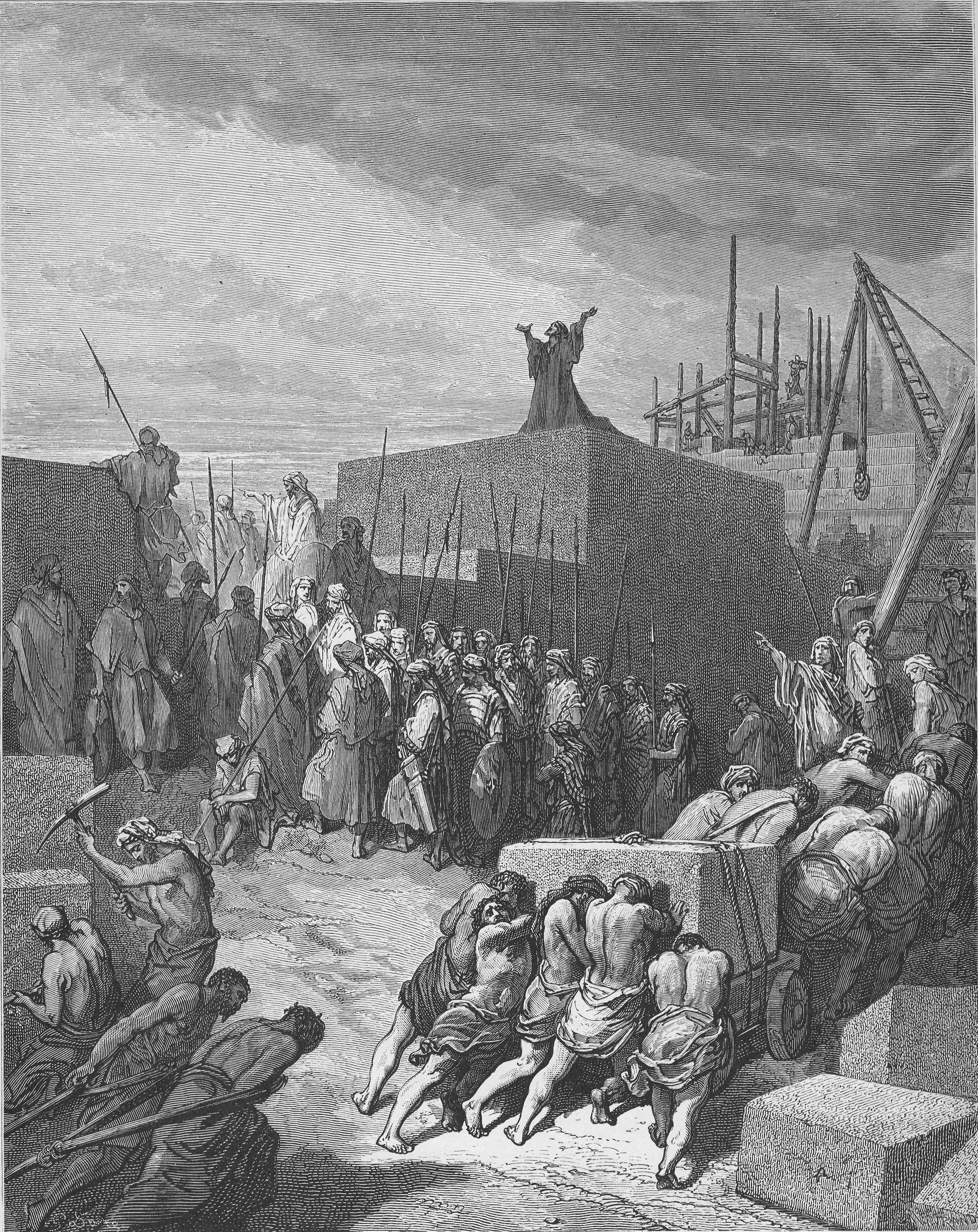
The Jeshanah Gate was repaired by Joiada son of Paseah and Meshullam son of Besodeiah. They laid its beams and put its doors with their bolts and bars in place. Next to them, repairs were made by men from Gibeon and Mizpah—Melatiah of Gibeon and Jadon of Meronoth—places under the authority of the governor of Trans-Euphrates. Uzziel son of Harhaiah, one of the goldsmiths, repaired the next section; and Hananiah, one of the perfume-makers, made repairs next to that. They restored Jerusalem as far as the Broad Wall. Rephaiah son of Hur, ruler of a half-district of Jerusalem, repaired the next section. Adjoining this, Jedaiah son of Harumaph made repairs opposite his house, and Hattush son of Hashabneiah made repairs next to him. Malkijah son of Harim and Hasshub son of Pahath-Moab repaired another section and the Tower of the Ovens. Shallum son of Hallohesh, ruler of a half-district of Jerusalem, repaired the next section with the help of his daughters. The Valley Gate was repaired by Hanun and the residents of Zanoah. They rebuilt it and put its doors with their bolts and bars in place. They also repaired a thousand cubits of the wall as far as the Dung Gate. The Dung Gate was repaired by Malkijah son of Rekab, ruler of the district of Beth Hakkerem. He rebuilt it and put its doors with their bolts and bars in place. The Fountain Gate was repaired by Shallun son of Kol-Hozeh, ruler of the district of Mizpah. He rebuilt it, roofing it over and putting its doors and bolts and bars in place. He also repaired the wall of the Pool of Siloam, by the King’s Garden, as far as the steps going down from the City of David. Beyond him, Nehemiah son of Azbuk, ruler of a half-district of Beth Zur, made repairs up to a point opposite the tombs of David, as far as the artificial pool and the House of the Heroes. – Nehemiah 3:6-16

Stone by stone, person by person, family my family Nehemiah and God are helping the Israelites rebuild the City of David.  I am pretty sure God had in mind more than just the rebuilding of a wall. I think he was in the process of rebuilding his relationship with the Israelites — stone by stone, person by person, family by family.  God knew that families working together toward a common purpose would make stronger families and a stronger relationship with Him.

I don’t have a lot of experience building walls…in fact the only time I can remember building a wall was a couple of years ago when I went with a group from our church to Haiti to help build homes for people that were left homeless after the 2010 earthquake.  We spent about a week working together, side by side, with Haitians to pour concrete columns and build walls for a home.  We, like the Israelites, were building more than concrete columns and cinder block walls — we were building relationships with the Haitians.

I had the good fortune to work with a stone mason named Kalebuda, who was directing the building of the walls.  I effectively became his apprentice after a few days, learning everything I could about building walls and pouring concrete columns.  Kalebuda clearly had a good reputation among the other young men and workers.  He knew what he was doing and he was a master of making much with little.  He reused almost every nail and scrap of wood.  I had much to learn from him both about building walls and living life.

I remember one day we were finishing a wall and we were pouring a concrete column near the corner of the building.  We were standing on a sketchy platform made of cinder blocks and pieces of wood.  I had the job of pouring the concrete down the wooden mold for the column.  This meant balancing precariously above the column trying not to lacerate my arm on the neighbor’s razor wire while pouring 50-pound buckets of concrete down the form.

This was difficult enough, but then it started to rain…not a light rain but a very hard rain one gets in the tropics in the afternoon.  I can remember Kalebuda the mason and I looking at each other in the soaking rain with great disappointment knowing that we were not going to be able to finish the wall we were building that day.

Part of rebuilding the wall in Jerusalem was also rebuilding the water storage features which were crucial to survival in this desert environment.  This included the Pool of Siloam and the “artificial pool” near the tombs of David.  When a city like Jerusalem is under siege water storage can mean life or death.    These water reservoirs are, in a way, analogous to the relationship and spiritual rebuilding that was accompanying the wall construction.  The people of Israel will need reservoirs of relationship with God to weather some of the trials to come.

The strongest and most impressive wall in the world is useless if it surrounds a city with no water — just like the strongest nation in the world is useless if their strength does not arise from the God they are following.

Prayer: God may our strength come from our relationship with you rather than the strength of our “walls”. 


Posted in Christian Community, Christian Leadership, Christianity, Covenant, Discernment, Discipleship, Following God, Life Together, Nehemiah, Obedience, religion, The Nature of God, Trusting God | Tagged , , , , , , , | 2 Comments

Nocturnal Romping with a Purpose

image

I went to Jerusalem, and after staying there three days I set out during the night with a few others. I had not told anyone what my God had put in my heart to do for Jerusalem. There were no mounts with me except the one I was riding on.   By night I went out through the Valley Gate toward the Jackal Well and the Dung Gate, examining the walls of Jerusalem, which had been broken down, and its gates, which had been destroyed by fire. Then I moved on toward the Fountain Gate and the King’s Pool, but there was not enough room for my mount to get through; so I went up the valley by night, examining the wall. Finally, I turned back and reentered through the Valley Gate. The officials did not know where I had gone or what I was doing, because as yet I had said nothing to the Jews or the priests or nobles or officials or any others who would be doing the work. – Nehemiah 2:11-16

Well we have entered the book of Nehemiah, apparently many scholars believe Ezra and Nehemiah were once part of one narrative. I barely noticed when Ezra ended and Nehemiah began so I would tend to agree with these scholars.  I am reflecting and praying about this post as I take my dog for a much needed romp in the snow through a forest of trees with only my headlamp for light.

The beginning of Nehemiah describes a man of God, Nehemiah, travelling to Jerusalem with the blessing and protection of  the Babylonian king. Nehemiah had heard about the challenges that the exiles were facing trying to rebuild the city of David and the temple so he asked to be allowed to go and help oversee the rebuilding of the temple and the city that was started under the leadership of Ezra.

Nehemiah sets out at night “with a few others” to investigate the city and it’s walls.  He probably did not have much more light than I have on my adventure through the snowy Michigan woods, but while I was out for a recreational romp with my pup Nehemiah was romping with a purpose.  He was evaluating the state of the people and the rebuilding process — in both a physical and spiritual sense.

He was engaged in a somewhat stealthy investigation to check up on what the exiles had accomplished in rebuilding the city and their relationship with God.  Why did Nehemiah feel the need to go at night?  Was it to avoid being seen, or to see things that were better seen at night?  I think it was mainly the former.  I think Nehemiah wanted an unbiased assessment of how motivated and committed the Exiles were in the task that Ezra set before them.  He was there to observe more than just which sticks and stones were in place and which were not.  He was observing carefully to see where the hearts and souls of the exiles were as well.

I wonder if he was going at night, and incognito, so that he could get a picture of the exile community without any pretend piety which they might put on in response to someone from the priesthood arriving.  Wouldn’t it be interesting to have stealthy observers like Nehemiah come visit our churches and Christian communities.  What would they observe about the state of our hearts and souls?  I think perhaps we would learn things that might surprise us — but the things that we learned would also likely make us stronger and better able to build healthy relationships and communities of believers.

I am intrigued by the mention of Nehemiah taking along a few people with him.  This would provide accountability for his observations and the actions that he will take based on what he saw.  I think it is wise of him to take others along when he is trying to discern God’s will as it relates to a group of His followers.  It is so easy to be wrong about such things and for our own feelings and emotions to get in the way.

Prayer: God send stealthy observers into our Christian communities so that we can learn from them how to be better builders and faithful followers.


Posted in Christian Community, Christian Leadership, Christianity, Discernment, Faith, Following God, Life Together, Nehemiah, Obedience, religion, Trusting God | Tagged , , , , , , | Leave a comment

Rain on their Parade

OLYMPUS DIGITAL CAMERAA proclamation was then issued throughout Judah and Jerusalem for all the exiles to assemble in Jerusalem. Anyone who failed to appear within three days would forfeit all his property, in accordance with the decision of the officials and elders, and would himself be expelled from the assembly of the exiles.   Within the three days, all the men of Judah and Benjamin had gathered in Jerusalem. And on the twentieth day of the ninth month, all the people were sitting in the square before the house of God, greatly distressed by the occasion and because of the rain. Then Ezra the priest stood up and said to them, “You have been unfaithful; you have married foreign women, adding to Israel’s guilt. Now honor the Lord , the God of your ancestors, and do his will. Separate yourselves from the peoples around you and from your foreign wives.”   The whole assembly responded with a loud voice: “You are right! We must do as you say. But there are many people here and it is the rainy season; so we cannot stand outside. Besides, this matter cannot be taken care of in a day or two, because we have sinned greatly in this thing. Let our officials act for the whole assembly. Then let everyone in our towns who has married a foreign woman come at a set time, along with the elders and judges of each town, until the fierce anger of our God in this matter is turned away from us.” – Ezra 10:7-14

This scene is a bit surreal.  Ezra has called all the exiles to a meeting in front of the newly built temple.  He has called the meeting to call the exiles to account for disobeying God.  In yesterday’s post there was much bitter weeping and in this passage the Israelites are standing in the rain getting a rebuke from Ezra.  This sounds like a hard time to be a follower of God, both for Ezra and the people he was called to lead.

The people are still supportive of Ezra’s call to repentance, but they are tired and wet and they reason with Ezra that the sort of changes he is calling for will take some time.  In the mean time they want to get out of the rain…It strikes me that this word rain could be replaced with the word reign and the meaning would not change much for this passage.

The people were “greatly distressed by the occasion and because of the rain [reign]”.  The reign of God in their lives was running headlong into their life choices, such as who they would marry.  It is an uncomfortable place to be at odds with the God you follow.  The very thing that is to give you comfort makes you uncomfortable because of the choices you have made.  Just like the rain in this passage, which is meant to provide water to a dry and dusty land, is making the the Israelites wet and irritable.

The second reference to rain is when they say “But there are many people here and it is the rainy season; so we cannot stand outside”.  The exiles were not ready to accept an Elemental God that might overwhelm their lives with reign.  They realized that unwinding their previous choices would be hard and take time.

Prayer: God you reign over us if we let you, but it is not always easy to unwind our previous choices.


Posted in Christian Community, Christian Leadership, Christianity, Conflict, Discernment, Ezra, Faith, Following God, Life Together, Obedience, Redemption, religion, Sin | Tagged , , , , , | 1 Comment

Take Courage and Do It!

While Ezra was praying and confessing, weeping and throwing himself down before the house of God, a large crowd of Israelites—men, women and children—gathered around him. They too wept bitterly. Then Shekaniah son of Jehiel, one of the descendants of Elam, said to Ezra, “We have been unfaithful to our God by marrying foreign women from the peoples around us. But in spite of this, there is still hope for Israel. Now let us make a covenant before our God to send away all these women and their children, in accordance with the counsel of my lord and of those who fear the commands of our God. Let it be done according to the Law. Rise up; this matter is in your hands. We will support you, so take courage and do it.”   So Ezra rose up and put the leading priests and Levites and all Israel under oath to do what had been suggested. And they took the oath. Then Ezra withdrew from before the house of God and went to the room of Jehohanan son of Eliashib. While he was there, he ate no food and drank no water, because he continued to mourn over the unfaithfulness of the exiles. – Ezra 10:1-6

Welcome to Jerusalem Ezra! Ezra’s first task when he arrives in Jerusalem is rather hard…he has to tell many of the exiles that they have broken God’s commandment and must give up their wife and kids. This could not have been an easy or popular message to deliver. This would be a bit like someone walking into a modern church and telling everyone who was divorced that they have broken God’s law and they must give up their new wife and kids. I can see why everyone was weeping bitterly.

Ezra’s withdrawal to a room to take no food or water is also an interesting detail — sort of a holy hunger strike. Was this to convince the people that he was asking to make hard choices that he was also making a hard choice, i.e. not to eat or drink until the matter was resolved?

I wonder how people would respond today if someone went on a hunger strike to restore the “purity” of the church. I suspect the person might quickly be asked to find a new church somewhere else. That is not the way the Israelites responded…they told Ezra to be bold…they would support him…”take courage and do it”.  They gave Ezra permission to hold them accountable.

I have witnessed the breaking apart of more than one family at the churches I have attended. I confess that it was hard for me to talk to these families, much less call on them to repent and undo their divorce and remarriage.  This is a hard teaching in this passage.  I think our society has become self conscious about confrontation.  I am guilty of taking the chicken chute sometimes when boldness and courage are required.

So how can we discern the difference between participating in God-inspired accountability when people are on a destructive path, and self-centered judgement of others?  Aye there’s the rub…the tension…which can both tear us apart and make us stronger.  Ultimately Ezra needed the permission of those he was leading to hold them accountable.  If we desire accountability we must give others in our lives, and God, permission to hold us accountable.

God has given us great freedom to make our own choices, even to be free of God if we choose.  With this great freedom comes great responsibility…or in the words of that great philosopher Spider-man…”with great power comes great responsibility”.  The Israelites have given up some of their freedom to marry who they wish because they want God more than they want their own freedom…food for thought.

Prayer: God with the freedom You have given us comes great responsibility.  Help us to identify people in our lives who we can hold us accountable for our choices.

Posted in Christian Community, Christian Leadership, Christianity, Conflict, Discernment, Discipleship, Divorce, Ezra, Faith, Following God, Forgiveness, Healing, Life Together, Obedience, reconciliation, Redemption, religion, Trusting God | Tagged , , , , , , , , , | 3 Comments

Confident by the Canal

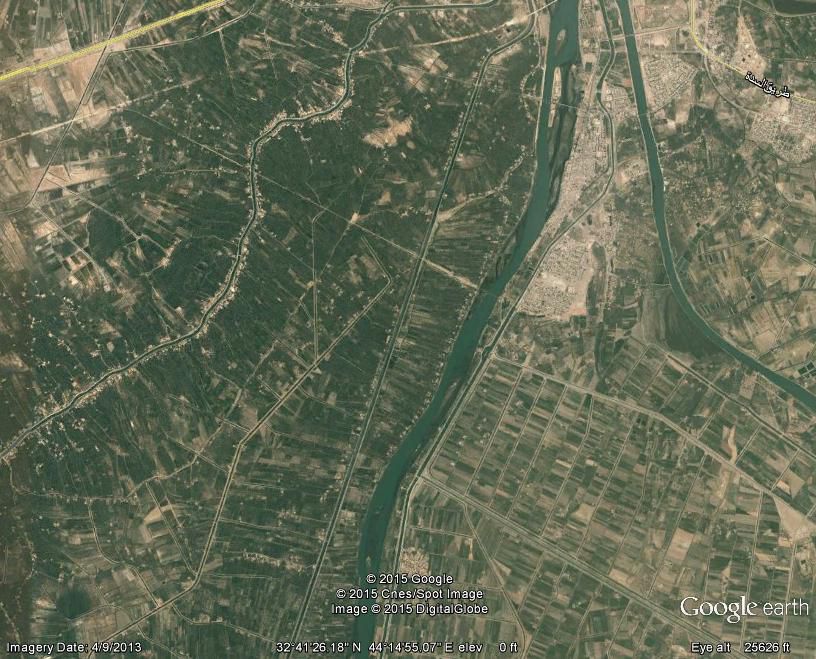
Canals near the site of Babylon in Iraq

Canals near the site of Babylon in Iraq

I assembled them at the canal that flows toward Ahava, and we camped there three days. When I checked among the people and the priests, I found no Levites there. So I summoned Eliezer, Ariel, Shemaiah, Elnathan, Jarib, Elnathan, Nathan, Zechariah and Meshullam, who were leaders, and Joiarib and Elnathan, who were men of learning, and I ordered them to go to Iddo, the leader in Kasiphia. I told them what to say to Iddo and his fellow Levites, the temple servants in Kasiphia, so that they might bring attendants to us for the house of our God. Because the gracious hand of our God was on us, they brought us Sherebiah, a capable man, from the descendants of Mahli son of Levi, the son of Israel, and Sherebiah’s sons and brothers, 18 in all; and Hashabiah, together with Jeshaiah from the descendants of Merari, and his brothers and nephews, 20 in all. They also brought 220 of the temple servants—a body that David and the officials had established to assist the Levites. All were registered by name.   There, by the Ahava Canal, I proclaimed a fast, so that we might humble ourselves before our God and ask him for a safe journey for us and our children, with all our possessions. I was ashamed to ask the king for soldiers and horsemen to protect us from enemies on the road, because we had told the king, “The gracious hand of our God is on everyone who looks to him, but his great anger is against all who forsake him.” So we fasted and petitioned our God about this, and he answered our prayer. – Ezra 8:15-23

Ezra arrives in this passage along with many of the other leaders who are returning to Jerusalem to “run” the temple. They are gathering here at the Ahava canal. It is not clear where this canal is but I assume it is near Babylon. Canals are a human invention to convey water from one place to another. They reduce reliance on rain, rivers, springs, and other water sources. A canal is an apt metaphor for the spiritual condition of Babylon and its leaders. They are making their kingdom by their ingenuity and might. The Israelites in rebuilding the temple in Jerusalem were choosing to trust in God to build their kingdom — God’s kingdom.

God’s kingdom is different. It is built on a reliance on God to provide the living water that we all need to live and thrive. God has tried to make this clear to the Israelites through the prophets and leaders like Moses and Aaron. God does not want us to build canals to get the living water.  He offers it to us freely through His son Jesus. The rebuilding of the temple is connecting the Israelites to the Great Cistern once again. They planted themselves near the One River Who can provide them with a consistent supply of living water for their souls.

Ezra shows great faith, confidence, and humility as he stands by the Ahava Canal and proclaims “a fast, so that we might humble ourselves before our God and ask him for a safe journey for us and our children”.  He does not want to appear to doubt God before the Persian king who has arranged for his return to help run the temple.  God uses the Persian King to accomplish His purpose of rebuilding the temple in Jerusalem and His place in the hearts and souls of the Isrealites.

There is reassurance in Ezra’s confident statement that “The gracious hand of our God is on everyone who looks to him” — God truly does carry us like a son or daughter.  So what does it look like to “look to God”?  In the case of Ezra and the leaders it meant fasting and approaching God with humility to ask for “safe journey for us and our children”.  I think these are sound recommendations as we approach God.  We should do so with humility and ask for “safe journey” for us and our children.

Prayer: God grant us safe journey for us and our children and help us to walk humbly with You.

Posted in Christian Community, Christian Leadership, Covenant, Discernment, Discipleship, Ezra, Faith, Following God, God's Love for Us, Obedience, reconciliation, religion, The Nature of God, Trusting God | Tagged , , , , , , , | 1 Comment

Tears for the Temple

In the second month of the second year after their arrival at the house of God in Jerusalem, Zerubbabel son of Shealtiel, Joshua son of Jozadak and the rest of the people (the priests and the Levites and all who had returned from the captivity to Jerusalem) began the work. They appointed Levites twenty years old and older to supervise the building of the house of the Lord . Joshua and his sons and brothers and Kadmiel and his sons (descendants of Hodaviah ) and the sons of Henadad and their sons and brothers—all Levites—joined together in supervising those working on the house of God.   When the builders laid the foundation of the temple of the Lord , the priests in their vestments and with trumpets, and the Levites (the sons of Asaph) with cymbals, took their places to praise the Lord , as prescribed by David king of Israel. With praise and thanksgiving they sang to the Lord : “He is good; his love toward Israel endures forever.” And all the people gave a great shout of praise to the Lord , because the foundation of the house of the Lord was laid. But many of the older priests and Levites and family heads, who had seen the former temple, wept aloud when they saw the foundation of this temple being laid, while many others shouted for joy. No one could distinguish the sound of the shouts of joy from the sound of weeping, because the people made so much noise. And the sound was heard far away. – Ezra 3:8-13

This post marks my “float” into the book of Ezra.  Apparently this book describes about a century of history of Israel from about 540 to 440 B.C. The focus of the book is the rebuilding of the temple in Jerusalem by a remnant who has returned from Babylonian exile.  I don’t know much about this book so it will be uncharted waters.

The first couple of chapters set the stage for the book.  God “stirred up the spirit” of Cyrus, the king of Persia, and convinced him that he should build (or rebuild) a house for God in Jerusalem.  Many of the exiled families were to return and take some of the items stolen from Jerusalem back with them to rebuild the temple.

In the passages just prior to this passage the remnant returns and they begin the rebuilding process by building the altar first and offering sacrifices to God.  I found this timing rather interesting…build the altar before the temple.  This would be a bit like building a prayer room before you build the church around it…not a bad idea.

So in this passage the foundation of the temple, God’s house, was laid.  That part is relatively straight forward.  It is after this that things get a bit confusing.  The people are singing songs and praising God for the completion of the foundation, but the older priests and Levites are weeping.  The passage goes on to say that “No one could distinguish the sound of the shouts of joy from the sound of weeping”.

Why were the older priests and Levites, “who had seen the former temple” weeping?  If tears are really samples of our souls what do their tears tell us?  Were they weeping for Joy?  Were they saddened by the reduced grandeur of the new temple compared to the old one built by Solomon?  Were they simply tears of gratitude and relief that they would once again be able to worship God?  Lots of questions…no great answers.

Perhaps the response of the priests and Levites was similar to the response of a person who has been adrift at sea for a long time when they are finally rescued — they kiss the solid ground.  These religious leaders may have felt “rescued” from the uncertain “sea” they were navigating during the exile in Babylon.  The temple for them may have been “solid ground” after many years at sea.  A relationship with God through Jesus can be like this as well…solid ground amid shifting sands.

Prayer: God thank You for being solid ground on which we can find rest and security in uncertain times


Posted in Christian Community, Christian Leadership, Christianity, Covenant, Ezra, Faith, Following God, Miracles, Obedience, reconciliation, religion, Trusting God | Tagged , , , , , , | Leave a comment

Rabbit Trail #8 – Chicken Chute

DCIM100SPORT

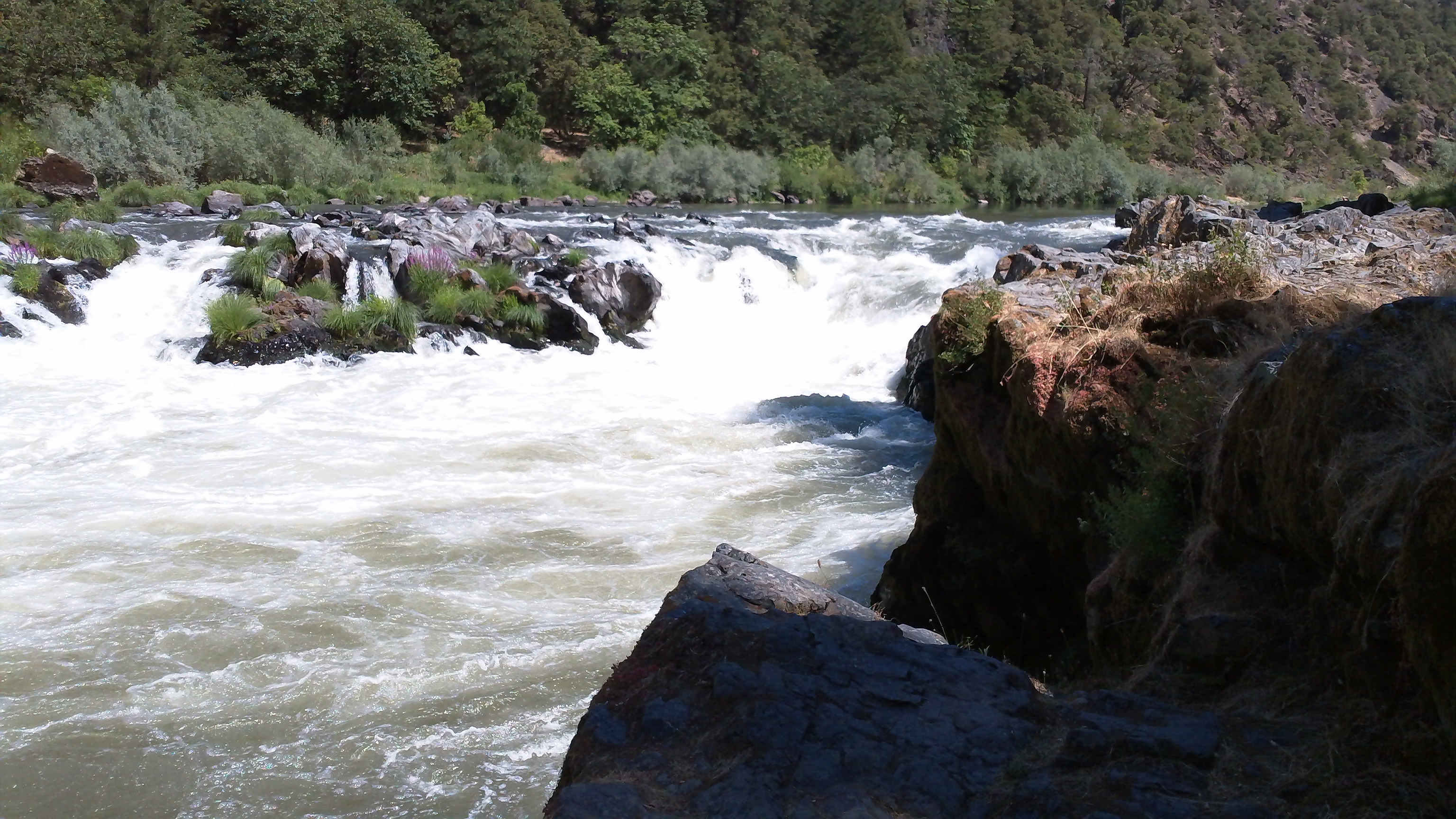
Rainie Falls on the Rogue River. The Middle Chute is on the left. The “chicken chute” is not visible further left.

IMG_6470 IMG_6476I needed a break after finishing 1 & 2 Chronicles.  Working my way through these two books felt at times like a combination of television re-runs and a phone book.  There were a few hidden wells, but I have to admit I need a break!  Thus today’s rabbit trail.  As I have been reflecting on this portion of my journey walking with water in the bible it has occurred to me that I may be having feelings similar to the way the Israelites felt as they awaited the messiah.

I have the advantage of knowing what is coming and I look forward to the Good News to come, but the waiting is hard.  The Israelites had plenty of opportunity to hear from God’s prophets, but they often chose a different line.  I suspect it was very hard for them to wait too.

There are days when I am reflecting on a passage like some of the ones in 1 & 2 Chronicles when I feel like I would like to just skip ahead to the arrival of Jesus and the new covenant…portage the rapids if you will.  When I consider such a path there is a voice inside me that assures me that, though confusing and hard, this part of the journey is important and necessary.  I think that the Israelites were receiving the same message from God through the trying times of their sojourn in the wilderness and the rule of the Kings.

A couple of years ago I went on a once in lifetime rafting trip on the wild and scenic section of the Rogue River in Oregon.  It was an amazing journey with plenty of challenging white water, cliff jumps, and water chutes.  Just after we started the raft trip we came to a class V rapids called Rainie Falls.  I was guiding our raft with a student who was doing research with me over the summer, and a former student and his dad were leading the trip in another raft.

We all got out and scouted the falls.  It looked really scary and big…about a 10-12 foot falls.  Part of me wanted to go for it (a small part).  There were a couple of options to avoid taking this rapids.  A moderately difficult chute called the middle chute and what my former student and his dad referred to as the “Chicken Chute”.  Bare in mind this was about 15 minutes into a two-day float and the biggest water I had run as guide…I chose the chicken chute.

We entered the chicken chute fine but it was narrow and fast. I failed to get my oars into the boat in time to prevent one from getting caught on a rock and snapping in half.  We had an extra oar, but we only had one spare so breaking another one was not an option.  The end result of my taking the “chicken chute” was that I had to “play it safe” on the remainder of the float to be sure I did not break another oar.  I do not think that God wants me to take the “chicken chute” and avoid some of the hard and confusing passages in the old testament.

Why does the journey have to be confusing and hard sometimes?  I am pretty sure the Israelites asked themselves the same question many times.  I am not sure I have a good answer but it seems like: 1) we make it hard by failing to focus on the important things; 2) our souls are trying to view God’s Kingdom through a veil that sometimes makes it difficult to see things clearly; 3) the master of this world delights in warping our vision like a fun house mirror.  I am up for the entire ride through the bible — seeking out water where it shows up and God leads.  I will try to avoid taking the “chicken chute” and I trust God will help me navigate the “falls”.

Prayer: God give me a clear view of your Kingdom and help me to navigate the hard and confusing parts of the journey with your help.


Posted in Discernment, Following God, Obedience, Rabbit Trails, religion, Satan, The Earthly Realm, The Spiritual Realm, Trusting God | Tagged , , , , , , , , , | Leave a comment

Bronze Basins

He made a bronze altar twenty cubits long, twenty cubits wide and ten cubits high.  He made the Sea of cast metal, circular in shape, measuring ten cubits from rim to rim and five cubits high. It took a line of thirty cubits to measure around it.  Below the rim, figures of bulls encircled it—ten to a cubit. The bulls were cast in two rows in one piece with the Sea.  The Sea stood on twelve bulls, three facing north, three facing west, three facing south and three facing east. The Sea rested on top of them, and their hindquarters were toward the center.  It was a handbreadth in thickness, and its rim was like the rim of a cup, like a lily blossom. It held three thousand baths.  He then made ten basins for washing and placed five on the south side and five on the north. In them the things to be used for the burnt offerings were rinsed, but the Sea was to be used by the priests for washing. 2 Chronicles 4:1-6

This is  a retelling of a story first told in 1 Kings 7:15-26 and I reflected on this in a post entitled “a Big Bath” on December 14, 2014.  This passage is very similar although there are a few numerical inconsistencies between the passages.  For example, the 1 Kings passage states that the bronze sea held 2,000 Baths whereas here it is said to hold 3,000 baths.  Again this difference does not really change the meaning of the passage, although it does make me wonder about the sources for 1 Kings and 2 Chronicles.  Were both books referring to another source and somehow the stories were transferred differently?

This passage does provide a little more detail about what the basins and the bronze sea of water were to be used for in the temple — the 1 Kings passage left me wondering as it did not really explain the purpose of these features that were so carefully described.  In this passage we learn that the smaller basins were used to clean the burnt offerings before they were offered on the altar, and the bronze sea was used by the priests to wash themselves.  This must have been a somewhat surreal place at the time it was being used for sacrifices.  animals being led into the temple and washed in preparation for being slaughtered and burned on the altar.  I guess if the priests were the ones doing the killing and burning I could certainly understand the need for a basin to clean themselves!

When I wrote the post about the 1 Kings passage I was actually travelling Haiti.  I am home now and I am not feeling any more inspired with deep insights about this passage than when I was in Haiti.  It is the last passage in 2 Chronicles, so I will leave it and perhaps one day God will give me additional insights.

Prayer: God there is joy in the journey…thank You for walking with me along the way.

Posted in 2 Chronicles, Christian Community, Covenant, Forgiveness, Redemption, religion, Sin | Tagged , , , , , | Leave a comment

Re-Rafted

gsa 034And Hiram added: “Praise be to the Lord , the God of Israel, who made heaven and earth! He has given King David a wise son, endowed with intelligence and discernment, who will build a temple for the Lord and a palace for himself.   “I am sending you Huram-Abi, a man of great skill, whose mother was from Dan and whose father was from Tyre. He is trained to work in gold and silver, bronze and iron, stone and wood, and with purple and blue and crimson yarn and fine linen. He is experienced in all kinds of engraving and can execute any design given to him. He will work with your skilled workers and with those of my lord, David your father.   “Now let my lord send his servants the wheat and barley and the olive oil and wine he promised, and we will cut all the logs from Lebanon that you need and will float them as rafts by sea down to Joppa. You can then take them up to Jerusalem.”   Solomon took a census of all the foreigners residing in Israel, after the census his father David had taken; and they were found to be 153,600. He assigned 70,000 of them to be carriers and 80,000 to be stonecutters in the hills, with 3,600 foremen over them to keep the people working. – 2 Chronicles 2:12-18

Well that was a pretty lean book in terms of water references to water…it made up for it in lists of names though.  We have coasted into the book of 2 Chronicles which appears to take up where 1 chronicles left off and David handed over the reigns, and the privilege of building the temple, to his Son Solomon, known for his wisdom and wealth.

This passage is a retelling of to story in 1 Kings 5:1-9 which I reflected on December 13, 2014 in a post entitled “wood rafted for worship”.  This account is not as word for word as the passage from a couple of day ago where I felt like I was running the same river.  The essential part of the story are pretty much the same.  David passes away, Hiram the king of Tyre, a former enemy of David see a chance to build a new relationship with Solomon and make a trade deal for cedars for the temple and palace.

The only real difference I can see is in the specificity and quantitative details provided in the 2 Chronicles account.  Perhaps the author was a bit OCD and felt the need to provide specific numbers, as we saw in the post a couple of days ago these numbers do not always match the earlier accounts.

Clearly the author of 1 Chronicles and 2 Chronicles believes the time of David and Solomon are a pivotal time in the history of Israel.  I suppose this is fitting as it is the time that God declared He would for the first time, since the Garden of Eden, come dwell with us on earth.  This time in the Israelite’s history is as important as what will happen “down the river” when God comes to dwell in a temple shaped like a man named Jesus.

Prayer: God You have sent the Holy Spirit to dwell with us and lead us.  Help us to follow.


Posted in 2 Chronicles, Christianity, Covenant, Faith, Following God, God's Love for Us, reconciliation, religion, The Earthly Realm, The Nature of God, The Spiritual Realm | Tagged , , , , , , , | Leave a comment

Tell me Who I am

hero_EB19900309REVIEWS3090304ARThen David gave his son Solomon the plans for the portico of the temple, its buildings, its storerooms, its upper parts, its inner rooms and the place of atonement.  He gave him the plans of all that the Spirit had put in his mind for the courts of the temple of the Lord and all the surrounding rooms, for the treasuries of the temple of God and for the treasuries for the dedicated things.  He gave him instructions for the divisions of the priests and Levites, and for all the work of serving in the temple of the Lord, as well as for all the articles to be used in its service.  He designated the weight of gold for all the gold articles to be used in various kinds of service, and the weight of silver for all the silver articles to be used in various kinds of service:  the weight of gold for the gold lampstands and their lamps, with the weight for each lampstand and its lamps; and the weight of silver for each silver lampstand and its lamps, according to the use of each lampstand;  the weight of gold for each table for consecrated bread; the weight of silver for the silver tables;  the weight of pure gold for the forks, sprinkling bowls and pitchers; the weight of gold for each gold dish; the weight of silver for each silver dish; and the weight of the refined gold for the altar of incense. He also gave him the plan for the chariot, that is, the cherubim of gold that spread their wings and overshadow the ark of the covenant of the Lord. – 1 Chronicles 28: 11-18 

In this passage David is providing a detailed plan for his son Solomon to construct the Temple after he is gone because God has already told him that he will not be allowed to build the temple himself.  This description matches the actual construction of the temple described in 1 Kings 7:38-45.  The 1 Kings verse was described in a previous post entitled “Sprinkling Bowls“.

I find it interesting that so many leaders end up being denied something by God toward the end of their lives.  Moses was not allowed to enter the Promised Land before he crossed over, and David is not allowed to build the temple before he dies.  So what is up with that and, more importantly, how can we avoid the same fate?  I will not pretend to understand the mind of God in this matter, but perhaps by examining what David and Moses had in common we can gain some understanding.

Moses and David were both confused a bit about who they were.  Moses because of his history in Egypt and his sense of being a “man without a people“; and David because he was defined by his early indiscretions and his role as a military leader but in his heart he wanted to be “a man after God’s own heart”.  I suspect that the identity confusion of Moses and David left them unable to pursue God with all their heart.

So what is the take home lesson from this?  It is important to know who we are so that we can pursue God with all our heart.

My family and I are big fans of the movie Joe Versus the Volcano.  It is a bit quirky, but some of our favorite quotes come from that movie.  At one point in the movie the main character, Joe Banks, is sitting in a limousine with the driver named Marshall:

Marshall: They just pay me to drive the limo, sir. I’m not here to tell you who you are.
Joe Banks: I didn’t ask you to tell me who I am.
Marshall: You were hinting around about clothes. That happens to be a very important topic to me, sir. Clothes, Mr…
Joe Banks: Banks.
Marshall: Banks. Clothes make the man. I believe that. You say to me you want to go shopping, you want to buy clothes, but you don’t know what kind. You leave that hanging in the air, like I’m going to fill in the blank, that to me is like asking me who you are, and I don’t know who you are, I don’t want to know. It’s taken me my whole life to find out who I am, and I’m tired now, you hear what I’m saying?

Prayer: God help us to know who we are and so that we can seek you with all our hearts.

Posted in 1 Chronicles, Christianity, Covenant, Death and Dying, Following God, Obedience, wealth | Tagged , , , , , , , | Leave a comment