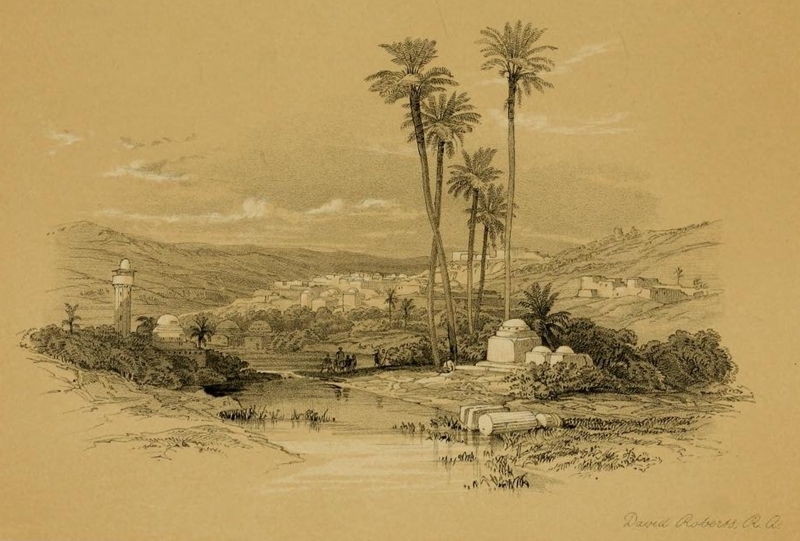
Jerusalem – City of David

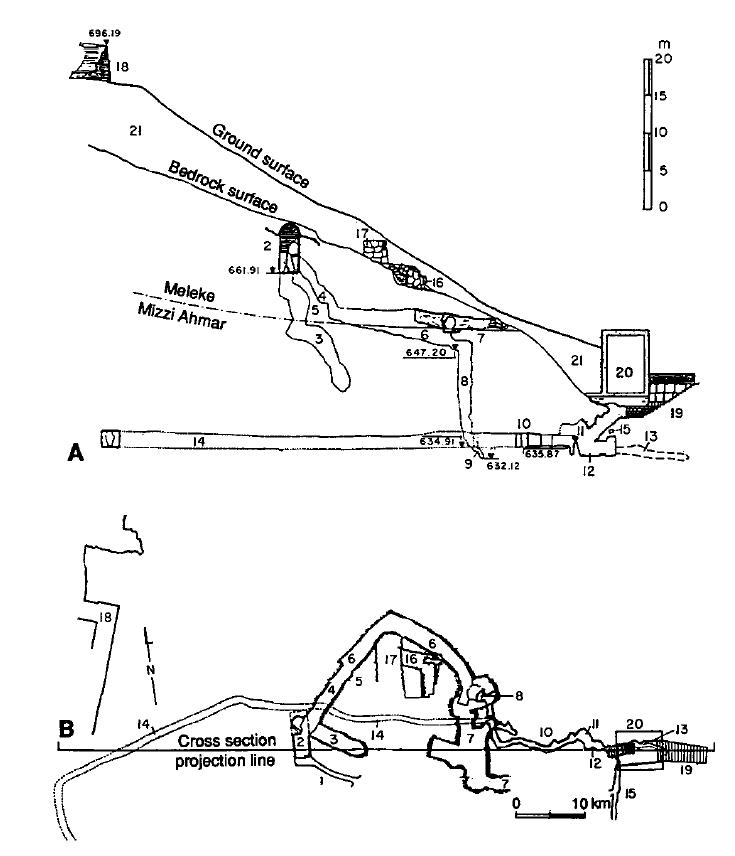
Map of the Jerusalem waterworks From Gill, 1991

Map of the Jerusalem waterworks From Gill, 1991

The king and his men marched to Jerusalem to attack the Jebusites, who lived there. The Jebusites said to David, “You will not get in here; even the blind and the lame can ward you off.” They thought, “David cannot get in here.” Nevertheless, David captured the fortress of Zion—which is the City of David.   On that day David had said, “Anyone who conquers the Jebusites will have to use the water shaft to reach those ‘lame and blind’ who are David’s enemies. ” That is why they say, “The ‘blind and lame’ will not enter the palace.”   David then took up residence in the fortress and called it the City of David. He built up the area around it, from the terraces inward. And he became more and more powerful, because the Lord God Almighty was with him.   Now Hiram king of Tyre sent envoys to David, along with cedar logs and carpenters and stonemasons, and they built a palace for David. Then David knew that the Lord had established him as king over Israel and had exalted his kingdom for the sake of his people Israel. -2 Samuel 5:6-12

This passage is a welcome break from the graphic violence and killing of the last several passages. No blood letting or body parts.  There is also some intriguing geological connections in this verse that relate to water and ancient waterworks near the city of Jerusalem.  It is interesting that without water, or more precisely a “water shaft”, there might not have been a “city of David”. Joab and David may not have been successful in gaining access to the city to conquer the Jebusites.

Water in this part of the world is very precious and rare.  The main sources of water in many areas are natural springs, wells, and cisterns.  The only abundant water source near the town of Jerusalem was called the Gihon Spring in the Kidron Valley.  Apparently the word Gihon or Giha in Hebrew means “gushing forth”.  The spring was apparently named this because, unlike many springs, it’s flow was not constant, it alternated between regular flow and dramatically increased flow (it gushed).

There is a good scientific reason for this seemingly odd behavior in a spring.  The rocks in the region of the spring are sedimentary layers of dolomite and limestone.  These rocks are relatively brittle and fractured.  When slightly acidic water finds its way into the cracks and fissures over a long period of time it dissolves some of the rock to create caves, cavities, and openings through which water can flow.  Geologists refer to this type of geologic structure as karst, and the areas where water flows as karst aquifers.  When water flows through karst caves and fissures they behave like pipes.  Water can be siphoned from one chamber or cave to another depending on the water levels.  This may explain the gushing nature of the spring.  Groundwater was moving though the karst cavities in an irregular way.

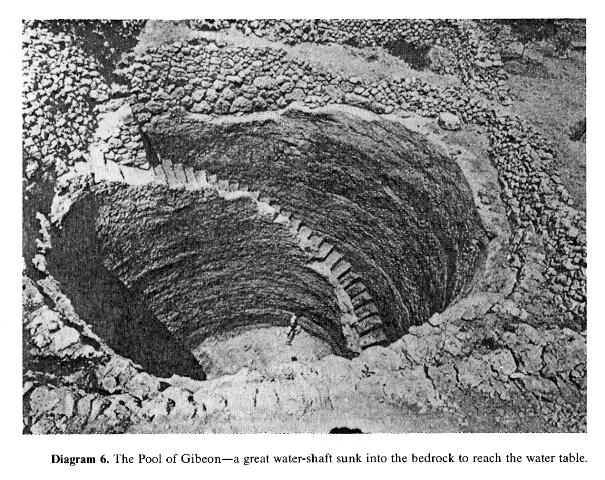
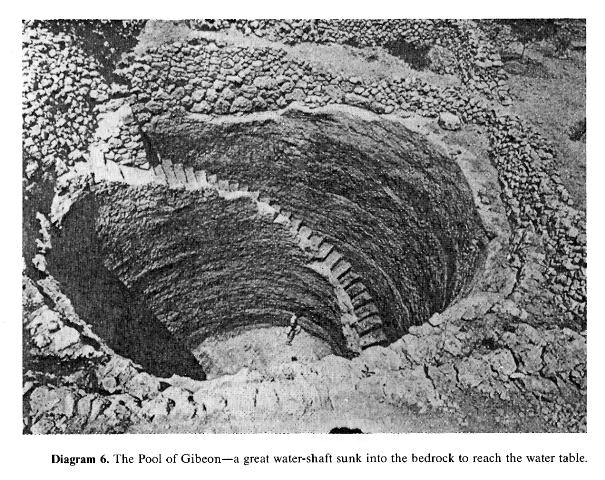
Karst areas in Florida routinely make the news when the caverns become large enough and collapse to form a sink whole under a building or parking lot.  A sinkhole recently made the news because it opened up under a rare corvette museum taking several very expensive cars with it. It is likely that the “water shaft”, described in this passage, was a naturally occurring sink hole that was used to sneak into Jerusalem to conquer the Jebusites.  The shaft was likely connected underground to the Gihon Spring. The horizontal connection to the spring may have been a naturally occurring cave or fissure that was modified and enlarged by people in the city to access the spring during times of siege.

I am not sure why the Jebusites did not know about the underground connection, but they apparently did not know it existed.  It is possible that David’s men, probably with God’s help, discovered the shaft while exploring around the Gihon Spring. God took something naturally occurring and performed a miraculous thing with it. This is reminiscent of David’s use of ordinary smooth stones to fell a giant — an ordinary sink hole to conquer a city.  God uses ordinary things quite often, including many ordinary people who he calls to do extraordinary things — with His help. This is reassuring for us ordinary people.

Prayer: God help us to expect the unexpected and allow You to make the ordinary parts of our lives extraordinary.

Posted in 2 Samuel, Christianity, Covenant, Discernment, Following God, Miracles | Tagged , , , , , , , , | Leave a comment

Bloodlust and Body Parts

They had gone into the house while he was lying on the bed in his bedroom. After they stabbed and killed him, they cut off his head. Taking it with them, they traveled all night by way of the Arabah. They brought the head of Ish-Bosheth to David at Hebron and said to the king, “Here is the head of Ish-Bosheth son of Saul, your enemy, who tried to kill you. This day the Lord has avenged my lord the king against Saul and his offspring.”   David answered Rekab and his brother Baanah, the sons of Rimmon the Beerothite, “As surely as the Lord lives, who has delivered me out of every trouble, when someone told me, ‘Saul is dead,’ and thought he was bringing good news, I seized him and put him to death in Ziklag. That was the reward I gave him for his news! How much more—when wicked men have killed an innocent man in his own house and on his own bed—should I not now demand his blood from your hand and rid the earth of you!”   So David gave an order to his men, and they killed them. They cut off their hands and feet and hung the bodies by the pool in Hebron. But they took the head of Ish-Bosheth and buried it in Abner’s tomb at Hebron. – 2 Samuel 4:7-12

The clan warfare and bloodlust continues….Rekab and his brother Baanah have killed Saul’s son and heir, Ish-Bosheth in his house and beheaded him. Apparently they did this to please David. He was not pleased. David had already made his peace with the house of Saul through Abner, who was killed by Joab in retribution for the killing of his brother Asahel. There is a lot of killing going on here.

The consequences of the decision by Rekab and Baanah to kill Saul’s son are somewhat horrific. They in turn are killed by David’s men, mutilated, and hung in a community spot by a pool, the pool of Hebron, where many women and children probably came to fetch water each day. This would be a little like someone hanging dismembered corpses in a shopping mall today. The punishment seems out of proportion to the crime. Why would David treat these men so harshly? They were apparently doing what they did in David’s name. Perhaps this is the reason David was so harsh. He had forgiven Saul and his descendants, but these men had shown no mercy and killed someone in his name.

The public display of the corpses could have been to dissuade anyone else from continuing this blood feud between the house of David and the house of Saul  This sort of behavior sounds like a page out of the ISIS playbook rather than something in the bible. How does this violent, seemingly bloodthirsty behavior, mesh with the God who sees us and wants to carry us like a son or daughter? Maybe it doesn’t. Maybe these men, including David, have failed the “Meribah Test” and they are in the process of leading people away from God rather than toward Him.

They may believe that “God is on their side”, but perhaps a more pertinent question is – are they on God’s side? This is a question we could ask ourselves whenever we “go to battle” in God’s name. Are we on God’s side? It seems to me we have to know God really well before we can determine whether we are on His side or not. God, as revealed through Jesus, was not only not on the side of killing anyone, He equated being angry with your brother with killing him. Clearly this is a different standard than was being practiced at this time in Israel’s history.

Prayer: God, rather than argue about whose side You are on,show us what it looks like to be on Your side when we encounter conflict.

Posted in 2 Samuel, Covenant, Following God, Forgiveness, God's Love for Us, Life Together, reconciliation, Redemption, religion, Trusting God | Tagged , , , , , , , , | Leave a comment

Retribution and Reconciliation

Abner conferred with the elders of Israel and said, “For some time you have wanted to make David your king. Now do it! For the Lord promised David, ‘By my servant David I will rescue my people Israel from the hand of the Philistines and from the hand of all their enemies.’” Abner also spoke to the Benjamites in person. Then he went to Hebron to tell David everything that Israel and the whole tribe of Benjamin wanted to do. When Abner, who had twenty men with him, came to David at Hebron, David prepared a feast for him and his men. Then Abner said to David, “Let me go at once and assemble all Israel for my lord the king, so that they may make a covenant with you, and that you may rule over all that your heart desires.” So David sent Abner away, and he went in peace. Just then David’s men and Joab returned from a raid and brought with them a great deal of plunder. But Abner was no longer with David in Hebron, because David had sent him away, and he had gone in peace. When Joab and all the soldiers with him arrived, he was told that Abner son of Ner had come to the king and that the king had sent him away and that he had gone in peace. So Joab went to the king and said, “What have you done? Look, Abner came to you. Why did you let him go? Now he is gone! You know Abner son of Ner; he came to deceive you and observe your movements and find out everything you are doing.” Joab then left David and sent messengers after Abner, and they brought him back from the cistern at Sirah. But David did not know it. Now when Abner returned to Hebron, Joab took him aside into an inner chamber, as if to speak with him privately. And there, to avenge the blood of his brother Asahel, Joab stabbed him in the stomach, and he died. Later, when David heard about this, he said, “I and my kingdom are forever innocent before the Lord concerning the blood of Abner son of Ner. May his blood fall on the head of Joab and on his whole family! May Joab’s family never be without someone who has a running sore or leprosy or who leans on a crutch or who falls by the sword or who lacks food.” – 2 Samuel 3:17-28

Recent tragic events in Jerusalem make it clear that reconciliation is as important today as it was during the time of David, Abner, and Joab.  Perhaps the place to start is for both sides to ask themselves whether they are faithfully following God.

Abner and the house of Saul have reconciled with David, as have many other of the Israelite tribes in the area.  Joab, an ally of David whose brother was killed by Abner (another senseless sacrifice), does not approve of David’s new alliance with Abner.  Abner meets with David and then is told to go in peace so that he can build more alliances among the other tribes. He is hanging out at the cistern of Sirah when some of Joab’s men call him back to David’s house, presumably without David’s knowledge.

In a previous post we explored cisterns and the Great Cistern that is God.  It seems that Abner has decided to acknowledge God’s role in determining the fate of Israel so perhaps it is appropriate that he is found at the cistern of Sirah.  Abner seems to have chosen the path of reconciliation and peace and Joab is unwilling to reconcile.  He wants retribution.

Retribution is an interesting word — to my ears it carries more weight than the word revenge.  Revenge sounds like a rash act over in minutes, while retribution sounds to me like a methodical and planned payback for a wrong or perceived wrong.  What Joab did was methodical and planned payback for Abner killing his brother Asahel.  If we accept the moral equivalency of “an eye for an eye” it would seem that Joab is justified in killing Abner.  Mohondas Gandhi once said “an eye for an eye and the whole world goes blind”.  In order for lasting peace to prevail we must be willing and ready to forgive even those wrongs for which we think we deserve payback.

Jesus shared many teachings about this new way of bringing about peace and forgiveness.  He said radical things like you have to love your enemies.  David seems to have been attempting this with Abner, Joab not so much.  I think the way we are able to forgive is to acknowledge that all wrongs, at their core, are wrongs against God.  We may be hurt, or hurt others, by the consequences of these wrongs, but the choice which brought about the wrong is traceable to a rebellion against God’s way of relating to one another.  When Abner killed Asahel he sinned against God not Joab, but from Joab’s perspective all he can see is the loss of his brother.  It is only when Joab, and all who faithfully follow God, place themselves in the proper posture and perspective toward God that we are able achieve the peace God intends.

Prayer: God help us maintain a posture toward you that allows us to be reconciled with those who we feel we owe retribution.


Posted in 2 Samuel, Christian Community, Christianity, Following God, Forgiveness, Life Together, Love for the Lost, Obedience, reconciliation, Redemption, Trusting God | Tagged , , , , , , , , , , , | Leave a comment

Senseless Sacrifice

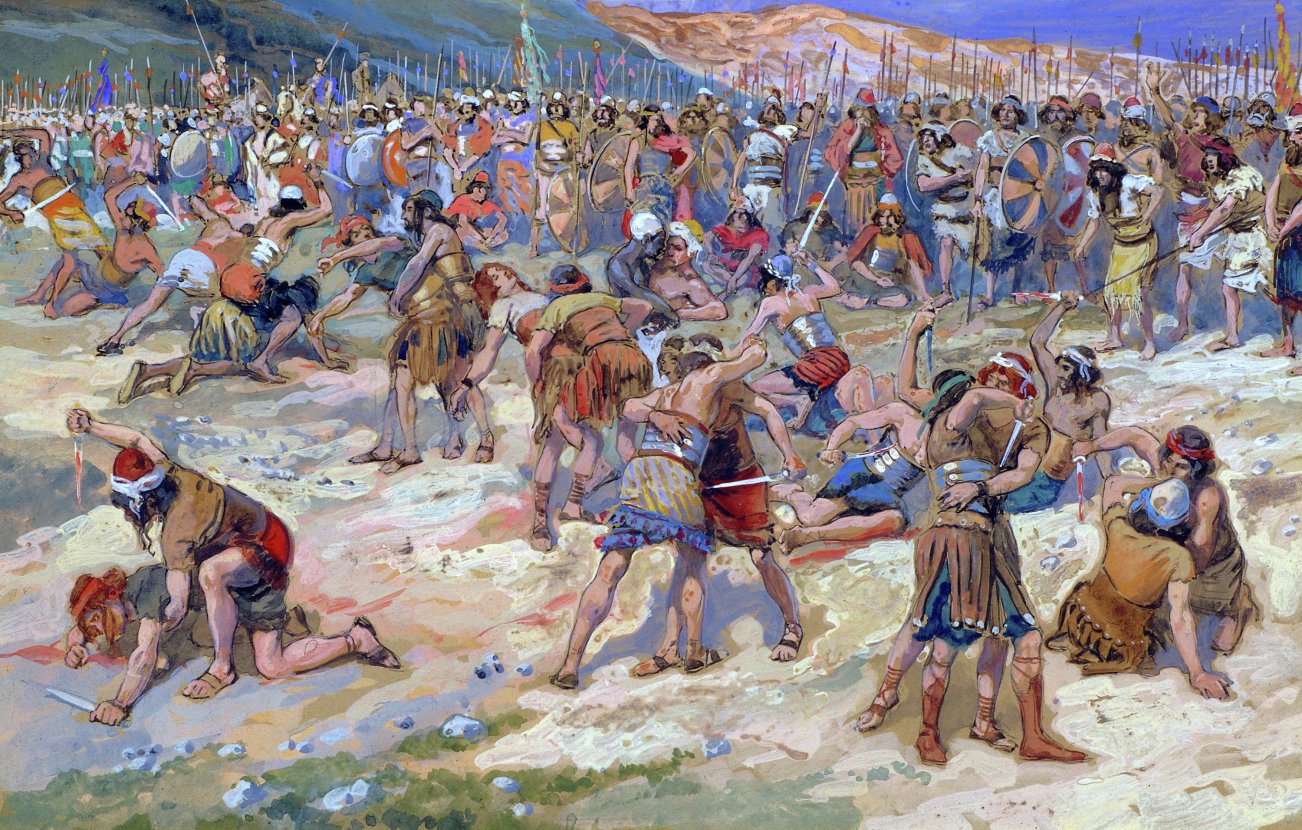
Meanwhile, Abner son of Ner, the commander of Saul’s army, had taken Ish-Bosheth son of Saul and brought him over to Mahanaim. He made him king over Gilead, Ashuri and Jezreel, and also over Ephraim, Benjamin and all Israel.   Ish-Bosheth son of Saul was forty years old when he became king over Israel, and he reigned two years. The tribe of Judah, however, remained loyal to David. The length of time David was king in Hebron over Judah was seven years and six months.   Abner son of Ner, together with the men of Ish-Bosheth son of Saul, left Mahanaim and went to Gibeon. Joab son of Zeruiah and David’s men went out and met them at the pool of Gibeon. One group sat down on one side of the pool and one group on the other side.   Then Abner said to Joab, “Let’s have some of the young men get up and fight hand to hand in front of us.” “All right, let them do it,” Joab said.   So they stood up and were counted off—twelve men for Benjamin and Ish-Bosheth son of Saul, and twelve for David. Then each man grabbed his opponent by the head and thrust his dagger into his opponent’s side, and they fell down together. So that place in Gibeon was called Helkath Hazzurim.    The battle that day was very fierce, and Abner and the Israelites were defeated by David’s men.   The three sons of Zeruiah were there: Joab, Abishai and Asahel. Now Asahel was as fleet-footed as a wild gazelle. He chased Abner, turning neither to the right nor to the left as he pursued him. Abner looked behind him and asked, “Is that you, Asahel?” “It is,” he answered.   Then Abner said to him, “Turn aside to the right or to the left; take on one of the young men and strip him of his weapons.” But Asahel would not stop chasing him.   Again Abner warned Asahel, “Stop chasing me! Why should I strike you down? How could I look your brother Joab in the face?”   But Asahel refused to give up the pursuit; so Abner thrust the butt of his spear into Asahel’s stomach, and the spear came out through his back. He fell there and died on the spot. And every man stopped when he came to the place where Asahel had fallen and died.   But Joab and Abishai pursued Abner, and as the sun was setting, they came to the hill of Ammah, near Giah on the way to the wasteland of Gibeon. Then the men of Benjamin rallied behind Abner. They formed themselves into a group and took their stand on top of a hill.   Abner called out to Joab, “Must the sword devour forever? Don’t you realize that this will end in bitterness? How long before you order your men to stop pursuing their fellow Israelites? – 2 Samuel 2:8-26

Apparently Abner did not get the memo that David was chosen by God to be the next king of Israel. This passage describes part of the power struggle after Saul and Jonathan were killed. Another of Saul’s sons, Ish-Bosheth, is being put forward by Abner as the rightful king. God has other plans. Israelite clans are fighting and killing one another. They seem to be chasing after each other rather than chasing after God.

The meeting at the pool of Gibeon is an odd scene. It is not clear what this pool was like but there are those who think it was a deep excavation into limestone to access a spring.  Two opposing groups of men, with deadly intent, are sitting across a pool of water from each other. This in itself is strange, but it gets even stranger when they each pick 12 warriors and they proceed to essentially commit group suicide. It sounds like a sacrifice rather than a battle. They name the place Helkath Hazzurim ( the field of the sharp knives). I confess I am at a loss to understand what is going on here. I have heard of battles being decided by single combat — like when David used his smooth stones to take out Goliath. This mass suicide does not even seem to decide anything. It seems like a senseless sacrifice. The battle continues despite the demise of twenty-four unlucky warriors.

As I chew on this passage it occurs to me that some of the “going to war over land” that goes on within our Christian communities can result in senseless sacrifices too. Let me explain, as Inigo Montoya from Princes Bride would say, “No, there is too much. Let me sum up.” Conflicts within the church over things like worship style, music, baptism, steeples, and other issues often result in divisions and splits in the body of Christ.  In many cases, this seems almost as senseless as the synchronized stabbing at the pool of Gibeon.  The end result is similar also.  It often does not really resolve the conflict. The conflict just spreads out like it did in this passage.  People move on to another church and take with them the unresolved issues that generated the division in the first place.  Unresolved conflict can become like cancer in the body of Christ.

Normal cell division in a body we call growth — abnormal cell division without purpose we call cancer. Cancer is a hideous disease. It takes over the very machinery of a cell to reproduce and eventually destroys the body…sounds eerily familiar doesn’t it. How often do divisions within the church arise from the very structures that are meant to prompt unity and growth? For example, the practice of baptism. This act is meant to signify a joining together of a family of believers. How crazy is it that disagreement over how this is done actually divides some Christians!

If Jesus were to show up today I think He would be horrified and bewildered by the ways we have allowed our differences to divide us. Just like the Israelites in this passage formed into clans to chase one another across the countryside. We allow our churches to divide into “1st”, “2nd”, and “3rd” without even mourning the loss.

Prayer: God help us to view division as a disease which is fatal for some souls. Help us to battle against it rather than each other.

Posted in 2 Samuel, Christian Community, Christianity, Following God, God's Love for Us, Obedience, Uncategorized | Tagged , , , , | Leave a comment

Lamenting a Loss

OLYMPUS DIGITAL CAMERADavid took up this lament concerning Saul and his son Jonathan, and he ordered that the people of Judah be taught this lament of the bow (it is written in the Book of Jashar):   “A gazelle lies slain on your heights, Israel. How the mighty have fallen!   “Tell it not in Gath, proclaim it not in the streets of Ashkelon, lest the daughters of the Philistines be glad, lest the daughters of the uncircumcised rejoice.   “Mountains of Gilboa, may you have neither dew nor rain, may no showers fall on your terraced fields.  For there the shield of the mighty was despised, the shield of Saul—no longer rubbed with oil.   “From the blood of the slain, from the flesh of the mighty, the bow of Jonathan did not turn back, the sword of Saul did not return unsatisfied.   Saul and Jonathan— in life they were loved and admired, and in death they were not parted. They were swifter than eagles, they were stronger than lions.   “Daughters of Israel, weep for Saul, who clothed you in scarlet and finery, who adorned your garments with ornaments of gold.   “How the mighty have fallen in battle! Jonathan lies slain on your heights.   I grieve for you, Jonathan my brother; you were very dear to me. Your love for me was wonderful, more wonderful than that of women.   “How the mighty have fallen! The weapons of war have perished! – 2 Samuel 1:17-27

This is the first passage related to water in the book of 2 Samuel.  The book begins with the end of the rule and life of Saul and his son Jonathan. David is heartbroken and he shares this lament with the people. I think it shows an amazing level of spiritual maturity for David to mourn the loss of Saul, a man who tried to kill him numerous times. Mourning for Jonathan I can understand as he was faithful to David his whole life, but Saul?  This would require a level of forgiveness that I am not sure I could muster.

Laments are not something we really do in our current culture. At least it is not something I have much experience with. It sounds something like a eulogy that is given at a person’s funeral, except this is a corporate lament for the loss of a leader. I think this sort of thing was more common when monarchies were around. Perhaps it is an important part of the succession process from one ruler to the next.

I have been reflecting on this passage for most of the day and David’s seemingly superhuman level of forgiveness for Saul.  I have come to the conclusion that David was unwilling to usurp God’s authority, even when Saul in essence abdicated his crown through his own actions.  It would have been so easy for David to seek retribution and revenge for how hard Saul made his life, but he didn’t.  David trusted God’s plan for his life and the Israelites.

The water imagery here is interesting. The mountains of Gilboa is where the Amalekites killed Saul and Jonathan. It is the place where men slayed God’s anointed. David’s lament recounts that the mountains of Gilboa will get no rain or dew. They are to be cut off from God and his spirit.  He will not provide for those people in that place because they have cut themselves off from God through their actions.

God gives us the freedom to cut ourselves off from God…to be free of God if we choose. When we disconnect ourselves from the spring we wither and we do not produce fruit.  That is the fate of the people of Gilboa, and the fate of those that choose to cut themselves off from God.  If we find ourselves failing to produce fruit perhaps it is because we have cut ourselves off from God.

Prayer: God help us to remain connected to You and to trust your plan for our lives.

Posted in 2 Samuel, Faith, Following God, Forgiveness, Trusting God | Tagged , , , , , , | Leave a comment

Eddying Out – Perplexing People

P1000117I have been walking through 1 Samuel for about the last two weeks and I have to admit that at times it has been a confusing and tough slog.  Yesterday’s post was the last one from 1 Samuel and I need a break so I thought this would be a good time to eddy out.

In my journey through 1 Samuel I have reflected on the flawed nature of many of God’s followers, including myself.  I still find it perplexing that famous characters like David have such trouble listening to God and following him.

On one level this should be reassuring as it means that even David, “a man after God’s own heart” found it difficult to faithfully follow God.  But part of me still wonders why God desires this kind of relationship with us.  Then I remember what I have learned and experienced as a parent.  I love my two daughters very much and I would do anything for them.  I am sure they love me too.  That does not mean that we never have misunderstandings and confusion between us.  I am sure my daughters would tell you we have had plenty of misunderstandings and confusion over the years.

I think one thing that my slog through 1 Samuel has taught me is that our relationship with God is a process or a journey.  We will have misunderstandings and confusion.  We are all perplexing people in our own way and that is OK.  God loves us anyway.  All God requires of us is to seek a deeper relationship with Him.  I am reminded of a verse I learned on a retreat that has stuck with me:

He has shown you, O man, what is good.
And what does the Lord require of you?
To act justly and to love mercy
and to walk humbly with your God. – Micah 6:8


I think the meaning of “walk humbly” is to maintain a posture and perspective that is always seeking better communication and understanding with God.  This does not mean that we will never have misunderstandings and frustrations with each other.  It just means that we are “all in” for God and He is “all in” for us.

Prayer: God give me the humility and patience to seek understanding when I encounter perplexing people, both in the bible and in my life.


Posted in Christian Community, Christianity, Discernment, Discipleship, Eddying Out, Faith, Following God, Life Together, Redemption, religion | Tagged , , , , | Leave a comment

Who do you belong to?

Then David said to Abiathar the priest, the son of Ahimelek, “Bring me the ephod.” Abiathar brought it to him, and David inquired of the Lord , “Shall I pursue this raiding party? Will I overtake them?” “Pursue them,” he answered. “You will certainly overtake them and succeed in the rescue.”   David and the six hundred men with him came to the Besor Valley, where some stayed behind. Two hundred of them were too exhausted to cross the valley, but David and the other four hundred continued the pursuit.   They found an Egyptian in a field and brought him to David. They gave him water to drink and food to eat— part of a cake of pressed figs and two cakes of raisins. He ate and was revived, for he had not eaten any food or drunk any water for three days and three nights.   David asked him, “Who do you belong to? Where do you come from?” He said, “I am an Egyptian, the slave of an Amalekite. My master abandoned me when I became ill three days ago. We raided the Negev of the Kerethites, some territory belonging to Judah and the Negev of Caleb. And we burned Ziklag.”   David asked him, “Can you lead me down to this raiding party?” He answered, “Swear to me before God that you will not kill me or hand me over to my master, and I will take you down to them.”   He led David down, and there they were, scattered over the countryside, eating, drinking and reveling because of the great amount of plunder they had taken from the land of the Philistines and from Judah. David fought them from dusk until the evening of the next day, and none of them got away, except four hundred young men who rode off on camels and fled. David recovered everything the Amalekites had taken, including his two wives. Nothing was missing: young or old, boy or girl, plunder or anything else they had taken. David brought everything back. He took all the flocks and herds, and his men drove them ahead of the other livestock, saying, “This is David’s plunder.”   Then David came to the two hundred men who had been too exhausted to follow him and who were left behind at the Besor Valley. They came out to meet David and the men with him. As David and his men approached, he asked them how they were. But all the evil men and troublemakers among David’s followers said, “Because they did not go out with us, we will not share with them the plunder we recovered. However, each man may take his wife and children and go.”   David replied, “No, my brothers, you must not do that with what the Lord has given us. He has protected us and delivered into our hands the raiding party that came against us. Who will listen to what you say? The share of the man who stayed with the supplies is to be the same as that of him who went down to the battle. All will share alike.” David made this a statute and ordinance for Israel from that day to this. – 1 Samuel 30:7-25

Living at this time in history sounds like a perpetual action movie…or perhaps a Sergio Leone Western 🙂 The Amalekites burn David’s village, capture his family, and pretty much take everything. David and 600 of his men are in hot pursuit of the Amalekites, kind of like Mad Max chasing after the bad dudes who stole his family.  David loses the Amalekites in the desert.  About 200 of his men are exhausted and decide to stop pursuing the Amalekites. This is one of the oddest parts of this story.  It seems to me that if my family were in the hands of an evil people I would go to the ends of the earth to rescue them. Why did these 200 men lose heart and stop? I suspect they lost hope. They despaired of ever seeing their families again. They did not know that God had their back.

David and the 400 men who did not lose hope ventured on into the desert.  I am sure they were hot, sweaty, and discouraged.  God provided them a “hidden well“.  They find a lost Egyptian dying of hunger and thirst that was with the Amalekites when they sacked David’s village, Ziklag. David asked him a very important question “Who do you belong to?”  This scene reminds me of an epic scene from one of my favorite westerns…The Good, the Bad, and the Ugly.

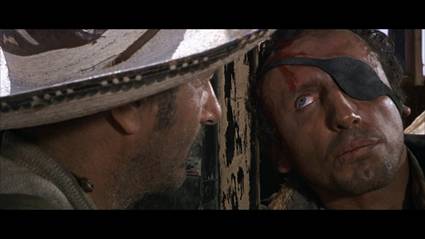
Clint Eastwood’s character Joe, or “Blondy”, is being slowing killed by thirst in the desert by his former partner in crime, Tuco (Eli Wallach). The two men had a great thing going…Eastwood would turn Tuco in for reward money then rescue him at the last minute from hanging by shooting the rope and they would split the money. The arrival of the sadistic character Sentenza (Lee Van Cleef), and a “missed” shot make Tuco and Blondy enemies.  Blondy leaves Tuco to die in the desert.  Tuco somehow makes it to town and survives…he really hates Blondy and when he finds him he wants retribution…thus the forced march through the desert.

As Tuco drives Blondy through the desert they come upon a union soldier on the edge of death who tells Tuco about $20,000 in gold buried in a cemetery.  The dying man refuses to tell Tuco which grave contains the treasure until he gives him some water.  While Tuco is fetching the water blondy somehow drags himself over to the dying man, and in his dying breath, the man tells Blondy which grave contains the treasure. Tuco becomes Blondy’s best friend and attempts to nurse him back to health so he can learn the location of the treasure.  They embark on an epic journey to get the treasure together as neither has enough information alone to find the treasure…. they need each other.

David and the Egyptian also need each other.  David needs the information the Egyptian can give him and the Egyptian needs both the water David provides and the grace David extends not to kill him. David is the “good”, the Amalekites are the “bad”, and some of David’s men are ugly.  David’s men show their ugliness when they refuse to share in the plunder with the 200 men who stayed behind. David extends grace to these men who stayed behind.

Those of us who belong to God – those who accept God’s ownership, must not lose hope. We need to continue the journey, seeking God at the center, even when we seem to be stuck in the desert with no hope. God showed up for the Egyptian dying of thirst in the desert, for David and his 400 intrepid men, for the 200 men who did not pursue the Amalekites, and He shows up for all of us who faithfully follow Him.

Prayer: God help us not to lose hope, even when things seem bleak. You know where the treasure is, and have agreed to lead us there.

Posted in 1 Samuel, Christianity, Covenant, Faith, Following God, God's Love for Us, Obedience, religion, Trusting God | Tagged , , , , , , , , , | Leave a comment

Choosing Safety over a Sovereign God

The Philistines gathered all their forces at Aphek, and Israel camped by the spring in Jezreel. As the Philistine rulers marched with their units of hundreds and thousands, David and his men were marching at the rear with Achish. The commanders of the Philistines asked, “What about these Hebrews?” Achish replied, “Is this not David, who was an officer of Saul king of Israel? He has already been with me for over a year, and from the day he left Saul until now, I have found no fault in him.”   But the Philistine commanders were angry with Achish and said, “Send the man back, that he may return to the place you assigned him. He must not go with us into battle, or he will turn against us during the fighting. How better could he regain his master’s favor than by taking the heads of our own men? Isn’t this the David they sang about in their dances: “ ‘Saul has slain his thousands, and David his tens of thousands’?”   So Achish called David and said to him, “As surely as the Lord lives, you have been reliable, and I would be pleased to have you serve with me in the army. From the day you came to me until today, I have found no fault in you, but the rulers don’t approve of you. Now turn back and go in peace; do nothing to displease the Philistine rulers.”   “But what have I done?” asked David. “What have you found against your servant from the day I came to you until now? Why can’t I go and fight against the enemies of my lord the king?”   Achish answered, “I know that you have been as pleasing in my eyes as an angel of God; nevertheless, the Philistine commanders have said, ‘He must not go up with us into battle.’ Now get up early, along with your master’s servants who have come with you, and leave in the morning as soon as it is light.”   So David and his men got up early in the morning to go back to the land of the Philistines, and the Philistines went up to Jezreel. – 1 Samuel 29:1-11

OK I admit I am little confused by what is happening here.  David has decided to hide from Saul among the Philistines.  Why would David feel safer among the people whose giant he has killed in battle?  Perhaps I am not understanding a cultural context here, but is this not like a criminal hiding in a police station?  Why would the Philistines tolerate David living among them any more than Saul does? Perhaps word did not spread so easily back then.

The Israelite forces are camped at a spring which is where the water reference comes into this passage.  David is marching with the opposing force of Philistines.  The commanders, with good reason, question why David is allowed to march with them.  They seem to either have a very short memory or the incident with Goliath was a much bigger deal to the Israelites than it was for the Philistines.

David’s posture seems to have changed somewhat from the time of the Goliath incident.  Back then he trusted God with His life and the life of Israel, now he is relying on his former enemies for safety.  David’s posture and perspective toward God seem to have changed. I suspect it is because David moved not God.  I guess David is joining the ranks of the flawed followers of which I know I am a member along with most of the early leaders of Israel.  Do we as Christians do something similar to what David was doing?  Do we ever Choose safety over a sovereign God?

I think that we often choose safety over God when we avoid taking on hard issues within our Christian communities. I know I am guilty of this.  I am reminded of a couple we knew some years ago.  We knew the couple pretty well, but our friendship did not delve into deeper relationship or spiritual issues….perhaps it should have.  This couple’s marriage ended in divorce and a broken home for their two children.  Even after the divorce we did not discuss the reasons for their break up…perhaps we should have.  The end result was awkward small talk which never got at the core issue, which was why they both chose to break up their family and where was God in the mix.

I get the sense that David is avoiding hard truths and discussions that he should be having with Saul, his followers, and the other Israelites.  He was chosen by God and Samuel to be the King over Israel, but he seems content to hide from Saul among the Philistines rather than assert the position God has called him to take.  What happened to that bold young man who picked up 5 smooth stones and went up against a giant?  It seems the relational messiness with Saul and the Israelites is bigger than a Philistine giant with a spear…or at least that is how it looks from David’s current perspective. Maybe we are hiding from messy or confusing topics and relational issues in our Christian communities….perhaps we shouldn’t.

Prayer: God help us to look for ways to build healthy relationships with other, even when doing so requires us to discuss hard things.

Posted in 1 Samuel, Christian Community, Christian Leadership, Christianity, Covenant, Discernment, Faith, Following God, Life Together, Love for the Lost, Obedience, religion, Trusting God | Tagged , , , , , , , | Leave a comment

Water Jugs and Weapons

So David and Abishai went to the army by night, and there was Saul, lying asleep inside the camp with his spear stuck in the ground near his head. Abner and the soldiers were lying around him.   Abishai said to David, “Today God has delivered your enemy into your hands. Now let me pin him to the ground with one thrust of the spear; I won’t strike him twice.”   But David said to Abishai, “Don’t destroy him! Who can lay a hand on the Lord ’s anointed and be guiltless? As surely as the Lord lives,” he said, “the Lord himself will strike him, or his time will come and he will die, or he will go into battle and perish. But the Lord forbid that I should lay a hand on the Lord ’s anointed. Now get the spear and water jug that are near his head, and let’s go.”   So David took the spear and water jug near Saul’s head, and they left. No one saw or knew about it, nor did anyone wake up. They were all sleeping, because the Lord had put them into a deep sleep.   Then David crossed over to the other side and stood on top of the hill some distance away; there was a wide space between them. He called out to the army and to Abner son of Ner, “Aren’t you going to answer me, Abner?” Abner replied, “Who are you who calls to the king?”   David said, “You’re a man, aren’t you? And who is like you in Israel? Why didn’t you guard your lord the king? Someone came to destroy your lord the king. What you have done is not good. As surely as the Lord lives, you and your men must die, because you did not guard your master, the Lord ’s anointed. Look around you. Where are the king’s spear and water jug that were near his head?”   Saul recognized David’s voice and said, “Is that your voice, David my son?” David replied, “Yes it is, my lord the king.” And he added, “Why is my lord pursuing his servant? What have I done, and what wrong am I guilty of? Now let my lord the king listen to his servant’s words. If the Lord has incited you against me, then may he accept an offering. If, however, people have done it, may they be cursed before the Lord ! They have driven me today from my share in the Lord ’s inheritance and have said, ‘Go, serve other gods.’ Now do not let my blood fall to the ground far from the presence of the Lord . The king of Israel has come out to look for a flea—as one hunts a partridge in the mountains.”   Then Saul said, “I have sinned. Come back, David my son. Because you considered my life precious today, I will not try to harm you again. Surely I have acted like a fool and have been terribly wrong.”   “Here is the king’s spear,” David answered. “Let one of your young men come over and get it. The Lord rewards everyone for their righteousness and faithfulness. The Lord delivered you into my hands today, but I would not lay a hand on the Lord ’s anointed. As surely as I valued your life today, so may the Lord value my life and deliver me from all trouble.”   Then Saul said to David, “May you be blessed, David my son; you will do great things and surely triumph.” So David went on his way, and Saul returned home. – 1 Samuel 26:7-25

David once again behaves honorably in response to a dishonorable man. Saul is camped out with his posse of 3,000 men and they are ready to kill David and his men. David and Abishasi sneak into Saul’s tent. There Saul sleeps with the weapon of his own destruction, a spear, right next to his head. Abishai wants to off him on the spot, but David is unwilling to usurp God’s authority by slaying God’s chosen king…even though by all measures Saul has abdicated this title through his actions.

Part of me wants to side with Abishai, why not kill him?  He has made attempts on David’s life more than once. David knew that to give in to this temptation would push himself, and those who were following him, away from God rather than toward Him. In this instance, David passed the Meribah Test with flying colors.

David was practicing the art of loving his enemy.  Something Jesus asked of His followers.  When I was in college I was a big Mohandas Gandhi fan.  Gandhi used  the term Satyagraha  to describe the seemingly illogical strategy of returning good for evil and loving your enemies. Gandhi applied this strategy with great success against the British to gain independence for India.

Jesus also tells us to love our enemies in Matthew 5:44:

You have heard that it was said, ‘Love your neighbor and hate your enemy.’ But I tell you, love your enemies and pray for those who persecute you, that you may be children of your Father in heaven. He causes his sun to rise on the evil and the good, and sends rain on the righteous and the unrighteous. If you love those who love you, what reward will you get? Are not even the tax collectors doing that? And if you greet only your own people, what are you doing more than others? Do not even pagans do that? Be perfect, therefore, as your heavenly Father is perfect.
 

This teaching of Jesus is really hard.  How do we put aside our hatred of our enemies and actually love them?  I think the only way to do this is to have our eyes fixed so firmly on God and Jesus that we do not see an enemy anymore, but a child of God who has perhaps made bad choices.  These choices may have even harmed us directly.

I am reminded of a book I read some time ago called The Sunflower by Simon Wiesenthal.  His book recounts an incredible story of a Nazi soldier who asks for forgiveness from a Jewish man from a concentration camp (Simon Wiesenthal).  The book is about what Simon should have done.  He asks a variety of people what they would have done.  Would they have forgiven him?  Why or why not?  David forgave Saul and gave God the power over both himself and Saul.  This is the model for us.  We need to give God the power over our enemies.  Ultimately it is not up to us…God loves even our enemies and we should too.

Prayer: God help us to love our enemies as You love them, regardless of ways they may have hurt us.

Posted in 1 Samuel, Christian Community, Christianity, Following God, Forgiveness, Love for the Lost, Obedience, Trusting God | Tagged , , , , | Leave a comment

Abigail’s Atonement

Then David accepted from her hand what she had brought him and said, “Go home in peace. I have heard your words and granted your request.”   When Abigail went to Nabal, he was in the house holding a banquet like that of a king. He was in high spirits and very drunk. So she told him nothing at all until daybreak. Then in the morning, when Nabal was sober, his wife told him all these things, and his heart failed him and he became like a stone. About ten days later, the Lord struck Nabal and he died.   When David heard that Nabal was dead, he said, “Praise be to the Lord , who has upheld my cause against Nabal for treating me with contempt. He has kept his servant from doing wrong and has brought Nabal’s wrongdoing down on his own head.” Then David sent word to Abigail, asking her to become his wife. His servants went to Carmel and said to Abigail, “David has sent us to you to take you to become his wife.”   She bowed down with her face to the ground and said, “I am your servant and am ready to serve you and wash the feet of my lord’s servants.” Abigail quickly got on a donkey and, attended by her five female servants, went with David’s messengers and became his wife. David had also married Ahinoam of Jezreel, and they both were his wives. But Saul had given his daughter Michal, David’s wife, to Paltiel son of Laish, who was from Gallim. – 1 Samuel 25:35-44

I have a new favorite character from the old testament — Abigail was an amazing woman.  Her husband Nabal is behaving like a spoiled king and Abigail is behaving like Christ.  She is prepared to wash David’s servants feet just like Jesus washed the feet of His disciples.  The first instance that water was used to wash feet was back in the post about the God who Serves.  Abigail provides an excellent example of serving with humility and grace.

Saul has “revoked” his daughter Michal from David and given her to another man…nice way for a dad to treat his daughter…much less his son-in-law.  Nabal was a man after Saul’s own heart and his wife Abigail was a woman after God’s own heart.

What was it about Abigail that made her so confident and courageous?  She stepped out in faith to provide for David knowing that she might get in trouble with her husband.  It turned out well in the end, but Abigail had to trust a God she could not see, but who fortunately was a God who saw her.

We as Christians have much to learn from Abigail.  She moved boldly on what she knew to be the right course even when the worldly consequences seemed dire.  Then when God provided for her in an amazing way she maintained her posture of humility.  It is easy to get cocky and forget God when things go well in our lives.  It is at those times when our posture determines our perspective and whether we can see God clearly enough to follow Him.

Prayer: God help me to follow You boldly and maintain a posture of humility.

Posted in 1 Samuel, Christianity, Covenant, Faith, Following God, Obedience, Redemption, religion, Trusting God | Tagged , , , , , , | Leave a comment