
Rabbit Trail #6 – Flawed Followers

JJK_5997There is something that has been ruminating in my mind over the last week.  It is a concept that has flitted in and out of my concienceness since I began my walk through the bible. It can be boiled down to one perplexing question. Why are so many of the people described in the bible such flawed followers? In honor of this being the 140th post I decided to follow this rabbit trail to see where it, and God, lead me.

The story of Saul’s decent into estrangement from God, and what can only be described as madness, has made me consider why God chooses leaders who are flawed. The list of flawed followers starts with Adam and Eve and includes pretty much every leader God has chosen, including the heavy hitters Noah, Moses, and Joshua, One conclusion we could reach is that all human leaders are flawed. This is pretty much the message Jesus brought. We all fall short.

So what are we to do, imperfect followers that we are? I think the answer lies in admitting that we are imperfect and allowing God to lead us despite our imperfections. In many cases God will use the blemishes in our being to accomplish great things if we allow Him to. The fundamental problem with Saul is not that he is a flawed king. God predicted that when he was chosen. His problem is that he does not allow God and the Holy Spirit to hammer out his imperfections. With each missed opportunity Saul separates himself further and further from God.

We are all flawed followers. Each of us has a unique set of flaws which we must present to God so that he can sculpt our souls into His image. Jesus was a sculptor of his disciple’s souls. From His first invitation to follow Him to His sacrifice on the cross Jesus was shaping souls. He was constantly hammering away at the flaws of people like Peter. I am reminded of one of the inspirations for this blog — the story of Jesus walking on water and inviting Peter to join him.

Shortly before dawn Jesus went out to them, walking on the lake. When the disciples saw him walking on the lake, they were terrified. “It’s a ghost,” they said, and cried out in fear. But Jesus immediately said to them: “Take courage! It is I. Don’t be afraid.” “Lord, if it’s you,” Peter replied, “tell me to come to you on the water.” “Come,” he said. Then Peter got down out of the boat, walked on the water and came toward Jesus. But when he saw the wind, he was afraid and, beginning to sink, cried out, “Lord, save me!” Immediately Jesus reached out his hand and caught him. “You of little faith,” he said, “why did you doubt?” And when they climbed into the boat, the wind died down. Then those who were in the boat worshiped him, saying, “Truly you are the Son of God.” – Matthew 14:25-33
 

Peter’s flaw in faith makes him unable to walk on water. Just like our flaws can prevent us from walking with God if we let them.

The answer does not lie in pretend perfection, but rather in bald-faced admission of imperfection and submission to God’s transformative hand. The only way to work out problems with our “programming” is to practice relying on God – the programmer. God wants to transform our flaws into features.

Prayer: God I confess I am a flawed follower. I give you free reign to turn my flaws into features.

SDG

Posted in Christianity, Discernment, Faith, Following God, God's Love for Us, Rabbit Trails, Trusting God | Tagged , , , , , | Leave a comment

Withholding Water

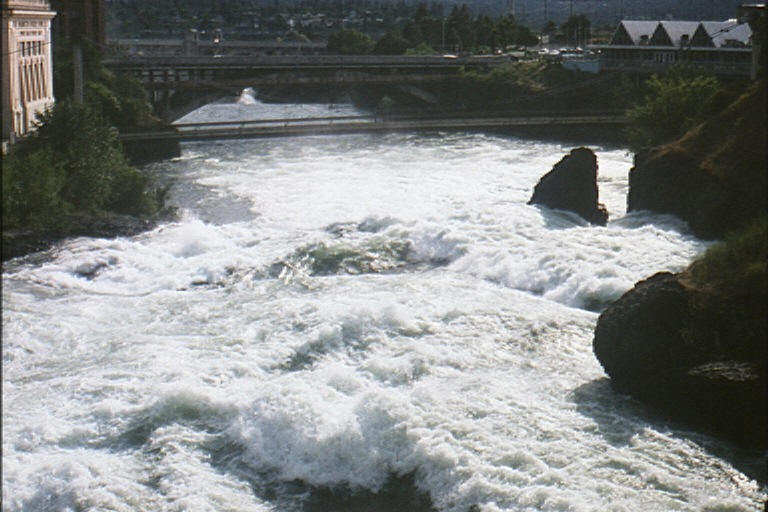
IMGP4938

The Amway Grand Hotel. Grand Rapids, MI

Now Samuel died, and all Israel assembled and mourned for him; and they buried him at his home in Ramah. Then David moved down into the Desert of Paran.    A certain man in Maon, who had property there at Carmel, was very wealthy. He had a thousand goats and three thousand sheep, which he was shearing in Carmel. His name was Nabal and his wife’s name was Abigail. She was an intelligent and beautiful woman, but her husband was surly and mean in his dealings—he was a Calebite.   While David was in the wilderness, he heard that Nabal was shearing sheep. So he sent ten young men and said to them, “Go up to Nabal at Carmel and greet him in my name. Say to him: ‘Long life to you! Good health to you and your household! And good health to all that is yours!   “ ‘Now I hear that it is sheep-shearing time. When your shepherds were with us, we did not mistreat them, and the whole time they were at Carmel nothing of theirs was missing. Ask your own servants and they will tell you. Therefore be favorable toward my men, since we come at a festive time. Please give your servants and your son David whatever you can find for them.’ ”   When David’s men arrived, they gave Nabal this message in David’s name. Then they waited.   Nabal answered David’s servants, “Who is this David? Who is this son of Jesse? Many servants are breaking away from their masters these days. Why should I take my bread and water, and the meat I have slaughtered for my shearers, and give it to men coming from who knows where?”   David’s men turned around and went back. When they arrived, they reported every word. David said to his men, “Each of you strap on your sword!” So they did, and David strapped his on as well. About four hundred men went up with David, while two hundred stayed with the supplies.   One of the servants told Abigail, Nabal’s wife, “David sent messengers from the wilderness to give our master his greetings, but he hurled insults at them. Yet these men were very good to us. They did not mistreat us, and the whole time we were out in the fields near them nothing was missing. Night and day they were a wall around us the whole time we were herding our sheep near them. Now think it over and see what you can do, because disaster is hanging over our master and his whole household. He is such a wicked man that no one can talk to him. – 1 Samuel 25:1-17

David and his band of misfits are still on the run from Saul. In this passage he finds out that there are those who’s side with Saul, or are at least out for themselves. That seems to be the case for Nabal. By all accounts he is a piece of work…wealthy, selfish, surly, and mean. His wife Abigail seems to be a woman who has a heart for God even though she is married to a jerk.

David sends messengers to Nabal to see if he will share some of his wealth and abundance. It sounds like David and his merry men have been running sheep in the same vicinity as Nabal’s men, but the name David meant nothing to Nabal and so he refused to share food and water with David and his men. Nabal’s servants have experienced what men of integrity David’s men are and they think Nabal is treating them unfairly…Abigail agrees.

Nabal is so focused on his wealth and possessions that he cannot see those in need around him. The things he owns have ended up owning him. It is hard to have humility in abundance and maintain a perspective and posture.  His servants describe him as such a wicked man that no one can talk to him.  The ability to talk and listen is a sure sign of one’s posture toward others.  Nabal clearly has no patience for talking or listening to people.

When I finished my PhD and started teaching I realized that I was not a good listener.  I had probably not been a good listener for some time before that, but it took me that long to figure it out.  Listening remains a growth area for me, and it is an area that God is actively smoothing and shaping in me.  When I started teaching I printed out a phrase that said “teach and learn rather than know and tell”.  This phrase reminds that it does not matter how much I know if I cannot maintain a posture that let’s my students know how much I care.

Prayer: God give us the ability to see those in need around us and become good at listening and talking with others.

Posted in 1 Samuel, Covenant, Discernment, Faith, Following God, Love for the Lost, Obedience, Trusting God | Tagged , , , , | Leave a comment

The Great Cistern

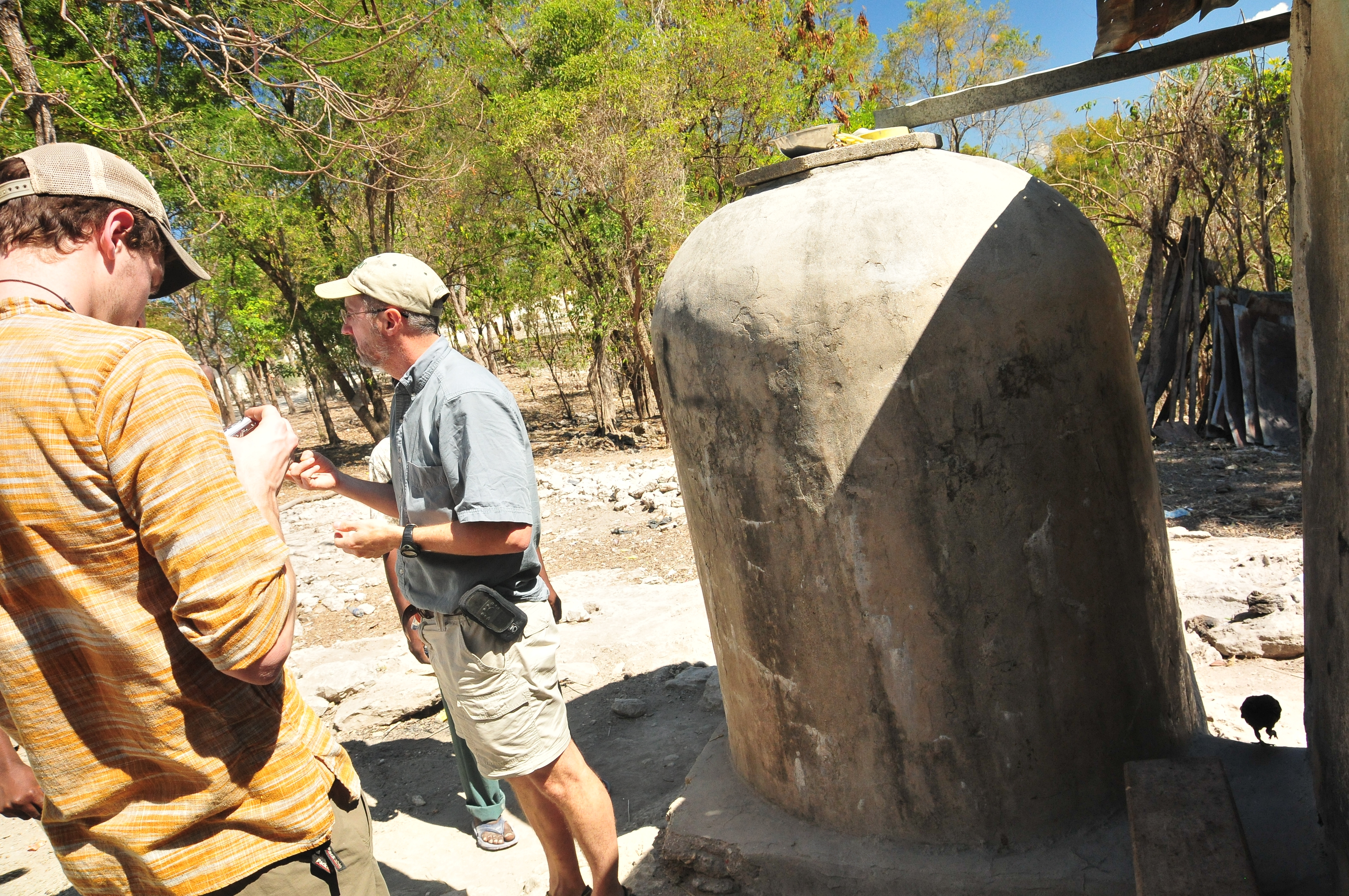
Cistern in rural Haiti

Cistern in rural Haiti

So Jonathan called David and told him the whole conversation. He brought him to Saul, and David was with Saul as before.   When Saul sent the men to capture David, Michal said, “He is ill.”   Then Saul sent the men back to see David and told them, “Bring him up to me in his bed so that I may kill him.” But when the men entered, there was the idol in the bed, and at the head was some goats’ hair.   Saul said to Michal, “Why did you deceive me like this and send my enemy away so that he escaped?” Michal told him, “He said to me, ‘Let me get away. Why should I kill you?’ ”   When David had fled and made his escape, he went to Samuel at Ramah and told him all that Saul had done to him. Then he and Samuel went to Naioth and stayed there. Word came to Saul: “David is in Naioth at Ramah”; so he sent men to capture him. But when they saw a group of prophets prophesying, with Samuel standing there as their leader, the Spirit of God came on Saul’s men, and they also prophesied. Saul was told about it, and he sent more men, and they prophesied too. Saul sent men a third time, and they also prophesied. Finally, he himself left for Ramah and went to the great cistern at Seku. And he asked, “Where are Samuel and David?” “Over in Naioth at Ramah,” they said.   So Saul went to Naioth at Ramah. But the Spirit of God came even on him, and he walked along prophesying until he came to Naioth. He stripped off his garments, and he too prophesied in Samuel’s presence. He lay naked all that day and all that night. This is why people say, “Is Saul also among the prophets?” – 1 Samuel 19:7, 14-24

This is an interesting passage.  Saul is in pursuit of Samuel and David and comes face to face with the Spirit of God.  Saul sends men to pursue Samuel and David and they end up prophesying and eventually Saul does too.  God seems to be showing up in a big way trying to convince Saul to change course.  Unfortunately God is unsuccessful.

Water in this passage comes in the form of a common water collection device called a cistern.  Cisterns are used to catch and store rainwater — a human invention used to capture and store the natural rains provided by God.   David goes to the place of a large cistern, the great cistern at Seku.

Cisterns are something that most people in the United States have not experienced. They were used on the great plains and in the desert southwest, but other water sources have replaced them in most areas.  In Haiti cisterns are used at some houses to obtain clean water that has not been tainted by human or animal waste.  They can provide some of the cleanest and safest water around if they are protected and isolated from sources of contamination.

I expect the cisterns in middle east were quite valuable and protected places.  The water that a cistern collects could have meant the difference between life and death for people of the desert.  I bet these large cisterns were closely guarded places.  If they were to become contaminated it would have meant illness and possible death for those who relied upon it for water.

It is intriguing that David and Samuel choose a great cistern to evade and hide from Saul.  In a sense they have been relying on God, the greatest cistern of all, for many years.  God has been the source of living water for both Samuel and David for most of their lives, but Saul is unwilling to access this source of water and life.  He has instead attempted to go it alone and rely upon his own resources to be successful.

There is a lesson here for all those who seek to know and love God.  We need to be willing to access the “cistern” which is God.  He stands ready to provide living water for all those who hunger and thirst for the living water he offers.

Prayer: Thank You God that you are the greatest cistern of all…providing living water for all who are willing to take it.

SDG
Posted in 1 Samuel, Faith, Following God, Obedience, Trusting God | Tagged , , , , , , | 1 Comment

Smooth Stones

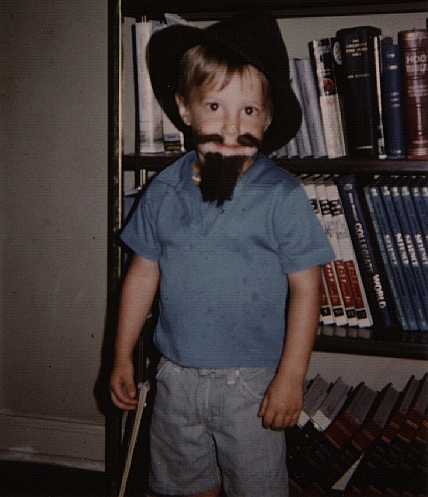
"Mini me" age ~ 4

Mini “me”

Then Saul dressed David in his own tunic. He put a coat of armor on him and a bronze helmet on his head. David fastened on his sword over the tunic and tried walking around, because he was not used to them. “I cannot go in these,” he said to Saul, “because I am not used to them.” So he took them off. Then he took his staff in his hand, chose five smooth stones from the stream, put them in the pouch of his shepherd’s bag and, with his sling in his hand, approached the Philistine.   Meanwhile, the Philistine, with his shield bearer in front of him, kept coming closer to David. He looked David over and saw that he was little more than a boy, glowing with health and handsome, and he despised him. He said to David, “Am I a dog, that you come at me with sticks?” And the Philistine cursed David by his gods. “Come here,” he said, “and I’ll give your flesh to the birds and the wild animals!”   David said to the Philistine, “You come against me with sword and spear and javelin, but I come against you in the name of the Lord Almighty, the God of the armies of Israel, whom you have defied. This day the Lord will deliver you into my hands, and I’ll strike you down and cut off your head. This very day I will give the carcasses of the Philistine army to the birds and the wild animals, and the whole world will know that there is a God in Israel. All those gathered here will know that it is not by sword or spear that the Lord saves; for the battle is the Lord ’s, and he will give all of you into our hands.”   As the Philistine moved closer to attack him, David ran quickly toward the battle line to meet him. Reaching into his bag and taking out a stone, he slung it and struck the Philistine on the forehead. The stone sank into his forehead, and he fell facedown on the ground. – 1 Samuel 17:38-49

Well a lot has happened since the last reference to water. Saul has continued to refer to God as Samuel’s Lord rather than his own. Saul’s posture and perspective were not allowing him to see God as his own. Finally both Samuel and God gave up on Saul and picked a successor….without letting Saul know whom God has chosen. God chose David, the youngest of eight sons in the family of Jesse – the “baby of the family”.  I can relate to David’s birth order….I am the youngest of five children and I will always be the “baby” of the family no matter how much grey hair and wrinkles I have.

As the youngest child I was often accused of being spoiled. I don’t think I was spoiled, but it is difficult to see one’s own spoilage — kind of like trying to see the inside of your own eye lid. I prefer to think that my parents were just worn out after raising my brothers and sister. My siblings tended to treat me a bit like a toy when I was young. I was gullible and starved for attention so I am sure I was often a willing participant. I have seen pictures of my 4-year old self covered with hand drawn tattoos. Apparently I was a willing canvas for a group of budding artists (my siblings).

The interesting thing is no matter how old I am, how many letters I have behind my name, or how many articles I publish I am still the “baby” when our family gets together and it often causes tension (at least for me). I would just like to be treated like a grown up. I am pretty sure David had similar feelings toward his siblings and they probably treated him like a child no matter how many bears he beat or lions he lanced. David shows himself to be very grown up when it comes to trusting God.

After rejecting Saul’s armor and sword, David goes out to meet Goliath….sort of a walking refrigerator with lots of armor. He probably would have done well in the NFL.  David enters the battle with the only weapon that could defeat Goliath – unconditional faith that God would show up.

David has clearly planted himself by the river and remains connected to the spring that is God’s love. David reaches down into the flowing stream and finds five smooth stones. Stones whose rough edges have been removed by floods and storms. As I write this I am struck by the image of a rock worn smooth. David is a bit like these smooth stones. His faith has been shaped and honed by years of practice relying on God to protect him when bears and lions attacked.  He has carried sheep on his shoulders just like God has said He wants to carry us.  Of course we know “the rest of the story” – one of those smooth stones felled Goliath and set in motion the line of David.

God could use David because he had allowed himself to be “rounded” and “smoothed” by God’s spirit. This shaping can be painful and hard. I suspect if river rocks could talk they would not describe a flood, when they are being bashed and bounced down the river, as a good experience. Yet without this they would remain rough and they would not be getting anywhere.

So if we are to become smooth stones that God can use to fell “giants” of all forms we must expect and welcome being bounced about by the spirit. I think this is why Christ’s disciples actually welcomed trials and tribulations. They knew that it was through these things that they could become smooth stones that God could use.

Prayer: God shape and smooth us with your spirit so that we are ready to take on giants when You need us to.

SDG
Posted in 1 Samuel, Christian Leadership, Covenant, Faith, Following God, Obedience, Trusting God | Tagged , , , , , , , , , , | Leave a comment

Getting Ahead of God

57256_03Saul was thirty years old when he became king, and he reigned over Israel forty- two years.   Saul chose three thousand men from Israel; two thousand were with him at Mikmash and in the hill country of Bethel, and a thousand were with Jonathan at Gibeah in Benjamin. The rest of the men he sent back to their homes.   Jonathan attacked the Philistine outpost at Geba, and the Philistines heard about it. Then Saul had the trumpet blown throughout the land and said, “Let the Hebrews hear!” So all Israel heard the news: “Saul has attacked the Philistine outpost, and now Israel has become obnoxious to the Philistines.” And the people were summoned to join Saul at Gilgal.   The Philistines assembled to fight Israel, with three thousand chariots, six thousand charioteers, and soldiers as numerous as the sand on the seashore. They went up and camped at Mikmash, east of Beth Aven. When the Israelites saw that their situation was critical and that their army was hard pressed, they hid in caves and thickets, among the rocks, and in pits and cisterns. Some Hebrews even crossed the Jordan to the land of Gad and Gilead. Saul remained at Gilgal, and all the troops with him were quaking with fear. He waited seven days, the time set by Samuel; but Samuel did not come to Gilgal, and Saul’s men began to scatter. So he said, “Bring me the burnt offering and the fellowship offerings.” And Saul offered up the burnt offering. Just as he finished making the offering, Samuel arrived, and Saul went out to greet him.   “What have you done?” asked Samuel. Saul replied, “When I saw that the men were scattering, and that you did not come at the set time, and that the Philistines were assembling at Mikmash, I thought, ‘Now the Philistines will come down against me at Gilgal, and I have not sought the Lord ’s favor.’ So I felt compelled to offer the burnt offering. – 1 Samuel 13:1-12

Saul is getting off to an auspicious start as king of the Israelites.  It did not take him long to place himself above God in the leadership of the Israelites.  Here this approach has gotten him into trouble with the Philistines.  The Israelites are beaten by the Philistines and are running for cover — hiding in cisterns and pits, and crossing back over the Jordan River.

The lesson that Saul learns from this failure is not exactly what Samuel, or God, had in mind.  Samuel is late to come to the rescue and Saul decides to go it alone and offer sacrifices to God without Samuel….big mistake.  What God is looking for is obedience and faithful following.  What Saul is doing could best be described by the acronym CYA (cover your you know what).  Saul does not trust God to show up, or even show up late for that matter.

Saul will soon find that his decision to get out ahead of God instead of letting God go out ahead of Him will cost him dearly.  God was asking Saul to wait and lead by following.  I admit that waiting on God can be hard and I am certainly guilty of being impatient at times.  I have a tendency to strike out ahead of God.  In my experience this often produces results that are less than optimal.

Saul lost sight of the bigger picture that God is in control, even when things look like they are not going his way.  There is a strange dynamic here.  When we encounter difficult times that require God’s help these are the very times when it is hardest to trust God — yet these are the very times when God desires us to follow Him unconditionally.  We cannot wait for things to “get better” or “easier” before we follow Him.  It is during these times that God wants to carry us like a son (or daughter) because He loves us.

Prayer: God help us to follow You even when doing so seems very hard and scary.

Posted in 1 Samuel, Christian Leadership, Covenant, Discernment, Following God, Trusting God | Tagged , , , , , , , , , | Leave a comment

A Harvest Rain

But when you saw that Nahash king of the Ammonites was moving against you, you said to me, ‘No, we want a king to rule over us’—even though the Lord your God was your king. Now here is the king you have chosen, the one you asked for; see, the Lord has set a king over you. If you fear the Lord and serve and obey him and do not rebel against his commands, and if both you and the king who reigns over you follow the Lord your God—good! But if you do not obey the Lord , and if you rebel against his commands, his hand will be against you, as it was against your ancestors.   “Now then, stand still and see this great thing the Lord is about to do before your eyes! Is it not wheat harvest now? I will call on the Lord to send thunder and rain. And you will realize what an evil thing you did in the eyes of the Lord when you asked for a king.”   Then Samuel called on the Lord , and that same day the Lord sent thunder and rain. So all the people stood in awe of the Lord and of Samuel.   The people all said to Samuel, “Pray to the Lord your God for your servants so that we will not die, for we have added to all our other sins the evil of asking for a king.”   “Do not be afraid,” Samuel replied. “You have done all this evil; yet do not turn away from the Lord , but serve the Lord with all your heart. Do not turn away after useless idols. They can do you no good, nor can they rescue you, because they are useless. For the sake of his great name the Lord will not reject his people, because the Lord was pleased to make you his own. As for me, far be it from me that I should sin against the Lord by failing to pray for you. And I will teach you the way that is good and right. But be sure to fear the Lord and serve him faithfully with all your heart; consider what great things he has done for you. Yet if you persist in doing evil, both you and your king will perish. – 1 Samuel 12:12-25

Samuel tells it like it is…”you said to me, ‘No, we want a king to rule over us’—even though the Lord your God was your king”.  Samuel recounts a few of the ways God was there for the Isrealites in the past…God was always the Israelite’s king and protector, they had just chosen to move away from Him to the point where God’s blessings were blurred.

Samuel is reminding the Israelites that both they and their new king need to faithfully follow God.  They have messed up by asking for a comfortable king to replace God, but Samuel is telling them that even now it can work out if they love and serve God with all their heart.

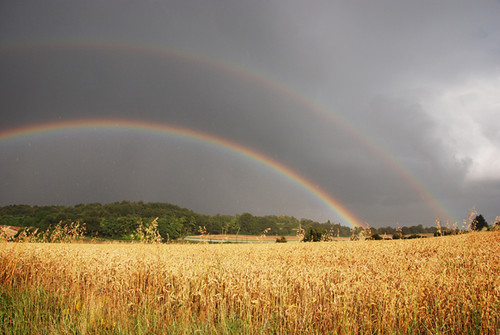
“stand still and see this great thing the Lord is about to do before your eyes”.  The water in this passage arrives in the form of rain (and thunder)…at wheat harvest time.  The timing at harvest time could be to make it clear that the rain was a miracle of God.  I am not a farmer, but I assume that harvest time for wheat is often hot and dry, which would make rain a more miraculous event.  It might also be a somewhat inconvenient event if it ruined the wheat harvest. Why would it be important that the rain and thunder show up at a time which might actually be inconvenient?

Perhaps there is a spiritual message here too.  What if part of the reason that God chose to demonsetrate His power in this way was to make it clear that the provision He provides comes on His terms not the Israelite’s terms.  Ever since the slavery in Egypt the Israelite’s problem with faithfully following God has been that they often expected something different than God provided.  In the desert God provided Manna that they did not like and bitter water that they could not drink.

I think Christians can suffer from the same problem.  Sometimes we miss God’s blessings because they arrive at a time, or in a form, that we do not expect.  We have to be looking and listening very carefully to be sure that we do not miss a rain at harvest time.

Prayer: God help us to faithfully follow you without the need for miracles to help us remember your love for us.

SDG
Posted in 1 Samuel, Discipleship, Following God, Miracles, Obedience, Trusting God | Tagged , , , , , , | Leave a comment

A Comfortable King

There was a Benjamite, a man of standing, whose name was Kish son of Abiel, the son of Zeror, the son of Bekorath, the son of Aphiah of Benjamin. Kish had a son named Saul, as handsome a young man as could be found anywhere in Israel, and he was a head taller than anyone else.   Now the donkeys belonging to Saul’s father Kish were lost, and Kish said to his son Saul, “Take one of the servants with you and go and look for the donkeys.” So he passed through the hill country of Ephraim and through the area around Shalisha, but they did not find them. They went on into the district of Shaalim, but the donkeys were not there. Then he passed through the territory of Benjamin, but they did not find them.   When they reached the district of Zuph, Saul said to the servant who was with him, “Come, let’s go back, or my father will stop thinking about the donkeys and start worrying about us.”   But the servant replied, “Look, in this town there is a man of God; he is highly respected, and everything he says comes true. Let’s go there now. Perhaps he will tell us what way to take.”   Saul said to his servant, “If we go, what can we give the man? The food in our sacks is gone. We have no gift to take to the man of God. What do we have?”   The servant answered him again. “Look,” he said, “I have a quarter of a shekel of silver. I will give it to the man of God so that he will tell us what way to take.” (Formerly in Israel, if someone went to inquire of God, they would say, “Come, let us go to the seer,” because the prophet of today used to be called a seer.)   “Good,” Saul said to his servant. “Come, let’s go.” So they set out for the town where the man of God was.   As they were going up the hill to the town, they met some young women coming out to draw water, and they asked them, “Is the seer here?”   “He is,” they answered. “He’s ahead of you. Hurry now; he has just come to our town today, for the people have a sacrifice at the high place. As soon as you enter the town, you will find him before he goes up to the high place to eat. The people will not begin eating until he comes, because he must bless the sacrifice; afterward, those who are invited will eat. Go up now; you should find him about this time. – 1 Samuel 9:1-13

In the midst of this seemingly innocuous passage is a tectonic shift in the posture and perspective of the Israelites.  They have asked Samuel for a king to rule over them.   Partially because Samuel’s sons were putzs, but also because they were unwilling to accept the real king of both Samuel and themselves….God.  They wanted to be like all the other nations with a comfortable, tangible, king that will be predictable and “safe”.

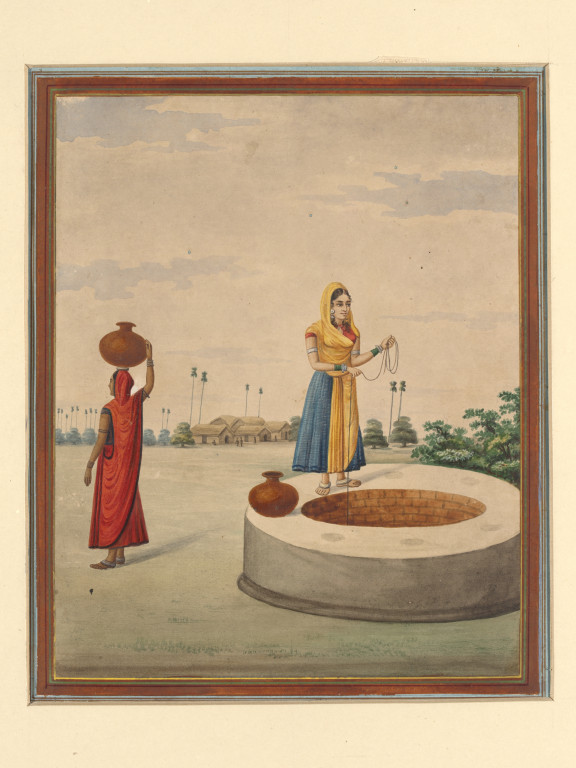
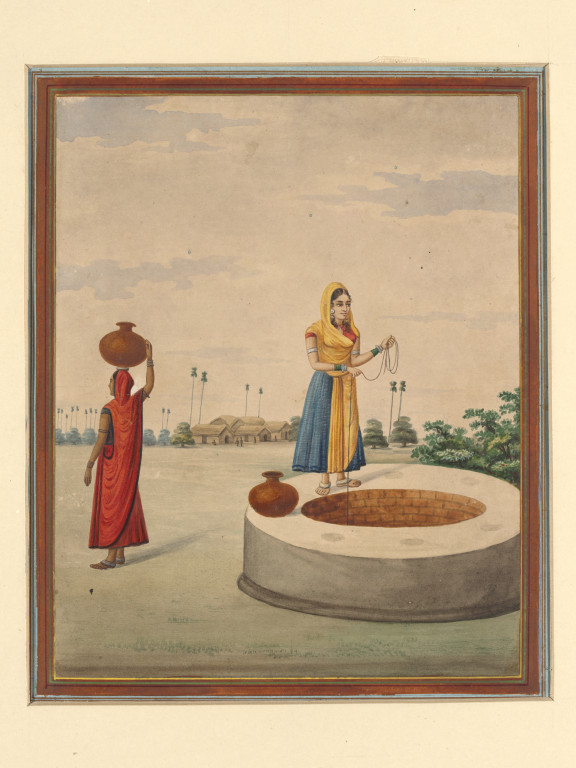
The women in this passage are in the process of doing something they likely do once or twice a day –they are drawing water from the well.  It is ironic that, spiritually speaking, that is what God was calling on the Israelites to do….draw daily on God’s love and provision so that they can stay connected to the spring and planted by the river.  I thought they might be getting it in yesterday’s post about turning back and pouring out….I was wrong.

Even when Samuel warns the Israelites about what having a king will be like they decide that they would rather conform to the world’s model of leadership and following than God’s.  God wants followers willing to pour out their water and trust His provision, while the Israelites want someone to tell them what to do and where to go.  It seems odd that the Israelites would give up their freedom in this way….yet don’t we do the same sometimes.

As Christians how often do we allow our leaders to become comfortable “kings” over how we follow God?  I know that I have allowed complacency to replace being strong and courageous in my efforts to faithfully follow God.  It is sometimes easier to allow someone else to do the spiritual “heavy lifting”, after all it is the church staff and pastor’s job right.  Pastors and church staff can be very gifted and caring pvoviders, for which I am grateful. However, there is a subtle difference between being a disciple, learning from those who are more spiritually mature, and allowing leaders to follow God for us.

The Israelites, in asking Samuel to choose a king for them, are opting to allow someone else to provide their connection to God.  Saul will be chosen as king and will prove to be an imperfect and flawed replacement.  Navigating a dynamic relationship with God through the highs and lows which inevitably come is hard and sometimes confusing, but it is well worth the effort.

Prayer: God You are my King, I need no other king.  Help me to faithfully follow you with courage and strength.

SDG
Posted in 1 Samuel, Christian Community, Christian Leadership, Christianity, Discernment, Discipleship, Following God, Life Together, Obedience, religion, Trusting God | Tagged , , , , , , , | Leave a comment

Turning Back and Pouring Out

The ark remained at Kiriath Jearim a long time—twenty years in all. Then all the people of Israel turned back to the Lord . So Samuel said to all the Israelites, “If you are returning to the Lord with all your hearts, then rid yourselves of the foreign gods and the Ashtoreths and commit yourselves to the Lord and serve him only, and he will deliver you out of the hand of the Philistines.” So the Israelites put away their Baals and Ashtoreths, and served the Lord only.   Then Samuel said, “Assemble all Israel at Mizpah, and I will intercede with the Lord for you.” When they had assembled at Mizpah, they drew water and poured it out before the Lord . On that day they fasted and there they confessed, “We have sinned against the Lord .” Now Samuel was serving as leader of Israel at Mizpah. – 1 Samuel 7:2-6

Well that was a quick trip through the book of Ruth. Very few references to water but Ruth did provide an amazing example of faithful following.  This post marks the entry in to the book of 1 Samuel.  A lot has already happened in the book up to this first reference to water.  The Israelites have been providing an excellent example of how not to follow God.

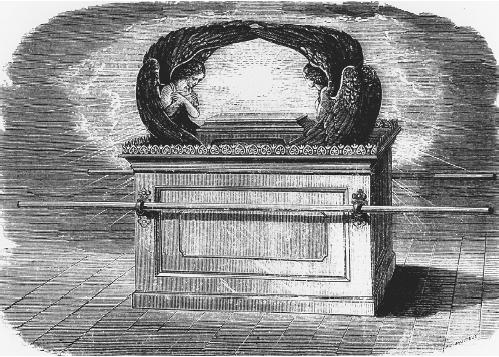
The Israelites have been treating the Ark of the Covenant like a good luck charm instead of honoring the covenant that it represents.  They end up losing it, along with many men, to the Philistines. They have lost their symbol of the covenant and, more importantly, they lost their close relationship with God.  Their drifting away from God began some time ago as a slow fade after crossing over the Jordan into the Promised Land.

Samuel arrives on the scene after God called to him while he was sleeping.  Samuel responded appropriately by answering God’s call with “Speak, for your servant is listening.”  Samuel is a leader who remembers how to lead by following God.

The Israelites are convinced that they need to “turn back to the Lord” and Samuel agrees to intercede on their behalf.  The water comes in this verse when Samuel is interceding for the Israelites.  The Israelites draw water, I assume from a well, and then they do something odd….they pour it out before the Lord.  Then they confess and fast.  Is there a hidden gem here?  What is the meaning of the poured out water?

Water, since the very beginning of my journey walking on water, is something that God has provided for His people through hidden wells, rivers, springs, dew, and abundant rain.  Here God, through Samuel, has asked the Israelites to pour their water out.  I think this act is for the them a bit like saying what Samuel said to god “Speak, for your servant is listening.”… or in this case “provide us water for we are thirsty”.  They were achieving the proper posture and perspective to listen to God and follow Him unconditionally.

Prayer: God may we rely upon You for the living water that can quench our thirsty souls.

Posted in 1 Samuel, Christian Leadership, Christianity, Covenant, Discernment, Faith, Following God, Obedience, religion, The Nature of God, Trusting God | Tagged , , , , , , , | Leave a comment

Ruth as Role Model

Boaz asked the overseer of his harvesters, “Who does that young woman belong to?”   The overseer replied, “She is the Moabite who came back from Moab with Naomi. She said, ‘Please let me glean and gather among the sheaves behind the harvesters.’ She came into the field and has remained here from morning till now, except for a short rest in the shelter.”   So Boaz said to Ruth, “My daughter, listen to me. Don’t go and glean in another field and don’t go away from here. Stay here with the women who work for me. Watch the field where the men are harvesting, and follow along after the women. I have told the men not to lay a hand on you. And whenever you are thirsty, go and get a drink from the water jars the men have filled.”   At this, she bowed down with her face to the ground. She asked him, “Why have I found such favor in your eyes that you notice me—a foreigner?”   Boaz replied, “I’ve been told all about what you have done for your mother-in-law since the death of your husband—how you left your father and mother and your homeland and came to live with a people you did not know before. May the Lord repay you for what you have done. May you be richly rewarded by the Lord , the God of Israel, under whose wings you have come to take refuge. – Ruth 2:5-12

Well we survived our sojourn in Judges with the Prodigal People. The last verse of the book of Judges pretty much sums up the whole book “In those days Israel had no king; everyone did as they saw fit (Judges 21:25).  We now thankfully move into the book of Ruth.

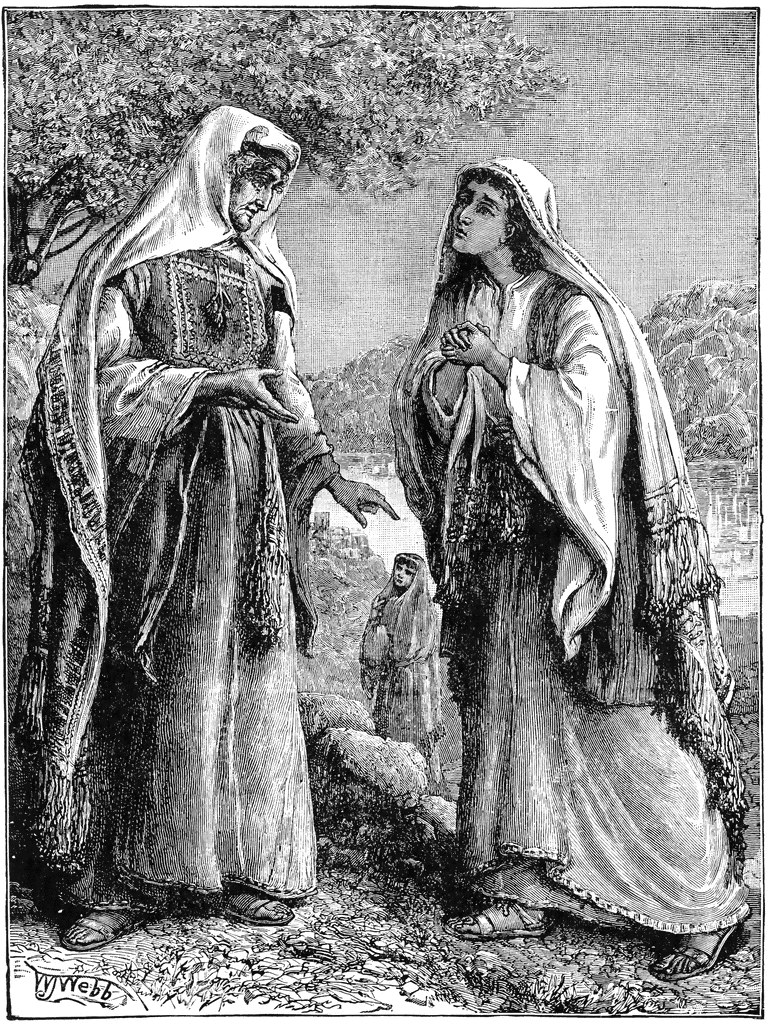
The main character of the book of Ruth is Naomi and she has had a rough time of it. After moving from her home to Moab she lost her husband and two sons. She is left with her two daughter-in-laws, Orpah and Ruth. My mother’s name was Ruth also.  Naomi has decided to return to her home near Jerusalem and Ruth showed amazing loyalty and returned with her.

When Naomi arrives home people barely recognize her. She is even unwilling to have people call her Naomi, but prefers the term Mara, which I believe means bitter. God has certainly provided bitter water for Naomi, but He has not forgotten her.

In many ways Ruth was Naomi’s, and God’s, adopted daughter. In this passage we hear about Boaz, and God, caring for Ruth by providing her water from clay pots when she is thirsty. Ruth showed she was faithful to Naomi, which Boaz rewarded.  Ruth is an amazing example of a faithful follower.

The ability to faithfully follow is something that was lacking for most of the book of Judges.  It is refreshing to see it here.  It is fitting that the son of Boaz and Ruth will become the root of the line of David.

Prayer: God help me to faithfully follow you wherever you may lead me.

Posted in Faith, Following God, Ruth, Trusting God | Tagged , , , , , | Leave a comment

Rabbit Trail #5 – A Prodigal People

OLYMPUS DIGITAL CAMERAYesterday marked my 130th post to the Walking on Water Blog.  I thought this would be a good time for a Rabbit Trail.  To be honest I feel like I need a break from the book of Judges.  I did not remember the level of carnage and cruelty that is described in this book.  I have spent a lot of time reflecting on this part of the bible and the place the Israelites find themselves in at the moment.  They are in the much anticipated Promised Land for goodness sake, shouldn’t things be better than when they were wandering in the desert eating Manna?  I have come to the conclusion that the Israelites are squandering their inheritance.

As I have been thinking about it I realized that it reminds me of story of the prodigal son found in the Gospel of Luke 15:11-32.  I love this story of redemption and love that reveals the way God loves us….both sons.

The Israelites are behaving just like the son who took his inheritance and spent it on “wild living”.  Their wild living consists of getting distracted by local religions, failing to listen to and faithfully follow God, placing pride over praise, and what seems at times like gratuitous killing and violence.

God seems to be playing the role of the faithful father waiting at home for the moment.  He is always there waiting for the Israelites to return.  The “son” (the Israelites) is still far away from Him and distracted by “wild living”.  The blessings He continues to rain down on them are passing by the Israelites almost unnoticed.

So the pertinent question for me is which son am I, and how am I using my inheritance?  There are times when I feel confident I am home with the Father and I am in His arms.  There are other times when I am pretty sure I am in squandering mode.  This blog has helped me to reflect daily on God and the ways that He is to be integrated into my DNA as a Christian.  So far this daily walk has felt like a blessing rather than an obligation.  I pray that it will continue to be so.

Prayer: Thank You God for meeting me daily and the inheritance I have through your son Jesus Christ.

Posted in Christianity, Covenant, Discipleship, Faith, Following God, Obedience, Rabbit Trails, religion | Tagged , , , , , , | Leave a comment