Strong and Courageous

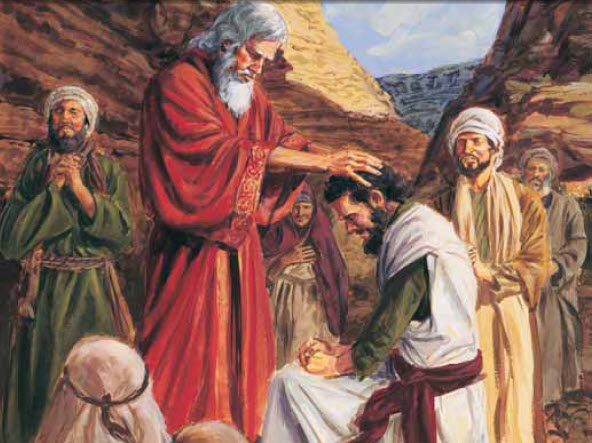
After the death of Moses the servant of the Lord, the Lord said to Joshua son of Nun, Moses’ aide: “Moses my servant is dead. Now then, you and all these people, get ready to cross the Jordan River into the land I am about to give to them—to the Israelites.  I will give you every place where you set your foot, as I promised Moses.  Your territory will extend from the desert to Lebanon, and from the great river, the Euphrates—all the Hittite country—to the Mediterranean Sea in the west.  No one will be able to stand against you all the days of your life. As I was with Moses, so I will be with you; I will never leave you nor forsake you.  Be strong and courageous, because you will lead these people to inherit the land I swore to their ancestors to give them.  Be strong and very courageous. Be careful to obey all the law my servant Moses gave you; do not turn from it to the right or to the left, that you may be successful wherever you go. Keep this Book of the Law always on your lips; meditate on it day and night, so that you may be careful to do everything written in it. Then you will be prosperous and successful. Have I not commanded you? Be strong and courageous. Do not be afraid; do not be discouraged, for the Lord your God will be with you wherever you go.” Joshua 1:1-9

The line of succession is a bit odd here.  Joshua, which means “Yahweh is salvation” in Hebrew, is chosen by God to succeed Moses after he dies.  At this point we are just told that Joshua is an “aide” to Moses and he will lead the Israelites across the Jordan River.  God is definitely stressing that Joshua needs to be strong and courageous.  They are preparing to enter a land not their own…the people who currently live there will probably not be happy.

This passage provides an interesting parallel to the way Jesus describes Himself and us.  Jesus said we are not to be of this world and He was not either.  In coming to earth as Jesus God entered a world not His own for us.  We are called to follow Jesus’ example and be in the world but not of the world.  Just like the Israelites are called to occupy the Promised Land but not adopt the ways of the people they encounter and conquer.

The Israelites will soon be crossing over the Jordan and entering a land not their own.  They are likely to feel very scared and weak at times which may be the reason that God has stressed that Joshua will need to be strong and courageous — strong in faith and courageous amid conflict.

Prayer: God help us to be strong in our faith and courageous amid conflict.


Posted in Faith, Following God, God's Love for Us, Joshua | Tagged , , , , , , | Leave a comment

Eddying Out after Deuteronomy

DCIM100SPORTThis post marks the end of Deuteronomy.  Since September 14th I have been dwelling in Deuteronomy on my walk with water in the Bible.  It has been an interesting journey with gushing springs and dry desert patches.  It started out with God saying he would carry us like a son or daughter and ended with Moses crossing over to be with God without ever crossing into the promised land.

One thing that surprised me about the book of Deuteronomy were the hidden gems that showed up at the most unexpected places.  For example, in the song of Moses where God revealed that we are like tender plants on which he showers rain and deposits dew.  These passages revealed a tender side of God which I did not realize was present in the “fire and brimstone” books of the old testament.  These passages reminded me of the tender side that was evident when Jesus came.  I am still really looking forward to when I reach the “Promised Land” of the new testament on my journey.  Hopefully I can faithfully follow God until then so that He allows me to “cross over” into the new testament.

I find myself somewhat humbled, and surprised, by the degree to which the God of Deuteronomy is the same God we hear about in the New Testament.  There are places which are difficult to reconcile, but most of the differences  seem to be when God is filtering His communications and interactions with the “stiff necked” Israelites.  Perhaps this is because they are not ready for a God who loves them unconditionally, and requires unconditional following.

I think Jesus asked His disciples to follow Him unconditionally by asking the disciples to leave their nets, families, and everything that they knew to follow him.  God did this in the Old Testament and he still does it today.  What items is he asking us to leave behind?  The items may not be nets, but they may be family, material possessions, even church traditions, or anything else that keeps us from faithfully following God.

Tomorrow I begin the book of Joshua.  I admit I do not know a lot about this book, but I am excited to leave the legalistic list of laws and requirements in Leviticus and Deuteronomy.  God knows what rapids and waterfalls await!

Prayer: Thank you God for providing me with hidden gems along my walk though the bible, as well as times to “eddy out”.

SDG
Posted in Deuteronomy, Eddying Out | Tagged , , , , | Leave a comment

Dew or Deep Wells?

IMGP4561

JJK_6023

About Joseph he said:  “May the Lord bless his land with the precious dew from heaven above and with the deep waters that lie below; with the best the sun brings forth and the finest the moon can yield; with the choicest gifts of the ancient mountains and the fruitfulness of the everlasting hills; with the best gifts of the earth and its fullness and the favor of him who dwelt in the burning bush.  Let all these rest on the head of Joseph, on the brow of the prince among his brothers.  In majesty he is like a firstborn bull; his horns are the horns of a wild ox.  With them he will gore the nations, even those at the ends of the earth.  Such are the ten thousands of Ephraim; such are the thousands of Manasseh.” – Deuteronomy 33:13-17

This part of Deuteronomy is a list of blessings that different descendants can expect in the Promised Land.  This list of blessings for Joseph and his descendants begins with two references to water.  Dew from heaven and deep waters that lie below.  Dew is ephemeral and hard to collect in sufficient quantities to satisfy one’s thirst.  “Deep waters” are constant, cold, and generally clean when recovered from a well or spring.  Springs occur naturally where groundwater rises to the surface, and wells are a human invention to intercept water that is otherwise hidden from view.

Spiritually speaking, dew is a little bit like the subtle movement of God in our lives on a day to day basis in the form of the Holy Spirit  The still small voice that we must listen very carefully to hear.  The “deep wells” (wells we did not dig) are like the rich history, creeds, hymns, and Christian communities that we gather with on Sunday and at other times to receive teaching, care for each other, and partake of the living water that Jesus offers.  Both are important for our growth as Christians.  The dew because it teaches us to trust and guides our steps; and the deep wells because they satisfy the deep thirst in our souls for community and spiritual growth.

Which one is more important dew from heaven or deep waters from below?  I think the answer to this question has a lot to do with one’s posture and perspective. The Israelites rejected the manna that came on the dew from heaven because it was not what they wanted…even though it was what they needed.  Sometimes God’s presence in our lives is a lot like dew.  He seems to condense for a time and dwell with us in an almost tangible way, then suddenly he seems to disappear like dew as the sun shines down on it.  He is still with us. He is just harder to see and hear.  Wells are reliable and they are a place where communities gather with the expectation that they will have water.  But the very regularity and reliability of well water can cause us to forget the one who actually owns the well — God. There is a time and place for wells, but they should not lead us to forget or ignore the dew.

Prayer: God help us to seek both the gentle whisper of your spirit and the deep wells of wisdom You provide.

Posted in Christian Community, Deuteronomy, Following God | Tagged , , , , , , | Leave a comment

Following God Unconditionally

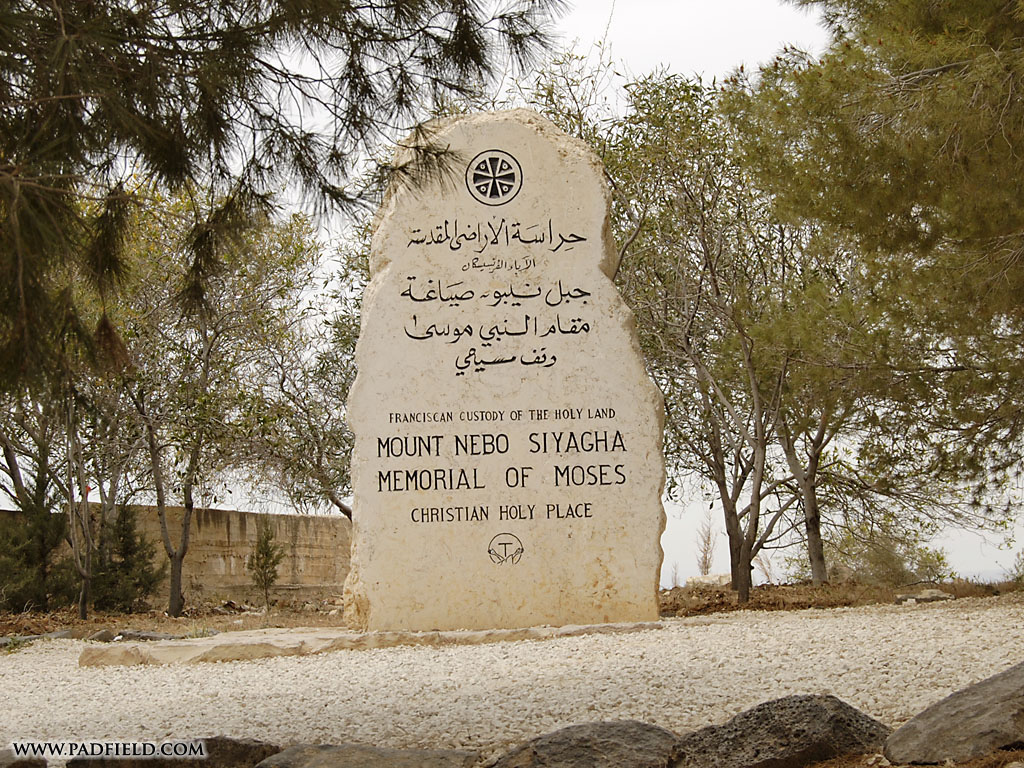
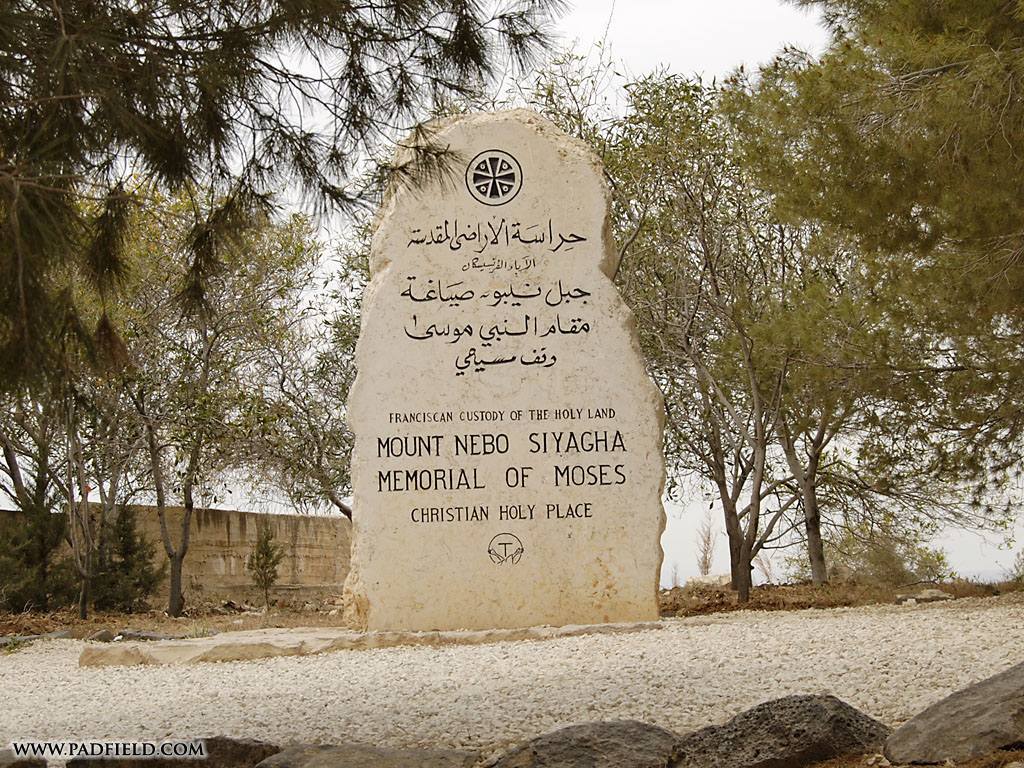
On that same day the Lord told Moses,  “Go up into the Abarim Range to Mount Nebo in Moab, across from Jericho, and view Canaan, the land I am giving the Israelites as their own possession.  There on the mountain that you have climbed you will die and be gathered to your people, just as your brother Aaron died on Mount Hor and was gathered to his people.  This is because both of you broke faith with me in the presence of the Israelites at the waters of Meribah Kadesh in the Desert of Zin and because you did not uphold my holiness among the Israelites.  Therefore, you will see the land only from a distance; you will not enter the land I am giving to the people of Israel.” Deuteronomy 32:48-52

Here we come to the end of Moses’ life.  What an amazing journey it was too.  From being born in egypt, floated in a basket on the nile, adopted into Pharaoh’s family, then 40 years wandering in the desert.  Through it all Moses attempted to listen to God, sometimes he was successful and sometimes there were other voices that won out.  Moses and Aaron failed the Meribah Test by leading the people away from God at times and the consequences are that Moses must die within site of the Promised Land.

This seems a harsh punishment given all the times when Moses “went to bat” for God.  I have been reflecting on this and trying to make sense of this seemingly harsh consequence for Moses.  As I have been praying and reflecting I have begun to wonder if Moses’ early experiences as a “man without a people” made it difficult for him to fully trust God.  Perhaps his early identity crisis of not really being an Egyptian or a Jew made it more difficult to choose between being accepted and liked by the Israelites and following God.

None of this is to excuse Moses from the choices he made any more than we are free of the consequences of our choices, even when we choose to be free of God.  In a sense God was honoring what Moses wanted, to be within site of the Promised Land (close to God) but not so close that he would have to commit himself 100% by crossing over into the Promised Land (following God unconditionally).

I must admit that I make similar choices at times.  I fail to commit 100% to God by following Him unconditionally for fear of rejection or just plain pride.  I think we all feel the consequences of this half-hearted following when we feel like we are spinning our wheels or that our efforts to follow God are not working.  Are we holding back some of ourselves?  I think Moses realized that he was holding some of himself back from God and settled for looking upon the Promised Land before he died.  In the end God I think got his wish, which was to be close to Moses.  It was was Moses who missed out by waiting until the end to be close to God.

Prayer: God help us to fully commit to follow you unconditionally so we can experience the Promised Land you have for us before we die. 


Posted in Christian Leadership, Deuteronomy, Discernment, Following God, Obedience, The Nature of God | Tagged , , , , , , | Leave a comment

Rain on Tender Plants

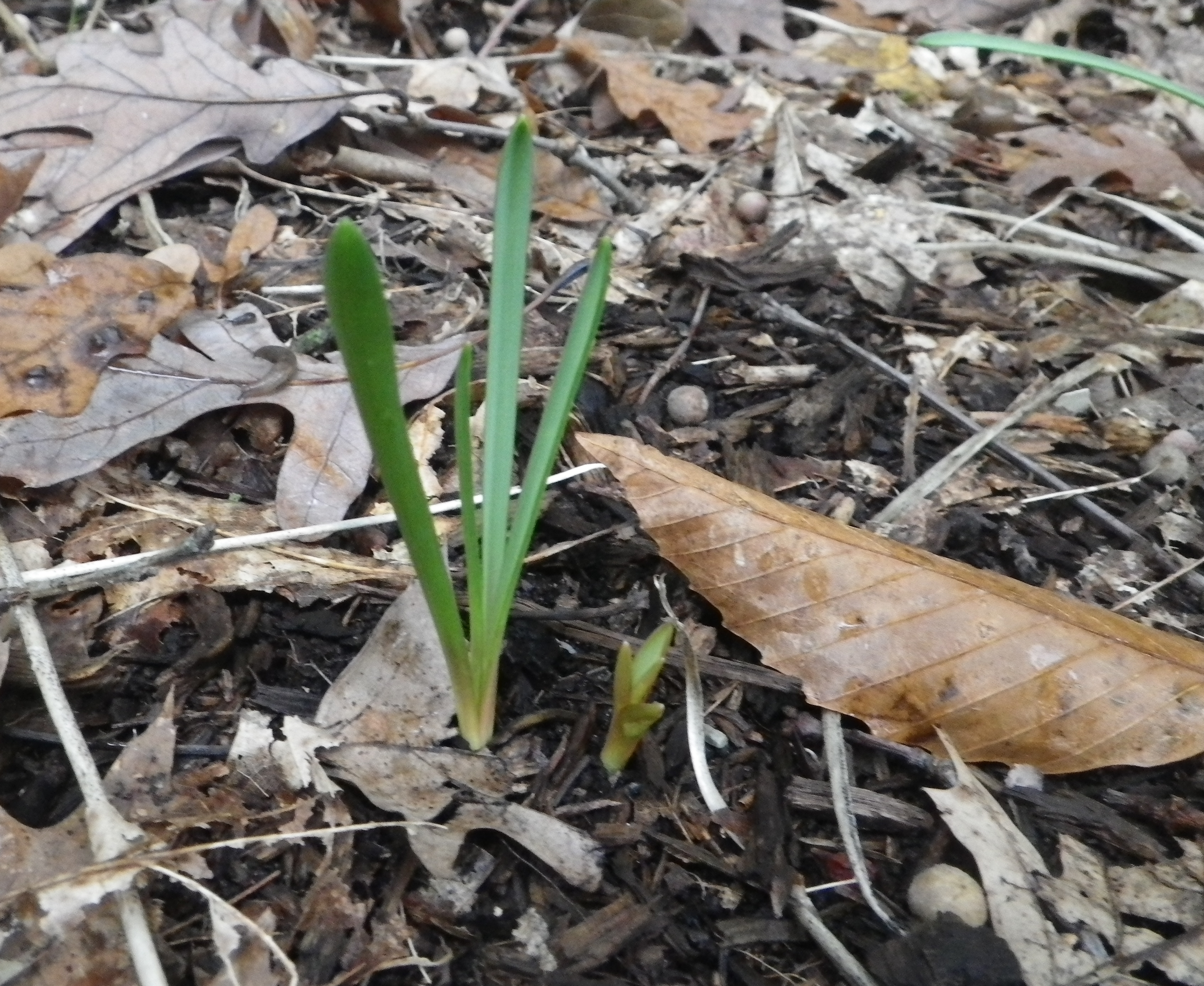
Tender ShootsListen, you heavens, and I will speak; hear, you earth, the words of my mouth.  Let my teaching fall like rain and my words descend like dew,  like showers on new grass, like abundant rain on tender plants. – Deuteronomy 32:1-2

This passage has convinced me that God has a lot to say through water and water imagery in the Old Testament.  Even in seemingly unlikely places like Deuteronomy.  What an amazing picture of how God loves us and wants to provide for us “tender plants”.

This passage comes at the beginning of what has been referred to as the Song of Moses.  It is one of the last messages Moses is asked to convey to the Israelites before he crosses over to be with God.  It is reminiscent of the song that Moses shared just after the Israelites were saved from the Egyptians at the parting of the Red Sea.  I explored some of the imagery in this passage in a previous post about How God is like Water, but every “rain” is different so let’s explore each part of this passage anew.

The first part God describes His teaching falling like rain.  I am a university professor and I wish my teaching could fall like rain sometimes.  There are days when I feel like the students all have their umbrellas up and raincoats on!  I suspect God feels similar about us sometimes as he tries to teach us so that we can avoid trouble — out comes the raincoats and umbrellas and we become as stiff necked as the Israelites were.  Sometimes we just need to embrace the rain and put away the raincoats.

The second part describes God’s word descending like dew.  Dew is a really interesting form of water.  From a scientific perspective it shows up when air with water vapor in it cools down.  When the air cools its capacity to hold water is decreased (cold air can hold less water vapor than warm air) so some of the water condenses on plants and the earth as dew.  God’s interactions with the Israelites thus far in the bible have been as a Godly Condensate in the form of a cloud.  In a sense all God’s interactions with us “tender plants” come in the form of a condensate of God’s spirit  — the cloud, the Holy Spirit, and the most amazing “condensate” of all Jesus.

The last part of the passage is my favorite.  The picture of these tender shoots receiving life-giving showers from God is so powerful.  God is also honest here.  He admits that abundant rain will fall on us “tender plants” at times.  This abundant rain can sometimes feel very exciting and amazing, but it can also feel very scary.  God’s Rain that fell in the time of Noah was not a light shower, but the rainbow that came after was amazing.  The reality is without rains we get no rainbows.  So does God want to wipe us “tender plants” out by abundant rains.  I do not think so.  I think that God knows we need all forms of rain — rain showers, dew, and abundant rain to grow strong and courageous.

Prayer: God help us to receive all the teaching and words you rain down us so that we can grow strong and courageous.

SDG
Posted in Covenant, Deuteronomy, Faith, Following God, Obedience, The Nature of God, Trusting God | Tagged , , , , , , , , , , | Leave a comment

Crossing Over!

IMGP1746Then Moses went out and spoke these words to all Israel: “I am now a hundred and twenty years old and I am no longer able to lead you. The Lord has said to me, ‘You shall not cross the Jordan.’ The Lord your God himself will cross over ahead of you. He will destroy these nations before you, and you will take possession of their land. Joshua also will cross over ahead of you, as the Lord said. And the Lord will do to them what he did to Sihon and Og, the kings of the Amorites, whom he destroyed along with their land. The Lord will deliver them to you, and you must do to them all that I have commanded you. Be strong and courageous. Do not be afraid or terrified because of them, for the Lord your God goes with you; he will never leave you nor forsake you.”   Then Moses summoned Joshua and said to him in the presence of all Israel, “Be strong and courageous, for you must go with this people into the land that the Lord swore to their ancestors to give them, and you must divide it among them as their inheritance. The Lord himself goes before you and will be with you; he will never leave you nor forsake you. Do not be afraid; do not be discouraged.” – Deuteronomy 31:1-8

There are two types of “crossing over” happening in this passage.  Moses is crossing over from this life to the next to be with God.  His body may be old and worn out, but his spirit is still young.  He will not share in the Promised Land on earth, but he does get to be with God, so he has that going for him.  Moses passes the baton to Joshua who God allows to lead — while following.  Meaning he gets to lead the Israelites into the Promised Land while he is following God.

Be strong and courageous Moses tells Joshua.  Good advice for us all.  The trouble is figuring out what being “strong and courageous” in God’s eyes looks like.  I am not sure that being strong is measured the way we measured it in the middle school locker room –by the amount of weight you can bench press.  Another sure sign of strength and manhood at this age was whether your underarms stunk enough to require deodorant — I guess middle school boys are not the best source of wisdom:)

Courage is another concept that was often ill defined in my youth.  As a teenage boy “courage” often involved what in hindsight could also have been termed “stupid”.  I remember one time when a friend and I decided to place lit fire starters across a road to see what would happen.  Trouble was the first car to show up happened to be a police car.  I won’t go into the details, but two very scared boys made it safely back to the house that night without being arrested.  This would fit the “stupid” category rather than the courageous category.  I think, based on what God communicates through Moses, Courage for Joshua means confidence that God has your back.

The “crossing over” for Moses brings up the issue of death and dying. Death is a strange thing.  What happens when we die?  I recently read a very interesting book called Proof of Heaven – A Neurosurgeon’s Journey Into the Afterlife by Dr. Eben Alexander.  His story is compelling and is even more compelling because it is being told by a very well-respected neurosurgeon.  Without spoiling the book for those who have not read it, Dr. Alexander is clinically dead for several days.  He recounts what happened to him during his days after he had “crossed over”.  The story is rich and complex but here is a quote that captures the essence:

“My experience showed me that the death of the body and the brain are not the end of consciousness, that human experience continues beyond the grave. More important, it continues under the gaze of a God who loves and cares about each one of us and about where the Universe itself and all the beings withing it are ultimately going.” 
― Eben Alexander, Proof of Heaven: A Neurosurgeon’s Journey Into the Afterlife  
 

Dr. Alexander’s experience is completely consistent with both my experience (not of dying but of God’s love for us) and what I have read as I have “walked” thus far through the bible.  God loves us, he wants us to be with Him, but being with Him requires that we follow Him.

Prayer: God remove the fear of crossing over and help us to courageously follow you.

SDG
Posted in Christian Leadership, Covenant, Deuteronomy, Faith, Following God, The Earthly Realm, The Spiritual Realm, Trusting God | Tagged , , , , , , , , , , , | Leave a comment

Who Will Cross the Sea?

IMGP4755Now what I am commanding you today is not too difficult for you or beyond your reach. It is not up in heaven, so that you have to ask, “Who will ascend into heaven to get it and proclaim it to us so we may obey it?” Nor is it beyond the sea, so that you have to ask, “Who will cross the sea to get it and proclaim it to us so we may obey it?” No, the word is very near you; it is in your mouth and in your heart so you may obey it.   See, I set before you today life and prosperity, death and destruction. For I command you today to love the Lord your God, to walk in obedience to him, and to keep his commands, decrees and laws; then you will live and increase, and the Lord your God will bless you in the land you are entering to possess.  But if your heart turns away and you are not obedient, and if you are drawn away to bow down to other gods and worship them, I declare to you this day that you will certainly be destroyed. You will not live long in the land you are crossing the Jordan to enter and possess. This day I call the heavens and the earth as witnesses against you that I have set before you life and death, blessings and curses. Now choose life, so that you and your children may live and that you may love the Lord your God, listen to his voice, and hold fast to him. For the Lord is your life, and he will give you many years in the land he swore to give to your fathers, Abraham, Isaac and Jacob. – Deuteronomy 30:11-20

In this passage God reassures the Israelites that following Him, and His commandments, may be hard but it is not beyond their reach.  This passage is reassuring to me as a Christian as well, especially when the going gets difficult or confusing. God is reminding us that following Him as a Christian is not beyond our reach.

I really like the imagery that God uses here when he tells the Israelites that following Him and His commands is not as hard as crossing over the sea or ascending into heaven.  I live near Lake Michigan which, although not an ocean, is a very big body of fresh water.  You cannot see across it even on the clearest day.   Crossing Lake Michigan without a boat or some other help is pretty much impossible.  It is too far to swim and unless I learn pretty quickly to walk on water it is beyond my capability to cross.

What God seems to be saying here is that He will take us “across the sea” not by our own ability but by His ability to carry us.  God said as much when he said he would carry us like a son or daughter.    Jesus is the great sea crosser, the one who walked on water, and the one who spanned an incredible spiritual gulf to come to earth and become a man.

I’m reminded of a scene from movie The Matrix. Although this movie has its share of gratuitous guns and violence it also explores some interesting philosophical Christology. Morpheus, sort of an edgy John the Baptist is talking to Neo who he believes is “the one”:

Neo: What are you trying to tell me? That I can dodge bullets?
 
Morpheus: No, Neo. I’m trying to tell you that when you’re ready, you won’t have to.


In a way God is telling the Israelites, and us, that when we are ready to trust Him to help us across the great sea that separates us from God we will already be there  — “The word is very near you; it is in your mouth and in your heart”.

Prayer: Thank you God for spanning the gulf that separated us from Your love by becoming a man and dying on the cross.

SDG
Posted in Covenant, Deuteronomy, Following God, The Spiritual Realm, Trusting God | Tagged , , , , , , , | Leave a comment

A Well Watered or Dry Land

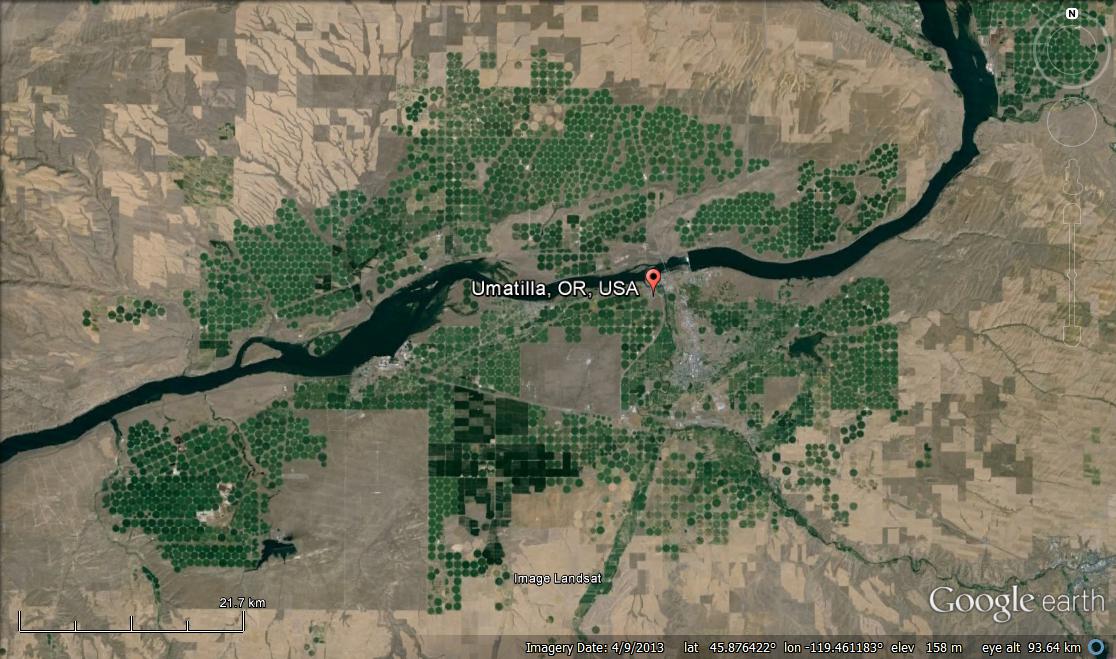
Google Earth Image of Umatilla, Oregon

Google Earth image of irrigated desert near Umatilla, Oregon

You yourselves know how we lived in Egypt and how we passed through the countries on the way here. You saw among them their detestable images and idols of wood and stone, of silver and gold. Make sure there is no man or woman, clan or tribe among you today whose heart turns away from the Lord our God to go and worship the gods of those nations; make sure there is no root among you that produces such bitter poison.   When such a person hears the words of this oath and they invoke a blessing on themselves, thinking, “I will be safe, even though I persist in going my own way,” they will bring disaster on the watered land as well as the dry. The Lord will never be willing to forgive them; his wrath and zeal will burn against them. All the curses written in this book will fall on them, and the Lord will blot out their names from under heaven. The Lord will single them out from all the tribes of Israel for disaster, according to all the curses of the covenant written in this Book of the Law. – Deuteronomy 29:16-21

A person who “goes their own way” will bring destruction on the watered land as well as the dry land.  So what does watered land look like?  The plants grow big and strong and they are green and lush.  They are able to weather a few dry spells and withstand heat.  Plants and animals in a watered land also tend to be more resilient and able to deal with stress like drought or heavy rains. In contrast, a dry land has few plants and animals and there is little evidence of growth. Most of the plants are prickly or poisonous, and many of the animals are dangerous too. This is because in this the harsh dry land everything is fighting to survive.  They all put up barriers and prickles to prevent others from eating them or robbing them of resources like water.

Sometimes I feel like much of our society in America is like a “dry land” spiritually.  Everyone is fighting to survive, many people are prickly, and no one has time for each other.  Perhaps our land is dry because we have cut ourselves off from God. We are spiritually in a dry land because we choose to “go it alone” and fail to accept, and drink in, the rain from heaven that God provides.

This passage also sheds some light on the philosophical question of why bad things happen to good people.  Here God says that the bad choices made by people unwilling to follow God’s commands affects both the dry land and the watered land.  I take this to mean that sometimes the poor choices of others can affect people who did not make those same poor choices.  There is collateral damage.  Although this does not seem fair this is not the first time God has described this dynamic of the spiritual realm and the way consequences for poor choices work.

There is another interesting aspect of this passage.  We as humans have invented lots of ways to make dry land wet.  Irrigation from wells, dams, canals, all these make formerly dry land well-watered.  The catch is that almost all of those systems used to make dry land wet require someone to maintain them.  The “well watered” land God seems to be describing here is land that is well watered because it is being provided rain from heaven rather than from our own ingenuity and irrigation systems.

For the Israelites the “irrigation” used to create “watered lands” out of “dry land” took the form of idols to replace God and his provision.  God made it clear that this was not good.  As Christians we have our share of idols that we use to artificially create a “well watered” land.  I think that even some of our traditions and liturgies can become a replacement for God’s provision and an attempt to create a well watered land by our own actions rather than God’s.

Prayer: God teach us to rely on you to provide the water in our lives to help us grow strong and thrive.

Posted in Covenant, Deuteronomy, Following God, Obedience, The Spiritual Realm | Tagged , , , , , , , , | Leave a comment

Guess who Moved

IMGP2442However, if you do not obey the Lord your God and do not carefully follow all his commands and decrees I am giving you today, all these curses will come on you and overtake you:   You will be cursed in the city and cursed in the country.   Your basket and your kneading trough will be cursed.   The fruit of your womb will be cursed, and the crops of your land, and the calves of your herds and the lambs of your flocks.   You will be cursed when you come in and cursed when you go out.   The Lord will send on you curses, confusion and rebuke in everything you put your hand to, until you are destroyed and come to sudden ruin because of the evil you have done in forsaking him.  The Lord will plague you with diseases until he has destroyed you from the land you are entering to possess. The Lord will strike you with wasting disease, with fever and inflammation, with scorching heat and drought, with blight and mildew, which will plague you until you perish. The sky over your head will be bronze, the ground beneath you iron. The Lord will turn the rain of your country into dust and powder; it will come down from the skies until you are destroyed.- Deuteronomy 28:15-24

This passage provides a laundry list of bad things that will happen to the Israelites if they fail to faithfully follow God.  The connection to water here comes near the end of the passage where God says the sky will be bronze and the ground beneath you iron.  God says he will turn the rain into dust and powder which sounds like a drought followed by too much rain that will come down until they are destroyed, which sounds a lot like a flood.

God is not pulling any punches here.  He is saying there are very real consequences to failing to follow God, both large and dramatic like a flood and devastatingly prolonged like a drought.  On one level we could look upon these consequences as retribution, but I think they are more correctly the result of failing to plant oneself by the river or remain connected to the spring.  I am not sure who said it but I have always liked the saying “if you feel like you are distant from God, guess who moved”.

I can remember numerous times during my Christian walk when it felt like I was getting nowhere and my relationship with God felt “dry”.  I think these dry times are a normal part of the Christian experience.  It is what we choose to do when we encounter them that determines whether we will remain faithful to God or drift away like a boat that has slipped it moorings.

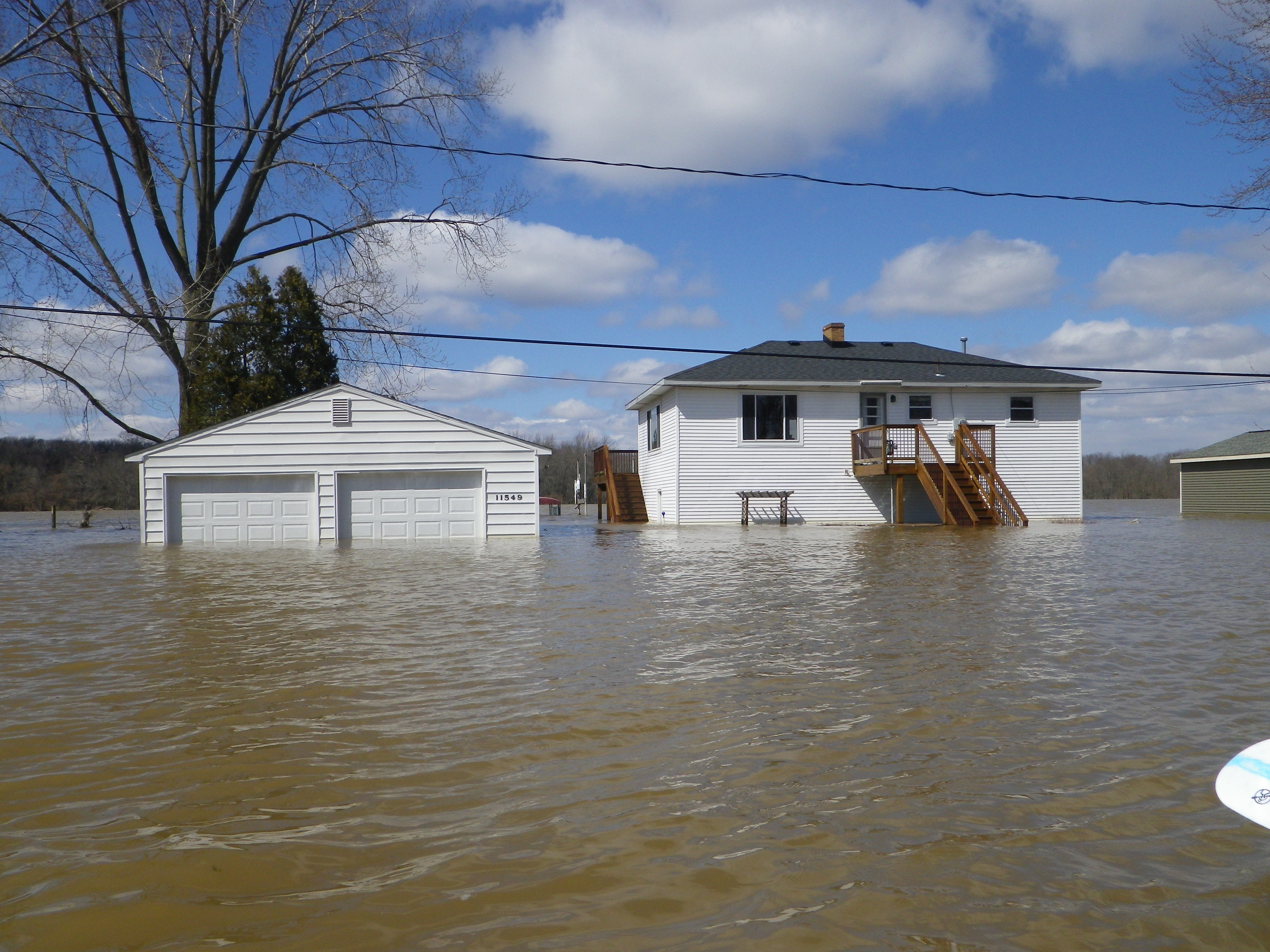
The other extreme described here is floods.  In one of my early Rabbit Trail posts, How God is Like Water, I reflected on some of the meanings I see in floods and the usage of flood language in describing God.  Floods are not really bad as seen from the perspective of the river that is experiencing them.  Rivers have always flooded and always will.  In fact if Rivers did not flood we would not have much of the fertile farmland to grow crops that we have today.

So although God is using what seems rather harsh language here in describing the rains as coming down until “you are destroyed”.  Homes and property near rivers are destroyed by flooding all the time, but it is usually because the homes or structures were in the wrong place relative to the river when the flood came.  I think God’s point here is that if we place ourselves in the wrong place, i.e. apart from God, we may end up drowning….our choice.

Prayer: God help us to walk faithfully with you through desert times and storms with the confidence that You are with us.


Posted in Covenant, Deuteronomy, Discernment, Faith, Following God, God's Love for Us, Trusting God | Tagged , , , , , , , , | Leave a comment

Leading While Following

IMGP4801The Lord will open the heavens, the storehouse of his bounty, to send rain on your land in season and to bless all the work of your hands. You will lend to many nations but will borrow from none. The Lord will make you the head, not the tail. If you pay attention to the commands of the Lord your God that I give you this day and carefully follow them, you will always be at the top, never at the bottom. Do not turn aside from any of the commands I give you today, to the right or to the left, following other gods and serving them. – Deuteronomy 28:12-14

Open the heavens…that sounds like a downpour to me. Then again this passage says that God will send rain on the land “in season” which implies that he will provide for us when we need Him. This is tricky in practice. Our tendency as independent, strong-willed, humans is to call out the rain makers to make it rain when we need it. What God is telling the Israelites here is something very different…they must lead by following. The only way the Israelites can effectively “be the head” is if they are following God.

What does it mean that God says he will make the Israelites the head rather than the tail? The head clearly implies leadership while the tail clearly implies well….other things. The economy being described here is actually opposite of the economy that Jesus described when he came. Jesus talked of the first being last and the last being first. So again in this passage we encounter a dissonance between the God who wants to make the Israelites the head and Jesus who wants to make them, and us, the tail. Which one is it? Clearly we need leaders who can lead. I think the key distinction here is we need leaders who can lead while they follow God. God basically says this when he tells the Israelites not to turn aside, but to follow the commands He has given them.

With all the talk of “leading from behind” in today’s political discourse this passage seems particularly appropriate. It seems to me that the only time it is appropriate to lead from behind is when we are following God. Leading from behind while following God is quite a different thing than leading from behind on our own. Leading from behind on our own looks a lot like cowardice.

The story of David and Goliath provides a good example of leading while following (1 Samuel 17). David boldly enters the battle with a far superior warrior, from an earthly perspective. Indeed most of the army probably thought he was nuts going up against a huge warrior with nothing more than a sling. What the army could not see was that David saw God going ahead of him…David was leading while following.


Prayer: God teach me to lead while following You.

Posted in Christian Leadership, Deuteronomy, Faith, Following God | Tagged , , , , , , , , | Leave a comment