
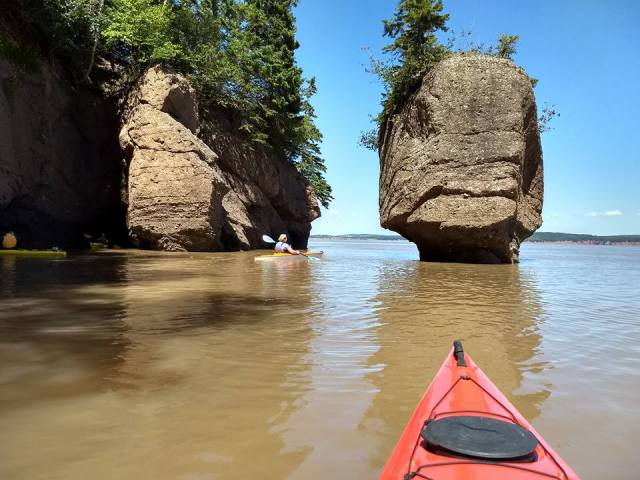
Flower Pot Rocks in the Bay of Fundy, New Brunswick, Canada
In wrath you strode through the earth and in anger you threshed the nations. You came out to deliver your people, to save your anointed one. You crushed the leader of the land of wickedness, you stripped him from head to foot. With his own spear you pierced his head when his warriors stormed out to scatter us, gloating as though about to devour the wretched who were in hiding. You trampled the sea with your horses, churning the great waters. – Habakkuk 3:12-15
Well that was a quick float through Habakkuk. This is the last water passage of the book as far as I can tell. If I were to sum up the entire book into one sentence it would be “remember who is Boss (God)”.
In this passage God is striding about “threshing nations”. This is an interesting way to describe the wrath of God. I typically picture plagues and pestilence as “wrath of God” stuff. Threshing implies a purposeful pummeling, i.e. to separate the grain from the chaff if this is referring to the kind of threshing with which I am familiar. This idea is borne out by the next sentence where Habakkuk says “You came out to deliver your people”, with the “You” being God.
Then the passage gets really interesting in that part of what God will do to “deliver His people” is to “save your anointed one”. This sounds like a reference to Jesus to me, a reflection of Him, and the strange work that He came to accomplish. Then the wrath of God turns from deliverance to something more akin to the violence in the movie Deliverance.
“You crushed the leader of the land of wickedness, you stripped him from head to foot”. This could certainly be a reference to an earthly king or ruler of the time, but it also would describe the deceiver, or the king of this land of wickedness we call earth. The passage goes on to say “With his own spear you pierced his head when his warriors stormed out to scatter us”. This sounds like a prophetic reference to an actual battle rather than a metaphorical reference. Presumably the “us” are the people of Israel.
Near the end of the passage comes the water reference “You trampled the sea with your horses, churning the great waters”. This seems like a murky metaphor. How can horses trample the sea? I suppose if they could it would probably “churn up the sea”. This seems like a reference to the Red Sea parting to me, but I could be wrong. In that case the “you” here would be the invader and their trampling the sea would be more like trampling the sea bed until the waters closed in on them to their doom.
I am struggling to extract hidden wisdom from this passage, perhaps it is one of those passages that I just float by and admire the scenery.
Prayer: God thank You for coming to deliver us in a powerful and mysterious way.

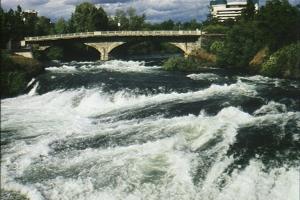 Lord , I have heard of your fame; I stand in awe of your deeds, Lord . Repeat them in our day, in our time make them known; in wrath remember mercy. God came from Teman, the Holy One from Mount Paran. His glory covered the heavens and his praise filled the earth. His splendor was like the sunrise; rays flashed from his hand, where his power was hidden. Plague went before him; pestilence followed his steps. He stood, and shook the earth; he looked, and made the nations tremble. The ancient mountains crumbled and the age-old hills collapsed— but he marches on forever. I saw the tents of Cushan in distress, the dwellings of Midian in anguish. Were you angry with the rivers, Lord ? Was your wrath against the streams? Did you rage against the sea when you rode your horses and your chariots to victory? You uncovered your bow, you called for many arrows. You split the earth with rivers; the mountains saw you and writhed. Torrents of water swept by; the deep roared and lifted its waves on high. – Habakkuk 3:2-10
 “Woe to him who builds his house by unjust gain, setting his nest on high to escape the clutches of ruin! You have plotted the ruin of many peoples, shaming your own house and forfeiting your life. The stones of the wall will cry out, and the beams of the woodwork will echo it. “Woe to him who builds a city with bloodshed and establishes a town by injustice! Has not the Lord Almighty determined that the people’s labor is only fuel for the fire, that the nations exhaust themselves for nothing? For the earth will be filled with the knowledge of the glory of the Lord as the waters cover the sea. – Habakkuk 2:9-14


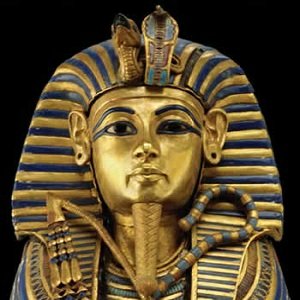


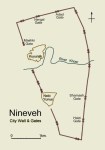 The ancient city of Ninevah was a “gated community” with a wall and gates that restricted access to the city. This must have been somewhat challenging when it came to the river, as the Tigris River apparently flowed right through the city. How do you put a gate on a large river?





 Walking on Water