Eddying Out – Water from Bethlehem

IMGP5515I just finished the book of 2 Samuel.  It was quite a roller coaster of events and some really choppy water. The last water-related verse from yesterday’s post took me by surprise.  The passage seemed out of place and was all about fetching “water from a well in Bethlehem”.

It occurred to me as I was hitting the snooze alarm this morning, and still pondering this passage, that this seemingly odd passage just might contain a hidden well of meaning. As far as I know this verse is not considered to be one of the prophetic verses about Jesus, but what if God was providing a preview of Jesus, the living water, that would come from Bethlehem?

If we consider this story as an allegory, the three warriors would be playing the role of the faithful followers of God, people like Nathan and the prophets.  They faithfully carried the “water” of God for generations.  In the passage they go fetch the water at the request of David.  I think David could represent the perpetually stubborn Israelites who seem to have such trouble remembering God.

David rejects the water that is provided and it is poured out — just like Jesus is rejected by the Jewish leaders of His day, and is “poured out” for us on the cross.  The Israelites did not accept the water God was providing so he sent them living water in the form of a baby boy named Jesus.  Who would have thought there could be a story of Emmanuel…God with us… embedded in the battles and blood of 2 Samuel.

Prayer: It is so amazing that You arrived as living water in Bethlehem, and You were willing to pour Yourself out for us.

Posted in Covenant, Discipleship, Eddying Out, Faith, Following God, reconciliation, Redemption, religion, The Spiritual Realm, Trusting God | Tagged , , , , , , , | Leave a comment

“Well” Intentioned

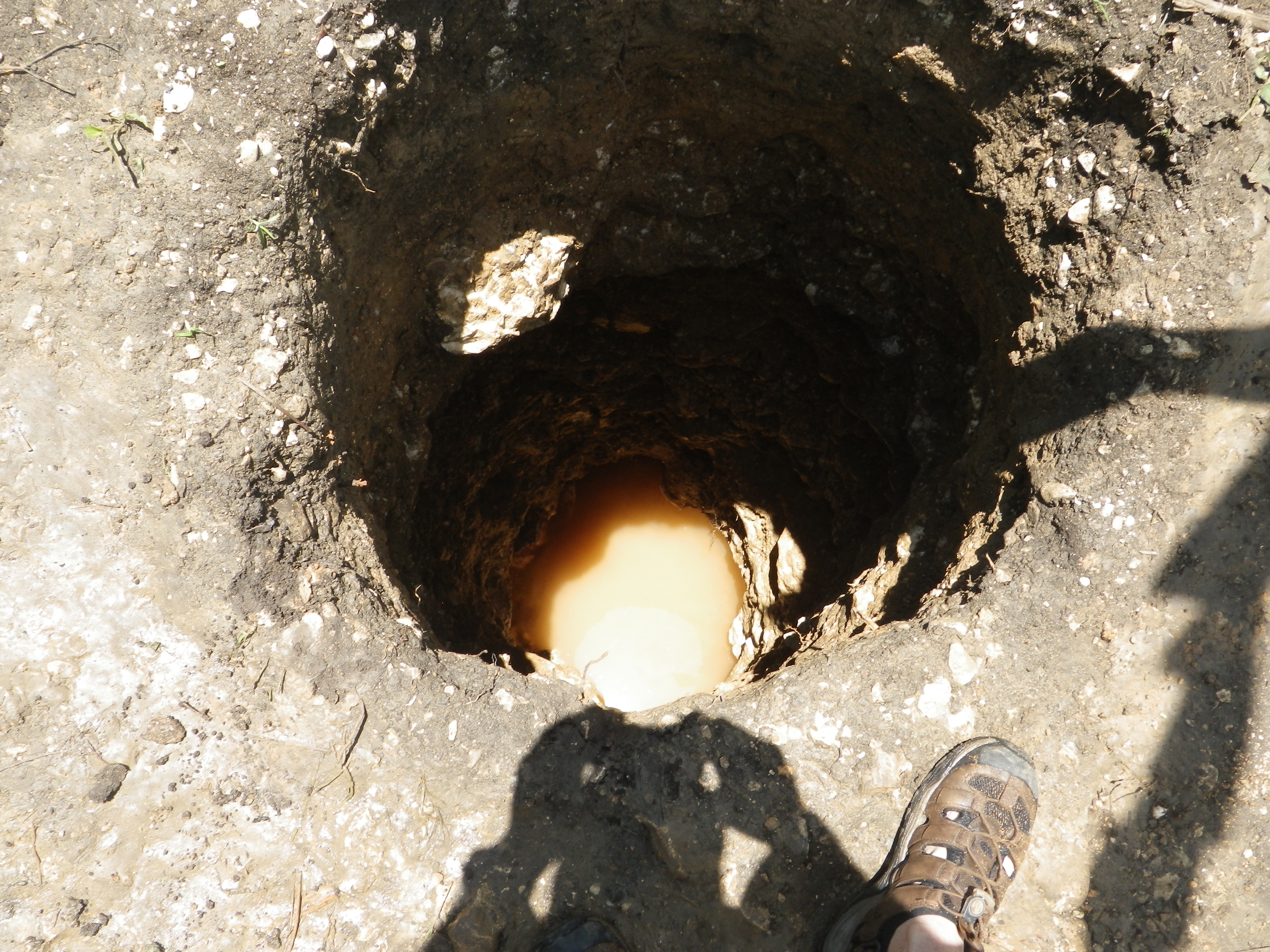
Hand-dug well in Haiti

Hand-dug well in Haiti

During harvest time, three of the thirty chief warriors came down to David at the cave of Adullam, while a band of Philistines was encamped in the Valley of Rephaim. At that time David was in the stronghold, and the Philistine garrison was at Bethlehem. David longed for water and said, “Oh, that someone would get me a drink of water from the well near the gate of Bethlehem!” So the three mighty warriors broke through the Philistine lines, drew water from the well near the gate of Bethlehem and carried it back to David. But he refused to drink it; instead, he poured it out before the Lord . “Far be it from me, Lord , to do this!” he said. “Is it not the blood of men who went at the risk of their lives?” And David would not drink it. Such were the exploits of the three mighty warriors. – 2 Samuel 23:13-17

Okay so I’m a little confused here. I thought David’s last words would be…well David’s last words. This short passage seems to be tacked on to the end of David’s life. It doesn’t really seem to fit with the rest of the verses that come just before it.

There are a group of 30 or so warriors who have pledged to protect David and care for him in his old age. It sounds like David is not in his palace in Jerusalem but rather hold up in a cave.  He’s thirsty and wants something to drink.  He wants not just any water but water from a well on the outskirts of Bethlehem. This presents a bit of a problem since the Philistines control Bethlehem at the moment.  Three of the 30 warriors decide that they will brave a journey to Bethlehem to get water from the well to bring back for David.

If someone is going to risk life and limb to get water for you it seems like one might want to drink it…but that is not what David does.  He does something a little strange.  He pours the water out because he doesn’t like the idea of these men risking their lives, and blood, to get it.  The scene is a bit reminiscent of previous cases of pouring out.  I must admit that I’m not entirely sure I understand what’s going on here.

I suppose it is possible that David is feeling guilty that he has not been the best faithful follower of God. Perhaps he thinks by pouring out the water provided by the warriors he is doing something like making a sacrifice — here at the end of his life.

I wonder if somewhere, deep in his heart and mind, David feels like he has squandered something important that God gave him as the anointed king of Israel.  In a sense these men did what David was supposed to be doing for Israel — going to the “well” to fetch water (which was God) and delivering it back to the people.  Somewhere along the way David got lost and wasn’t able to be that person.

It is very easy to become distracted and caught up with the cares of the day and fail to remember the one who rules each day.  This blog continues to challenge and teach me each day.  Some days it feels like a wrestling match, and other days it feels more like a minuet where God and I are in sync — either way God always wins.

Prayer: God help me to maintain a focus on the things you need me to do today.

Posted in 2 Samuel, Christianity, Covenant, Faith, Life Together, Obedience, reconciliation, Trusting God | Tagged , , , , , , | Leave a comment

A Cloudless Morning

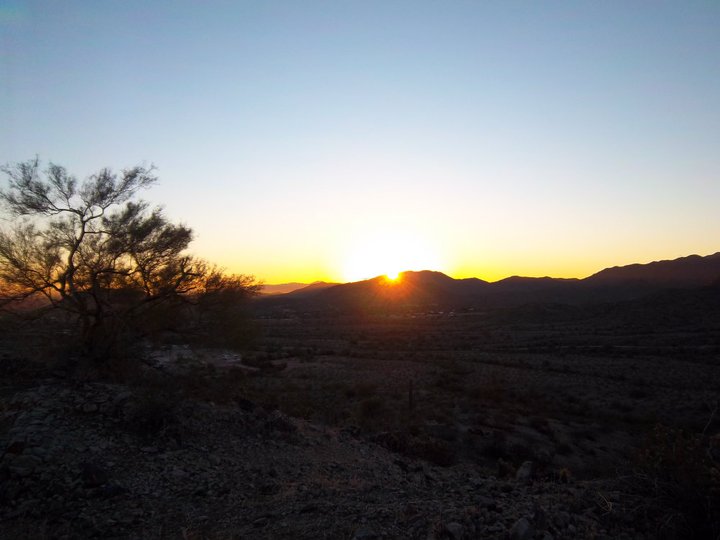
180772_870187250835_5659079_n 182737_870188233865_3761969_nThese are the last words of David: “The inspired utterance of David son of Jesse, the utterance of the man exalted by the Most High, the man anointed by the God of Jacob, the hero of Israel’s songs: “The Spirit of the Lord spoke through me; his word was on my tongue.  The God of Israel spoke, the Rock of Israel said to me:  ‘When one rules over people in righteousness, when he rules in the fear of God, he is like the light of morning at sunrise on a cloudless morning, like the brightness after rain that brings grass from the earth. “If my house were not right with God, surely he would not have made with me an everlasting covenant, arranged and secured in every part; surely he would not bring to fruition my salvation and grant me my every desire. But evil men are all to be cast aside like thorns, which are not gathered with the hand. Whoever touches thorns uses a tool of iron or the shaft of a spear; they are burned up where they lie.” – 2 Samuel 23: 1-7

This passage comes after the Song of David that was the subject of the last couple of days of posts.  There is still much that I do not fully understand about the song of David and the trajectory of David’s life.  I plan to do a “Rabbit Trail” about David and his trajectory soon.

This passage starts out by stating “these are the last words of David”.  It is where he was at the end of his life.  The passage describes David as one who rules in the “fear of God” and a ruler like this is like “the light of morning at sunrise on a cloudless morning”.  This seems to be so specific.  What is so unique about the light at sunrise on a cloudless morning?  More importantly, how is someone who fears God like this?

In my experience sunrises are very beautiful and hopeful times.  A day is just beginning, everything is fresh and new, and there is often a chilly breath of wind just as the sun comes up.  I think one of my favorite sunrises lately was when I was visiting my brother in Phoenix, AZ.  I woke up early and went to a park where I could hike up into the mountains to see the desert sun come up, on a cloudless morning.  The desert smelled amazing.  Some of the plants were covered with dew and glistened in the rising sun.

I am not sure how David is like the light of morning most of his life, but perhaps he became a ruler who fit this description near the end of his life.  As I have been praying and reflecting about David’s life I have come to the conclusion that David’s relationship with God peaked when he was a young Shepard killing Goliath with smooth stones; it slowly faded to the point where he was standing on the Mount of Olives choosing to send a spy rather than kneel and pray.  It seems at the end of his life he accepted God’s forgiveness for his poor choices and allowed God to draw him out of deep waters.

The rest of the description of David reads “like the brightness after rain that brings grass from the earth”  What an interesting turn of phrase.  It sounds almost like a description God used earlier in the bible to describe his relationship with us as “rain on tender plants“.  I think these last words of David are describing a restored relationship between David and God — a new day full of promise.  New shoots of grass emerging after a rain.  I think both God and David acknowledge that much of his life was spent failing to lead by following God.  Here at the end of his life David get’s it, and he is ready to faithfully follow a God who loved him all along.  It is reassuring that despite all the time David spent running in the wrong direction away from God, God is ready and waiting for him when he is ready to turn around and be carried like a son or daughter.

Prayer: God I am so thankful that You see us for who we can be rather than who we are at the moment, and that you forgive us for the mistakes we have made.

Posted in 2 Samuel, Christianity, Conflict, Covenant, Death and Dying, Discernment, Faith, Following God, Forgiveness, Obedience, religion, Trusting God | Tagged , , , , , , , | Leave a comment

Drawn from Deep Waters

IMGP5105The valleys of the sea were exposed and the foundations of the earth laid bare at the rebuke of the Lord , at the blast of breath from his nostrils.   “He reached down from on high and took hold of me; he drew me out of deep waters.   He rescued me from my powerful enemy, from my foes, who were too strong for me.   They confronted me in the day of my disaster, but the Lord was my support.   He brought me out into a spacious place; he rescued me because he delighted in me. – 2 Samuel 22:16-20

David was pulled from deep waters – the rip currents and raging torrents, much of which was David’s own creation. I love the imagery of God reaching down into the swirling waves and destructive torrents to save David –not just from his earthly enemies but from his sins as well. This is precisely what God did, and still does, through Jesus. He reaches into the mire of our messy lives and draws us into Himself….a truly spacious place.

David describes God taking hold of him and drawing him out of deep water. There is a desperation that sets in when a person is drowning. This desperation can be so strong sometimes that the rescuer can be pulled under if they are not careful. I think David feels desperate about his life and the wreckage of previous choices he has made. I suspect deep in David’s soul he does not think he deserves rescuing, but God loves him despite his many flaws and rescues him anyway.

God rescues David from his “powerful enemies and foes that were too strong”.  Is it possible that David is referring to something more than earthly enemies and armies?  I wonder if one of David’s foes was actually himself.  David made poor choices in his early life that have resulted in an incredibly dysfunctional family.  Those poor choices have swirled around him like waves of death.

This verse is reassuring for all of us flawed followers of God.  God reaches down to us while we are still broken and helps us to heal.  God does not require David to get his life straightened out before He reaches down to save him. God does not heal our broken souls so we can enter his kingdom, but rather as a consequence of doing so.  We must decide to faithfully follow God even before we can clearly see Who we are following.

The beginning of the verse is also interesting.  “The valleys of the sea were exposed and the foundations of the earth laid bare”.  There is a sense that nothing will be hidden when God shows up.  We do not need to cover our sin in His presence.  He already knows us better than we know ourselves…and He loves us anyway.  God believes in us!

Prayer: Thank you for believing in us God…even when we do not believe in ourselves.

SDG
Posted in 2 Samuel, Covenant, Discernment, Discipleship, Faith, Following God, Obedience, The Nature of God, Trusting God | Tagged , , , , , , , | Leave a comment

Riding on Rain Clouds

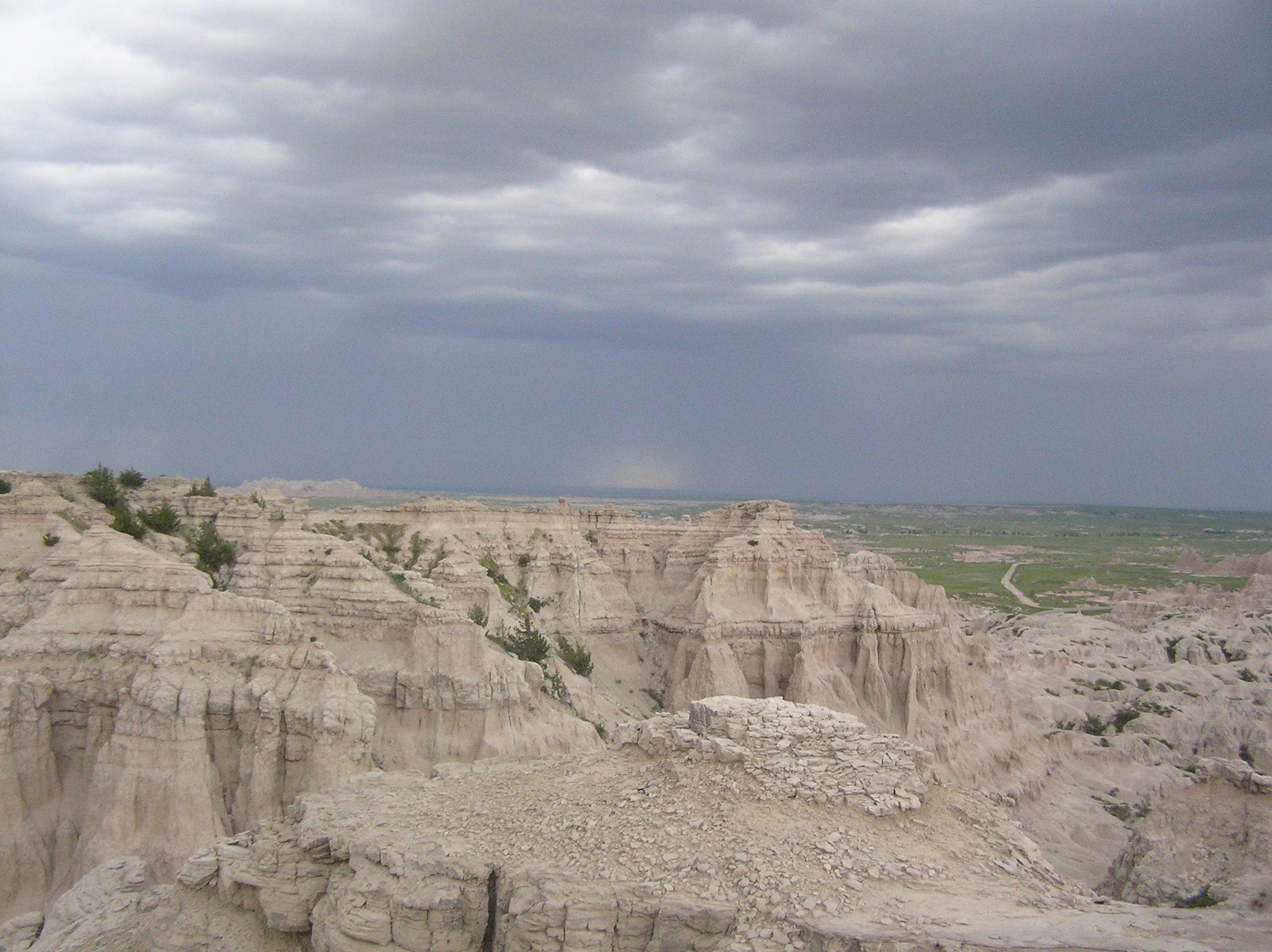
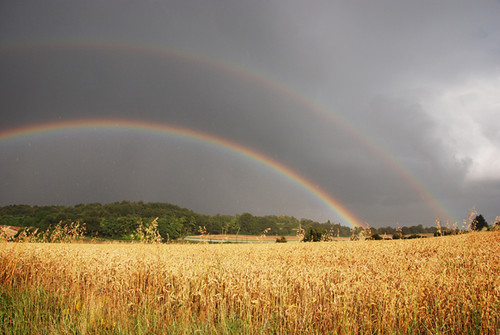
OLYMPUS DIGITAL CAMERAThe earth trembled and quaked, the foundations of the heavens shook; they trembled because he was angry. Smoke rose from his nostrils; consuming fire came from his mouth, burning coals blazed out of it. He parted the heavens and came down; dark clouds were under his feet. He mounted the cherubim and flew; he soared on the wings of the wind. He made darkness his canopy around him— the dark rain clouds of the sky. Out of the brightness of his presence bolts of lightning blazed forth. The Lord thundered from heaven; the voice of the Most High resounded. – 2 Samuel 22:8-14

This message is a continuation of the song of David which we started learning about in yesterday’s post. I have read through the song of David several times over the last couple of days and I must admit it is very much like “turbulent water” to me.

It is almost as if different parts of the song refer to different times in the life of David, or even different Davids. There are also statements made in the song which seem just plain wrong, like when David says “I am not guilty of turning from my God”.  I did a quick count of the number of times David refers to himself (uses me, my, I, etc.)…94 times! I will reflect on this more in tomorrow or the next day’s posts, but for now we will focus on the water in this passage.

After praying and thinking about this passage it seems like it could have a subtitle “God is my howitzer”. David is invoking an incredibly powerful vision of God who can show up and vanquish his enemies.  I am not sure whether this image is something that God has conveyed to David; or if David is imposing his own image upon God. Either way the description of God’s arrival has more in common with Mad Max than Mother Theresa.

The picture being painted here is awe inspiring — something the special effects crowd in Hollywood would probably enjoy creating. God arrives with dark rain clouds.  This is quite different than the description of God arriving as a godly condensate or a consuming fire or permeating cloud up to this point in the Bible.  In this passage God and the clouds are clearly separate and God is being conveyed by, and through, the clouds. Almost as if the Godly condensate has been disconnected from the Israelites for so long that it has built up moisture, become a dark rain cloud, and is prepared the send God’s rain on the Israelites and their enemies alike.

I have spent plenty of afternoons in Haiti and the desert southwest.  Clouds build in the afternoon and eventually mature into thunderstorms and heavy rains fall from dark grey clouds. The arrival of dark clouds can be somewhat menacing and scary.  I remember one time in Haiti when had driven about 1 1/2 hours up a very sketchy road then hiked 45 minutes to a remote village.  We knew that if it rained we would not be able to navigate the road or the river crossing to return home.  Our position, and distance from the car, made the dark clouds much more menacing that they would have had we been safe and sound in our guest house down the mountain.

The lightning and thunder that arrive with the dark clouds are also dangerous, especially if you find yourself on a high mountain.  It seems to me that that David has placed himself on a “high mountain” in relation to both the Israelites, and in some ways, in relation to God.  Perhaps that is why the tone in the Song of David is somewhat odd.  It almost seems that David is trying to convince both himself and God that he really does have confidence in God’s ability to forgive him from his past actions and the liberties he has taken from his view from the top. David, perhaps more than most people, realizes the muddy mire of sin we can find ourselves stuck in; and the critical need we have for God’s forgiveness.

Prayer: God you know the ways we have failed to faithfully follow You, and have trespassed against others.  Thank You for forgiving us.

SDG
Posted in 2 Samuel, Christianity, Conflict, Covenant, Death and Dying, Miracles, reconciliation, religion, The Nature of God, The Spiritual Realm, Trusting God | Tagged , , , , , , , , | Leave a comment

Rip Currents and Raging Torrents

David sang to the Lord the words of this song when the Lord delivered him from the hand of all his enemies and from the hand of Saul. He said: “The Lord is my rock, my fortress and my deliverer;   my God is my rock, in whom I take refuge, my shield and the horn of my salvation. He is my stronghold, my refuge and my savior— from violent people you save me.   “I called to the Lord , who is worthy of praise, and have been saved from my enemies.   The waves of death swirled about me; the torrents of destruction overwhelmed me.   The cords of the grave coiled around me; the snares of death confronted me.   “In my distress I called to the Lord ; I called out to my God. From his temple he heard my voice; my cry came to his ears. – 2 Samuel 22:1-7

This passage begins the Song of David. I must admit the content of the song seems different to me than some of the previous songs of praise given by Moses and others. David’s Song is reminiscent of circling back to review where one has been.  This song is different in that it seems like war and conflict language are more prominent than praise. David’s posture sounds like he is under siege.  In many ways he is right, as it seems like everyone in this part of the world is chasing after one another for one reason or another.

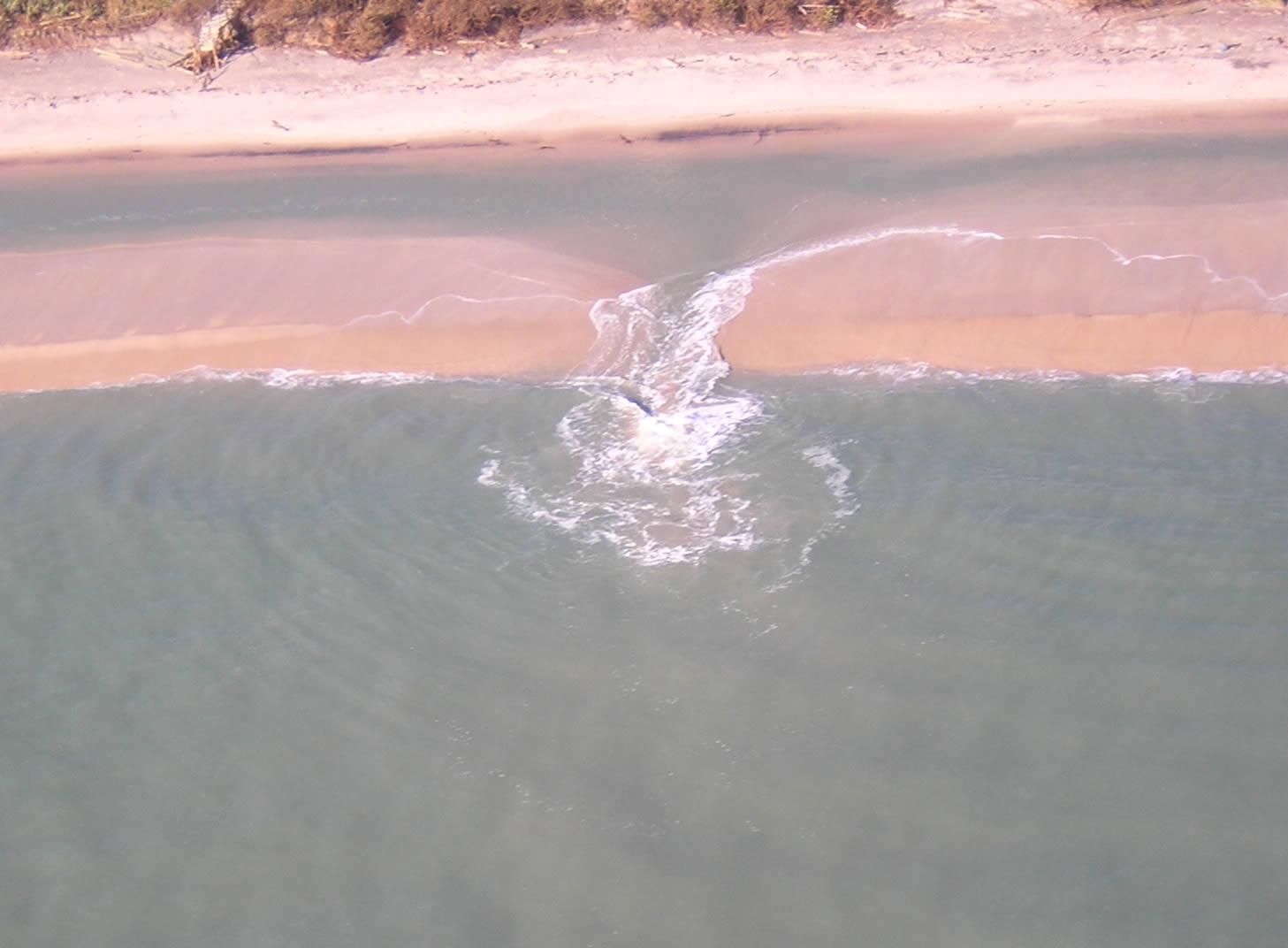
The water imagery in this passage is interesting and rich with meaning. David describes “waves of death swirling about him”. I live near Lake Michigan, which was called “meicigama” or great water by the Chippewa Indians.  It is truly a huge lake with many different faces and moods.  I am dictating part of this post as I walk along the beach…not another soul in site.  The lake is calm and gentle waves are lapping at the shore.  I have been to the beach when the waves were larger than I am. David clearly has large and dangerous waves in mind when he describes “waves of death” swirling about him. What David is describing is more like the rip currents which kill swimmers every summer on the Lake Michigan beaches.  Rip currents are an interesting phenomenon that is caused by a breach or gap in the linear bars of sand that exist just offshore.  The waves crash in and, as the water rushes out again, the water is concentrated at one spot and returns with great force and speed. Strong and capable swimmers are killed every summer by rip currents because they try to swim against this strong current and become tired and drown.  The safest thing to do if one is caught in a rip current is to relax and allow the current to carry you out — or swim along the shore to get out of the current.

I think at this point in David’s life he is realizing that in many ways he has been caught up in a current of revenge, retribution, destruction, and poor choices made earlier in his life.  I am not sure that David knows how to get out of the current and this song is in some ways a song of desperation.  Ultimately, I think David needs to do what a person caught in a rip current should do — let the current take him.  In other words allow God to take him where he needs to go by replacing his own self interest and desires with God’s.

The other bit of water imagery used in this passage is the description of “Torrents of destruction”. When I hear the word “torrent” I think of a river or stream in flood with so much debris and mud that it is difficult for a person to escape if one were to fall into it.  A phenomena best observed from afar.  Torrents have so much mass and momentum that they make it difficult for anything to escape. David’s life seems like a torrent at the moment.  His family is dysfunctional and in shambles, his kingdom is tenuous and under siege, and he is threatened from all sides.  I suspect he feels trapped by his circumstances.  He knows that he needs to trust God and faithfully follow Him, but it is not really working.  The momentum of all the people that are arrayed around David, and the weight and debris from his past decisions, have David stuck.

I think there are two important lessons to take away from this: 1) If  it feels like you are swimming against a current that you can’t beat perhaps you are swimming the wrong way and need to allow yourself to be led by God out of the current and into safety; and 2) if you feel like you’re being overwhelmed by the sheer weight and magnitude of things happening around you, or past decisions you have made, your best hope is to look toward something even weightier and more massive — God.

Prayer: God help us to trust you to lead us out of strong currents and free us from the debris of past poor choices.

Posted in 2 Samuel, Christian Community, Christianity, Conflict, Discernment, Faith, Following God, Obedience, religion, The Nature of God, Trusting God | Tagged , , , , , , , , , | Leave a comment

Eddying Out – Purchased People

It is crunch time for professors and students alike at my university.  I had to choose this evening whether I would devote time to my continued walk with water and the bible or attend a panel discussion on human trafficking.  I chose the panel so I will continue my walk with water tomorrow.

Here is a a brief recap of the human trafficking panel discussion.  I learned a lot about a subject I knew little about.  I had no idea, but according to some estimates there are more people in slavery and human trafficking now than at any time in human history!  There are many ways we can help by being careful and informed about the products we purchase and how they are produced.

Our university is honoring the founder of an organization in Ghana called Challenging Heights.  This organization rescues children from slavery and child trafficking.  The founder, James Kofi Annan, was a child slave himself.  After escaping that life he decided to devote his life to helping other children get out of this situation.  James is being granted an honorary doctorate for his humanitarian work in Ghana by Grand Valley State University.

I will be working with James this summer when I lead a study abroad group to Ghana to work on service learning projects and water quality for seven weeks.  I am excited to learn more about the work Challenging Heights is doing, the man behind this amazing organization, and the Ghanaian people and culture.

Prayer: God help me to use my purchasing power wisely so that I am not contributing to the problem of human trafficking and child labor.

Posted in Conflict, Eddying Out, Love for the Lost, Obedience, reconciliation, Redemption, religion, Sin, Trusting God | Tagged , , , , , , , | Leave a comment

Rain on Dead Plants

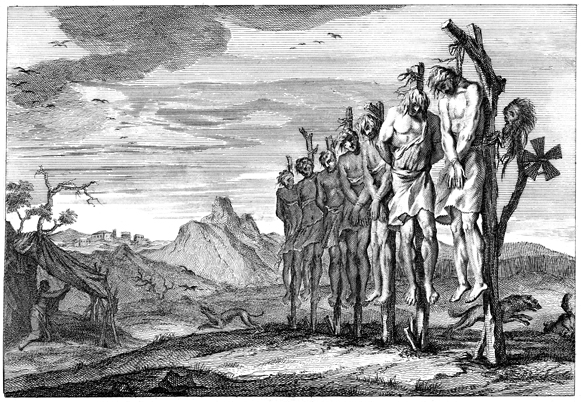
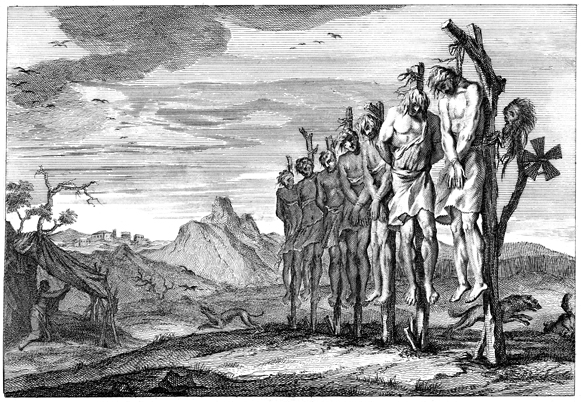
The king spared Mephibosheth son of Jonathan, the son of Saul, because of the oath before the Lord between David and Jonathan son of Saul. But the king took Armoni and Mephibosheth, the two sons of Aiah’s daughter Rizpah, whom she had borne to Saul, together with the five sons of Saul’s daughter Merab, whom she had borne to Adriel son of Barzillai the Meholathite. He handed them over to the Gibeonites, who killed them and exposed their bodies on a hill before the Lord. All seven of them fell together; they were put to death during the first days of the harvest, just as the barley harvest was beginning.   Rizpah daughter of Aiah took sackcloth and spread it out for herself on a rock. From the beginning of the harvest till the rain poured down from the heavens on the bodies, she did not let the birds touch them by day or the wild animals by night. When David was told what Aiah’s daughter Rizpah, Saul’s concubine, had done, he went and took the bones of Saul and his son Jonathan from the citizens of Jabesh Gilead. (They had stolen their bodies from the public square at Beth Shan, where the Philistines had hung them after they struck Saul down on Gilboa.) David brought the bones of Saul and his son Jonathan from there, and the bones of those who had been killed and exposed were gathered up.   They buried the bones of Saul and his son Jonathan in the tomb of Saul’s father Kish, at Zela in Benjamin, and did everything the king commanded. After that, God answered prayer in behalf of the land. – 2 Samuel 21:7-14

This is an odd passage….no doubt about it.  I guess I can understand the effort to “cleanse” the countryside of people who were part of the coup against David, but the details of this retribution and cleansing are just weird.  The first odd detail is David handing over Saul’s descendants to be killed by the Gibeonites.  Why would he do this?  It seems like he is letting someone else do his dirty work.

The Gibeonites killed 7 descendants of Saul and displayed there bodies on a hill before the Lord.  This is also a strange detail.  Why would the Gibeonites want to display these men’s bodies before the Lord?  I assume this was to serve as warning to others who might be thinking of challenging the rule of David.

The next odd detail is the response of Rizpah, the mother of two of the men killed and put on display by the Gibeonites.  She sets up camp near the bodies and stays for what sounds like months to make sure the bodies are not defiled by birds or wild beasts.  This could not have been a pleasant or easy task.

Water enters in the form of rain from heaven on the dead bodies.  The imagery here is rather gruesome.  Decaying bodies being drenched by rains intended for provision and growth.  As I have reflected on this passage, aside from getting a little queasy, it occurs to me that the rain from heaven is falling on the dead bodies and can only promote decay.  This is similar to the effect of rain on dead plants.  The increased moisture causes mildew and decay rather than growth.

The last odd part of this passage is David’s response to Rizpah’s faithful guard of her son’s bodies.  I guess it makes him realize that he has not given the same faithful respect to the bones of Saul and Jonathan.  He rectifies this by recovering their bones and laying them to rest in their rightful place.

This is a rather bleak scene.  Could there be any hidden encouragement here?  Perhaps there is not.  I guess one could look at a world without God as a bleak, hopeless, dead place of decay and death.  The last sentence suggests that the relationship with God was in some way restored to the land.  Interestingly, there is no mention of restoration of the relationship between God and David.

Prayer: God may your rains fall on growing plants rather than dead ones.

Posted in 2 Samuel, Conflict, Covenant, Death and Dying, reconciliation | Tagged , , , , , | Leave a comment

Mea Culpa Crossings

King David sent this message to Zadok and Abiathar, the priests: “Ask the elders of Judah, ‘Why should you be the last to bring the king back to his palace, since what is being said throughout Israel has reached the king at his quarters? You are my relatives, my own flesh and blood. So why should you be the last to bring back the king?’ And say to Amasa, ‘Are you not my own flesh and blood? May God deal with me, be it ever so severely, if you are not the commander of my army for life in place of Joab.’ ”   He won over the hearts of the men of Judah so that they were all of one mind. They sent word to the king, “Return, you and all your men.” Then the king returned and went as far as the Jordan. Now the men of Judah had come to Gilgal to go out and meet the king and bring him across the Jordan. Shimei son of Gera, the Benjamite from Bahurim, hurried down with the men of Judah to meet King David. With him were a thousand Benjamites, along with Ziba, the steward of Saul’s household, and his fifteen sons and twenty servants. They rushed to the Jordan, where the king was. They crossed at the ford to take the king’s household over and to do whatever he wished. When Shimei son of Gera crossed the Jordan, he fell prostrate before the king and said to him, “May my lord not hold me guilty. Do not remember how your servant did wrong on the day my lord the king left Jerusalem. May the king put it out of his mind. For I your servant know that I have sinned, but today I have come here as the first from the tribes of Joseph to come down and meet my lord the king.”   Then Abishai son of Zeruiah said, “Shouldn’t Shimei be put to death for this? He cursed the Lord ’s anointed.” – 2 Samuel 19:11-21

Quite a lot has happened since the last passage.  Absalom is dead and his followers and allies are trying to rebuild a relationship with David and his followers.  There are some interesting parallels between the reconciliation that occurs on the banks of the Jordan and the reconciliation that God accomplished on the cross.

The contrast between the original crossing of the Jordan River and this crossing is striking. God’s anointed king, David, is essentially granted permission to reenter his own kingdom. On the face of it this seems ridiculous, but it just occurred to me this is what God did when He sent His son Jesus.  I am reluctant, given David’s track record, to compare David to God, but God did it first when He chose David to be king.  God chooses us flawed followers too.  He believes in us even when we do not believe in Him.

The Israelites on the west side of of the Jordan, some of whom sided with Saul, and the late Absalom, have come to the Jordan with a Mea Culpa..they admit they were wrong to follow Absalom and reject David.  They took responsibility for their previous poor choices by getting on their knees.  They changed their posture and perspective.

I think God wants us to do what the Israelites did with David.  He wants us to approach the river, admit we were wrong, take responsibility for our choices (mea culpa), and accept that we have rejected him as King.

David had every right, from an earthly perspective, to exact revenge and retribution, but he chose reconciliation.  God also chose to reconcile with us through Jesus.  This move was not “logical” from an earthly perspective, but it makes perfect sense for a God who serves.

Prayer: God thank You for choosing to reconcile  with us even when we choose to rebel against you.

 SDG
Posted in 2 Samuel, Covenant, Following God, Forgiveness, reconciliation, religion, Sin | Tagged , , , , , , , | Leave a comment

Chaotic Crossings and Missed Messiahs

35124_786598164035_850645_n

Hushai told Zadok and Abiathar, the priests, “Ahithophel has advised Absalom and the elders of Israel to do such and such, but I have advised them to do so and so. Now send a message at once and tell David, ‘Do not spend the night at the fords in the wilderness; cross over without fail, or the king and all the people with him will be swallowed up.’ ” Jonathan and Ahimaaz were staying at En Rogel. A female servant was to go and inform them, and they were to go and tell King David, for they could not risk being seen entering the city. But a young man saw them and told Absalom. So the two of them left at once and went to the house of a man in Bahurim. He had a well in his courtyard, and they climbed down into it. His wife took a covering and spread it out over the opening of the well and scattered grain over it. No one knew anything about it. When Absalom’s men came to the woman at the house, they asked, “Where are Ahimaaz and Jonathan?” The woman answered them, “They crossed over the brook.” The men searched but found no one, so they returned to Jerusalem. After they had gone, the two climbed out of the well and went to inform King David. They said to him, “Set out and cross the river at once; Ahithophel has advised such and such against you.” So David and all the people with him set out and crossed the Jordan. By daybreak, no one was left who had not crossed the Jordan. When Ahithophel saw that his advice had not been followed, he saddled his donkey and set out for his house in his hometown. He put his house in order and then hanged himself. So he died and was buried in his father’s tomb. – 2 Samuel 17:15-23

This is a somewhat complicated and confusing passage. Any time you have to resort to language like “do such and such” you know things are getting complex. This is the playing out of the plans within plans discussed in a previous post. In this passage crossing over the Jordan is mentioned numerous times, but I notice that God is not mentioned once. These crossings are chaotic and seemingly without direction from God. The Israelites are missing God, just like they missed the Messiah when Jesus showed up in Jerusalem.

Water comes in both in the Jordan River crossings and the well that David’s men hide in to escape Absalom’s men. David’s men climb into the well and in so doing probably contaminated the water in it for some time. I am struggling to discern the deeper meaning God has for me in this passage. It seems like David and Absalom are so distracted by their family dysfunction that they would not see God even if he showed up and made the Jordan stop flowing. Perhaps that is the main point. Distraction can cause us to miss God showing up.

Does this level of dysfunction and distraction still occur? What would this look like in a modern context? What activities are we engaged in that are similar? Perhaps we need look no further than “black Friday” at a shopping mall. I am not suggesting that shopping is completely analogous to the battle being described in this passage…although some scenes you see on the news are pretty ugly. What seems very similar is the focus on everything but God and a lack of a shared vision of what it would look like if God showed up. I would not be surprised if Jesus could walk unnoticed through a shopping mall, just like the Messiah walked unnoticed through the lives of many of the Jewish leaders.

Perhaps God does not show up in this passage, or shopping malls for that matter, because He was not invited. I am reminded of a scene from one of my favorite movies growing up, Close Encounters of the Third Kind. Richard Dreyfus plays a man who has a close encounter with an alien spaceship. As a result of his encounter he is implanted with a vision which he cannot get out of his head. After building a likeness of his vision in the middle of his kitchen he realizes it is in fact Devil’s Tower in Wyoming. Many others have similar visions and are drawn to the same place. They share the same vision…they were invited. God invited the Israelites to cross over into the Promised Land, He invited the Jewish leaders to be born again, and He invites each one of us to follow Him.

The Israelites have lost their shared vision of who God is and what it would even look like for Him to show up. I think this can happen within our Christian communities as well. We can become so distracted by “doing” that we don’t take time to remember God or look for Him to show up. As a consequence He begins to show up less and less — not because He is less present, but because we are not looking closely enough…or perhaps He was simply not invited.

Prayer: God help us to develop a shared vision of who You are so we recognize You when You show up.

Posted in 2 Samuel, Christian Community, Christianity, Conflict, Discernment, Faith, Following God, Life Together, religion, Trusting God | Tagged , , , , , , , | Leave a comment