
Rabbit Trail #16 – Watery Places

https://d2e111jq13me73.cloudfront.net/sites/default/files/styles/product_image_aspect_switcher_170w/public/product-images/csm-movie/myoctopusteacher.jpg?itok=2UJSvrUp

I just finished up the book of Mark which took me way longer than it should have. I decided this would be a good time for a Rabbit Trail. Something that has been on my mind recently was something I heard about many Inuit tribes in Canada and northern Alaska. Apparently part of their cultural heritage is that watery places are synonymous with spirit-filled places. Seas, rivers, lakes and the like are places where the spiritual world intersects with the physical world here on earth in a unique way. Jesus demonstrated this by providing a window between these worlds as he taught and healed along the shores of several bodies of water.

This idea that water is a metaphor for the spiritual sea that surrounds us has come up many times in my float through the bible. Perhaps this is because as earth dwellers most of us are not at home in the “water” so it is similar to the spiritual realm in this respect.

I recently happened upon a very interesting documentary on Netflix called My Octopus Teacher. The movie is about videographer and photographer Craig Foster who shows great fortitude, some would say foolhardiness, by spending a year free diving with his underwater cameras to essentially “live” in a kelp forest and get to know a specific octopus.

He learns that in order to be at home in this alien world he must push himself to his physical limits and set aside his need for comfort. He dives without a wet suit or SCUBA gear so that he can experience this environment as the creatures that live in it experience it. He learns to slow his breathing and grows accustomed to the frigid water. Instead of suiting up to survive the environment he slowly equips his own body to operate in this foreign realm.

Returning to water as a metaphor for the spiritual realm raises some interesting questions about how we prepare ourselves here on earth to survive and thrive in the spiritual realm, both now and in the time to come. Are we doing the equivalent of putting on wet suits and equipping ourselves with external air tanks so that we can “survive” in this foreign environment – or are we embracing it and allowing some level of discomfort so that we become accustomed to this spiritual sea? I think many of the efforts woven throughout history like mind altering substances, dream quests, meditation, and even prayer are an effort to quiet our souls and get more comfortable and familiar with the “spiritual sea” that surrounds us.

One of my heroes is the naturalist John Muir. I like to think we would have been kindred spirits if we had lived at the same time. John Muir was a naturalist like few others. He would climb a tall fir during a raging storm just to feel the fury of the natural world around him. I suppose he may have just been an adrenaline junky but I think he realized something that Craig Foster also realized while free diving in the ocean off the coast of South Africa. In order to truly know and experience a foreign environment we must allow ourselves to become a part of it. This requires some level of discomfort if the environment is not our natural dwelling place.

So how do we do this for the spiritual world? I think in many ways it is harder than holding our breath and getting accustomed to cold water. We must learn a new way of seeing and hearing what is happening around us. In a way that is what John Muir and Craig Foster were doing too. They allowed themselves to be submersed in nature in a way that allowed them to see things they could not otherwise see. In order to be submersed in the spiritual sea around us requires that we allow ourselves to become submersed in this intangible world in a way that may make many of us feel uncomfortable.

We fear being labelled a religious fanatic when we see and hear evidence for this spiritual world. We are unsure of what we have seen or experienced and are quick to explain it away as coincidence or “fate”. I am sure both John Muir and Crag Foster were called crazy by many of their friends and relatives for their devotion to knowing and experiencing nature. Perhaps we should be willing to be called crazy once in a while too in exchange for experiencing eternity.

Posted in Faith, Following God, Heaven, Holy Spirit, The Earthly Realm, The Nature of God, The Spiritual Realm | Tagged , , , | Leave a comment

Here at the End of All Things

“But in those days, following that distress, “ ‘the sun will be darkened, and the moon will not give its light; the stars will fall from the sky, and the heavenly bodies will be shaken.’ “At that time people will see the Son of Man coming in clouds with great power and glory. And he will send his angels and gather his elect from the four winds, from the ends of the earth to the ends of the heavens. – Mark 13:24‭-‬27

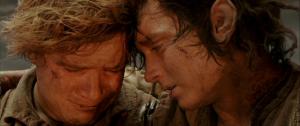
“I’m glad to be with you, Samwise Gamgee…here at the end of all things.” So ends the amazing journey of Sam and Frodo to destroy the One Ring in the Return of the King. JRR Tolkien was a master story teller who created a world for us to explore. Apparently Tolkein was a Roman Catholic so he created a world that, although not overtly “religious”, was filled with allegory and metaphor that mirrored the Messiah.

We have come to the “end of all things” – the last water reference in the book of Mark. I have been “stuck” in this stretch of water for way too long. I started the book of Mark in August. It is time to shoot this last rapid and move on to the book of Luke.

This passage describes the “end of all things” when Jesus will come “in clouds with great power and glory.” It sounds like the second coming will be different than Jesus’ first arrival, “the sun will be darkened, and the moon will not give its light; the stars will fall from the sky, and the heavenly bodies will be shaken.” No subtle reveal of a secret Kingdom here.

It sounds like the second coming will be a collecting tour with Jesus doing the collecting of “his elect from the four winds, from the ends of the earth to the ends of the heavens”. No escaping the event. Everyone will need to choose. I do find it interesting that Jesus in this coming will arrive “in clouds”. This is the form God took with the Israelites for much of the old testament.

I am not sure why God would choose to arrive in this form and way. Part of me would prefer the arrival of a gentle lamb to lead us home, but perhaps that is not what will be required to shake us loose from our snares here in this land of Oblivion, and our obsession with it. From all I have read about this time it will be a time of great confusion and calamity. I am sure there will be many tempting roads that would seem less difficult than the one God will be offering to the “elect”.

With the United States election just days away the people of the United States will choose new leaders. I will not wade into the election and political ideologies, but I think what God is saying here is that the choice we have as “elect” has nothing to do with an ephemeral election no matter who or what is on the ballot. The real choice is whether we believe and go all in for God in the end. Either way God wins.

Prayer: God help us to choose You over all things of this world so that at the end of all things we will be counted with the elect.

Posted in Christianity, Death and Dying, Faith, Following God, Free Will, God's Love for Us, Mark, Messiah, The Earthly Realm, The Spiritual Realm | Tagged , , , , , | 3 Comments

Believe!

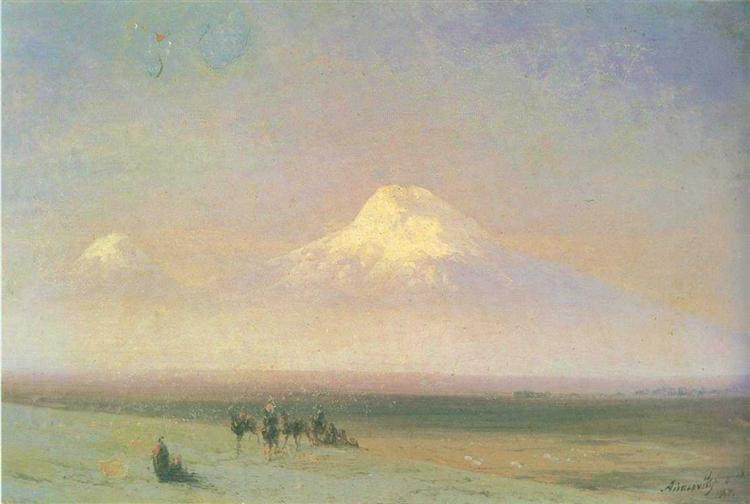
The mountain Ararat
by Ivan Aivazovsky

“Have faith in God,” Jesus answered. “Truly I tell you, if anyone says to this mountain, ‘Go, throw yourself into the sea,’ and does not doubt in their heart but believes that what they say will happen, it will be done for them. Therefore I tell you, whatever you ask for in prayer, believe that you have received it, and it will be yours. And when you stand praying, if you hold anything against anyone, forgive them, so that your Father in heaven may forgive you your sins.” – Mark 11:22‭-‬25

The water passage for today is a bit tangential but we will take it on anyway because the other parts of the passage contain some deep philosophical water about prayer, believing, and faith.  Faith is almost as difficult to define as it is to practice.  Faith is hard.

The faith we are to have is faith in God – not ourselves, church leaders, or other Christians but God alone.  Apparently if we have faith in God we will be empowered to do amazing things like moving mountains into the sea.  In order to be successful at this level of faith we have to 1) believe that what we have asked for has already been done for us; 2) forgive others before we stand praying; 3) accept God’s forgiveness for our sins

The first one sounds easy but I think in practice this is hard.  What God is asking us to do is set aside out earthly experience about how things “work” and accept that He is the God of all these things.  As a scientist this one is particularly hard for me.  The scientist in me wants proofs and evidence, but God seems to be implying that we need to believe before we have proof or evidence about the future outcome of our prayers.  I am not sure I fully understand this dynamic.  Perhaps God simply wants our focus to be so intently on Him that the outcome ceases to matter as much?

I do not think that God wants to make magicians of us all able to do “tricks” in His name.  I think the next two requirements are telling about God’s real focus here.  It appears that faith is more of a posture and perspective than a practice or philosophy.  God wants our hearts to be in the right place so that what we ask is really what God wants for us rather than some magical miracle.  We have to be like God in His ability to forgive others and accept His forgiveness for ourselves.  Why would this be important for successful prayer and faith?

There are so many voices that are constantly trying to gain our attention.  We are like a radio that has difficulty tuning in to just one station.  We are constantly drifting from station to station catching snippets of supposed wisdom and comfort.  What God is saying is that if we get tuned in to His “station” and seek our comfort and wisdom from Him alone our will and His will converge. In that sense we will be able to do whatever we desire because what we desire will be aligned with what God desires.

Don’t get me wrong God does believe in us, but He needs us to channel our hearts to Him before we can move mountains in His name.

Prayer: God help us to have the kind of faith that allows our will to be lined up with yours so that we can successfully as for things in Your name.

Posted in Christianity, Discernment, Discipleship, Faith, Following God, God's Love for Us, Mark, Miracles, Obedience, prayer, The Earthly Realm, The Nature of God, The Spiritual Realm, Trusting God | Tagged , , , , | 2 Comments

A Cup of Water

Cup of Water and a Rose on a Silver Plate by Francisco de Zurbaran

“Teacher,” said John, “we saw someone driving out demons in your name and we told him to stop, because he was not one of us.” “Do not stop him,” Jesus said. “For no one who does a miracle in my name can in the next moment say anything bad about me, for whoever is not against us is for us. Truly I tell you, anyone who gives you a cup of water in my name because you belong to the Messiah will certainly not lose their reward. “If anyone causes one of these little ones—those who believe in me—to stumble, it would be better for them if a large millstone were hung around their neck and they were thrown into the sea. – Mark 9:38‭-‬42

Today’s topic is a cup of water. This innocuous everyday item is elevated to a rather lofty position by Jesus. The disciples are concerned that people were “driving out demons in your name”.  I am not sure what was in the hearts of the disciples, but it seems there are a few possibilities: 1) they were jealous of these people successfully driving out demons when they could not; 2) they were concerned that the people doing it were not members of elite inner circle and privy to the same teachings they were; 3) they thought these people might be outside their “control” and might do something that would be counter to Jesus’ teaching; or 4) something else I have not figured out yet.

Jesus responds to their concerns with an assurance that one cannot bear good fruit with bad intentions, “For no one who does a miracle in my name can in the next moment say anything bad about me, for whoever is not against us is for us.”  It seems Jesus is saying in essence the fruit of their actions speaks for itself and true miracles and wonders can only find their source in God.  Unfortunately history is full of examples when horrible things were done in the name of religion and even in the name of Christ, but these would in my opinion qualify as “bad fruit” and not what Jesus was talking about here.

The we arrive at the water reference and the humble cup of water, “Truly I tell you, anyone who gives you a cup of water in my name because you belong to the Messiah will certainly not lose their reward.”. This simple cup of water takes on new meaning as an outward sign of an internal heart that acknowledges that: 1) there is a Messiah; 2) He has come in this Man Jesus; 3) those that choose can “belong” to Him; and 4) belonging brings with it a “reward”, which is in fact dwelling with God for eternity.

The open acknowledgement that there is a Messiah, and Jesus is that Messiah, is a “secret” that Jesus has been somewhat hesitant up to this point to reveal.  His disciples, those Jesus interestingly refers to here as “little ones”, are learning every day what “belonging” to Him looks like and what it will require of them.  The “reward” Jesus is referring to here is not a gold star in our Sunday School workbook but salvation itself and an eternal place with God in Heaven. This “cup” is a hidden well for sure.

Jesus ends this water wisdom with a warning, “If anyone causes one of these little ones—those who believe in me—to stumble, it would be better for them if a large millstone were hung around their neck and they were thrown into the sea.”  So from Jesus’ perspective we are all “little ones“, not because we are lowly cave dwellers here on earth that are less than God, but because we are infants in our understanding of the spiritual realm that He is teaching about.

The take home message for me from today’s passage is that something as simple as a cup of water can hold eternal life and deep spiritual truths when held by the hands of Jesus.

Prayer: God help us to take the cup of Living Water that you offer us every day so that we can live our lives in Your name.

SDG

Posted in Christianity, Following God, God's Love for Us, Impure spirits, Jesus, Mark, Miracles, The Nature of God, The Spiritual Realm, Trusting God | Tagged , , , , , | Leave a comment

Transfiguration or Transformation

After six days Jesus took Peter, James and John with him and led them up a high mountain, where they were all alone. There he was transfigured before them. His clothes became dazzling white, whiter than anyone in the world could bleach them. And there appeared before them Elijah and Moses, who were talking with Jesus. Peter said to Jesus, “Rabbi, it is good for us to be here. Let us put up three shelters—one for you, one for Moses and one for Elijah.” (He did not know what to say, they were so frightened.) Then a cloud appeared and covered them, and a voice came from the cloud: “This is my Son, whom I love. Listen to him!” Suddenly, when they looked around, they no longer saw anyone with them except Jesus. As they were coming down the mountain, Jesus gave them orders not to tell anyone what they had seen until the Son of Man had risen from the dead. They kept the matter to themselves, discussing what “rising from the dead” meant. – Mark 9:2‭-‬10 NIV

Today’s passage describes the transfiguration of Jesus.  Apparently the word “transfiguration” is from Latin and means roughly to “change form” or “change the shape of”.  This changing takes place high in the mountains when Jesus is on a “hike” with Peter, James, and John.  The transfiguration is described as Jesus’ clothes becoming white, “whiter than anyone in the world could bleach them”.   I will not pretend to understand what is happening here from a metaphysical perspective, but what does seem clear it that Jesus underwent a dramatic change in the way he looked, at least the way he looked to Peter, James, and John with their earthly eyes.

Jesus is joined by Moses and Elijah.  It does not say whether they were also clothed in whiteness or not.  It just says that Jesus was talking with them. Faced with this incredible scene Peter, who was very frightened and probably speechless, decides to fill the vocabulary void with words.  He has the idea that they could build shelters for these three metaphysical men.  I am not sure what he thought he would be sheltering them from with these secular shelters made of stone. Perhaps given this glimpse of the spiritual realm they were simply unable to place the experience in their minds in any meaningful way.  I do not know.

Then the water reference comes up in the form of a cloud, God’s presence, “Then a cloud appeared and covered them, and a voice came from the cloud: “This is my Son, whom I love. Listen to him!”.  This makes for an interesting juxtaposition.  The Son of God was enveloped and surrounded by His Father God, the “Father of the Rain“, in the cloud.  Of course God was present in this form throughout the Old Testament so this represents a confluence of sorts between the Old and the New Song that Jesus is “singing”.  The presence of Moses and Elijah also represents this mixing of old and new treasures.

I am not sure why these men were chosen by God to witness this merging of worldviews between the old and the new.  Perhaps God was presaging the need for these men to form a bridge between the Jewish culture and this new way that Jesus came to teach and demonstrate.  It is interesting that Jesus does not want them to tell of this event until after He is gone.  Perhaps this was another effort to keep people from seeing the magic instead of the metaphysical miracle of the Messiah.  Jesus wanted these men, and those they would eventually teach, to focus on the transformation that God needs in their hearts rather than “trick” of the transfiguration.

The take home message for me in this passage is to focus on transformation rather than “tricks”.  Don’t get me wrong it is amazing when God shows up in miraculous ways like He did in this passage, but I am pretty sure He prefers that we notice Him when He shows up in much more subtle ways in our lives every day.

Prayer: God give us eyes to see your presence in all that we do and transform our hearts to that they can see you more clearly.


Posted in Christianity, Discipleship, Following God, God's Love for Us, Mark, Messiah, Miracles, The Nature of God, The Spiritual Realm, Trusting God | Tagged , , , , , | 2 Comments

Sight from the Savior

They came to Bethsaida, and some people brought a blind man and begged Jesus to touch him. He took the blind man by the hand and led him outside the village. When he had spit on the man’s eyes and put his hands on him, Jesus asked, “Do you see anything?” He looked up and said, “I see people; they look like trees walking around.” Once more Jesus put his hands on the man’s eyes. Then his eyes were opened, his sight was restored, and he saw everything clearly. Jesus sent him home, saying, “Don’t even go into the village.” – Mark 8:22‭-‬26

So the topic of today’s passage is something a bit odd and some might say irreverent, spit from a savoir. Jesus performs a miraculous healing of a blind man and in so doing provides a powerful metaphor for the healing He offers all of us blind cave dwellers. This healing feels deeply personal and intimate with Jesus actually sharing part of his essence, His spit, with this blind man.

On a purely human level this would seem to be a bit gross to have someone spit on your eyes.  In fact in our current culture this could be deemed an insult worthy of retribution, but clearly that is not the way Jesus intends this act to be received. The Godly condensate, Jesus, is sharing part of Himself with this man in order to heal him.

Viewed metaphorically this healing takes on interesting meaning.  If the face represents a reflection of our inner soul, and the eyes a window to it, then Jesus in healing this man has not only given him sight but he has opened his heart to a new kind of relationship with God.  I find it interesting that the new sight is at first imperfect and allows the man to “see people; they look like trees walking around.”  It requires a second touch from the savoir to fully restore his vision.

At Jesus’ second touch “his sight was restored, and he saw everything clearly.”  Certainly this was a physical healing of his optical machinery but I think, perhaps more importantly, it was a healing of his metaphysical machinery.  He needed help to “see” the undiscovered country that is the Kingdom of God that Jesus was offering with his spit and touch.  A few more letters and the word “spit” becomes a more familiar word “spirit”.  I think that is the real gift that Jesus gave this man at Bethsaida.

Jesus offers this same gift to all those who are willing to choose to follow Him and allow their eyes to be opened.  I think what is often holding us back is that we do not realize we are blind.  Our spiritual sight has atrophied through lack of use.  We think we see the world around us clearly when in fact we see only the physical world and miss the forest for the trees.  We miss opportunities to participate in God’s shaping of our souls because we do not think they require modification.  Even when we submit to God’s healing we sometimes settle for seeing the metaphysical world like this man saw the people, “like trees walking around.”

This man had an obvious physical need and a not so obvious spiritual need.  Jesus healed both.  We are all similar to the blind man in this respect, whether we know it or not.

Prayer: God open our eyes to the spiritual world around us so we can take part in the new things You have for us.

Posted in Christianity, Following God, God's Love for Us, Jesus, Mark, Miracles, The Spiritual Realm | Tagged , , , , | 4 Comments

Magic and Metaphysical Miracles

Then Jesus left the vicinity of Tyre and went through Sidon, down to the Sea of Galilee and into the region of the Decapolis. There some people brought to him a man who was deaf and could hardly talk, and they begged Jesus to place his hand on him. After he took him aside, away from the crowd, Jesus put his fingers into the man’s ears. Then he spit and touched the man’s tongue. He looked up to heaven and with a deep sigh said to him, “Ephphatha!” (which means “Be opened!” ). At this, the man’s ears were opened, his tongue was loosened and he began to speak plainly. Jesus commanded them not to tell anyone. But the more he did so, the more they kept talking about it. People were overwhelmed with amazement. “He has done everything well,” they said. “He even makes the deaf hear and the mute speak.” – Mark 7:31‭-‬37

Today’s passage comes with a geography review for me. I had to go back and dredge up previous references to the city of Tyre and Sidon to see if there was anything special about these locations. There was a prophecy about this sea port region back in Zechariah 9:1‭-‬5, and I reflected on it there in a post called “Power on the Sea“. Tyre was also called out back in Ezekiel 28:1‭-‬10, dealing with the pride of the king of Tyre and his impression that he ruled the sea rather than God. Tyre was also prophesied about by Isaiah when God said that it would be “left without house or harbor” (Isaiah 23:1-18).

So Jesus is leaving a region with a long history of rejecting God and His Lordship. He travels to the Sea of Galilee where many miracles occur, including the one described here. “Some people” bring a deaf and mute man to Jesus so that He can heal him. It is not stated who these people were, but presumably they were either his friends or relatives who were helping him find healing, and hopefully ears to hear the “new song” that Jesus is offering.

Jesus takes this man aside and gets very personal by putting His fingers in his ears and putting spit on his tongue. Now I am not sure what this man would have been thinking or what his level of faith was in this man standing by the Sea of Galilee, but it must have felt like a deeply personal experience to be touched by Jesus in this way.

Jesus looks to heaven and with a “deep sigh said to him, be opened!”. I am not sure what the importance of the “deep sigh” was here. Perhaps it was the understanding that this man’s physical healing was only an outward sign of a much more difficult inner healing that would take much longer and be a more difficult road. Jesus was healing hearts with his spit and hands, but I am not sure that the people always understood this overlay on the more obvious healing.

The man is physically healed, his “tongue was loosened and he began to speak plainly”. I am not sure if that means he was speaking plainly about that fact that he was healed or if he was speaking plainly about the Man who healed him. Jesus wanted to keep this healing from being a sideshow, “Jesus commanded them not to tell anyone. But the more he did so, the more they kept talking about it.” I think Jesus wanted people to focus on the new wine He was offering rather than the “magic” in the miraculous healing.

I find the last part interesting when the people say “He has done everything well,”. I am not sure what their measure of “well” was but it seems like it was based on his success in physical healing rather than his ability to channel hearts and souls toward God. The focus on the “magic” of the miracles was a distraction from the real metaphysical miracle that the God of the universe was standing in front of them placing His fingers in people ears and putting spit on their tongues.

The take home message for me is that God forded a great river that no one can cross so that we could Follow Him to the undiscovered country – a journey that ironically requires no speaking or hearing.

Prayer: God give a ears to hear and eyes to see more than just the “magic” in miracles.

Posted in Christianity, Discipleship, Faith, Following God, God's Love for Us, Mark, Miracles, Obedience | Tagged , , , , , | 19 Comments

Filling the Infinite Abyss

This image is one of the most photogenic examples of the many turbulent stellar nurseries the NASA/ESA Hubble Space Telescope has observed during its 30-year lifetime. The portrait features the giant nebula NGC 2014 and its neighbour NGC 2020 which together form part of a vast star-forming region in the Large Magellanic Cloud, a satellite galaxy of the Milky Way, approximately 163 000 light-years away.

The Pharisees and some of the teachers of the law who had come from Jerusalem gathered around Jesus and saw some of his disciples eating food with hands that were defiled, that is, unwashed. (The Pharisees and all the Jews do not eat unless they give their hands a ceremonial washing, holding to the tradition of the elders. When they come from the marketplace they do not eat unless they wash. And they observe many other traditions, such as the washing of cups, pitchers and kettles. ) So the Pharisees and teachers of the law asked Jesus, “Why don’t your disciples live according to the tradition of the elders instead of eating their food with defiled hands?” He replied, “Isaiah was right when he prophesied about you hypocrites; as it is written: “ ‘These people honor me with their lips, but their hearts are far from me. They worship me in vain; their teachings are merely human rules.’ You have let go of the commands of God and are holding on to human traditions.” And he continued, “You have a fine way of setting aside the commands of God in order to observe your own traditions! For Moses said, ‘Honor your father and mother,’ and, ‘Anyone who curses their father or mother is to be put to death.’ But you say that if anyone declares that what might have been used to help their father or mother is Corban (that is, devoted to God)— then you no longer let them do anything for their father or mother. Thus you nullify the word of God by your tradition that you have handed down. And you do many things like that.” – Mark 7:1‭-‬13

This passage is a retelling of a parallel account in Matthew that I reflected on in a post called Hand Washing and Human Traditions.  My take on that passage was that Jesus was trying to make these religious leaders realize they were honoring something other than God with their traditions.  They were really honoring themselves and their ability to choose their own path.  Some traditions may seem to be very “God honoring” on the surface, but if they get in the way of an intimate relationship with God they must be set aside, at least until we are able to see them with the proper posture and perspective.

Comparing the two accounts it is clear that Mark is providing much more detail and context to this story which helps us understand what is going on in the hearts and minds of the Pharisees.  Mark states clearly that this practice of hand washing is from the elders and tradition rather than a command from God “The Pharisees and all the Jews do not eat unless they give their hands a ceremonial washing, holding to the tradition of the elders. When they come from the marketplace they do not eat unless they wash. And they observe many other traditions, such as the washing of cups, pitchers and kettles.”

What Mark seems to be describing here is an obsessive focus by the Pharisees on being “clean”, at least in a physical sense.  On one level this may have been just good hygiene in a world without proper sanitation, refrigeration, and a warm climate, but ultimately I think it represents an underlying lack of trust in God to protect them and care for them.  I think Jesus desires for these religious leaders to find and accept His new teachings about the Kingdom of God, but they are having difficulty separating this new treasure from the old ones they are used to searching for. and holding on to tightly.

Jesus then quotes the same passage in Isaiah that is quoted in Matthew, “These people honor me with their lips, but their hearts are far from me. They worship me in vain; their teachings are merely human rules.”  So the human traditions of the Pharisees are preventing the heart connection that is required to know and be known by God.  Jesus has an interesting way of calling out the Pharisees, “you have let go of the commands of God and are holding on to human traditions.”  It seems there is a place in our souls for God to dwell and we can fill that spot up with human religious traditions just as easily as we can with more traditional “sins” and distractions.

Blaise Pascal explored this stretch of water in his book Pensées, defending the Christian faith.  The famous God-shaped void quote apparently had its origin here.  In Pensées he says:

“What else does this craving, and this helplessness, proclaim but that there was once in man a true happiness, of which all that now remains is the empty print and trace? This he tries in vain to fill with everything around him, seeking in things that are not there the help he cannot find in those that are, though none can help, since this infinite abyss can be filled only with an infinite and immutable object; in other words by God himself.” – Blaise Pascal, Pensées VII(425)

God wants all of us to have malleable hearts that can be shaped and channeled toward Him, allowing us to be changed into the people He needs us to be.  The only way to do that is to “let go” of some of the human traditions as Jesus has asked the Pharisees to do here.  This is hard because our traditions often become firmly attached to our souls and their removal can be difficult and painful, but in order to make room for God we must clean house and jettison some of the things that are cluttering up our souls.

Prayer: God help us to see those traditions and practices which are filling our souls instead of You.

Posted in Christian Community, Christianity, Following God, Forgiveness, Free Will, God's Love for Us, Jesus, Mark, The Nature of God | Tagged , , , , , | Leave a comment

Walking on Water

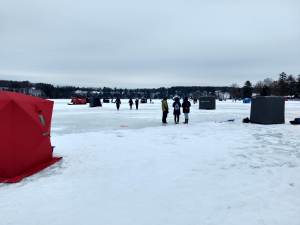
Ice Fishing in Newago, MI

Immediately Jesus made his disciples get into the boat and go on ahead of him to Bethsaida, while he dismissed the crowd. After leaving them, he went up on a mountainside to pray. Later that night, the boat was in the middle of the lake, and he was alone on land. He saw the disciples straining at the oars, because the wind was against them. Shortly before dawn he went out to them, walking on the lake. He was about to pass by them, but when they saw him walking on the lake, they thought he was a ghost. They cried out, because they all saw him and were terrified. Immediately he spoke to them and said, “Take courage! It is I. Don’t be afraid.” Then he climbed into the boat with them, and the wind died down. They were completely amazed, for they had not understood about the loaves; their hearts were hardened. – Mark 6:45‭-‬52

This passage marks the arrival at a familiar stretch of water, one of the passages that inspired this blog. The passage begins with Jesus seemingly abandoning His disciples to pray in the mountains. He “made” His disciples get in the boat and left them alone to fend for themselves on the lake. Meanwhile He went into the mountains to pray. I totally get why Jesus would go to the mountains to pray. I am from the mountainous Pacific Northwest of the United States and some of the most amazing spiritual experiences I have had have been in the mountains. It is not clear what Jesus was praying about but He may have been seeking wisdom and guidance about how to teach his disciples to “walk on water” and understand this new way He was teaching about.

The scene continues with Jesus “alone on the land” and the disciples out in the middle of the lake struggling to make any headway against the “wind”. Jesus is on land separated from the disciples by an expanse of water. What if we look at this scene from a metaphorical perspective? In previous posts I have explored the idea that Jesus is a window between two worlds, the physical and spiritual. The land represents the physical world and the water represents the spiritual realm sometimes referred to as the Kingdom of God. As “cave dwellers” accustomed to the earthly realm Jesus’ disciples are having trouble seeing how to navigate the spiritual sea that surrounds them. I think that is the purpose of many of the miracles and events that the disciples experience. It is an effort to help them see this hidden reality and learn how to navigate it.

Most of the disciples in the boat were experienced fisherman. They would have seen, and lived through, many storms on the lake, but this storm was somehow different. I think Jesus was allowing them to experience the wind and waves to make a point and help to channel their hearts toward God. He wanted this experience, just like the experience with Jairus’ daughter, to change their souls and their conception of how big God is and how much of what is going on around them is happening outside their earthly senses.

Jesus walks out onto the lake intending to cross to the other side. Interestingly, Jesus was about to walk by the disciples in the boat until they cried out to Him. I think this is key. They did the right thing, they called out to God, but for the wrong reason. They called out because “they all saw him and were terrified”. What God is looking for is strong and courageous sailors on the spiritual sea that surrounds us. This means setting aside our fears of physical danger and focusing on the One who has extended His arm to save us. It did not matter how accomplished and skilled these fisherman were at navigating and operating a boat. Jesus wanted them to understand that the sea they were really navigating has nothing to do with wind, wetness, and waves. They were wading into deep water and needed to ask for help in crossing it.

Sadly they missed the point of the spiritual squall swirling about them, “They were completely amazed, for they had not understood about the loaves; their hearts were hardened.” So they were amazed, but not for the right reason. They were supposed to be focusing on the amazing glimpse into the spiritual realm they had been given, but all they could see were wind, waves, and ghosts. Their hearts were hardened, which means their souls were not ready to be shaped into what God needed them to be. Fortunately, most of them get it in the end, but it takes a considerable sacrifice on God’s part.

From a purely physical perspective it is possible to walk on water, but it requires the water to be in a non-liquid state for most of us. Being from Michigan there are a few months when everyone can “walk on water” – when it is frozen with sufficient thickness to support our body weight. What Jesus does for his disciples through healing and miracles is “freeze” the spiritual sea that is all around them so they can experience its wonders. He is trying to help them learn how to see with eyes accustomed to the dark; hear with ears accustomed to the deafening noise of whirring wings; and sense the spiritual world with sensitive whiskers.

The take away for me from this passage is that I need to be careful and observant to make sure that I do not miss similar opportunities to glimpse the spiritual world around us. Perhaps slow down long enough to “walk on water” even when it is not frozen.

Prayer: God help us to see and experience the spiritual world around us so we can become accustomed to its wonders.

Posted in Christianity, Faith, Following God, God's Love for Us, grace, Holy Spirit, Mark, Miracles, New Testament, The Earthly Realm, The Nature of God, The Spiritual Realm, Trusting God | Tagged , , , , , | 5 Comments

Don’t be afraid; just believe

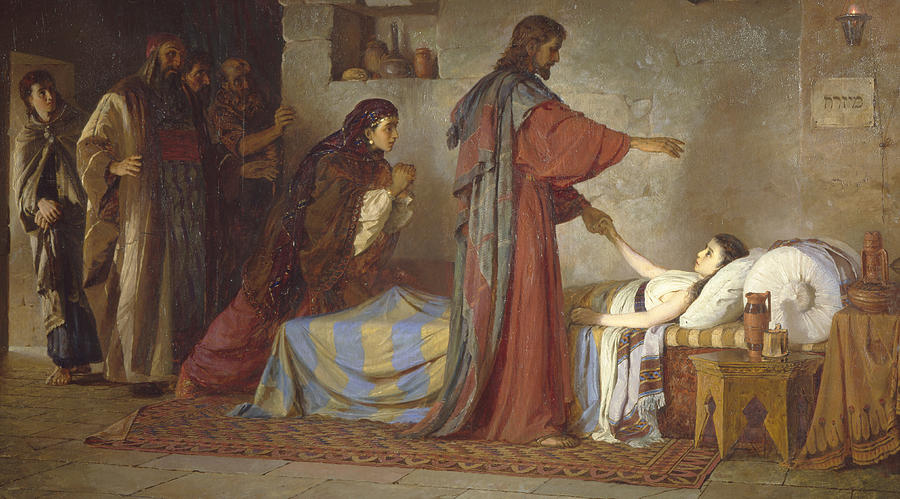
The Raising of Jairus’ daughter, 1871 (oil on canvas), Polenov, Vasilij Dmitrievich

When Jesus had again crossed over by boat to the other side of the lake, a large crowd gathered around him while he was by the lake. Then one of the synagogue leaders, named Jairus, came, and when he saw Jesus, he fell at his feet. He pleaded earnestly with him, “My little daughter is dying. Please come and put your hands on her so that she will be healed and live.” So Jesus went with him. A large crowd followed and pressed around him. And a woman was there who had been subject to bleeding for twelve years. She had suffered a great deal under the care of many doctors and had spent all she had, yet instead of getting better she grew worse. When she heard about Jesus, she came up behind him in the crowd and touched his cloak, because she thought, “If I just touch his clothes, I will be healed.” Immediately her bleeding stopped and she felt in her body that she was freed from her suffering. At once Jesus realized that power had gone out from him. He turned around in the crowd and asked, “Who touched my clothes?” “You see the people crowding against you,” his disciples answered, “and yet you can ask, ‘Who touched me?’ ” But Jesus kept looking around to see who had done it. Then the woman, knowing what had happened to her, came and fell at his feet and, trembling with fear, told him the whole truth. He said to her, “Daughter, your faith has healed you. Go in peace and be freed from your suffering.” While Jesus was still speaking, some people came from the house of Jairus, the synagogue leader. “Your daughter is dead,” they said. “Why bother the teacher anymore?” Overhearing what they said, Jesus told him, “Don’t be afraid; just believe.” He did not let anyone follow him except Peter, James and John the brother of James. When they came to the home of the synagogue leader, Jesus saw a commotion, with people crying and wailing loudly. He went in and said to them, “Why all this commotion and wailing? The child is not dead but asleep.” But they laughed at him. After he put them all out, he took the child’s father and mother and the disciples who were with him, and went in where the child was. He took her by the hand and said to her, “Talitha koum!” (which means “Little girl, I say to you, get up!” ). Immediately the girl stood up and began to walk around (she was twelve years old). At this they were completely astonished. He gave strict orders not to let anyone know about this, and told them to give her something to eat. – Mark 5:21‭-‬43

The subject of today’s passage is healing and resurrection. Where does all this happen, by the lake of course, which is why it is included in my float looking at water references in the bible.  This passage is really a “resurrection sandwich” with a side of healing. It begins as several of the water passages lately have begun with Jesus and a crowd by the lake.

There is someone in this crowd who does not fit the normal MO for Jesus’ crowds. The “bread” of the resurrection sandwich is a man named Jairus, one of the synagogue leaders.  Jairus has come to Jesus at some cost to his reputation as a synagogue leader, but he is willing to sacrifice everything to save his sick daughter.  I can relate to his desperation as a father of two daughters myself. Unfortunately his daughter, as we will find out, has already “crossed over“, but despite this difficult road that Jairus is about to walk down Jesus is with him and He has a plan.

On the way to heal Jairus’ daughter they are interrupted by another healing.  A woman with a chronic condition places her last hope in Jesus and His ability to heal her. She wades through the crowd, stretches out her hand, touches Jesus’ clothes, and is healed. This seems to happen without Jesus’ knowledge or consent which is a bit strange, funny water to be sure. Rather than losing our way in this turbulent water let’s push on toward Jesus’ explanation, “Daughter, your faith has healed you. Go in peace and be freed from your suffering.” So ultimately it was the woman’s faith, posture, and perspective that produced the outcome she desired.  It was where her heart was that enabled the healing.

This theological turbulence is about to become a class IV rapid when people from Jairus’ house arrive to tell them they are too late – his daughter is dead. Jesus reassures Jairus’ “Don’t be afraid; just believe”. I am sure that Jairus at this point was crushed and heartbroken and may have found it difficult to believe that God had his back.  Jesus asks that the disciples and the parents proceed alone to check on Jairus’ daughter as the wailing crowd at Jairus’ house laughs at the idea that “The child is not dead but asleep”.  Jesus proceeds into the girl’s room with her mother, father, and the disciples.  I am not sure why Jesus wanted this healing to be more intimate, but that is clearly the way He wanted it to happen.  Perhaps Jesus wanted this resurrection to be a powerful event for His disciples and the girl’s parents and knew that if the crowd was present it would become more like a performance.

Jesus closes out this passage by giving “strict orders not to let anyone know about this”.  This is part of the somewhat perplexing pattern of Jesus in the book of Mark of wanting his miracles to remain a secret, at least in the beginning of His ministry.  I have pondered this many times and I am comfortable with the explanation that Jesus wanted people to focus on their own hearts and souls rather than the healing itself.  He was looking for faithful followers willing to follow Him even when the path was not clear or difficult  – as was the case for Jairus and his wife.

Jesus was interested in resurrecting more than just Jairus’ daughter.  He wanted to resurrect the heart and soul of her parents and the disciples who were experiencing this event.  Don’t get me wrong, Jesus had great love and care for the girl, but the more difficult “healing” was for her parents.  They had to allow their hard hearts to be channeled toward God by this event. I think that is the focus that Jesus wants for them, and the disciples, rather than on the miracle itself.  There are miracles all around us for those that have eyes to see them, but the most important miracle is that we have a God who loves us and wants to lead us home.

Prayer: God thank You for loving us and making miracles all around us.  Help us to You in these miracles rather than the miracles themselves.

Posted in Christianity, Death and Dying, Discipleship, Faith, Following God, God's Love for Us, Healing, Jesus, Mark, Miracles | Tagged , , , , , | 4 Comments