Diluted with Demons

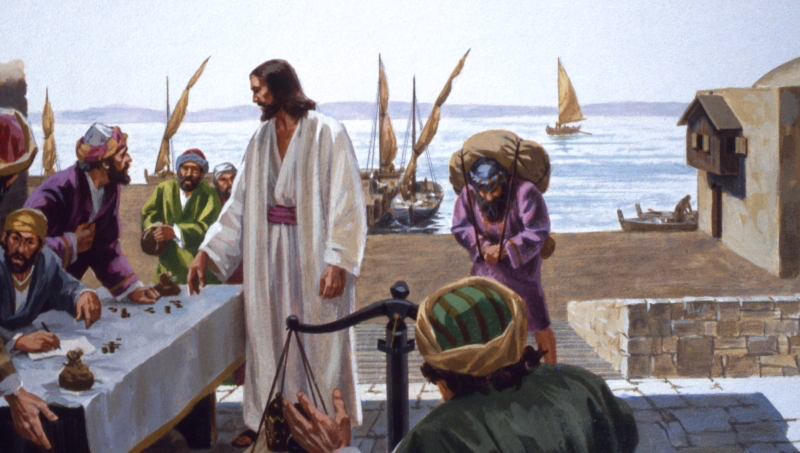
They went across the lake to the region of the Gerasenes. When Jesus got out of the boat, a man with an impure spirit came from the tombs to meet him. This man lived in the tombs, and no one could bind him anymore, not even with a chain. For he had often been chained hand and foot, but he tore the chains apart and broke the irons on his feet. No one was strong enough to subdue him. Night and day among the tombs and in the hills he would cry out and cut himself with stones. When he saw Jesus from a distance, he ran and fell on his knees in front of him. He shouted at the top of his voice, “What do you want with me, Jesus, Son of the Most High God? In God’s name don’t torture me!” For Jesus had said to him, “Come out of this man, you impure spirit!” Then Jesus asked him, “What is your name?” “My name is Legion,” he replied, “for we are many.” And he begged Jesus again and again not to send them out of the area. A large herd of pigs was feeding on the nearby hillside. The demons begged Jesus, “Send us among the pigs; allow us to go into them.” He gave them permission, and the impure spirits came out and went into the pigs. The herd, about two thousand in number, rushed down the steep bank into the lake and were drowned. Those tending the pigs ran off and reported this in the town and countryside, and the people went out to see what had happened. When they came to Jesus, they saw the man who had been possessed by the legion of demons, sitting there, dressed and in his right mind; and they were afraid. Those who had seen it told the people what had happened to the demon-possessed man—and told about the pigs as well. Then the people began to plead with Jesus to leave their region. As Jesus was getting into the boat, the man who had been demon-possessed begged to go with him. Jesus did not let him, but said, “Go home to your own people and tell them how much the Lord has done for you, and how he has had mercy on you.” So the man went away and began to tell in the Decapolis how much Jesus had done for him. And all the people were amazed. – Mark 5:1‭-‬20

I think these people spend more time on or near the lake than anywhere else. In this passage they are again traversing the lake to the region of the Gerasenes. Here they encounter someone who could best be described as a “messy person” with all sorts of problems. This man with “an impure spirit” had been exiled to the tombs, apparently because no one wanted him around. He was clearly a scary person for those who came into contact with him. He was apparently very strong and powerful as he could not be chained or subdued. He also seemed to know that he was somehow “broken” and was also cutting himself with stones. I think in our modern society this man may have been confined to a mental institution and medicated. That is not to imply that people with mental illness are possessed with evil spirits, but this man’s soul was clearly broken. It was apparently diluted with demons.

It seems that the soul of the man had been diluted or replaced by the impure spirits. So much so that when asked what his name was the impure spirits answered for the man, “my name is legion – for we are many”. The impure spirits plead with Jesus and He sends them out of the man into a herd of pigs who promptly commit suicide by running into the lake and drowning. This was probably both surprising and strange for the people tending the pigs. They had just lost their livelihood to this exorcism of demons for a man that they probably had little care or concern for in the first place. But Jesus cared for this man who had been cast aside and left for dead by his own community. The community cared for the lost pigs, Jesus cared for the lost soul they had exiled.

They came and saw this man miraculously freed of his demons and instead of being thankful they were afraid. What were they afraid of? Was it merely a fear of losing pigs? Were they afraid that this man was only faking it and was not really healed? Were they afraid of the power that this Man who healed him wielded over demons? Faced with such evidence they were left with only two conclusion: 1) this Man commanded demons because He was God; or 2) this man commanded demons because he was the “head demon”. It seems they chose the latter based on their actions.

Then something happens that left me a little confused, and at least initially, disappointed. This man who had been healed wanted to go with Jesus in the boat and Jesus said no. It seems odd that Jesus would refuse someone who wanted to follow Him, but I suppose there was a limit to the number of people that could fit in the boat and I am not sure even if there was room Jesus would have allowed him to go with them.

This seems harsh on this man so recently healed, but Jesus has a plan for him. He knows that returning to his own people and sharing about the one who healed him was more valuable that another disciple in the boat. He wanted this man to thrive where he was planted and to provide his unique witness to God’s power among the people he knew. His transformed spirit could remain connected no matter where he was if that is what he chose.

So what is the take home message here? I think there are several things I have learned: 1) no one is lost beyond hope, no matter how broken or “diluted” their soul seems to be; 2) we should all be wary of “soul dilution” in big or small ways; 3) we should rejoice and not be afraid when we see God working in miraculous ways in our lives and the lives of others; 4) Following God can look different for different people and that is OK; 5) God may need us to be a witness to those we know at the expense of following Him in more overt ways like religious practices and traditions; and 6) bearing witness of our changed lives to other people is more important than “riding around in the boat” with Jesus.

Prayer: God help us to reach out to those around us with love and understanding, even when they are scary and messy.

Posted in Christianity, Following God, Forgiveness, Healing, Impure spirits, Mark, Miracles, Sharing the Gospel, The Nature of God, Trusting God | Tagged , , , , , , | 4 Comments

Who is this?

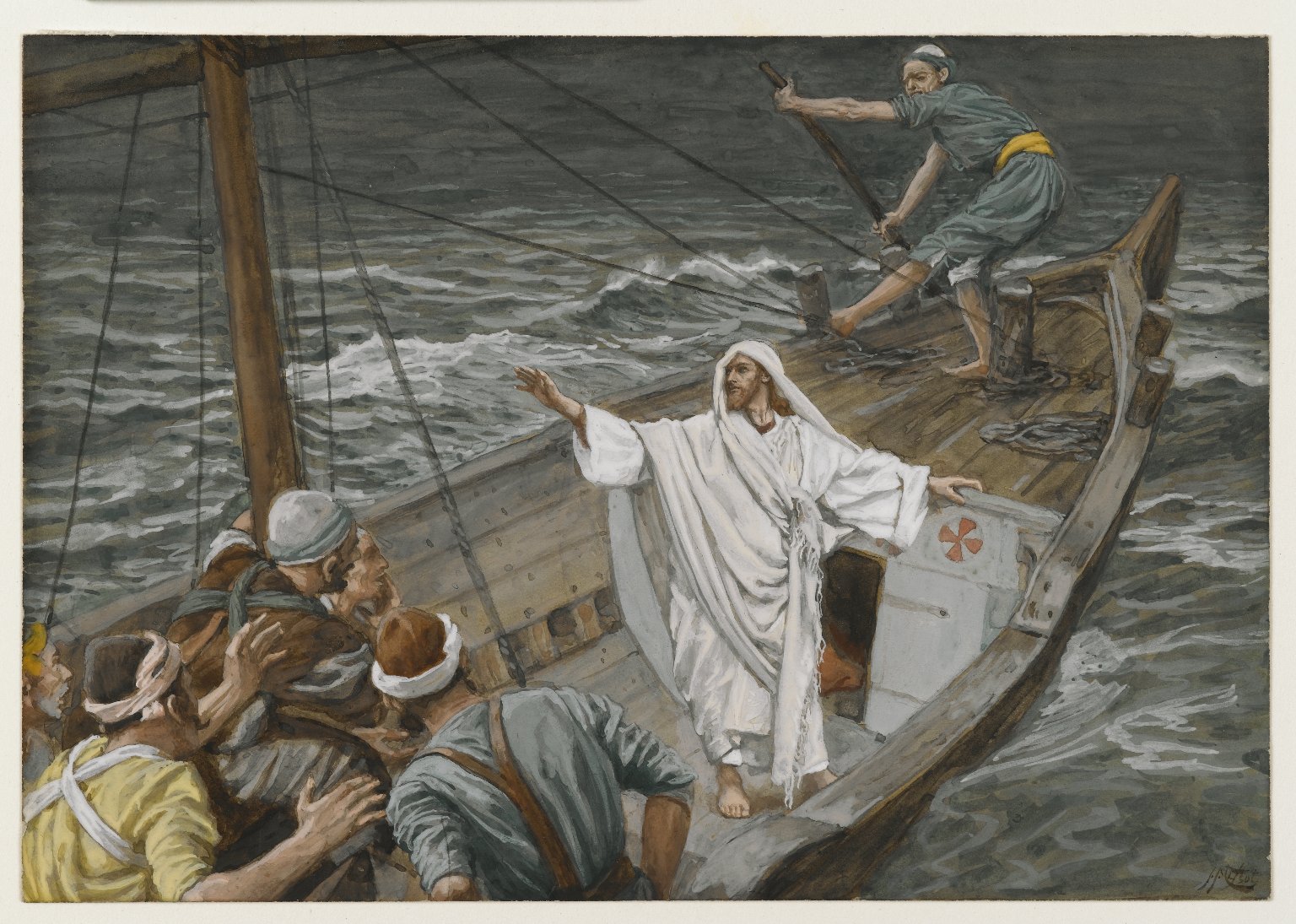
That day when evening came, he said to his disciples, “Let us go over to the other side.” Leaving the crowd behind, they took him along, just as he was, in the boat. There were also other boats with him. A furious squall came up, and the waves broke over the boat, so that it was nearly swamped. Jesus was in the stern, sleeping on a cushion. The disciples woke him and said to him, “Teacher, don’t you care if we drown?” He got up, rebuked the wind and said to the waves, “Quiet! Be still!” Then the wind died down and it was completely calm. He said to his disciples, “Why are you so afraid? Do you still have no faith?” They were terrified and asked each other, “Who is this? Even the wind and the waves obey him!” – Mark 4:35‭-‬41

This is one of those passages that are in danger of losing their meaning in the fog of familiarity,but it starts out with a detail I never noticed.  The disciples take Jesus “just as he was” in the boat. I am not sure what this means, but it sounds like Jesus was ready for a nap after His long day of healing and crowds, perhaps that is why He ends up sleeping in the boat.  It seems to imply that taking Jesus some other way was possible or had been done previously.  This is an interesting riffle worthy of a little scouting around to see if there is a hidden well here.

It seems like Jesus has been misunderstood or misrepresented from His birth.  Was He a great King? Was He God?  Was He a man?  Was He Elijah reincarnated?  Was He John the Baptist reincarnated?   Was He the Messiah?  Was He the King of the Jews?  So for the disciples to take Jesus “just as He was” may be harder than it seems.  It turns out the disciples were just as confused as the rest of us and by the end of their ordeal in the lake, they will be asking “who is this?” too.

I also never noticed that writer makes a point of mentioning that “there were also other boats with Him.”  Perhaps this is to reinforce the idea that the salvation and “storm calming” that Jesus offers is for all those who choose to be part of Jesus’ “flotilla”, not just His close disciples.  The “other boats” are all those who choose to faithfully follow the way of Jesus – we all must choose sailor or savior,

Returning to this dramatic scene, Jesus is napping in the back of the boat and all of a sudden squall came up and the lake became a scary and dangerous place to be with wind and waves threatening to sink the boat.  They wake Him and ask “Teacher, don’t you care if we drown?” Interestingly, their focus is on themselves and their physical well being.  They were afraid of drowning and dying.  Jesus says to the wind and waves “Quiet! Be still!” and they obey and all is calm, except the disciples who seem to be more freaked out by Jesus’ power than the power of the storm.

The lack of calm in the hearts and minds of the disciples is a feature not a flaw.  Jesus makes it clear that what is going on inside of these disciples is way more important than drowning and dying, “Why are you so afraid? Do you still have no faith?”. This is a heart issue, a collision between the secular and the spiritual.  The “Window Between the Worlds” just allowed a wave to crash right into the lives of the disciples and they are terrified.  What they need is soul-preserver rather than a life-preserver.  Were they more afraid of the storm or their Savior?  Were they also amazed, appreciative, and thankful? Are we amazed, appreciative, and thankful amidst life’s storms?  I know I cannot always manage this level of faith.

This brings us back to where we started,  “Who is this? Even the wind and the waves obey him!”  Jesus is misunderstood even by those who are with Him and should know Him.  We should be surprised that He is still being misunderstood by many today.  Jesus, and God, seem to want us to be a bit confused so that we seek answers and knock on doors.  He is seeking us while we are seeking Him.  Uncertainty and ambiguity are not necessarily bad things if they drive us to pursue Jesus more passionately.  Sometimes questions are more powerful than answers, as long as we are not afraid of the answer when we find Him.

Prayer: God help us to pursue You with passion and persistence.

Posted in Christianity, Following God, God's Love for Us, Jesus, Mark, Messiah, The Earthly Realm, The Nature of God, The Spiritual Realm, Trusting God | Tagged , , , , , , | 1 Comment

Lessons by the Lake

Again Jesus began to teach by the lake. The crowd that gathered around him was so large that he got into a boat and sat in it out on the lake, while all the people were along the shore at the water’s edge. He taught them many things by parables, and in his teaching said: “Listen! A farmer went out to sow his seed. As he was scattering the seed, some fell along the path, and the birds came and ate it up. Some fell on rocky places, where it did not have much soil. It sprang up quickly, because the soil was shallow. But when the sun came up, the plants were scorched, and they withered because they had no root. Other seed fell among thorns, which grew up and choked the plants, so that they did not bear grain. Still other seed fell on good soil. It came up, grew and produced a crop, some multiplying thirty, some sixty, some a hundred times.” Then Jesus said, “Whoever has ears to hear, let them hear.” – Mark 4:1‭-‬9

I do not remember noticing before how often Jesus did His teaching by the lake.  It makes me wonder what it was about this location that made it such a good location for learning about the Kingdom of God and this new way of knowing God.  A few passages back I reflected on how the shore of the lake is like a window between worlds, and that Jesus is a similar spiritual “window”.  He is the bridge and the One River we must cross at the same time – the lion and the lamb.

Interestingly, the crowd gets so large that Jesus needs to leave the land for His teaching.  He boards a boat and makes the lake itself his lectern. On one level this may be a mere logistical necessity to allow Him to get His message out amidst a chaotic crowd, but I wonder if we return to our “window between the worlds” metaphor whether there may be deeper water here.  Jesus teaching from the lake is placing Himself outside the worldly fray to relay spiritual truths from “outside” the window. 

He used a parable, a word picture, to teach the crowd to “see” the unseen spiritual reality that is the Kingdom of God all around them.  His story of sowing and seeds clearly has deep spiritual meaning and insights into the undiscovered country for “Whoever has ears to hear”.  The imagery and language here about plants and seeds is reminiscent of language in the old testament.  All the way back in Deuteronomy 32:1-2 God was talking about rain on tender plants, and there are many references to planting oneself by the river so that we can thrive and remain connected to spring of Living Water.

So how do we ensure that we are listening with ears that can hear when God speaks in our lives?  I am not sure “hearing aids” in the form of religious traditions or alter decorations are the answer.  The inner attentiveness that Jesus is talking about here is a soul sense not a physical sense like hearing.  Proper spiritual “hearing” has more to do with posture and perspective than religious rigor. God wants us to channel our hearts, our souls, in such a way that when he whispers we are ready and able to hear Him.

Prayer: God give us ears to hear and eyes to see the unseen so that we can be part of your plans for our lives.

Posted in Christian Community, Christianity, Jesus, Mark, Nature, religion, The Earthly Realm, The Nature of God, The Spiritual Realm | Tagged , , , , | 16 Comments

One-Way Mirror

Jesus withdrew with his disciples to the lake, and a large crowd from Galilee followed. When they heard about all he was doing, many people came to him from Judea, Jerusalem, Idumea, and the regions across the Jordan and around Tyre and Sidon. Because of the crowd he told his disciples to have a small boat ready for him, to keep the people from crowding him. For he had healed many, so that those with diseases were pushing forward to touch him. Whenever the impure spirits saw him, they fell down before him and cried out, “You are the Son of God.” But he gave them strict orders not to tell others about him. – Mark 3:7‭-‬12

Jesus is teaching by the lake again and apparently attracting quite a crowd. Clearly what he was saying was something people wanted to hear. Or at least they were impressed by His actions healing people and forgiving their sins. Jesus was aware of the desire of the crowd to be near Him because he called up a boat from which to teach.  What is not clear to me is whether they were crowding around Him to learn and grow or if they simply wanted something He could give them.  Were they coming for the physical healing or the new life and forgiveness that He offered?


It seems like it is easier to seek healing than redemption.  Physical healing is immediate and visible to those around us in a tangible way.  Redemption is a “slow burn” transformation that may take our entire lives to fully live out.  That is not to say that we must earn our salvation.  Redemption is freely given, but the receiving of this redemption is what takes some effort on our part.  Why is it hard to accept this free gift offered by God?  I think there is a clue in the last part of this  passage. There are “impure spirits” ready and willing to convince us that God does not really mean to forgive us – no matter what he says.


C.S. Lewis explored these “impure spirits” in a book called the Screwtape Letters.  The book is a dialogue between tempters assigned to lead people away from God and the forgiveness He offers.  This is rarely done in an obvious or overt way.  The apprentice demons in this fictional account are given advice how to use all of our strengths and weaknesses to lead us away from God.  Everything from a person singing out of tune in the next pew at church to tantalizing moral temptations for our souls.  It seems there are both angels and demons at work in the spiritual realm in a battle for our souls and the demons know Jesus is their kryptonite.  It is not clear why Jesus wants them to be silent about His identity.  Perhaps he wants faithful followers rather than scared people seeking refuge rather than redemption.

I do find it interesting that even the “impure spirits” fell down before Him.  This is something that many people have difficulty doing, including myself, before I decided to follow the way of Jesus.  Why is it that these “impure spirits” are able to see something that it is difficult for us to see?  I think it comes down to the fact that they inhabit the same spiritual space and we are separated from this reality by a veil which obscures the spiritual realities that surround us.   There was no such veil between Jesus and these impure spirits.  They could see Him and He could see them.  I do believe that God sees us, but we are often behind a one-way mirror and see only our own reflection when we are trying to see God.  The trick to seeing God is breaking the mirror so we see Him rather than just ourselves.


Prayer: God help us to break the mirror of our self-focus so we can see You and accept the grace You freely offer.


Posted in Angels, Christianity, Faith, Following God, Forgiveness, Free Will, Jesus, Matthew, The Earthly Realm, The Spiritual Realm | Tagged , , , , | 2 Comments

Levi by the Lake

Once again Jesus went out beside the lake. A large crowd came to him, and he began to teach them. As he walked along, he saw Levi son of Alphaeus sitting at the tax collector’s booth. “Follow me,” Jesus told him, and Levi got up and followed him. While Jesus was having dinner at Levi’s house, many tax collectors and sinners were eating with him and his disciples, for there were many who followed him. When the teachers of the law who were Pharisees saw him eating with the sinners and tax collectors, they asked his disciples: “Why does he eat with tax collectors and sinners?” – Mark 2:13‭-‬16

Jesus is once again teaching by the lake, one of His favorite classrooms.  Jesus clearly has something interesting to say that is attracting a large crowd, or perhaps some were there just to see whether the religious leaders would rattle their rattles again as they did with John by the Jordan.  Jesus singles out an unlikely follower, a tax collector of all people named Levi.  Levi was in his “office” or booth in this case.  He probably had stacks of coins scattered in front of him from the taxes he had collected that day.   

Jesus simply says “follow me”.  The same invitation He gives to all those who have eyes to see and ears to hear.  Levi apparently did not ask where, or for how long.  He simply picked up his things and followed.  Levi also did not say why me Jesus?  I am sure part of him was thinking why does this man care about me, a wretched tax collector.  But instead of getting wrapped up in self-doubt he simply took Jesus at face value and followed this man who seemed to know here He was going.

Jesus was quick to include Levi in his life by dining at his house with other “many tax collectors and sinners”.  It is not really clear who the “sinners” were and what they did that was sinful, but Jesus made it clear that it is not important where you came from only where you are going, as long as you are faithfully following Him.  The religious leaders were not happy with His choice of dinner companions and asked the question “Why does he eat with tax collectors and sinners?”  Although this question came from a place of superiority and judgement it is an interesting question. 

Why did Jesus invest His time with people who on some level appeared to be ignoring God and religious practices?  I don’t think Jesus wants us to ignore God or necessarily ignore traditions and religious practices.  So why this focus on the sinners and tax collectors?  I think Jesus wants curious God seekers willing to follow Him without reservation.  The religious leaders were trained professional “followers” of God with years of study and practice under their belt.  Unfortunately, their training was too heaving on the leading and not so much on the following.

The take home message for me in this passage is that following is much harder than leading, especially when the One you are following asks you to go places that may be uncomfortable, or even scary at times.  Like for example sharing food with people that you have been trained your whole life to regard as human scum not worthy of your time.  Jesus was all about breaking down barriers and building community – not gated communities with membership requirements, but open communities ready to take anyone in that is willing to follow.

Prayer: God help us to be open to all curious God-seekers so that we can build communities ready and willing to follow You.

Posted in Christian Leadership, Christianity, Discernment, Following God, Jesus, Mark | Tagged , , , , | 1 Comment

A Window Between the Worlds

Fishing boat along the Atlantic Ocean in Ghana “Where to find comfort”

As Jesus walked beside the Sea of Galilee, he saw Simon and his brother Andrew casting a net into the lake, for they were fishermen. “Come, follow me,” Jesus said, “and I will send you out to fish for people.” At once they left their nets and followed him. When he had gone a little farther, he saw James son of Zebedee and his brother John in a boat, preparing their nets. Without delay he called them, and they left their father Zebedee in the boat with the hired men and followed him. – Mark 1:16‭-‬20

Jesus seems to do a lot of his business by the lake. I am with Jesus in this respect.  Walking along the lake is one of the most peaceful activities I can think of. I am fortunate enough to live close to Lake Michigan which has some of the most beautiful beaches in the world.  There are days when I have the entire beach to myself which makes the introvert in me happy.  Maybe Jesus was an introvert too, I do not know.

Quiet Lake in Iceland

So what is it that is special about lakes? On one level they are merely a collection of water all in one place. But there is something magical about them.  The way that they change with the weather – one minute like a mirror and the next minute churning with waves and uncertainties.  I guess in this respect a lake is a little bit like life, especially at the moment with the pandemic and all the uncertainty that it has brought.  Last January was a quite pond and now we are in the midst of a raging storm of waves and breakers.

In the passage Jesus is walking along the lake  He comes upon some fishermen, Simon and Andrew, at work catching fish along the lake.  A modern day version of this would be Jesus walking through an office building, passing by a cubicle and asking the people in the cubicle to follow him.  I can just imagine the people in the cubicle putting down their papers closing down their computer and walking away forever from the job they were previously doing. This would be an odd and unexpected scene.

I am not sure I have the faith to accept that kind of a call from Jesus if He walked into my office.  Yet that is what He calls us to do.  In some ways it is even harder for us because He walks into our lives not making footprints in the sand on the beach, but with subtle whispers to our spirit that are easily misinterpreted or missed unless we have very sensitive spiritual “whiskers.

There’s something else interesting about lakes. Lakes represent two different worlds adjacent to one another – the land with plants,  soil, rocks, and terrestrial creatures; and the water with fish, aquatic plants, and other organisms that can only live in water. The shore of the lake where Jesus is walking represents a frontier of sorts between these two worlds.

In a way Jesus represents a bridge between two worlds, this land of Oblivion and the undiscovered country separated by a River that no one can cross. These young men Jesus meets, sweaty and smelling of fish, have sensed something out of the ordinary – a window between the worlds walking down the shore. They may not fully understand what they’re seeing but they know that it’s something unique and compelling and without hesitation they take the opportunity to follow Jesus to find out more.

This is where this passage hits home for me. When I consider my response when I get a glimpse of this “window between the worlds” that is Jesus am I ready to follow without question?  Do I allow the concerns of the day and the complexity of my life to keep me from “walking on water”?  If I am honest the answer is yes, many things have gotten between me and following Jesus at times, perhaps I’m not alone in this. I think rather than become disillusioned and discouraged when we fail, God simply wants us to start each day looking for windows.

Prayer: God give me the eyes to see and the boldness to follow You wherever You may lead me today.

Posted in Christianity, Jesus, Love for the Lost, Mark, Obedience, reconciliation, Redemption, The Earthly Realm, The Spiritual Realm | Tagged , , , | 30 Comments

John by the Jordan

And so John the Baptist appeared in the wilderness, preaching a baptism of repentance for the forgiveness of sins. The whole Judean countryside and all the people of Jerusalem went out to him. Confessing their sins, they were baptized by him in the Jordan River. John wore clothing made of camel’s hair, with a leather belt around his waist, and he ate locusts and wild honey. And this was his message: “After me comes the one more powerful than I, the straps of whose sandals I am not worthy to stoop down and untie. I baptize you with water, but he will baptize you with the Holy Spirit. At that time Jesus came from Nazareth in Galilee and was baptized by John in the Jordan. Just as Jesus was coming up out of the water, he saw heaven being torn open and the Spirit descending on him like a dove. And a voice came from heaven: “You are my Son, whom I love; with you I am well pleased.” – Mark 1:4-‬11

This passage “marks” my entry into the book of Mark.  I have studied the book of Mark several times with Bible studies and on my own.  As I recall one of the recurring themes in the book of Mark is that Jesus reveals the arrival of God’s Kingdom on earth slowly and as one would reveal a secret. It will be interesting to view this book through my current watery “Walking on Water” lens. Perhaps there will be more hidden springs than I found in Matthew.

I reflected on the essence of this passage when I floated into the book of Matthew almost two years ago when I wrote, Signposts of a Savior about Matthew 3:1-6.  One of the differences I noticed when I reread Matthew is the order of the explanation of baptism and the details about some powerful detractors provided by Mark. In Matthew there was an interesting interlude where John called the religious leaders a brood of vipers before explaining baptism and its meaning. Then Matthew finally arrived at the actual baptism of Jesus in Matthew 3:13-17. So what took Matthew 17 chapters to describe and explain takes Mark 7 chapters here.

The focus seems to be placed squarely on the savior, baptism, and its meaning. Certainly less focus on the religious leaders and their role. The essence of water baptism is described the same here as in Matthew “I baptize you with water, but he will baptize you with the Holy Spirit.” The Jordan River is providing the water to perform this symbolic transformation from an old life to a new one through repentance – a fundamentally spiritual change.

I suppose this act of John using “dirty” river water to essentially forgive sins was what stirred up the religious leaders that Matthew describes as a “brood of vipers”.  Their “rattles were buzzing” because someone was disturbing their comfortable den of dos and don’ts.  People were finding a way to God that did not require the temples and traditions they had built their lives upon.

Jesus shows up to be baptized and without much explanation John baptizes God’s Son in the dirty river water of the Jordan River.  The focus is on the Holy Spirit and the Role the Holy Spirit plays in the conversion process that begins with the baptismal bathing.  We see all three manifestations of God here at once, Father, Son, and Holy Spirit.

This glimpse of God in three forms at once does not happen often so it is probably worth a little pondering.  I have reflected several times about the elemental nature of God and how God is like water.  We are not too surprised when we see water in three forms: ice, vapor, and liquid water so why is it so surprising to see God in three forms at once?  Perhaps because the form taking here is largely a spiritual one rather than a physical one.  God is present in both the spiritual realm and the earthly realm at the same time.  How is this possible?  I do not know.  

What seems important here is that God thinks the symbolic act of baptism is a really important spiritual act that He participated in Himself.  That is enough for me.

Prayer: God help us to be washed clean and made new through baptism. 

Posted in baptism, Christianity, Jesus, Mark | Tagged , , | 6 Comments

Rabbit Trail #15 Obsession with Oblivion

Well I finally made it through the book of Matthew. In honor of floating by this landmark I decided it was time for a Rabbit Trail. Something that the current COVID-19 pandemic has made abundantly clear is that people have very different ideas about what may or may not be beyond this physical existence. Is there a heaven? Is there a hell? What comes after this Land of Oblivion in which we live? Is there an undiscovered country to discover?

There are so many movies, books, songs, art pieces and other creative works that explore what comes after this life here on earth. One of my favorites movies about this subject is called “What Dreams May Come” starring Robin Williams. This is definitely a departure from his comedic roles. This strikingly beautiful movie is all about choices, good and bad; and how choices shape our journey here on earth and perhaps in whatever comes next. I don’t necessarily agree with all the theology of the movie, but it is thought provoking none the less. Without ruining the movie for those who have not seen it I will say that despite some poor choices and incredible challenges the endpoint is a message of hope. It is clear from this movie that the choices we make have consequences that shape our lives. I think we would all agree that this is true. It is just difficult to know, or sometimes understand, how our choices ripple through time and space while we are making them.

I happen to believe there is an undiscovered country to discover across that great river no one can cross we call death. I have been reading some poems by Alfred Lord Tennyson recently and he explored the idea of “crossing over” in a poem entitled “Crossing the bar

Sunset and evening star,
      And one clear call for me!
And may there be no moaning of the bar,
      When I put out to sea,

   But such a tide as moving seems asleep,
      Too full for sound and foam,
When that which drew from out the boundless deep
      Turns again home.

   Twilight and evening bell,
      And after that the dark!
And may there be no sadness of farewell,
      When I embark;

   For tho’ from out our bourne of Time and Place
      The flood may bear me far,
I hope to see my Pilot face to face
      When I have crost the bar.

– Alfred Lord Tennyson

I am not sure to what extent Tennyson believed in God or was able to articulate who or what his “pilot” was, but he does seem to allude to the idea that there is someone or something piloting the boat that we are all riding on as we navigate our lives here on earth. I remain convinced that this pilot is God, but I will concede that the objective proofs of this are mainly to be found in my own heart and soul.  But isn’t this true of other equally important aspects of our lives like love for one’s spouse, children, or family? Can I prove objectively that love exists outside my own heart and soul? I am not sure that is possible either but the world would surely be a darker place without it.

Tennyson also alludes to “the boundless deep”. In some ways this sounds like the secret place from which we all originate described in Psalm 139:1-18.  This sea of water is both the origin and the destination for our souls – part of the spiritual cycle that defines the landscape of our souls.

Another amazing picture of the undiscovered country is a book by C.S. Lewis call the Great Divorce. In this fictional musing Lewis envisions a metaphysical bus that arrives in the “grey town” to pick up those who have “crossed over” (died) to go on what is essentially a field trip to heaven. The choice to board the bus is up to each person and once on the bus they make a miraculous metaphysical journey and discover that the entire world we have called home is unsubstantial compared to the radiant reality of heaven.

The bus riders arrive in “heaven” and are faced with another choice, get off the bus and explore this strange, and as it turns our initially painful, world or get back on the bus and return to the comfortable coffin that is the grey town. Those that make the choice to get off the bus are met by people they know from their life on earth. These “guides” help the “ghosts” to become more solid and so they can remain in heaven. It turns out that most of these “ghosts” are choosing to hold onto some aspect of their existence which is keeping them from heaven. These blinders and shackles must be removed by those who wear them before they can see and experience heaven.

So back to my original question, why are we obsessed with oblivion?  Why do we cling to earth even when heaven is in our reach?  Perhaps it is because we are all cave dwellers who have become so comfortable and adapted to living here in the spiritual “dark” that we are afraid of the adjustments that might be required for us to dwell in the light.  Jesus made it clear that some radical changes are necessary for all of us who seek to faithfully follow Him.  These changes will require sacrifice and sagacity if we are to be ready when our bodies and souls have “crost the bar”.


Posted in Christianity, Death and Dying, Eddying Out, Heaven, Hell, Rabbit Trails, The Earthly Realm, The Spiritual Realm | Tagged , , , , | 5 Comments

Wishy Washy Hand Washing

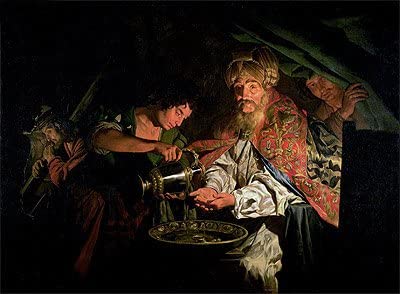
“What shall I do, then, with Jesus who is called the Messiah?” Pilate asked. They all answered, “Crucify him!” “Why? What crime has he committed?” asked Pilate. But they shouted all the louder, “Crucify him!” When Pilate saw that he was getting nowhere, but that instead an uproar was starting, he took water and washed his hands in front of the crowd. “I am innocent of this man’s blood,” he said. “It is your responsibility!” All the people answered, “His blood is on us and on our children!” – Matthew 27:22‭-‬25

Here at the end of the book of Matthew we see water being used in a less than admirable way by the Roman Governor Pontious Pilate. This man of decision has a sticky problem on his hands and as we will see he wants nothing more than to simply wash his hands of it. The people (religious leaders) want Jesus crucified, Pilate wants to find a way out of this decision. He must know in his heart that Jesus is innocent, he wants desperately to wash his hands of the whole affair. Ultimately I think Pilate is thinking about how he can please the most people with his decision. He likely places his trust in the Roman system of government rather than God.

The expression to “wash our hands” of something has become a common way to talk about ridding ourselves of responsibility for a complex or hard issue in our lives. This is the opposite of what Jesus did. He took on hard issues like lepers, paralytics, blind, and deaf people without giving up. All of these messy people with physical flaws were precious to Him. Pontious Pilate clearly does not want to get his hands dirty with this seemingly messy man and his followers.

It is reassuring that Jesus took on messy people and problems because although we may not all have obvious physical flaws we are all flawed followers in need of a savior. I think deep down Pilate realizes that he is flawed too, but he is too cowardly to admit it to this unruly crowd. Lest we all look down our nose too hard at Pilate I think we may need to look in a mirror and be honest about ways that we are unwilling to stand up for Jesus and the messy people He championed. I know I have averted my eyes as I walk past a homeless person or person in need to avoid getting mired in their messiness.

I have failed to champion the weak when I should have been standing up for them and doing what I could to care for them. Why is it so easy to walk on by and “wash our hands” of these people and problems? I think it is because the solutions are often complex, unclear and hard. What is the solution to a homeless, drug-addicted, person living in a tent under a highway bridge? I think Jesus’ answer would be simple, love and care for them, full stop.

I think part of the confusion complexity, and difficulty comes from knowing what “loving and caring” look like. This is something many of Jesus’ early followers struggled with too. Perhaps if we start with prayerful loving and caring some of the other problems may solve themselves? I do not know.

Pilate’s answer of a little hand washing to keep people’s messiness from getting all over us is clearly not the line that God would have us choose. I hope as I get older and wiser I am able to get more comfortable with a little messiness. Maybe the only way to get clean is to become more comfortable with a little dirt now and then without feeling compelled to wash our hands.

Prayer: God help us to learn how to help those in need without feeling the need to wash our hands afterwards.

Posted in Christianity, Free Will, God's Love for Us, Jesus, Matthew, Messiah | Tagged , , | 1 Comment

Blasphemy

Those who had arrested Jesus took him to Caiaphas the high priest, where the teachers of the law and the elders had assembled. 58 But Peter followed him at a distance, right up to the courtyard of the high priest. He entered and sat down with the guards to see the outcome. The chief priests and the whole Sanhedrin were looking for false evidence against Jesus so that they could put him to death. But they did not find any, though many false witnesses came forward. Finally two came forward and declared, “This fellow said, ‘I am able to destroy the temple of God and rebuild it in three days.’” Then the high priest stood up and said to Jesus, “Are you not going to answer? What is this testimony that these men are bringing against you?” But Jesus remained silent. The high priest said to him, “I charge you under oath by the living God: Tell us if you are the Messiah, the Son of God.” “You have said so,” Jesus replied. “But I say to all of you: From now on you will see the Son of Man sitting at the right hand of the Mighty One and coming on the clouds of heaven.” Then the high priest tore his clothes and said, “He has spoken blasphemy! Why do we need any more witnesses? Look, now you have heard the blasphemy. What do you think?” “He is worthy of death,” they answered. – Matthew 26:57-‬66

As we approach the end of the book of Matthew we begin to see the religious leaders at their finest.  They are so concerned with doing what is “right” they miss the Savior right in front of them….hmm that is something to think about isn’t it.  It is so easy to become focused on doing rather than being.

The water reference here is to the Son of Man “coming on the clouds of heaven”.  This hearkens back to a time when God’s only interaction with His people was in the form of a cloud.  There were so many references to clouds in the old testament.  There were clouds in the temple, clouds so high above us, and more recently other references in Matthew of God coming on the clouds.  Clearly there is something special about God and clouds.  Perhaps this is not too surprising with the many ways that God is like water.

Those who had arrested Jesus took him to Caiaphas the high priest, where the teachers of the law and the elders had assembled. But Peter followed him at a distance, right up to the courtyard of the high priest. He entered and sat down with the guards to see the outcome. The chief priests and the whole Sanhedrin were looking for false evidence against Jesus so that they could put him to death. But they did not find any, though many false witnesses came forward.

Finally two came forward and declared, “This fellow said, ‘I am able to destroy the temple of God and rebuild it in three days.’ ” Then the high priest stood up and said to Jesus, “Are you not going to answer? What is this testimony that these men are bringing against you?” Finally the high priest has had enough of this upstart from Galilee and he tears his clothes and says, “He has spoken blasphemy! Why do we need any more witnesses? Look, now you have heard the blasphemy. What do you think?”.

Blasphemy is such an interesting word. According to Merriam Webster’s it means “the act of insulting or showing contempt or lack of reverence for God”; “the act of claiming the attributes of a deity”; or “irreverence toward something considered sacred or inviolable”. Jesus has been brought before the religious leaders to defend his statements and actions. They can’t find any real basis for convicting Him so they try to trap Him. Ironically, they are engaging in exactly the offense which they finally charge Him with – blasphemy.  They are playing god while He was standing in front of them, pretty precarious position if you ask me.

We all know the rest of this story.  The religious leaders decide that they better get some cover by taking Jesus before the Roman leaders so that their persecution is legitimized and Pilate will weasel out while washing his hands of the whole thing. 

The take home message here for me is to be very careful playing God because you never know when He might be standing right in front of you.

Prayer: God help us to see those who are in front of us with compassion and care.

Posted in Christianity, Following God, Matthew, religion | Tagged , , | Leave a comment