Difficult Roads

View from the top of South Sister in Oregon

View from the top of South Sister in Oregon

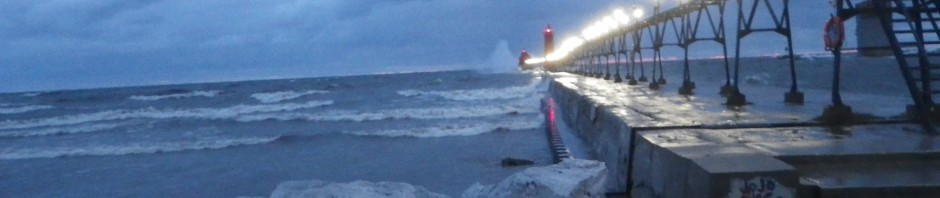
When Pharaoh let the people go, God did not lead them on the road through the Philistine country, though that was shorter. For God said, “If they face war, they might change their minds and return to Egypt.”  So God led the people around by the desert road toward the Red Sea.  The Israelites went up out of Egypt ready for battle.  Moses took the bones of Joseph with him because Joseph had made the Israelites swear an oath. He had said, “God will surely come to your aid, and then you must carry my bones up with you from this place.”  After leaving Sukkoth they camped at Etham on the edge of the desert.  By day the LORD went ahead of them in a pillar of cloud to guide them on their way and by night in a pillar of fire to give them light, so that they could travel by day or night.  Neither the pillar of cloud by day nor the pillar of fire by night left its place in front of the people. – Exodus 13: 17-22

The Israelites are guided by God by a pillar of cloud by day and fire by night. The desert was largely devoid of water but they were nearing the Red Sea. They had to rely on God for his guidance and provision through the pillars of fire and cloud. This was their first experience as a people being truly led by God. They needed practice following God through difficult and trying situations (the desert). They also needed to rely on God for water and food.  God was with them.

God led them on a more difficult road, because he knew their faith in him was tenuous and if given the challenges of a war with the Philistines they might just backslide back to Egypt.  God intentionally took the Israelites the long way around.  How many times does it seem like we are on a “difficult road” only to learn later (if we have the eyes to see) that God needed us to walk that difficult road for a reason.  The shortest path is not always the way God needs and wants us to go.

I am reminded of a hike I did a number of years ago with two friends up South Sister in Oregon.  I was probably not in the best shape, but it was a hard hike that pushed me to my limits physically and mentally.  As we neared the top we had to hike up through a loose rock called scoria.  For every step forward you would slide about a half step back making progress very slow and frustrating.  We eventually made the summit and it was totally worth the difficult road to the top.

The experience on South Sister taught me a couple of things about difficult roads: 1) difficult roads can lead to amazing vistas and summits; 2) our progress on a difficult road can sometimes make us feel like we are standing still or even sliding backward; 3) difficult roads are always easier if you have friends along to encourage you; 4) although God did not physically show up and carry me up the mountain, he was there and carrying me as much as I was carrying myself; 5) when embarking on a difficult road, bring God along.

Prayer: God help me to rely on your provision in my life, even when I am walking through dry, desert, times when it seems like you are far away.

Posted in Christian Community, Exodus, Life Together | Tagged , , , , , , , , | Leave a comment

Remember…

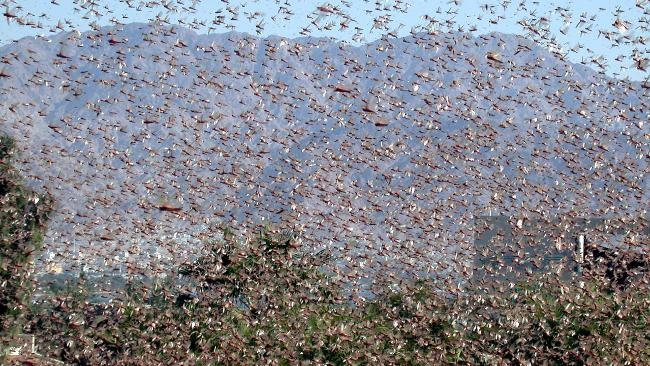
Then the LORD said to Moses, “Go to Pharaoh, for I have hardened his heart and the hearts of his officials so that I may perform these signs of mine among them that you may tell your children and grandchildren how I dealt harshly with the Egyptians and how I performed my signs among them, and that you may know that I am the LORD.”  So Moses and Aaron went to Pharaoh and said to him, “This is what the LORD, the God of the Hebrews, says: ‘How long will you refuse to humble yourself before me? Let my people go, so that they may worship me.  If you refuse to let them go, I will bring locusts into your country tomorrow. They will cover the face of the ground so that it cannot be seen. They will devour what little you have left after the hail, including every tree that is growing in your fields.  They will fill your houses and those of all your officials and all the Egyptians—something neither your parents nor your ancestors have ever seen from the day they settled in this land till now.’” Then Moses turned and left Pharaoh.  Pharaoh’s officials said to him, “How long will this man be a snare to us? Let the people go, so that they may worship the LORD their God. Do you not yet realize that Egypt is ruined?”  Then Moses and Aaron were brought back to Pharaoh. “Go, worship the LORD your God,” he said. “But tell me who will be going.”  Moses answered, “We will go with our young and our old, with our sons and our daughters, and with our flocks and herds, because we are to celebrate a festival to the LORD.”  Pharaoh said, “The LORD be with you—if I let you go, along with your women and children! Clearly you are bent on evil.  No! Have only the men go and worship the LORD, since that’s what you have been asking for.” Then Moses and Aaron were driven out of Pharaoh’s presence.  And the LORD said to Moses, “Stretch out your hand over Egypt so that locusts swarm over the land and devour everything growing in the fields, everything left by the hail.”  So Moses stretched out his staff over Egypt, and the LORD made an east wind blow across the land all that day and all that night. By morning the wind had brought the locusts; they invaded all Egypt and settled down in every area of the country in great numbers. Never before had there been such a plague of locusts, nor will there ever be again.  They covered all the ground until it was black. They devoured all that was left after the hail—everything growing in the fields and the fruit on the trees. Nothing green remained on tree or plant in all the land of Egypt.  Pharaoh quickly summoned Moses and Aaron and said, “I have sinned against the LORD your God and against you.  Now forgive my sin once more and pray to the LORD your God to take this deadly plague away from me.”  Moses then left Pharaoh and prayed to the LORD.  And the LORD changed the wind to a very strong west wind, which caught up the locusts and carried them into the Red Sea.  Not a locust was left anywhere in Egypt.  But the LORD hardened Pharaoh’s heart, and he would not let the Israelites go.  – Exodus 10: 1-20

I admit the water connection here is bit weak, this is really a continuation of the Hail storm in the previous passages.  Kind of like a sequel.  The plague of locusts is not a too surprising result of the precipitation and abundant moisture which must have made the desert temporarily green up with vegetation ripe for eating by hungry locusts.

The heart-softening process for Pharaoh (and the Israelites) continues.  Pharoah is quick to admit his sin, which does not keep him from getting amnesia again after the locusts are blown out to sea, but at least he does temporarily acknowledge his sin.

In the beginning of these verses God comes out and explains what is becoming more obvious, which is that God is using this long string of “lessons” to teach not only Pharaoh, but the Israelites about what it is like to follow him through good times and bad.  How to remember what God has done and who is Lord.  God is God and they are not.

He specifically asks the Israelites to tell their children and grandchildren to remember the signs and know that he is Lord.  It does not seem like so much to ask, but as we will see the Israelites have their own amnesia trouble when it comes to remembering how God cares for them as they begin wandering and having to really trust God.  I guess we all have amnesia when it comes to remembering God, it must make him really frustrated and sad.

Prayer: God help me to remember, cure me of my amnesia which so conveniently forgets your love and care for me in times of trouble, especially when times are good.


Posted in Covenant, Exodus, Following God | Tagged , , , , , , , , | 1 Comment

Hail Stones and Standing Stones

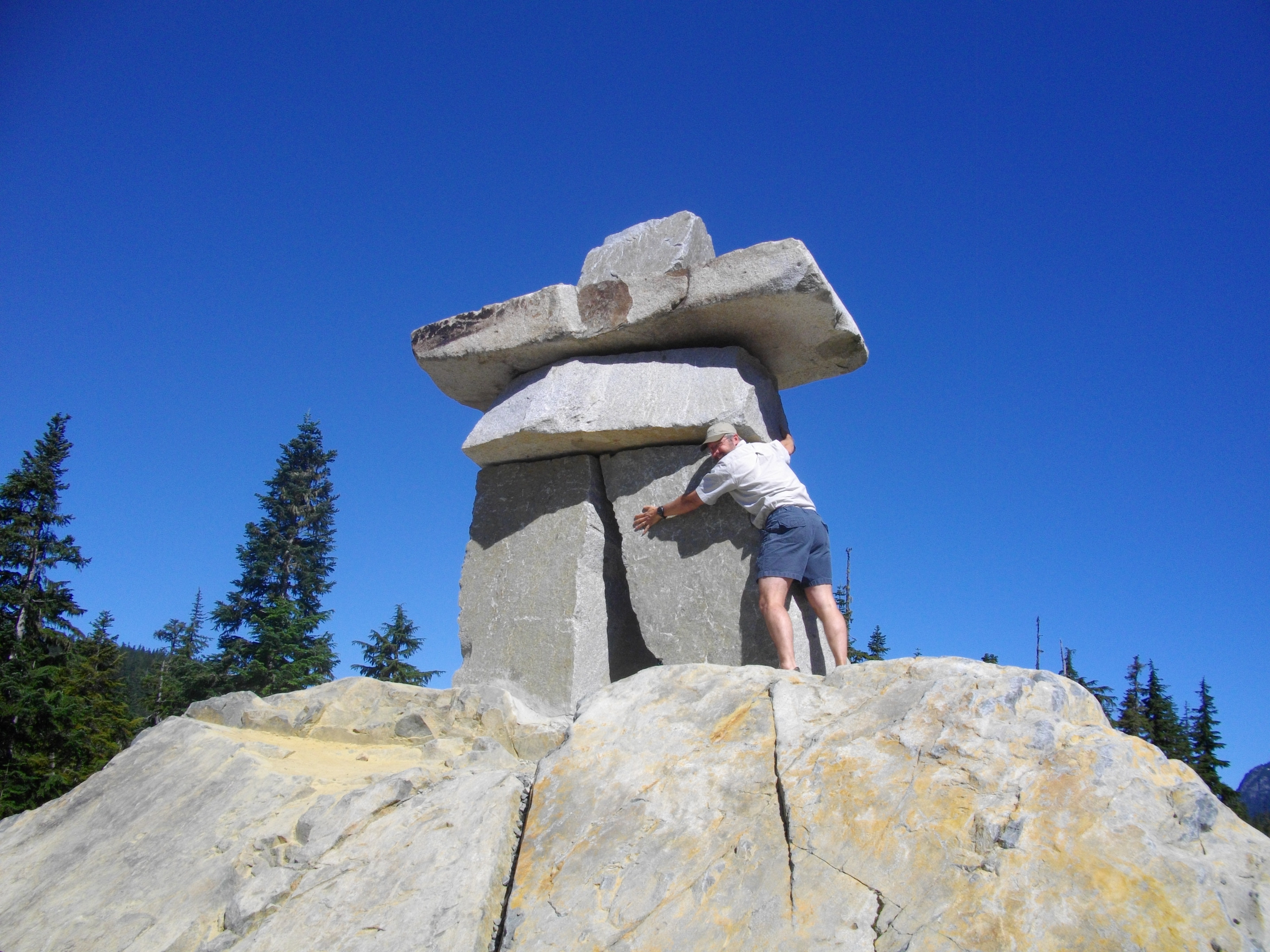
The ultimate Cairn at the site of the Winter Olympic Games in Whistler BC, Canada

The ultimate Cairn at the site of the Winter Olympic Games in Whistler BC, Canada

Then the LORD said to Moses, “Get up early in the morning, confront Pharaoh and say to him, ‘This is what the LORD, the God of the Hebrews, says: Let my people go, so that they may worship me, or this time I will send the full force of my plagues against you and against your officials and your people, so you may know that there is no one like me in all the earth.  For by now I could have stretched out my hand and struck you and your people with a plague that would have wiped you off the earth.  But I have raised you up[a] for this very purpose, that I might show you my power and that my name might be proclaimed in all the earth.  You still set yourself against my people and will not let them go.  Therefore, at this time tomorrow I will send the worst hailstorm that has ever fallen on Egypt, from the day it was founded till now.  Give an order now to bring your livestock and everything you have in the field to a place of shelter, because the hail will fall on every person and animal that has not been brought in and is still out in the field, and they will die.’”  Those officials of Pharaoh who feared the word of the LORD hurried to bring their slaves and their livestock inside.  But those who ignored the word of the LORD left their slaves and livestock in the field.  Then the LORD said to Moses, “Stretch out your hand toward the sky so that hail will fall all over Egypt—on people and animals and on everything growing in the fields of Egypt.”  When Moses stretched out his staff toward the sky, the LORD sent thunder and hail, and lightning flashed down to the ground. So the LORD rained hail on the land of Egypt;  hail fell and lightning flashed back and forth. It was the worst storm in all the land of Egypt since it had become a nation.  Throughout Egypt hail struck everything in the fields—both people and animals; it beat down everything growing in the fields and stripped every tree.  The only place it did not hail was the land of Goshen, where the Israelites were.  Then Pharaoh summoned Moses and Aaron. “This time I have sinned,” he said to them. “The LORD is in the right, and I and my people are in the wrong.  Pray to the LORD, for we have had enough thunder and hail. I will let you go; you don’t have to stay any longer.”  Moses replied, “When I have gone out of the city, I will spread out my hands in prayer to the LORD. The thunder will stop and there will be no more hail, so you may know that the earth is the LORD’s.  But I know that you and your officials still do not fear the LORD God.”  (The flax and barley were destroyed, since the barley had headed and the flax was in bloom.  The wheat and spelt, however, were not destroyed, because they ripen later.)  Then Moses left Pharaoh and went out of the city. He spread out his hands toward the LORD; the thunder and hail stopped, and the rain no longer poured down on the land.  When Pharaoh saw that the rain and hail and thunder had stopped, he sinned again: He and his officials hardened their hearts.  So Pharaoh’s heart was hard and he would not let the Israelites go, just as the LORD had said through Moses. – Exodus 9: 13-35

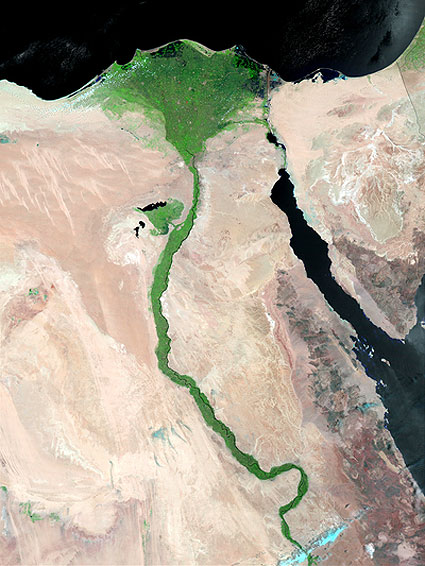
It appears that God is through with mere ecological calamity through blood-red water, frogs, flies, and pestilence.  God is now ready to bring the hammer down on Pharaoh with a thunderstorm unseen in Egypt before, but he gives the Egyptians and Pharaoh a chance to repent this time.  Those that heed his word and have faith in God are spared because they move their livestock and stay inside during the deadly hail storm.  This is somewhat reminiscent of the account of Noah’s flood, except much more limited in time and geographic scope.  The storm spares the land of Goshen which had been given to the Israelites in the time of Joseph.  As I understand it the land of Goshen was northeast of the Giza Pyramids and modern day Cairo on the eastern part of the Nile Delta.  It sounds like this happens in the spring time based on the description of the grains being grown and where they are at in their growth cycle.

Pharaoh does a little more softening in that this time he admits that he is in the wrong and God is in the right.  Which is actually the first step for all of us in starting a relationship with God…so he had that going for him…  He initially accepts God’s bargain to let the Israelites go, at least until the hail stopped.  When the hails stops Pharaoh get’s his chronic case of amnesia again and forgets what God has done in the past (and will likely do in the future).  I must admit that I have done this too.  I have seen God work in my life and promptly forgotten what he did when I get comfortable again.

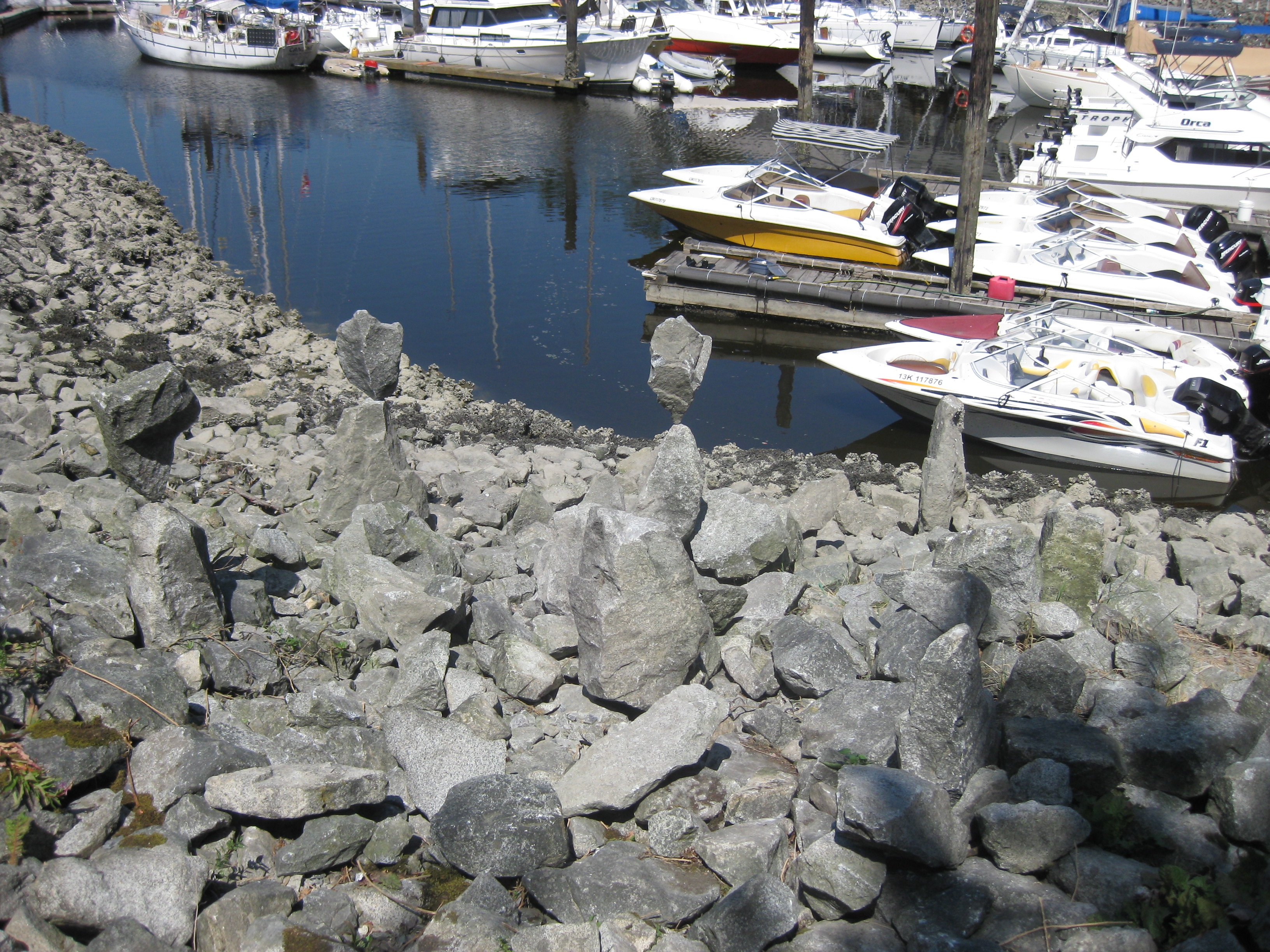
Balanced rocks near Vancouver BC, Canada.

Balanced rocks near Vancouver BC, Canada.

The Israelites had a solution to this.  They would erect altars and stone monuments to remember the great things God had done in their lives so that they could be confident in God showing up in the future.  I think it would be good to do more of that myself, perhaps not rock cairns, but what about some other form of remembrance….then again maybe stone piles could be cool 🙂

Prayer: God grant me the ability to erect monuments to Your awesome power at work in my life and through the lives of others so that I will remember what You have done and have confidence in what You will do.

Posted in Covenant, Exodus, Following God, Obedience | Tagged , , , , , , , , , , , , | 1 Comment

Love ’em all and let God sort them out

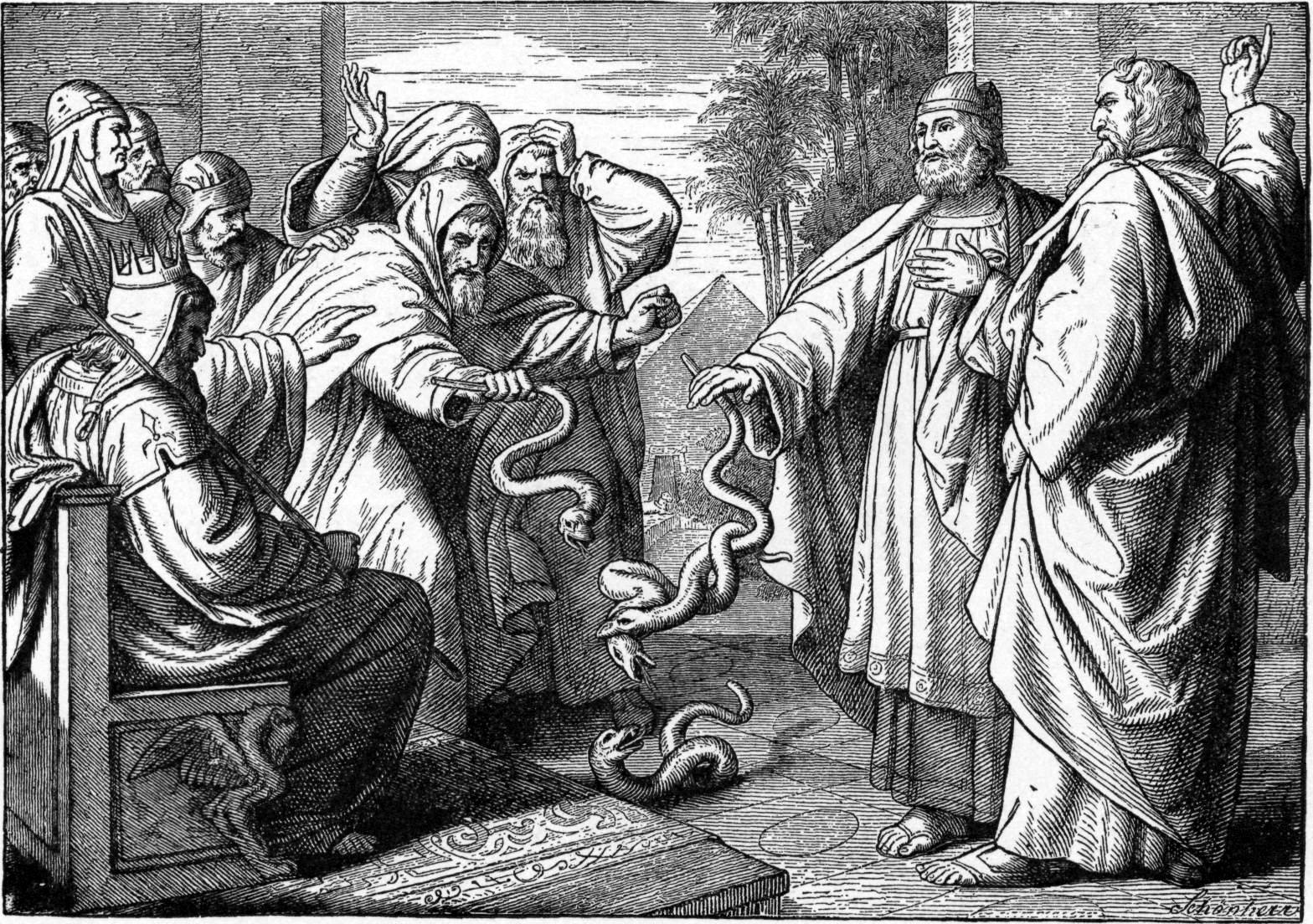
Then the LORD said to Moses, “Tell Aaron, ‘Stretch out your staff and strike the dust of the ground,’ and throughout the land of Egypt the dust will become gnats.”  They did this, and when Aaron stretched out his hand with the staff and struck the dust of the ground, gnats came on people and animals. All the dust throughout the land of Egypt became gnats.  But when the magicians tried to produce gnats by their secret arts, they could not.  Since the gnats were on people and animals everywhere, 19 the magicians said to Pharaoh, “This is the finger of God.” But Pharaoh’s heart was hard and he would not listen, just as the LORD had said.  Then the LORD said to Moses, “Get up early in the morning and confront Pharaoh as he goes to the river and say to him, ‘This is what the LORD says: Let my people go, so that they may worship me.  If you do not let my people go, I will send swarms of flies on you and your officials, on your people and into your houses. The houses of the Egyptians will be full of flies; even the ground will be covered with them.  “But on that day I will deal differently with the land of Goshen, where my people ,live; no swarms of flies will be there, so that you will know that I, the LORD, am in this land.  I will make a distinction between my people and your people. This sign will occur tomorrow.’”  And the LORD did this. Dense swarms of flies poured into Pharaoh’s palace and into the houses of his officials; throughout Egypt the land was ruined by the flies.  Then Pharaoh summoned Moses and Aaron and said, “Go, sacrifice to your God here in the land.”  But Moses said, “That would not be right. The sacrifices we offer the LORD our God would be detestable to the Egyptians. And if we offer sacrifices that are detestable in their eyes, will they not stone us?  We must take a three-day journey into the wilderness to offer sacrifices to the LORD our God, as he commands us.”  Pharaoh said, “I will let you go to offer sacrifices to the LORD your God in the wilderness, but you must not go very far. Now pray for me.”  Moses answered, “As soon as I leave you, I will pray to the LORD, and tomorrow the flies will leave Pharaoh and his officials and his people. Only let Pharaoh be sure that he does not act deceitfully again by not letting the people go to offer sacrifices to the LORD.”  Then Moses left Pharaoh and prayed to the LORD, and the LORD did what Moses asked. The flies left Pharaoh and his officials and his people; not a fly remained.  But this time also Pharaoh hardened his heart and would not let the people go. – Exodus 8:16-32
Although this passage only remotely relates to water it’s connection to the previous passages was so close that I felt I needed to include it here.  The meeting between Moses and Pharaoh occurs “at the river”.  The rotting frogs which were brought on the by the rotting algae generated gnats and flies which is not too surprising.  I am reminded of the old nursery rhyme about the old woman who swallowed a fly then proceeded to swallow all sorts of things to take care of this problem.

The Nile River ecosystem was taking care of the ecological imbalance brought on by the original algal bloom (red tide) which was brought on by Moses and Aaron who were trusting God.  I am not denying that the original bloom could have been miraculous, simply that the events that followed are not that strange from an ecological point of view.  It was not “rough magic” as C.S. Lewis put it in Voyage of the Dawn Treader, but rather an orchestration of natural events in tune with the ecological laws God himself has created.

The end result was a partial softening of Pharaoh’s heart.  He asks Moses and Aaron to “pray for me”.  This is a big step for a man who a short time ago denied the existence of God entirely.  He also wanted Moses to make offerings to his God to stop the scary things that were happening in and around the Nile River.  In the end Pharaoh is not able to trust the God of Moses more than he trusts his own gods.  Pharaoh was definitely one of those people it would be hard to love.

I have encountered plenty of people with “hard hearts”, including me at one time!  I am not sure I can count on turning a river red or swarms of insects.  So how can I assist God in the softening process of someone’s heart?  I think this is very difficult and requires much prayer so that we are sure we are on the same page as God and what he is doing in the person’s heart.  I used to see an offensive bumper sticker on some people’s cars that read “kill ’em all and let God sort them out”.  I think as Christians we should have a bumper sticker that reads “love ’em all and let God sort them out”.  Really it is God’s job to soften hearts, we just get to play Cameo parts once in a while.

Prayer: God grant us patience and wisdom when we encounter people in our lives with “hard hearts” who seem to be unreachable.  Make our role in the softening process clear.

Posted in Exodus, Love for the Lost | Tagged , , , , , , , , | Leave a comment

Blood Everywhere!

image

Then the LORD said to Moses, “Pharaoh’s heart is unyielding; he refuses to let the people go.  Go to Pharaoh in the morning as he goes out to the river. Confront him on the bank of the Nile, and take in your hand the staff that was changed into a snake. Then say to him, ‘The LORD, the God of the Hebrews, has sent me to say to you: Let my people go, so that they may worship me in the wilderness. But until now you have not listened. This is what the LORD says: By this you will know that I am the LORD: With the staff that is in my hand I will strike the water of the Nile, and it will be changed into blood. The fish in the Nile will die, and the river will stink; the Egyptians will not be able to drink its water.’”  The LORD said to Moses, “Tell Aaron, ‘Take your staff and stretch out your hand over the waters of Egypt—over the streams and canals, over the ponds and all the reservoirs—and they will turn to blood.’ Blood will be everywhere in Egypt, even in vessels of wood and stone.”  Moses and Aaron did just as the LORD had commanded. He raised his staff in the presence of Pharaoh and his officials and struck the water of the Nile, and all the water was changed into blood.  The fish in the Nile died, and the river smelled so bad that the Egyptians could not drink its water. Blood was everywhere in Egypt.  But the Egyptian magicians did the same things by their secret arts, and Pharaoh’s heart became hard; he would not listen to Moses and Aaron, just as the LORD had said.  Instead, he turned and went into his palace, and did not take even this to heart. 24 And all the Egyptians dug along the Nile to get drinking water, because they could not drink the water of the river.  – Exodus 7:14-24

In this passage Moses is commanded to meet Pharaoh by the Nile River; Juxtaposing the god of Pharaoh that was the Nile and the God of Abraham, Jacob, Joseph, and Moses.  The scene kind of reminds me of the showdown at the OK corral, except Moses was toting a shape shifting staff and pharaoh was armed with an unyielding heart.

This passage recounts miraculous events.  I believe that God does miracles, but I do not think God uses them simply to impress or awe people into following him.  God uses miracles to change human hearts and minds.  That being said I can view this miracle at least three ways, sort of like some of the details of the Noah’s flood narrative.  I can believe that 1) God suspended the natural laws or changed them; 2) The account was describing actual events but not in the exact order, timing, or sequence described; or 3) The account was purely allegorical and poetic and not intended to be read as a scientific account.  I favor a combination of #1 and #2.  The details of the account are consistent with natural biochemical processes that do occur, but the timing and rate at which they occur are seemingly supernatural.

This account of the Nile river turning to “blood” is a very apt description of a phenomenon known as “red tide” in many areas of the globe.  The red tide phenomenon is caused by an algal bloom resulting from excess nutrients or some other biochemical imbalance in water.  The Nile’s water temperature is relatively warm year round and get’s up to around 80 F in the summer.  This is prime conditions for algae and bacterial growth.  The algae and diatoms (single-celled aquatic organisms that produce silica shells) that are associated with red tide often produce poisonous toxins that can make humans sick.

The timing of the algal bloom described is not realistic from a scientific point of view but all the other parts of the account are sound from a scientific point of view.  When the algae died they would fall to the bottom of the river using up all the oxygen creating a black mess smelling of rotten eggs (stink).  The lack of oxygen in the water would certainly have resulted in the death of many fish and other organism that lived in the river.  The solution to the “bloody water” problem was to dig near the river to access water that was filtered by the river sediments.  This a wise practice even today for those needing water near a river.  In fact we have adopted a similar technique to what the Egyptians are described as doing for installing wells in rural Haiti.

The description says that even pharaoh’s magicians could turn the river into blood.  This is not too surprising in that the phenomenon was probably not uncommon in the spring and summer.  The magicians need only claim to have created something that was actually occurring naturally.  The unique thing about Moses and Aaron’s miracle was that it happened on command.  So as a Christian and a scientist I can accept God accelerating otherwise natural processes to change pharaoh’s “unyielding heart”.  Jesus certainly did similar things many times while He was on earth to reach those in need of Him.

Prayer: Lord give me the confidence to ask for miracles in my life, knowing that you can make the impossible possible and give hope to the hopeless.

Posted in Exodus, Miracles | Tagged , , , , , , , , , | Leave a comment

Blood on the ground

Then the LORD said, “If they do not believe you or pay attention to the first sign, they may believe the second.  But if they do not believe these two signs or listen to you, take some water from the Nile and pour it on the dry ground. The water you take from the river will become blood on the ground.” – Exodus 4:8-9

Since the last passage much has happened, Moses has resided in Midian, raised a family, encountered God in a burning bush on Mount Sinai, and been asked by God to return to Egypt and set the Israelites free from their bondage.  Moses is rightfully apprehensive about returning to Egypt.  He is not sure they will receive him with parades and rejoicing.  He was right.

Both this account and the ones to follow describe rivers and other water turning to blood.  There is actually a relatively common phenomenon that does turn rivers and water red as blood called the red tide.  The red color is due to microorganisms in the water call Dinoflagellates (algae).  These microscopic creatures are also responsible for other amazing phenomena such as glowing water referred to as bioluminescence.

Alaska!

Alaska!

I have never experienced “red tide” to the point where the water was red but I have been turned away from clamming due to the presence of the microorganism which can produce neurotoxins in shellfish and while I was working in Alaska I experienced first hand the wonder of bioluminescence.  We were returning from dinner at the cabin of an oyster farmer named “Griz” (I am not making this up).  It was dark and we were motoring in a 15-foot aluminum skiff back to our boat.  As I looked behind the boat there was a beautiful green trail of glowing water behind the boat as we travelled.  Apparently the warmth and/or agitation of the motor stimulated the microorganisms in the water to glow.  My travelling companions told me that the same thing happens when one urinates in the water…I had to know…yep the water did in fact glow!

Water and blood…one gives life to our bodies and the other gives life to God’s creation.  By demonstrating His power over the water God demonstrates his ultimate power over our lives and the lives of the Israelites.  Changing the water to “blood” was on one level merely a “magic trick” to impress the Israelites but I think it is also prequel to the atonement that would come through Jesus’ blood and the redemptive power that it will represent.

Posted in Exodus, Forgiveness, Miracles | Tagged , , , , , , , , , | Leave a comment

A man without a people

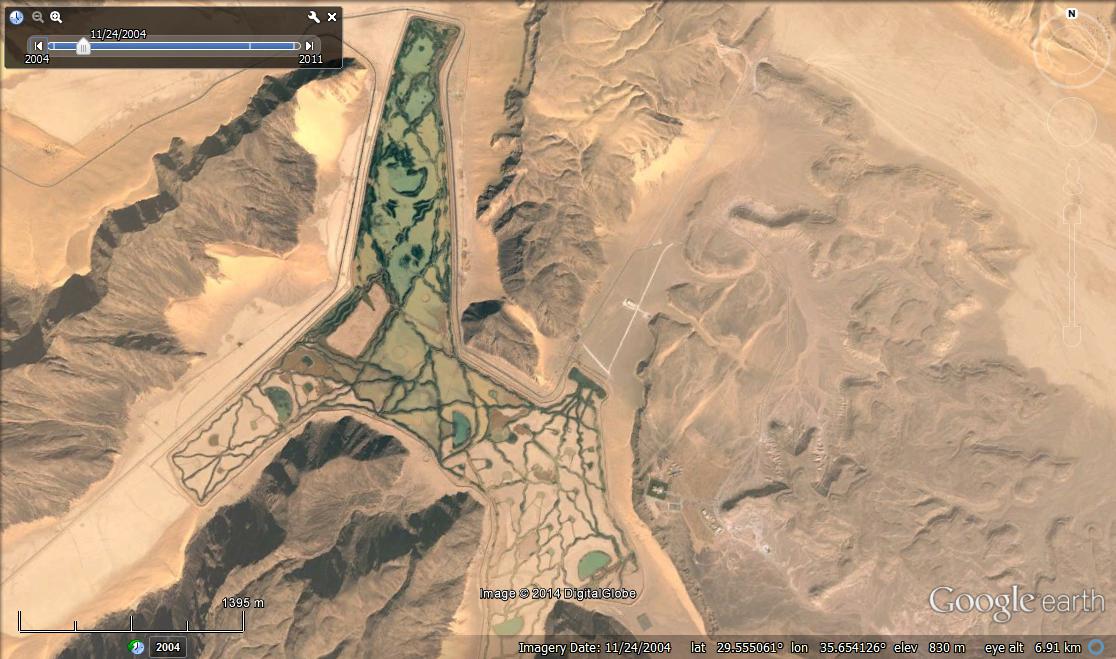
Strange water feature in the desert near the area believed to be Midian

Strange water feature in the desert near the area believed to be Midian

One day, after Moses had grown up, he went out to where his own people were and watched them at their hard labor. He saw an Egyptian beating a Hebrew, one of his own people.  Looking this way and that and seeing no one, he killed the Egyptian and hid him in the sand.  The next day he went out and saw two Hebrews fighting. He asked the one in the wrong, “Why are you hitting your fellow Hebrew?”  The man said, “Who made you ruler and judge over us? Are you thinking of killing me as you killed the Egyptian?” Then Moses was afraid and thought, “What I did must have become known.”  When Pharaoh heard of this, he tried to kill Moses, but Moses fled from Pharaoh and went to live in Midian, where he sat down by a well.  Now a priest of Midian had seven daughters, and they came to draw water and fill the troughs to water their father’s flock.  Some shepherds came along and drove them away, but Moses got up and came to their rescue and watered their flock.  When the girls returned to Reuel their father, he asked them, “Why have you returned so early today?”  They answered, “An Egyptian rescued us from the shepherds. He even drew water for us and watered the flock.”  “And where is he?” Reuel asked his daughters. “Why did you leave him? Invite him to have something to eat.”  Moses agreed to stay with the man, who gave his daughter Zipporah to Moses in marriage.  Zipporah gave birth to a son, and Moses named him Gershom, saying, “I have become a foreigner in a foreign land.”  During that long period, the king of Egypt died. The Israelites groaned in their slavery and cried out, and their cry for help because of their slavery went up to God.  God heard their groaning and he remembered his covenant with Abraham, with Isaac and with Jacob.  So God looked on the Israelites and was concerned about them.  – Exodus 2:11-25

Moses Egypt to MidianMoses clearly knows that he is a Hebrew and not an Egyptian.  He seems to be having difficulty fitting into either of his heritages.  He is not really an Egyptian and the Hebrews are not sure what to do with him.  Pharaoh clearly does not feel a strong bond as he is ready to kill Moses.  So Moses flees to Midian, which from what I have read is in the northwest Arabian peninsula near the Gulf of Aqaba.  By land he would have had to cross several hundred miles of desert from Egypt — clearly he was not interested in having Pharaoh find him.

Once again a water well is the central gathering place and the place where “community” happens.  Moses stepped in to provide life giving water to the daughters of Reuel (AKA Jethro) and protect them from those that would prevent them from obtaining water from the well for themselves and their animals.  This seems like a prequel to the role that Moses will be called on to play for the entire Israelite people when he returns to Egypt to lead them out of bondage.  Moses took possession of the water at the well even though he was not from that place.

Moses became an instrument for God’s provision of water just as he would later become God’s instrument to convey the living water of God’s spirit to the Israelites.  Moses would be engaged in “watering the flock” for many years to come, it is a good thing he was able to practice here at the well.

Prayer: When I am called to be your instrument grant me the boldness and wisdom to act decisively and justly.


Posted in Christian Community, Christian Leadership, Exodus, Obedience | Tagged , , , , , , , | Leave a comment

A Rafted Baby and Rappelling to Church

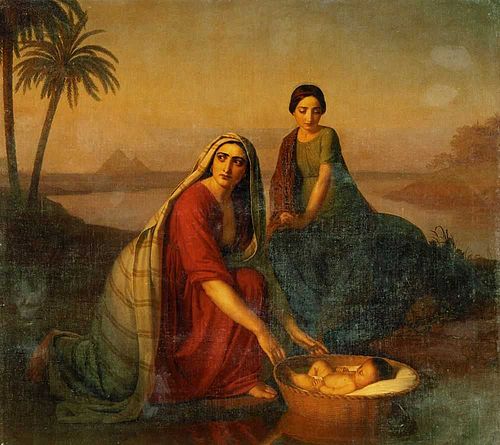
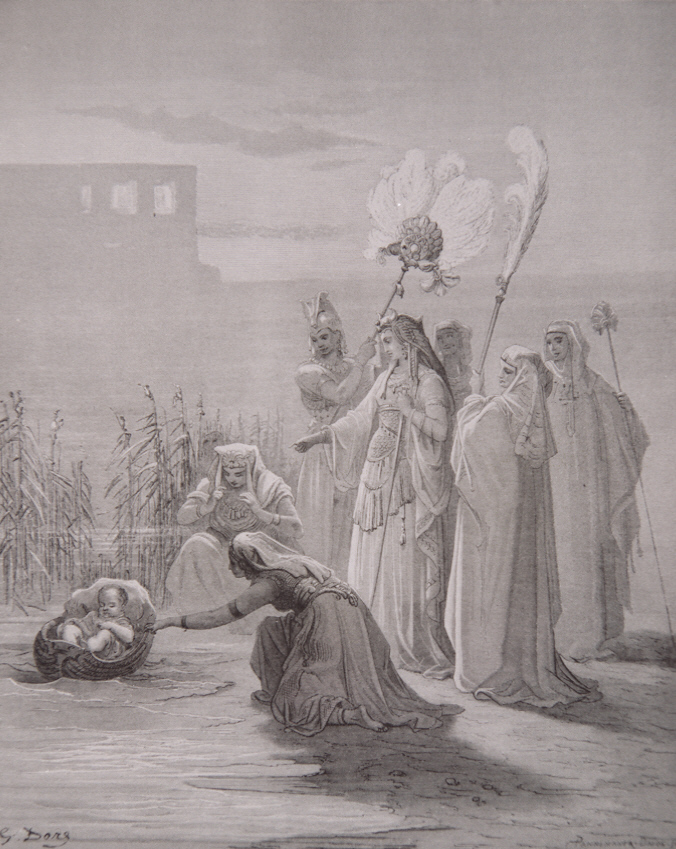
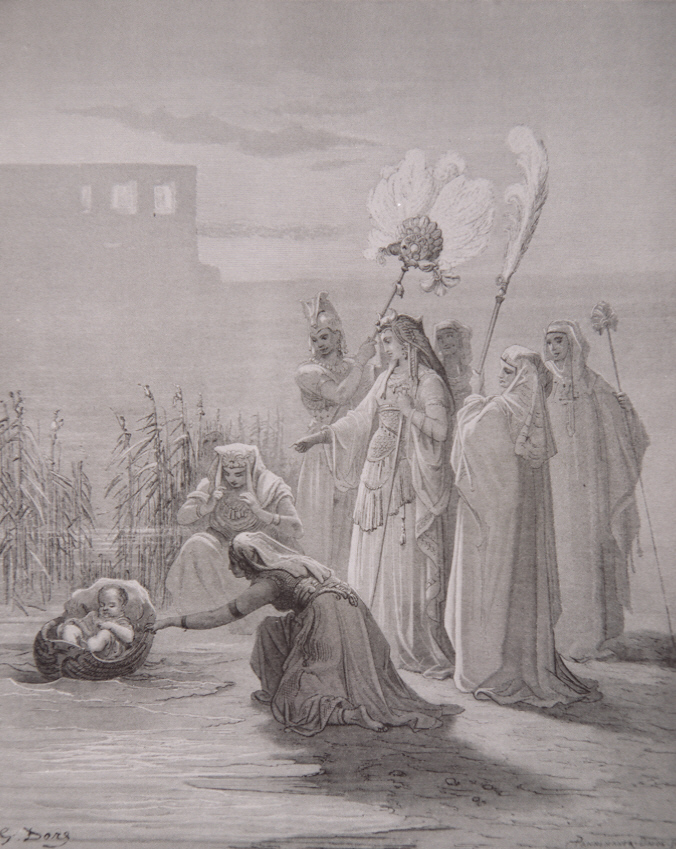
Now a man of the tribe of Levi married a Levite woman, and she became pregnant and gave birth to a son. When she saw that he was a fine child, she hid him for three months.  But when she could hide him no longer, she got a papyrus basket for him and coated it with tar and pitch. Then she placed the child in it and put it among the reeds along the bank of the Nile.  His sister stood at a distance to see what would happen to him.  Then Pharaoh’s daughter went down to the Nile to bathe, and her attendants were walking along the riverbank. She saw the basket among the reeds and sent her female slave to get it.  She opened it and saw the baby. He was crying, and she felt sorry for him. “This is one of the Hebrew babies,” she said.  Then his sister asked Pharaoh’s daughter, “Shall I go and get one of the Hebrew women to nurse the baby for you?”  “Yes, go,” she answered. So the girl went and got the baby’s mother.  Pharaoh’s daughter said to her, “Take this baby and nurse him for me, and I will pay you.” So the woman took the baby and nursed him.  When the child grew older, she took him to Pharaoh’s daughter and he became her son. She named him Moses, saying, “I drew him out of the water.”  – Exodus 2:1-8

This famous story of the birth of Moses has been told so many times we are in danger of losing sight of its meaning. Moses’ mother technically did what the Pharaoh commanded in placing the baby in the Nile.  She acted in a way that allowed God to move in the heart of Pharaoh’s daughter to save the baby.  In this case God prevented the waters of the Nile from being used for an evil purpose (killing a baby) by working through Moses’ mother and a non-jew Pharaoh’s daughter. Moses was protected from the evil misuse of the Nile River by God. The effort to save the baby must have seemed like a long shot to his mother, but God arranged things in a way that no human would have predicted or planned.  It is hard to imagine what was going through the mind of Moses’ mother when she placed her baby in the Nile River and in God’s hands.  It must have taken an amazing level of faith in God.

Do I have the level of faith that Moses’ mother showed?  What things in my life are as important as a newborn baby that I am willing to set adrift on a river and trust that God will show up?  Am I able to trust God with even smaller details of my life?  The honest answer is no.  So how does one get “better” at trusting God?   Probably the same way one gets better at tennis or soccer — practice.

I used to work as an exploration geologist in Montana at a Gold mine called the Zortman Mine, near the town of Zortman Montana.  I was part of a mine rescue team and we would train in the mountains around town “rescuing” each other using ropes, and rock climbing and spelunking techniques.  We trained so that if we were called on we would know what to do.  Perhaps we as Christians need to be “training” to trust God.

I remember one sunday I was mine rescue training with the leader Wayne who was a fellow Christian.  We heard the church bell ring in the town while we were on a mountain roughly 300 feet above the church about 1/3 of a mile across rough terrain.rapelling to church  When we heard the church bell we looked at each other and said “let’s go”.  So we proceeded to rappel down the rock face and jog through the trees to church.  We arrived in our climbing gear with carabiners jingling like cow bells.  We got some interesting looks from the people in the pews as we settled in to listen to the service.  Rappelling to church with Wayne was a shared “leap” of faith that I will never forget.   I learned a couple things from this experience 1) following God can be an adventure; 2) stepping out (or in this case off a cliff) in faith is easier if you are with someone else; and 3) practicing little steps of faith make it easier to take larger steps of faith when they are needed.

Prayer: God give me the faith to prayerfully participate in your plans even when I do not understand how they could possibly work.  Help me to take baby steps of faith so that I am prepared when larger steps are needed.

Posted in Exodus, Faith, Following God, Obedience | Tagged , , , , , , , | Leave a comment

Choosing Blessings over Cursing

The king of Egypt said to the Hebrew midwives, whose names were Shiphrah and Puah,  “When you are helping the Hebrew women during childbirth on the delivery stool, if you see that the baby is a boy, kill him; but if it is a girl, let her live.”  The midwives, however, feared God and did not do what the king of Egypt had told them to do; they let the boys live.  Then the king of Egypt summoned the midwives and asked them, “Why have you done this? Why have you let the boys live?”  The midwives answered Pharaoh, “Hebrew women are not like Egyptian women; they are vigorous and give birth before the midwives arrive.”  So God was kind to the midwives and the people increased and became even more numerous.  And because the midwives feared God, he gave them families of their own.  Then Pharaoh gave this order to all his people: “Every Hebrew boy that is born you must throw into the Nile, but let every girl live.” – Exodus 1:15-22

Well we have entered the book of Exodus and arrived at a somewhat difficult passage.  Much has happened since the end of the book of Genesis.  Joseph has died and the Israelites have fallen out of favor with the Egyptians.  This passage comes at the end of a narrative describing how the Israelites have increased in number in Egypt after Joseph and Jacob’s deaths. The Egyptian rulers were encouraging the Israelite midwives to practice infanticide on the male Israelites to keep their numbers down. When the Israelite midwives refuse to be complicit in this plan Pharaoh had to come up with another plan.  He turns to the mighty Nile River which he has deified in the past into a killing machine.  The plan is for the Egyptians to throw the Hebrew boys in the Nile, transforming this river of life giving water into an instrument of death.

This is an extreme and disgusting example of turning a blessing into a curse by choices, but if I am honest have to admit to doing this in smaller ways with God’s blessings.  How many times have my choices resulted in something other than what God intended.  How many times have I misused gifts given by God for my own purposes and plans?  The choosing that happens in our lives may not be a matter of life and death as it was for Pharaoh.  It may be as simple as choosing to slow down and listen to a friend, or a colleague who is hurting.  For some, our choice may be a matter of life and death.

Although this is a somewhat horrific story, God has a way of turning cursing into blessing.  Moses will come into the Pharaoh’s own household and become a blessing for the Israelites because of Pharaoh’s poor choice to kill all the Hebrew baby boys.

Prayer: God help me to be a good steward of the people, plans, and blessings you have put in place in my life so that I may receive them as blessings.


Posted in Discernment, Exodus, Sin | Tagged , , , , , , , , | Leave a comment

Connected to the Spring

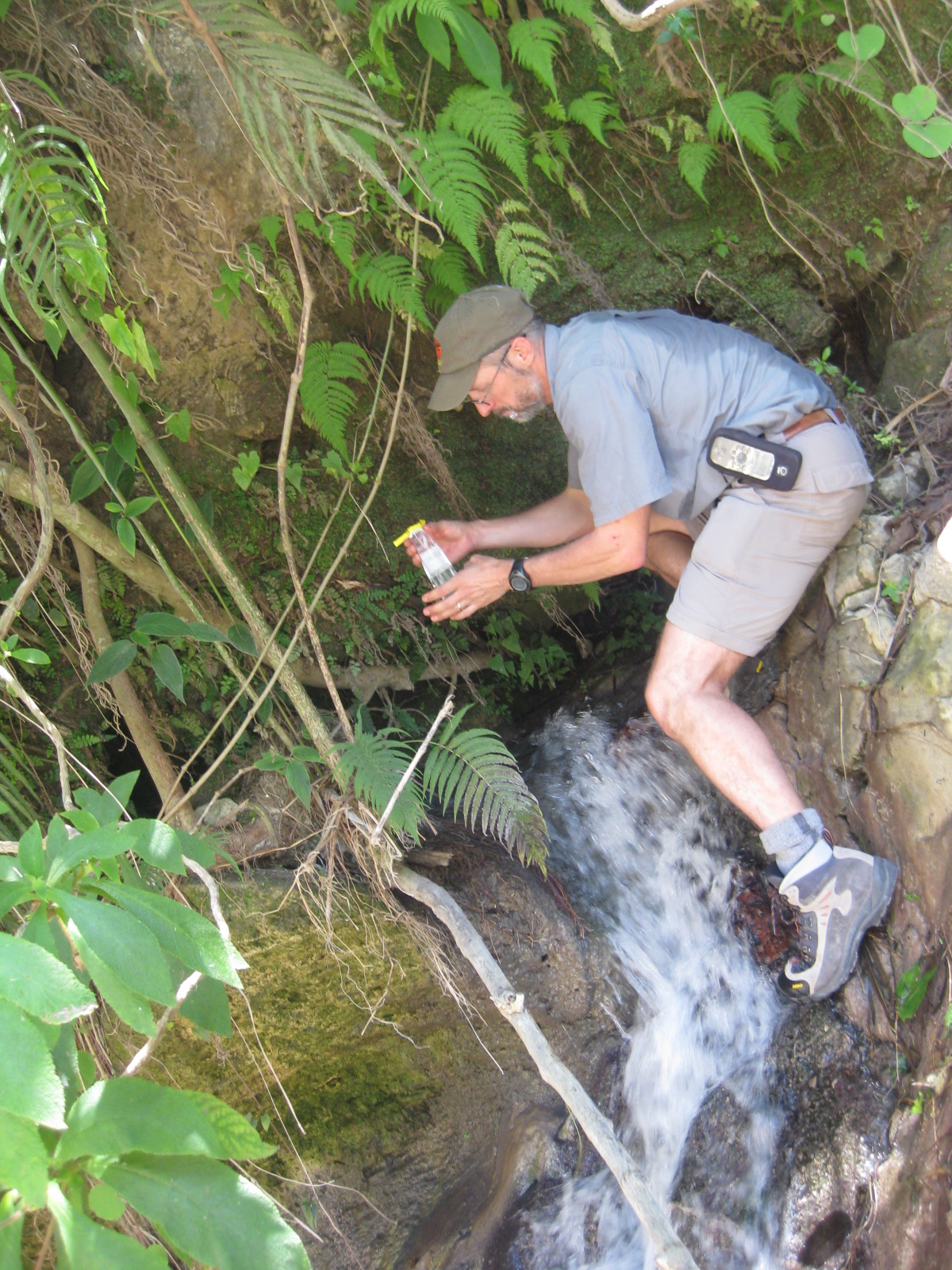
Natural spring in Haiti, 2011

Sampling a natural spring in Haiti, 2011

“Joseph is a fruitful vine, a fruitful vine near a spring, whose branches climb over a wall.  With bitterness archers attacked him; they shot at him with hostility.   But his bow remained steady, his strong arms stayed limber, because of the hand of the Mighty One of Jacob, because of the Shepherd, the Rock of Israel, because of your father’s God, who helps you, because of the Almighty, who blesses you with blessings of the skies above, blessings of the deep springs below, blessings of the breast and womb.  Your father’s blessings are greater than the blessings of the ancient mountains, than the bounty of the age-old hills.
Let all these rest on the head of Joseph, on the brow of the prince among his brothers.” – Genesis 49: 22-26

Joseph, God’s chosen servant, is described in this passage as the vine located near a spring. This “spring” is in fact God, the only constant in Joseph’s life through all his moving and wanderings to and from Egypt.  Joseph is fruitful because he is connected to the one who provides living water to his people.  His life has purpose and is directed by God’s hand unlike his brother Reuben, whose life is compared to turbulent water.  Joseph obtains his nourishment and water for life from God. The blessings of the deep springs below are similar to great blessings showering from God above. They originate from places unseen and in ways not well understood, but yet they are there and constant in a way that many other things in life are ephemeral.

Springs are locations where groundwater comes to the surface naturally.  In Haiti, the springs are referred to as karst springs which means they flow through rock that looks like swiss cheese.  In the mountains where I work in Haiti there are many springs and most people can get water from a spring.  The problem in Haiti is that the springs are often contaminated due to poor sanitation practices and the swiss cheese rock through which they flow.  Unfortunately, the Haitian’s get sick and sometimes they do not even know what is making them sick because the water looks clean.

How can I remain connected to the “spring” that is God’s spirit?  How can I be confident that the spring is not “contaminated”.  Can the “spring” we are connected to ever become contaminated?  I do not believe God could ever be “contaminated”, but I do think that we as humans can contaminate, or become disconnected from, God’s spirit and intentions through our actions and selfish behavior.  I am sorry to say that one of the things that kept me from becoming a Christian was the behavior of some Christians.  I know that my behavior, especially as a new Christian,  has sometimes turned people away from God.  I think we as Christians need to be constantly asking ourselves “is this good water or bad water” we are getting from the “spring”.  If it is good water then it is from God and if it is bad, we have probably polluted the spring.

SDG

Prayer: God help me to remain connected and rooted in you and the springs that you provide for me along the way. Help me to drink deeply of your living water so that I can be a strong and fruitful vine.

Posted in Discipleship, Following God, Genesis, God's Love for Us, The Nature of God, The Spiritual Realm | Tagged , , , , , , , , | Leave a comment