
Slack Water

Then the Lord will appear over them; his arrow will flash like lightning. The Sovereign Lord will sound the trumpet; he will march in the storms of the south, and the Lord Almighty will shield them. They will destroy and overcome with slingstones. They will drink and roar as with wine; they will be full like a bowl used for sprinkling the corners of the altar. The Lord their God will save his people on that day as a shepherd saves his flock. They will sparkle in his land like jewels in a crown. How attractive and beautiful they will be! Grain will make the young men thrive, and new wine the young women. – Zechariah 9:14‭-‬17

The last few days “on the water” have been hard. Not because the passages have been overly perplexing or confusing, but it has felt more like “slack water”.  For those who are not river rats “slack water” is a river section where the current is diminished as a result of a change in slope, river width, or interaction with another river at a confluence. It reminds me of a float on the Lower Snake River I did in a raft a number of years ago with two of my students and some colleagues.

We put in at a place called Pittsburgh Landing near Lucille, Idaho and took out near Lewiston, Idaho after a several day float through a beautiful canyon.  It was an amazing float with a few exciting rapids along the way, including one that tossed one of our party into the chilly Snake River.  On the last day we arrived at the slack water of the Lower Snake River. The river was still moving, but not very fast. The wind picked up in the afternoon and it was difficult to make progress downriver without pushing the raft hard by paddling.  The Snake River joins the Columbia River at Lewiston, a great confluence of big rivers, and that is part of the reason for the slack water in the Lower Snake River.

I feel like I am making my way through “slack water” here in Zechariah at end of the Old testament. So I will do what we did on the Snake River, paddle away and make headway toward the confluence. I am not sure why this passage feels like slack water. It starts out pretty exciting with God showing up in a bolt of lightening, “the Lord will appear over them; his arrow will flash like lightning.” God is coming to the aid of the people of Israel.  He has their back in the battle described here, “he will march in the storms of the south”.  Perhaps it is descriptions like this that are part of the reason the Jewish people were looking for a military leader in the Messiah.  I do not know.

Then comes the water-related part, “they will be full like a bowl used for sprinkling the corners of the altar.”  I think the “they” being referred to here is the people of Israel, although it is not so clear. Whomever it is they are to be filled like a sprinkling bowl used at the altar.  This concept of a “sprinkling bowl” has been around at least since Solomon was building the temple (1 Kings 7:38-45). It was not clear then, nor is it clear now, the purpose or significance of the sprinkling bowls.  Back in 1 Kings I wondered if perhaps this was being used metaphorically to describe sharing God’s blessings with others.

God will show up and “save his people on that day as a shepherd saves his flock”.  This is such an interesting word picture. How does a shepherd “save his flock”.  It seems to me that an earthly shepherd spends all his time with the flock and is diligent to prevent them from being hurt, taken by predators, or simply getting lost because they have wandered off. God is saying that He desires this type of relationship with the people of Israel, and later, all those who will come to follow Him. Certainly Jesus when He came took on the role of Shepherd for all those willing to faithfully follow Him. This passage was worth the hard paddling, and I am one more passage closer to the confluence to come.

Prayer: God thank you for being our Shepherd and caring for us when we get lost. 

Posted in Christianity, Covenant, Discipleship, Faith, Following God, God's Love for Us, Jesus, The Nature of God, Trusting God, Zechariah | Tagged , , , , , | 1 Comment

Waterless Pit

Rejoice greatly, Daughter Zion! Shout, Daughter Jerusalem! See, your king comes to you, righteous and victorious, lowly and riding on a donkey, on a colt, the foal of a donkey. I will take away the chariots from Ephraim and the warhorses from Jerusalem, and the battle bow will be broken. He will proclaim peace to the nations. His rule will extend from sea to sea and from the River to the ends of the earth. As for you, because of the blood of my covenant with you, I will free your prisoners from the waterless pit. Return to your fortress, you prisoners of hope; even now I announce that I will restore twice as much to you. I will bend Judah as I bend my bow and fill it with Ephraim. I will rouse your sons, Zion, against your sons, Greece, and make you like a warrior’s sword. – Zechariah 9:9‭-‬13

Today’s passage is a prophecy about a coming king that will be unlike any king that has come before. This king will be “righteous and victorious” while at the same time being “lowly and riding on a donkey” – the lion and lamb. The old ways of battle and power will be superseded and cast aside by this coming Prince of Peace who will “proclaim peace to the nations”. The future battles will be won not with chariots and bows but with something new, “blood of the covenant.”

Water comes into the passage as part of a geographic hyperbole. The reach of this new ruler and His kingdom is described as extending “from sea to sea and from the River to the ends of the earth”. This is another way of saying that a time will come when God’s rule through this lowly King will extend around the world crossing every border and boundary. This prophecy come’s right after numerous prophecies in Haggai and Zephaniah about using strong hands to rebuild the temple. I wonder if part of the reason for this juxtaposition is to introduce the concept that the Lowly King will usher in a temple rebuilding like no other the people have seen yet. This “temple rebuilding” will be global in scope yet personal; and it will have both immediate and eternal consequences.

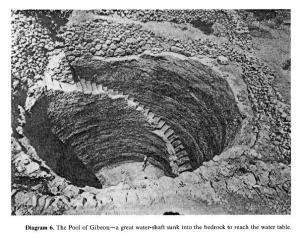
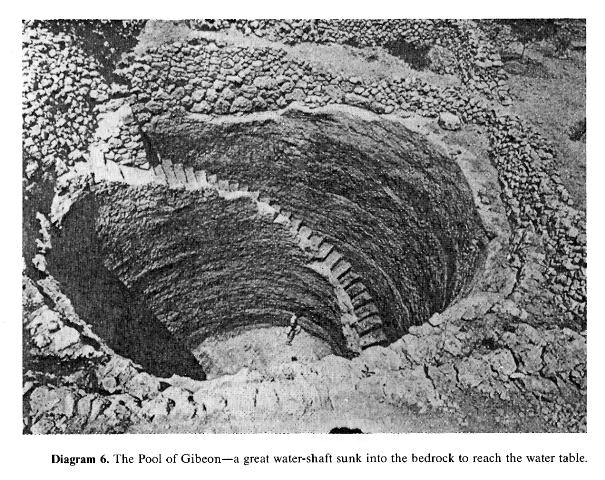
The second water reference in this passage is a little more confusing, “As for you, because of the blood of my covenant with you, I will free your prisoners from the waterless pit.” It is not clear what is meant here by a “waterless” pit. If one is to take it literally it could be referring to a dried up cistern – a “waterless pit”. Cisterns have been described before in my float. They were used for stashing bodies, imprisoning people, and many other purposes other than those for which a cistern is created. The other possibility is that the term “waterless pit” is being used metaphorically.

In many ways God has been the “Great Cistern” for the people of Israel, providing them with Living Water and Manna from heaven that came on the dew. So if God is the water source and the people are described as “prisoners from the waterless pit”. It is saying they are disconnected from God and slaves to someone or something else from which they are in need of being freed. This is an apt description of the state of all those who choose to be free of God.

This passage is a reflection of Him, and a foreshadowing of a coming King who will be very different and usher in a new way of relating to God that involves a “blood covenant” and freedom from things that enslave and ensnare us. This coming King has a name, Jesus, and I am rapidly approaching the confluence between the Old and New Testaments where He will be described by those who walked and talked with Him. I am really looking forward to that.

Prayer: God I am excited for the confluence to come when I will begin to explore the Good News of the one who came righteous and victorious, lowly and riding on a donkey to set us free.

Posted in Christianity, Covenant, Discipleship, Following God, Forgiveness, Free Will, God's Love for Us, Jesus, Obedience, Prophecy, Redemption, Sharing the Gospel, The Earthly Realm, The Nature of God, The Spiritual Realm, Zechariah | Tagged , , , , , , | 1 Comment

Power on the Sea

A prophecy: The word of the Lord is against the land of Hadrak and will come to rest on Damascus— for the eyes of all people and all the tribes of Israel are on the Lord — and on Hamath too, which borders on it, and on Tyre and Sidon, though they are very skillful. Tyre has built herself a stronghold; she has heaped up silver like dust, and gold like the dirt of the streets. But the Lord will take away her possessions and destroy her power on the sea, and she will be consumed by fire. Ashkelon will see it and fear; Gaza will writhe in agony, and Ekron too, for her hope will wither. Gaza will lose her king and Ashkelon will be deserted. – Zechariah 9:1‭-‬5

The subject of today’s passage is God’s wrath against some of the neighboring towns like Hamath, Tyre, and Sidon.  God’s ire is especially directed at Tyre.  This is not the first time that prophecies have indicated a reckoning for Tyre. Back in Ezekiel 28:1‭-‬10 God was dealing with the pride of the king of Tyre and his impression that he ruled the sea rather than God.  The king gets a wake-up call from invaders and perhaps some sort of natural phenomena like an earthquake of rearrangement of the coastline that will leave his city in the depths of the sea.

The doom of Tyre was also prophesied by Isaiah when God said that it would be “left without house or harbor” (Isaiah 23:1-18).  In that passage the issue was dependence on possessions and trade rather than God.  This passage also seems to be dealing with an unhealthy dependence on earthly treasures and skills rather than God’s provision.  It seems God is again reminding the people of Tyre that all the wealth and wisdom that they have is not really a result of their own intelligence and business acumen.

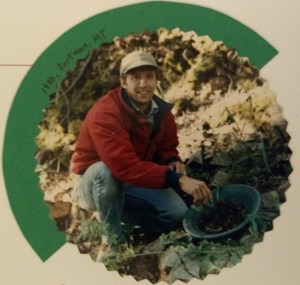
They are clearly amassing earthly wealth, “Tyre has built herself a stronghold; she has heaped up silver like dust, and gold like the dirt of the streets”.  That is a lot of gold and silver dust! When I was a boy my dad and I used to go gold panning for “gold dust”.  We never found a lot, but just enough to make it interesting and make us go back in the hopes that we would find “the mother load” of dust.  The people selling the gold panning equipment were making far more money than we were on the gold we recovered.  But it was fun and a great excuse to hang out together along a beautiful river.

The prophecy here, as in previous prophecies about Tyre, is that “the Lord will take away her possessions and destroy her power on the sea, and she will be consumed by fire”. This is a little different than previous prediction in that there is to be fire involved. Previous predictions involved the sea in some way and probably drowning.  Given a choice of going out by fire or drowning I am not sure which I would choose.  Neither is at all pleasant.  Interestingly, both of these ways dying involve one’s body being overwhelmed by an outside and elemental force, water or fire.

It sounds like what will happen in Tyre will not be alone in the calamity to come, “Ashkelon will see it and fear; Gaza will writhe in agony, and Ekron too, for her hope will wither. Gaza will lose her king and Ashkelon will be deserted”.  The devastation and “fear of the Lord” will spread to neighboring cities along the coast north of Jerusalem.  I suppose if this motivates people to turn around a return to God it is a good thing in the end, but I am sure it seemed like a pretty difficult road for the people of Tyre and their neighbors.

The take home for me here is that we need to be very careful about what we treasure and how much we rely on our own skills and resources rather than God. The tools and treasures may look a little different in modern times but the message remains the same, in end God wins.

Prayer: God help us to keep a proper posture toward our pride and possessions so that we do not find ourselves separated from You.

Posted in Christianity, Covenant, Death and Dying, Discernment, Following God, God's Love for Us, Prophecy, The Earthly Realm, The Nature of God, The Spiritual Realm, wealth, Wisdom, Zechariah | Tagged , , , , , | 2 Comments

Strong Hands

This is what the Lord Almighty says: “Now hear these words, ‘Let your hands be strong so that the temple may be built.’ This is also what the prophets said who were present when the foundation was laid for the house of the Lord Almighty. Before that time there were no wages for people or hire for animals. No one could go about their business safely because of their enemies, since I had turned everyone against their neighbor. But now I will not deal with the remnant of this people as I did in the past,” declares the Lord Almighty. “The seed will grow well, the vine will yield its fruit, the ground will produce its crops, and the heavens will drop their dew. I will give all these things as an inheritance to the remnant of this people. Just as you, Judah and Israel, have been a curse among the nations, so I will save you, and you will be a blessing. Do not be afraid, but let your hands be strong.” – Zechariah 8:9‭-‬13

Welcome to the book of Zechariah! Zechariah was apparently a prophet during the reign of King Darius of Persia (~ 520 B.C.). Chronologically we are still about five centuries from the arrival of Christ on the scene, but as we will see this passage contains what I think is a reflection of Him. It was a time of returning and rebuilding for the former Babylonian exiles. Zechariah is addressing the remnant to help them reconnect with God through rebuilding the temple in Jerusalem. The more I have read and chewed on this passage the more I am convinced there is a hidden well here to be plumbed that is deeper than the historical content being conveyed.

Zechariah calls on the people to get busy and rebuild the Lord’s temple, “Let your hands be strong so that the temple may be built.” I wonder if this statement has metaphorical and metaphysical meaning that transcends time and the physical activity of placing stone upon stone to rebuild a temple: “This is also what the prophets said who were present when the foundation was laid for the house of the Lord Almighty”.  The “this” in that sentence refers to the “strong hands”.

It sounds to me like the “strong hands” being described here are more than dexterous digits. What if they are a metaphor for putting faith in God into action through “rebuilding the temple”. God acknowledges that building and maintaining the temple in the past has been hard. “But now I will not deal with the remnant of this people as I did in the past,” God is making it clear in this passage that He has a new song to share with the remnant doing the rebuilding. This new way will make it easier to bear good fruit and be successful.

It seems like what is being discussed here is deeper than just reconstructing a building. It is about rebuilding and maintaining an intimate relationship with God. The temple is just a vehicle to achieve that goal that God has for His people.  “The seed will grow well, the vine will yield its fruit, the ground will produce its crops, and the heavens will drop their dew.” The water reference here is to “dew”, a godly condensate. This dew from heaven will in some way empower and enable the “strong hands” to be successful in “rebuilding the temple” (their relationship with God).

If we think of this entire passage metaphorically it presents the Gospel in a nutshell. It is saying in essence God will send His spirit (the dew from heaven) to allow the remnant and their descendants (all faithful God-followers including me) to have “strong hands” (spiritual gifts?) to “rebuild the temple” (repent and return to right relationship with God). Of course I may be stretching this metaphor and passage way beyond its limits, but is an interesting way to ponder this concept of “strong hands” buried here in the words of a “minor prophet” 500 years before the Gospel was given.

The take home message for me is that God has empowered each of us with “strong hands” to rebuild our temples, our physical body and spirit. As Jesus taught the temple of God is actually in each of us which is both awe-inspiring and horrifying. The goal of our temple rebuilding process should be an intimate, and adventure-filled, relationship with God rather than a decorated altar in a stuffy old building.

Prayer: God grant us strong hands to continue to rebuild our bodies and spirits so that we can be in relationship with You.

Posted in Christianity, Covenant, Faith, Following God, God's Love for Us, Gospel, Holy Spirit, Jesus, The Earthly Realm, The Nature of God, The Spiritual Realm, Zechariah | Tagged , , , , , , , | 1 Comment

Mildew and Hail

Now give careful thought to this from this day on —consider how things were before one stone was laid on another in the Lord ’s Temple. When anyone came to a heap of twenty measures, there were only ten. When anyone went to a wine vat to draw fifty measures, there were only twenty. I struck all the work of your hands with blight, mildew and hail, yet you did not return to me,’ declares the Lord . ‘From this day on, from this twenty-fourth day of the ninth month, give careful thought to the day when the foundation of the Lord ’s temple was laid. Give careful thought: Is there yet any seed left in the barn? Until now, the vine and the fig tree, the pomegranate and the olive tree have not borne fruit. “ ‘From this day on I will bless you.’ ” – Haggai 2:15-‬19

This is the second, and last, water-related passage in the book of Haggai. Two more books and I reach a major confluence in the braided river that is the Bible. I am hoping to stay on track and reach this point by the end of July. We shall see. I have scouted ahead and there are about a dozen water-related passages in Malachi and Zechariah so it is possible.

The topic of today’s passage continues to be the rebuilding of the temple. God is asking the people to remember what it is like without the temple, and Him. Things were not as they should be, “When anyone came to a heap of twenty measures, there were only ten.” The people were caught in a sand trap of sin and did not realize it. They were struggling to make their lives work as they thought they should. This reminds me of where I was at when I entered college and was casting about for meaning. Eventually God found me and I found Him and the journey began.

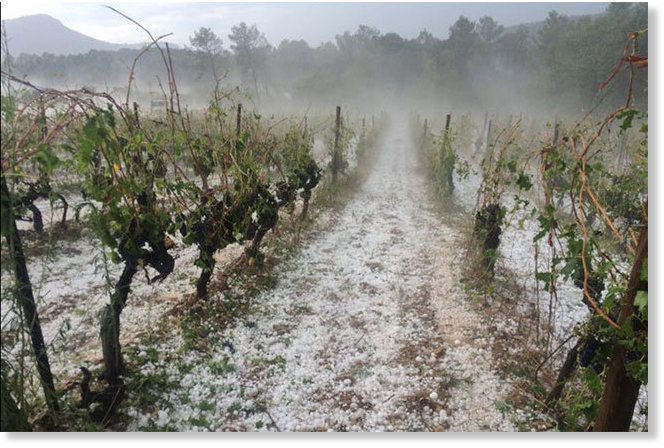
The people seem to be in a similar place here. Their work was unproductive and unsuccessful. The reason was that God “struck all the work of your hands with blight, mildew and hail” God did not do this to be “mean” or for retribution, He did it so that they would “return to me.” God was desperately trying to get their attention and shake their souls from their slumber. One of the “alarm clocks” used here was hail. I am not a farmer, but I suspect hail is something a farmer fears and dreads. Hail can reduce a year’s worth of work to a muddy mess in minutes.

God has used Hail in the past to get people’s attention. Back in Joshua God used hail as a weapon to best the enemies of Israel, and of course back in Egypt God used Hail stones to get Pharaoh’s attention (and the people of Israel’s too). God wants the people to return to Him so that they can be blessed and bear the good fruit they are intended to bear. Part of this process is apparently rebuilding the temple. In new testament lingo we would call this returning to God “repenting”, something Jesus spoke about all the time.

So how are rebuilding the temple and repentance related? It seems to me that rebuilding the temple is a long process that requires discipline and commitment. It has a starting point when the decision is made to begin reconstruction, but the real work is in the rebuilding process, which may take a lifetime and will likely occur in fits and starts. This is a little bit like the process I have experienced in attempting to do this blog for the last 4 years. It has happened in fits and starts and there were times when it seemed no progress was being made, but I am almost finished with the old testament so I have that going for me.

In contrast to the slow, constant rebuilding process repentance is the turning point. It is not the target or the goal, but merely a decision point. It is like a fork in the road or more appropriately it is a U-turn. I live in Michigan and we have something call a Michigan U-turn. When I first moved here I thought these were rather strange. Basically instead of turning left across traffic you often have to do a U-turn and then turn right to get to your destination. If this sounds rather complicated it is. To be honest I still mutter under my breath about Michigan U-turns, but I digress.

Modern day God-followers like myself are also in the “temple rebuilding” process, deconstructing and reconstructing our souls in God’s image. Like the temple, the beginning of the rebuilding process begins with repentance, turning around. The actual rebuilding takes a lifetime and in my experience it is never “finished” in the way a building project can be finished.

This long process of rebuilding could lead some to become discouraged I suppose, but for me it is encouraging to know that God does not expect a finished product, merely a willing worker. I think we should not be so preoccupied with the reconstruction process that we lose sight of the real target which is increased intimacy with God. That is what I think God is saying to the people of Israel near the end of the passage,”the fig tree, the pomegranate and the olive tree have not borne fruit,” Their lives are not bearing the fruit God has asked of them, to love God with all their heart and their neighbors as themselves.

So the pertinent question, and the take home message for me, seems to be is the “rebuilding” process we are engaged in improving our ability to bear fruit, i.e. loving God and loving our neighbors? If not then perhaps we are rebuilding the wrong temple.

Prayer: God help us in the process of rebuilding our souls so that we can bear the fruit that You need us to bear.

Posted in Christian Community, Christian Leadership, Christianity, Discipleship, Following God, Forgiveness, Free Will, God's Love for Us, Haggai, Obedience, The Nature of God, Trusting God | Tagged , , , , , | Leave a comment

Withholding the Dew

This is what the Lord Almighty says: “Give careful thought to your ways. Go up into the mountains and bring down timber and build my house, so that I may take pleasure in it and be honored,” says the Lord . “You expected much, but see, it turned out to be little. What you brought home, I blew away. Why?” declares the Lord Almighty. “Because of my house, which remains a ruin, while each of you is busy with your own house. Therefore, because of you the heavens have withheld their dew and the earth its crops. I called for a drought on the fields and the mountains, on the grain, the new wine, the olive oil and everything else the ground produces, on people and livestock, and on all the labor of your hands.” – Haggai 1:7‭-‬11

Welcome to the book of Haggai. Haggai is another of the minor prophets who spoke to the people of Israel.  He comes after the exile in Babylon (~ 520 B.C.). He may have been in exile and part of the remnant that returned to Jerusalem. The main topic of his message to the people is rebuilding the temple.  Apparently this relates to the second rebuilding of the temple under King Darius according to the introduction to the book. The rebuilding of the temple is on one level merely a historic account, but I wonder if God is trying to communicate some deeper truths here too.

The passage begins with a command from God to “Give careful thought to your ways”.  This is pretty much sums up a message God has been sending through the prophets in most of the old testament up to this point. God wants curious and courageous God-seekers willing to rebuild His temple.  He asks the people to go into the mountains and bring down trees so they can “rebuild the temple” This sounds like hard work that would require some sacrifice on the part of those involved.

The reason God gives for rebuilding the temple is interesting. “so that I may take pleasure in it and be honored”. I don’t often associate pleasure with God. I am not sure why this is the case. God invented the concept of pleasure and clearly there are parts of the bible that delve into this with some detail and specificity.  In the Song of Solomon this kind of passion for pleasure is described as a “Fiery love than cannot be dowsed” (Song of Solomon 8:5-7).  Why can’t God experience this same passion for the temple that the people are to rebuild?

The second part of the reason for rebuilding is so that God can be honored. I think this comes down to maintaining the proper posture and perspective toward God so that we can walk humbly with Him.  The humility we are to have toward God is independent of any outward intelligence, success, wealth, or worldly gifts we may possess. We are to attend to God’s house before we attend to our own, “each of you is busy with your own house”.  It seems the people were hard at work building wealth and houses for themselves while ignoring God and His house.

Then comes the water passage, “Therefore, because of you the heavens have withheld their dew”. Dew has typically been associated with a permeating presence of God, or the “dew of the morning” as it was described back in Isaiah 26:12-21. The concept of dew has been used as a metaphor for the Holy spirit or the spirit of God that descends on the earth. So for God to say here that the heavens will “withhold the dew” is really profound.  It sounds somewhat like the time between the prophets and the arrival of Jesus when God seemed to be absent for the people of Israel. The coming “drought” will affect the peace and prosperity of the people in an effort to get their attention, and convince them that they need to turn back to God.

Prayer: God thank You for restoring the dew through Jesus so that we can actively rebuild Your “temple” as curious and courageous God seekers.

Posted in Christianity, Covenant, Death and Dying, Discernment, Discipleship, Following God, Forgiveness, Free Will, Haggai, Jesus, Prophecy, Redemption, The Nature of God, The Spiritual Realm | Tagged , , , , , , , , | Leave a comment

From Beyond the Rivers of Cush

“Then I will purify the lips of the peoples, that all of them may call on the name of the Lord and serve him shoulder to shoulder. From beyond the rivers of Cush my worshipers, my scattered people, will bring me offerings. On that day you, Jerusalem, will not be put to shame for all the wrongs you have done to me, because I will remove from you your arrogant boasters. Never again will you be haughty on my holy hill. But I will leave within you the meek and humble. The remnant of Israel will trust in the name of the Lord . They will do no wrong; they will tell no lies. A deceitful tongue will not be found in their mouths. They will eat and lie down and no one will make them afraid.” – Zephaniah 3:9‭-‬13

This passage marks our float out of the book Zephaniah. It was a pretty short book with some interesting nuggets of knowledge along the way.

Today’s passage starts with an interesting word picture, serving God “shoulder to shoulder”. It reminds me of the command to walk humbly with your God in Micah 6:8. It seems in order to do this walking shoulder to shoulder with God some purification is required, “Then I will purify the lips of the peoples”. It is not clear why purifying the lips is the focus here rather than the whole body, but it seems the words the people are speaking reveals where their heart (soul) is. Much of the old testament has been preoccupied with being clean and how to become clean in the eyes of God.

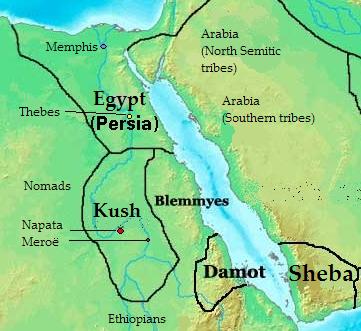
Then comes the water reference “From beyond the rivers of Cush my worshipers, my scattered people, will bring me offerings”. On one level this is merely a geographic reference to the people beyond the rivers of Cush. As I understand it the land of Cush was south of modern-day Israel near what is now Sudan along the Nile River south of Egypt. I am not sure what significance this particular location had except that it was somewhat remote and along a major water source, the Nile.

Another way to look at this reference is metaphorically. In a sense all God-followers are “worshipers”, and unless they are Jewish they are outside of the special relationship God has with the people of Israel. They are metaphorically “beyond the Rivers of Cush”. This is reassuring for a God-follower like myself that is in this camp.

It sounds like a bit of sifting is in store for the people of Israel, “I will remove from you your arrogant boasters”. This is certainly a good argument for not being an “arrogant boaster”. The people that will remain are those that are “meek and humble”. This sounds similar to the sermon on the mount where Jesus said the meek will inherit the earth (Matthew 5:5-7). It is ironic that Jesus gave this instruction on “the mount” and in this passage God is warning the people of Israel about being “haughty on my holy hill”.

The remnant after the sifting process will be a confident people able to “eat and lie down and no one will make them afraid”. This sounds like a people who can just take courage and do it! I think all modern-day God followers could benefit from this kind of courage and confidence.

Prayer: God you are the great sifter of souls. May we be seeking you so that when the sifting occurs we can remain with You.

Posted in Christianity, Discernment, Following God, Free Will, Love for the Lost, Obedience, The Earthly Realm, The Nature of God, The Spiritual Realm, Trusting God, Zephaniah | Tagged , , , , , , | Leave a comment

Sea will Become Pastures

Gaza will be abandoned and Ashkelon left in ruins. At midday Ashdod will be emptied and Ekron uprooted. Woe to you who live by the sea, you Kerethite people; the word of the Lord is against you, Canaan, land of the Philistines. He says, “I will destroy you, and none will be left.” The land by the sea will become pastures having wells for shepherds and pens for flocks. That land will belong to the remnant of the people of Judah; there they will find pasture. In the evening they will lie down in the houses of Ashkelon. The Lord their God will care for them; he will restore their fortunes. – Zephaniah 2:4‭-‬7

Today’s passage is talking about a geographic area that is frequently in the news today, the Gaza strip along the Mediterranean Sea. It sounds like God is predicting a change in ownership and perhaps a change in geography.  Many of the cities mentioned in this passage are still on the map today cities like Ashdod and Ashkelon.  This territory was granted to Israel as part of the 1949 armistice agreement, although it is still a very contentious area.

The water-related part comes toward the middle of the passage when God says “The land by the sea will become pastures having wells for shepherds and pens for flocks.” I do not know a lot about the soils or agriculture of this area, but in my experience land by the sea is not a good place for pastures or wells. This is primarily because of several factors that are related to proximity to the sea: 1) sandy soils devoid of nutrients; 2) shifting sands and sand dunes which can cover crops; 3) salty soil as a result of salt in the air; and 4) salty groundwater.  In order for this areas to become pastures one would have to overcome these problems.

Parts of this area are clearly settled and being farmed today.  Some of this is made possible by extensive desalinization plants located near the sea in the Gaza strip.  Interestingly one of the largest of Israel’s desalinization plants is located in Ashkelon. About 15,000 to 16,000 cubic meters of seawater is converted into fresh water every hour and provides about 15% of Israels fresh water supply. So this is not exactly a “well” but it certainly is functioning to provide the water needs of a lot of people in the region.  The question is whether this is a well the people did not dig or not.

There is apparently also a lot of hydroponic agriculture in this area as well.  Farmers sometimes raise fish as part of the closed loop water system to provide both protein and fertilizer from the fish that are raised.  Again this is not exactly “shepherds and pens for flocks” but it is close.  I suppose one could see the current geography and political boundaries as a fulfillment of the statement “That land will belong to the remnant of the people of Judah; there they will find pasture. In the evening they will lie down in the houses of Ashkelon. The Lord their God will care for them; he will restore their fortunes.”

I am not saying that the current state of affairs is a fulfillment of this prophecy. I do not know, and I am not going to wade into the deep water and political debate about who owns this land and whether the people of Israel should be there or not.  In my experience God is much more interested in breaking down borders and opening doors than creating or maintaining barriers to keep out our neighbors.

I think regardless of who owns the land, and what they are doing with it, the main take home message for me here is in the last sentence of the passage, “The Lord their God will care for them”.  What this “care” looks like is open to debate and depends somewhat on the posture and perspective of the person receiving God’s care.  I suppose one could argue that the knowledge, wisdom, and skills being used by modern settlers in Israel is a gift from God to allow them to be in this diffuclt to settle land. I think what God desires is that we acknowledge His care and ownership of all that we have regardless of our nationality, religion, or political background. In the end God wins.

Prayer: God everything we have is really Yours, help us to acknowledge Your care and ownership.

Posted in Christianity, Following God, God's Love for Us, Prophecy, The Earthly Realm, Trusting God, Zephaniah | Tagged , , , , , | 2 Comments

A Day of Clouds and Blackness

The great day of the Lord is near— near and coming quickly. The cry on the day of the Lord is bitter; the Mighty Warrior shouts his battle cry. That day will be a day of wrath— a day of distress and anguish, a day of trouble and ruin, a day of darkness and gloom, a day of clouds and blackness— a day of trumpet and battle cry against the fortified cities and against the corner towers. “I will bring such distress on all people that they will grope about like those who are blind, because you have sinned against the Lord . Their blood will be poured out like dust and their entrails like dung. Neither their silver nor their gold will be able to save them on the day of the Lord ’s wrath.” In the fire of his jealousy the whole earth will be consumed, for he will make a sudden end of all who live on the earth. – Zephaniah 1: 14‭-‬18

I was going to entitle this post “a day of clouds” but it turns out I already have a post by that name from Ezekiel (Ezekiel 30: 1‭-‬19) so I chose the entire phrase “a day of clouds and blackness”. In Ezekiel the “doom” was coming from Egypt and I concluded that one’s view of “the clouds” depends somewhat on where one is standing relative to God.

In today’s passage the “doom” appears to be coming from Babylon and it is being visited on all those who have “sinned against the Lord”, although the wrath being described here sounds more global in scope, “In the fire of his jealousy the whole earth will be consumed, for he will make a sudden end of all who live on the earth”. Either way its bad.

The outlook here is pretty bleak. God indicates He will “bring such distress on all people that they will grope about like those who are blind…Their blood will be poured out like dust and their entrails like dung. The blindness I get and maybe it is not so different from the blindness we experience everyday as “cave dwellers” when we try to approach the light. The other part of the description contains two murky metaphors to be sure.

What does it mean for “blood to be poured out like dust”. I think of dust as soil or dirt without water. I guess in a sense that is what we all are when we are separated from our “water source“, God, dust without water. So what God is saying here is that this calamity will come and the people who do not seek God, their blood will be poured out like dust. The people who do turn back to God and seek Him would presumably have access to the spring of Living Water that God provides and regardless of the consequences for their earthly vessel their souls would be hydrated and poured out to be with God.

The second metaphor is even more bizarre, “entrails like dung”. Entrails have come up a few times along my float so far. Most notably in Leviticus 1:5-13 when God speaks about entrails and animal legs. My impression of entrails is they are something best left where it is serving a purpose like in the body of the owner. So to take something that is already pretty gross and say that it is filled with something equally gross, “dung” paints a pretty bleak picture for those who separate themselves from God by choice.

Unfortunately, this particular passage ends without much hope or resolution except the implicit hope that is in us through choosing not to be “dust” by planting ourselves near the One River that can keep us from becoming “dusty”.

Prayer: God this passage paints a bleak picture of our separation from You. Help us to seek You so we do not become dusty and dry.

Posted in Christianity, Death and Dying, Following God, Free Will, The Earthly Realm, The Spiritual Realm, Zephaniah | Tagged , , , , , | 1 Comment

Swept Away Part II

“I will sweep away everything from the face of the earth,” declares the Lord . “I will sweep away both man and beast; I will sweep away the birds in the sky and the fish in the sea— and the idols that cause the wicked to stumble.” “When I destroy all mankind on the face of the earth,” declares the Lord , “I will stretch out my hand against Judah and against all who live in Jerusalem. I will destroy every remnant of Baal worship in this place, the very names of the idolatrous priests— those who bow down on the roofs to worship the starry host, those who bow down and swear by the Lord and who also swear by Molek, those who turn back from following the Lord and neither seek the Lord nor inquire of him.” Be silent before the Sovereign Lord , for the day of the Lord is near. The Lord has prepared a sacrifice; he has consecrated those he has invited. – Zephaniah 1:2‭-‬7

Welcome to the book of Zephaniah, another book for which I must plead woeful ignorance soon to be rectified. Apparently Zephaniah was the great- great- grandson of King Hezekiah so he has that going for him. He was also a contemporary of Jeremiah and lived in or near Jerusalem around 641-610 B.C. The book of Jeremiah was a wealth of water imagery and wisdom so I am looking forward to this stretch of water and the insights it may hold. I wanted to title this post “swept away” but I discovered that I had already used that title back in Hosea (Hosea 4: 1‭-‬3).

Clearly the passage today is about judgment for people who have gone astray and are not following God. God will sweep away all the “fish in the sea”.  This is an interesting way to put it in that the previous book of Habakkuk people were being compared to fish and being caught in a dragnet or on with hooks. It seems to the “net” and “hooks” are actually idols, “the idols that cause the wicked to stumble”.  This showed up back in Jeremiah when the people asked the rhetorical question “Do idols bring rain?” (Jeremiah 14:19-22). The answer provided here is no God is the Father of the Rain.

One of the specific issues being addressed here is Baal worship, essentially placing trust in someone or something other than God.  The people were also looking to the stars for wisdom as they “bow down on the roofs to worship the starry host”. I can appreciate the stars on a clear night, but that is something different than looking to them for wisdom or insights about how to live or who to love.  It sounds like the people were involved in astrology of some sort trying to divine the future or make decisions based on the positions of the planets and stars.  There are many people that still do this today.

In addition to Baal and star worship the people “turn back from following the Lord and neither seek the Lord nor inquire of him.” So the people are not faithfully following God. They are “turning back” from their “turning back” which results in heading the direction you were heading in the first place.  They are living as if they do not need or want God.  What God really wants is for us to “seek the Lord” and “Inquire of Him”.  This should not be so hard.

God is not asking for perfection here, in fact it sounds like he is asking for the people to acknowledge they are flawed followers and go looking for Him. He wants us to ask questions and be curious about Him rather than the motion of the stars or some idol on a shelf. He wants to engage in this somewhat confusing celestial game of hide and seek with us.  I get the sense that it is in the seeking and inquiry that we find Him.  He is not found in the idols, altars, or even the priests that He sometimes uses to get, and keep, our attention.

The passage ends with some powerful words “Be silent before the Sovereign Lord, for the day of the Lord is near. The Lord has prepared a sacrifice; he has consecrated those he has invited”.  The “sacrifice” sounds like an allusion to Jesus.  Those who follow Him are “the invited”.  It is interesting that God instructs the people to “be silent” before the Lord. It seems the way to God is not through many words or even many actions, it is through seeking, asking, and listening (being silent). God is the Living Water and He wants us to be thirsty.  If this passage is representative I think I am going to like the book of Zephaniah.

Prayer: God help us to seek, ask, and listen so that we can live and love the way you intended.


Posted in Christian Community, Christianity, Discipleship, Following God, Forgiveness, Free Will, Jesus, Life Together, Love for the Lost, Redemption, religion, Wisdom, Zephaniah | Tagged , , , , , , , | Leave a comment