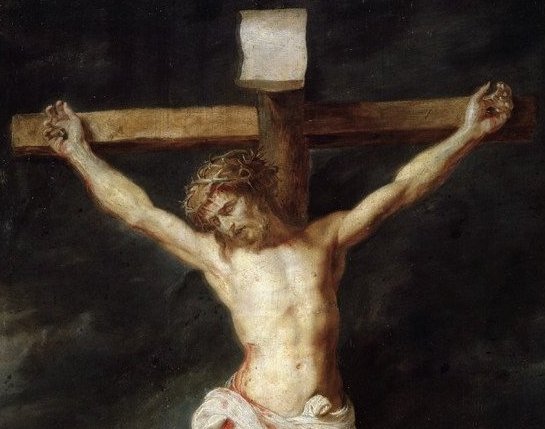
Clear Conscience Toward God

Who is going to harm you if you are eager to do good? But even if you should suffer for what is right, you are blessed. “Do not fear their threats; do not be frightened.” But in your hearts revere Christ as Lord. Always be prepared to give an answer to everyone who asks you to give the reason for the hope that you have. But do this with gentleness and respect, keeping a clear conscience, so that those who speak maliciously against your good behavior in Christ may be ashamed of their slander. For it is better, if it is God’s will, to suffer for doing good than for doing evil. For Christ also suffered once for sins, the righteous for the unrighteous, to bring you to God. He was put to death in the body but made alive in the Spirit. After being made alive, he went and made proclamation to the imprisoned spirits— to those who were disobedient long ago when God waited patiently in the days of Noah while the ark was being built. In it only a few people, eight in all, were saved through water, and this water symbolizes baptism that now saves you also—not the removal of dirt from the body but the pledge of a clear conscience toward God. It saves you by the resurrection of Jesus Christ, who has gone into heaven and is at God’s right hand—with angels, authorities and powers in submission to him. – 1 Peter 3:13‭-‬22

I have floated through James and now come to one of letters written by the apostle Peter.  He was apparently in Rome when this letter was written with the help of Silas.  It was apparently delivered by Silas to  believers in the area of present day Turkey.

It sounds like the recipients of the letter were somewhat lost and confused on their journey home. They seem to be experiencing some level of persecution for their faith, but there also seems to be a drifting away or loss of focus as they try to faithfully follow a Messiah no longer physically present.

This brings about a discussion of the tension between the secular and the spiritual. A tension that was exemplified in Christ “He was put to death in the body but made alive in the Spirit.” The concept of a conscience is brought up as a way to describe this internal secular/spiritual tension. I am not sure why Peter does not mention the Holy Spirit here as it would seem to be an important player in this discussion of conscience.

When I think of conscience my mind conjures images from Hollywood and cartoons of shoulders occupied by little angel and devil characters that speak to us as we make decisions. This depiction was usually about a choice between “good” and “evil”. Should I do this or that thing? The crisis of conscience here is mainly about keeping a “clear conscience”, specifically a “clear conscience toward God”. What does this mean? Let’s try to unpack it.

Conscience is typically thought of as an internal voice that helps guide our decisions and ultimately determines what kind of person we will be. This would seem to describe at least part of the role of the Holy Spirit poured into the souls of believers, which is why I am a bit puzzled that Peter does not mention it here.

A “clear” conscience is tied to the “cleansing” of the world recounted in the story of Noah and his family that were “saved through water, and this water symbolizes baptism that now saves you also—not the removal of dirt from the body but the pledge of a clear conscience toward God”. So our baptism in water, although it symbolizes being made clean through Christ, is really a recognition that we will never will have a “clean” conscience while we are mucking about here in the land of oblivion. We will have something eminently more valuable, a clear conscience toward God.

This does not mean a ticket to disregard the inner voice that is helping us to be faithful in our following of God, but rather a release from the constant guilt and distraction created by an endless quixotic quest for a “clean” conscience. A clear conscience is freeing, while a “clean” conscience can be a spiritual straight jacket restricting our movement in response to God’s leading. A clear conscience allows us to focus on the eternal rather than the ephemeral. The less we focus on the “here and now” the more we can tune into the “there and then”, which I think is what Peter is trying to communicate here.

I can understand why Peter felt the need to write to these believers. This is somewhat confusing stuff, funny water to be sure. This definitely feels like a passage I may look back on and realize I missed something important.

Prayer: God help us to accept the gift of a clear conscience towards you so we can focus on the eternal rather than the ephemeral.

Posted in 1 Peter, Angels, Ceremonial Cleansing, Christianity, Discipleship, Following God | Tagged , , | 6 Comments

Lifeguards

https://www.nrpa.org/

Is anyone among you in trouble? Let them pray. Is anyone happy? Let them sing songs of praise. Is anyone among you sick? Let them call the elders of the church to pray over them and anoint them with oil in the name of the Lord. And the prayer offered in faith will make the sick person well; the Lord will raise them up. If they have sinned, they will be forgiven. Therefore confess your sins to each other and pray for each other so that you may be healed. The prayer of a righteous person is powerful and effective. Elijah was a human being, even as we are. He prayed earnestly that it would not rain, and it did not rain on the land for three and a half years. Again he prayed, and the heavens gave rain, and the earth produced its crops. My brothers and sisters, if one of you should wander from the truth and someone should bring that person back, remember this: Whoever turns a sinner from the error of their way will save them from death and cover over a multitude of sins. – James 5:13‭-‬20

The topic of today’s passage is community and caring for one another. This is an especially timely and important message as we enter another season of masks and social distancing to prevent the spread of COVID. My sense from reading this letter is there may have been some social distancing going on among the believers and those they were called to care for and protect.

The caring for one another is taken to a potentially costly level as these believers are instructed to confess their sins to one another. The Catholic church has codified this practice with the confessional, but I am not sure that is exactly what James has in mind when he says “confess your sins to each other and pray for each other so that you may be healed.” This sounds to me like a peer to peer praying and confession rather than a top down priest to parishioner activity.

Granted this level of vulnerability is really hard and requires great trust in one another and God to hear our prayers and petitions despite our flaws and imperfections. Let’s face it we are all flawed followers. So why do we feel self conscious sharing our flaws with one another? It requires authenticity and audacity to believe in a healing no matter how big the sin or sickness. This is what God wants of us – to be righteous and believe that God can heal any sickness or sin “The prayer of a righteous person is powerful and effective. Does that mean immediate results from every prayer? I don’t think so.

James provides an example of a “righteous person” to emulate, Elijah. His prayers reached the Father of the rain and caused a 3 1/2 year drought. Then he prayed again and God gave Rain on a dry and dusty land. James is connecting Elijah praying for rain to bring about fruitful crops, and believers praying for one another to be filled with Living Water so that their lives are fruitful and produce healthy and effective fellow believers.

The last part of the passage suggests that we are to help one another when we get lost along our journey home. We are to act like lifeguards looking for those who are struggling to keep their heads above water and are in danger of giving up and drowning.

Then comes a surprising riffle. It seems that each time we successfully turn “a sinner from the error of their way” we are also in some sense saving ourselves. Perhaps the act of attempting a rescue reminds us of ways that we also are drowning and in need of help? Ultimately, we cannot save ourselves or anyone for that matter. The squalls in which we are foundering are fundamentally spiritual rather than secular. We need the ultimate lifeguard – the One who can walk on water to provide us a window between worlds. Only He can help us to cross the river no one can cross.

Prayer: God help us to care and pray for one another with humility and grace, even when doing so is hard and makes us vulnerable.

Posted in Christian Community, Christianity, Discernment, Following God, Forgiveness, God's Love for Us, James, Life Together, Sin | Tagged , , | 1 Comment

Seasonality

Now listen, you rich people, weep and wail because of the misery that is coming on you. Your wealth has rotted, and moths have eaten your clothes. Your gold and silver are corroded. Their corrosion will testify against you and eat your flesh like fire. You have hoarded wealth in the last days. Look! The wages you failed to pay the workers who mowed your fields are crying out against you. The cries of the harvesters have reached the ears of the Lord Almighty. You have lived on earth in luxury and self-indulgence. You have fattened yourselves in the day of slaughter. You have condemned and murdered the innocent one, who was not opposing you. Be patient, then, brothers and sisters, until the Lord’s coming. See how the farmer waits for the land to yield its valuable crop, patiently waiting for the autumn and spring rains. You too, be patient and stand firm, because the Lord’s coming is near. Don’t grumble against one another, brothers and sisters, or you will be judged. The Judge is standing at the door! – James 5:1‭-‬9

Rich people weeping and wailing, not something you see every day.  Popular culture and marketing mavins would suggest just the opposite.  Money and wealth makes one happy not sad right? This passage suggests wealth brings misery, rot, and moth eaten clothes.

It sounds like the amount of money is not the issue but what one does with it and priority it takes in one’s life – the impact money can have on our heart and soul. The passage then creates a connection between sad wealthy people and a specific group of sad wealthy people who “condemned and murdered the innocent one”. It is not stated explicitly but this is a reference to the crucifixion of the Messiah and those in power who colluded with the Romans to make it happen.

Finally we arrive at the water reference “See how the farmer waits for the land to yield its valuable crop, patiently waiting for the autumn and spring rains.” This is clearly a reference to Jesus’ return which was a point of much confusion for those reading this letter. The reference to “autumn and spring rains” is very similar to language in a passage in Joel 2:20‭-‬24. This same language shows up in Jeremiah 5:20-25.

It seems there is an important element of “seasonality” to the rains God sends into our lives. My sense is this is a feature not a flaw. God wants us to fix our eyes on Him whether we are rich or poor. If we are busy tending our money and wealth we are probably not keeping our eyes on God.

Prayer: God help us to prioritize You in our lives above all else.

Posted in Christianity, Following God, James, Jesus, The Earthly Realm, wealth | Tagged , , | Leave a comment

Vanishing Mist

Now listen, you who say, “Today or tomorrow we will go to this or that city, spend a year there, carry on business and make money.” Why, you do not even know what will happen tomorrow. What is your life? You are a mist that appears for a little while and then vanishes. Instead, you ought to say, “If it is the Lord’s will, we will live and do this or that.” As it is, you boast in your arrogant schemes. All such boasting is evil. If anyone, then, knows the good they ought to do and doesn’t do it, it is sin for them. James 4:13‭-‬17

We are mist that appears for a little while then vanishes. No matter how successful we are and how much material wealth and knowledge we accumulate we are ephemeral on this earth. We could go the way of Ecclesiastes and conclude that everything is meaningless or we can cherish every moment of the journey because our time is so limited and we have so much to learn.

Mist or dew has come up several times during my float through the bible. Way back in Deuteronomy the dew represented God’s blessings which can sometimes seem ephemeral compared to the steady water supply provided by deep wells of living water. Gideon in the book of Judges relied on dew and lamb’s wool to discern God’s will. This passage uses language very similar to language in Hosea “It is said of these people, “They offer human sacrifices! They kiss calf-idols!” Therefore they will be like the morning mist, like the early dew that disappears”.

It is only later, after the confluence of the old and new testaments, that clouds and mist take on new meaning as God Himself “condenses” on the earth in human form. It is interesting that we also are compared to mist. I think the point here is that as we go about our journey here on earth we tend to focus on the wrong things. Our spirit is what is eternal and real while all material things are ultimately ephemeral.

In the hydrologic cycle on earth all water is in motion from cloud to land, land to river, river to sea, and from the sea back to the clouds again. It is the journey that defines the raindrop’s purpose. Just as it is the spiritual cycle, and the work of our souls, that defines our journey here on earth, not the body in which our soul is travelling. What is the “work” of our souls? I think it is the process of discerning God’s will for our lives and acting on His will to grow into the souls He needs us to be.

This ia alluded to in the last part of the passage when it says “If it is the Lord’s will, we will live and do this or that.” God is in the business of sculpting our souls and stripping away all the things that make us blind if we let Him. He does however give us the freedom to remain in the dark distracted by the dollars and diplomas so valued by this world.

Prayer: God help us to focus on the health and prosperity of our souls.

Posted in Christianity, Death and Dying, Discernment, Following God, James, Jesus, The Earthly Realm, The Spiritual Realm | Tagged , , , , | 1 Comment

Salt Springs and Fresh Water

Likewise, the tongue is a small part of the body, but it makes great boasts. Consider what a great forest is set on fire by a small spark. The tongue also is a fire, a world of evil among the parts of the body. It corrupts the whole body, sets the whole course of one’s life on fire, and is itself set on fire by hell. All kinds of animals, birds, reptiles and sea creatures are being tamed and have been tamed by mankind, but no human being can tame the tongue. It is a restless evil, full of deadly poison. With the tongue we praise our Lord and Father, and with it we curse human beings, who have been made in God’s likeness. Out of the same mouth come praise and cursing. My brothers and sisters, this should not be. Can both fresh water and salt water flow from the same spring? My brothers and sisters, can a fig tree bear olives, or a grapevine bear figs? Neither can a salt spring produce fre – James 3:5‭-‬12

The topic for today is tongues and the power of this seemingly unassuming body part. It is rather small relative to other more vital parts like our brain and heart, but this passage argues it has an ability to corrupt “the whole body, sets the whole course of one’s life on fire, and is itself set on fire by hell.”. Wow I never considered the great power of my palate.

This idea of tongues and he’ll came up back in Like 16:19-31 in a post entitled “the great chasm“. In that story a rich man finds himself in hell thirsting for water because of his life choices that focused on material wealth at the expense of his eternal soul. This passage is alluding to another consequence of an untamed tongue – a “salty” disposition.

My daughter likes to use the term “salty” to describe a state of being annoyed or bothered by something or someone, “I am salty about…” The “saltiness” described here is something beyond brief bothersome event. It is describing a pattern of personality that is in some sense poisonous and toxic, “With the tongue we praise our Lord and Father, and with it we curse human beings, who have been made in God’s likeness. Out of the same mouth come praise and cursing.”

The author is arguing that praising and cursing are incompatible with one another, like oil and water. Oil and water do not readily mix or combine but salt dissolves in water making it bitter and eventually undrinkable. Salty water can also ruin land and crops making them unproductive and “bitter”. This is what an untamed tongue can do to our lives and our faith if left unchecked. It can turn the well of living water that is supposed to be within us into a salty spring.

It is difficult and expensive to desalinate salty water. It is much easier to prevent mixing fresh and salty water in the first place. It is equally difficult to “uncontaminate” our lives and our faith after we have allowed our tongues to contaminate them. I think we have all known people who become more angry and bitter, “salty”, as they get older. Their salty lives are a consequence of perpetually unchecked tongues.

Our lives are supposed to be filled with Living Water from the One River that is always fresh and always new. The fresh water can be used by the Master Gardener to produce amazing things during all stages of our lives from infancy to old age.

If the “fruit” of our lives is not what we want, and we are feeling bitter and “salty”, we need to tame our words and tongue – “My brothers and sisters, can a fig tree bear olives, or a grapevine bear figs? Neither can a salt spring produce fresh water.”

Prayer: God help us to guard our tongues and use them to convey love and blessing rather than bitterness and cursing.

Posted in Christianity, Covenant, Death and Dying, Discernment, Faith, Following God, Healing, James, living water, The Earthly Realm, The Nature of God, Trusting God | Tagged , , , | Leave a comment

Double-mindedness and Choppy Waters

Chaotic Waves on Lake Michigan

Consider it pure joy, my brothers and sisters, whenever you face trials of many kinds, because you know that the testing of your faith produces perseverance. Let perseverance finish its work so that you may be mature and complete, not lacking anything. If any of you lacks wisdom, you should ask God, who gives generously to all without finding fault, and it will be given to you. But when you ask, you must believe and not doubt, because the one who doubts is like a wave of the sea, blown and tossed by the wind. That person should not expect to receive anything from the Lord. Such a person is double-minded and unstable in all they do. – James 1:2‭-‬8

Welcome to the book of James. Apparently this book was written by someone very familiar with Jesus, His brother James. It must have been hard and challenging to be the brother of Jesus. Harder still to accept that your sibling was also your savior. I am not sure If I could manage this level of maturity. I am the youngest of five siblings and four brothers. I am not sure my brothers ever really accepted my transition to adulthood, let alone a transcendental transition like James experienced in his sibling.

The passage starts with some encouragement for struggling Christ followers. It sounds like James is trying to shore up followers who have perhaps fallen away or are struggling with holiness or “body awareness“. The antidote or “cure” for the spiritual trials is perseverance and faith – “testing of your faith produces perseverance”.

Perseverance is a powerful word. It conjures in my mind images of struggling athletes shedding blood, sweat, and tears to reach some goal or to win a race. The “race” these early Christ followers were “running” was continuing to faithfully follow the savoir amidst many decievors and distractions. I am reminded of the Olympic athletes who are being “tested” right now as they compete for medals. Many of these athletes have invested a significant portion of their lives to compete at the Olympic level. Do we train as faithfully or as consistently as Christians? What does our “training” look like?

The passage suggests that our “training” largely consists of seeking wisdom from God with humility and tears, anyone who “lacks wisdom, you should ask God”. It is OK not to know everything about our faith, and even our relationship with God, as long as week seek our answers from the One who knows both the answers and us better than we know ourselves.

We are to seek this wisdom with confidence, “But when you ask, you must believe and not doubt, because the one who doubts is like a wave of the sea, blown and tossed by the wind.” Asking questions and having wondering souls is expected and beneficial as long as we maintain confidence in the One with the answers. If we doubt we lose our “form” and become a purposeless wave.

Waves on the ocean and lakes are mesmerizing to me. I can sit and watch them for hours. One of the most interesting aspects of water waves is that the water itself is not really moving. It is the energy imparted through wind, tidal forces, or some other force that moves and results in the breakers at the beach. The “chop” described by many boaters is a chaos of waves moving in different directions. This type of wave action is difficult to navigate.

I think what James is alluding to here is that some of the Christ followers he is addressing are not seeking God’s wisdom and they are creating a chaotic “chop” within the early body of believers we collectively call “the church”. These “double-minded” people make it more difficult for everyone to faithfully follow God. Asking questions of God with perseverance and persistence is good and fruitful. Questioning everything with a “double-mind” is bad and leads to wandering waves without purpose.

Prayer: God help us to seek our answers from You as we navigate the sometimes choppy waters of following Christ.

Posted in Christian Community, Christian Leadership, Christianity, Discernment, Discipleship, Faith, Following God, James, religion | Tagged , , | Leave a comment

Holiness and Body Awareness

Make every effort to live in peace with everyone and to be holy; without holiness no one will see the Lord. See to it that no one falls short of the grace of God and that no bitter root grows up to cause trouble and defile many. See that no one is sexually immoral, or is godless like Esau, who for a single meal sold his inheritance rights as the oldest son. Afterward, as you know, when he wanted to inherit this blessing, he was rejected. Even though he sought the blessing with tears, he could not change what he had done. – Hebrews 12:14‭-‬17

This is the last water passage in Hebrews.  It is one of those passages that I read and to be honest I am not so inspired or excited.  Sort of like coming to a stretch of river with quiet water and a headwind.  I will push on paddling with the expectation and hope of more interesting water ahead.

It begins with a very sensible command to live in peace with everyone.  If everyone agreed to do this the world would be a different place.  Then comes a bit of an unexpected riffle in this otherwise quiet water – we are to be holy for “without holiness no one will see the Lord.”. Apparently there is something about striving for holiness that gives us cave dwellers sight. Interestingly, the last passage I reflected on in Hebrews was about seeing Him who is invisible.

Holiness is a tricky concept, mainly because I think it has been incorrectly used and abused by some people.  It conjures images for me of religious practices and traditions that are intended to represent holiness. We are all flawed followers in need of grace no matter how “holy” we are.  The pope just as much as a pauper living in a tent along a freeway.  We are called to a radical love for God and one another, regardless of salvation state or station.

So what are we to make of this ability of holiness to act as spiritual spectacles that enable us to see an invisible God?  As I have chewed on this the only thing I can think of is that holiness is more of a posture than a practice.  It is our position relative to God’s outstretched hand rather than a set of practices that make us holy.  We tend to focus on the practices to achieve holiness when maybe we should be paying more attention to “body awareness” – both our physical body and our spiritual “body”.

I have been enjoying watching the 2020 Olympic games.  One of my favorite events is men’s and women’s gymnastics.  This is partially because I was a gymnast from about age five or six years old until college.  Watching these athletes perform amazing feats with their bodies brings back many fond memories for me. I grew up in the gym training my body to do everything from handstands to highbar. I discovered that all this practice and training made me better at other sports, even without practicing.

So back to the passage and our call to be holy. Maybe holiness is really about “body awareness”. Knowing clearly where we are in relation to God and others. Maybe this sort of “holiness” only comes about through extensive practice in “God’s gym” – everyday life in community with others.

The passage ends with a reference to Esau and his poor decision to trade his inheritance for a meal. His tears reveal his soul sickness at losing his inheritance. We should be equally sad when we trade true holiness for haughtyness.

Prayer: God help us to be holy by knowing our position relative to You and others.

Posted in Christian Community, Christian Leadership, Christianity, Discernment, Discipleship, Following God, God's Love for Us, Hebrews, Life Together, religion | Tagged , , | 3 Comments

Him Who is Invisible

By faith Moses, when he had grown up, refused to be known as the son of Pharaoh’s daughter. He chose to be mistreated along with the people of God rather than to enjoy the fleeting pleasures of sin. He regarded disgrace for the sake of Christ as of greater value than the treasures of Egypt, because he was looking ahead to his reward. By faith he left Egypt, not fearing the king’s anger; he persevered because he saw him who is invisible. By faith he kept the Passover and the application of blood, so that the destroyer of the firstborn would not touch the firstborn of Israel. By faith the people passed through the Red Sea as on dry land; but when the Egyptians tried to do so, they were drowned. – Hebrews 11:24‭-‬29

Today’s passage is another appeal to the nostalgia and history found in Moses and his faith. Moses was an impressive God-follower to be sure, but he was a flawed follower just like me. Yesterday’s post connected the old and the new through the mixing of blood and water for atonement and forgiveness. This passage connects Moses’ faith in an invisible God with the faith that Christ followers require.

Moses’ first demonstration of faith was rejecting the ephemeral earthly pleasures to be found with Pharaoh and his daughter in Egypt. Interestingly, the author makes a direct connect between Moses and Christ “He regarded disgrace for the sake of Christ as of greater value than the treasures of Egypt, because he was looking ahead to his reward”.

Moses was following God, but he was also following Christ hundreds of years before he was born. This represents a certain “bending of time” that must have been confusing for these earthly followers. How could Moses look forward to a reward in the distant future? My conclusion, after chewing on this for a bit, is that the “reward” did not change. The reward for faithful following was, is, and always will be to be with God for eternity. The same arm that lit up a bush on Mount Sinai was nailed to a cross for us. God believes in us and wants us to have the faith to trust and believe in Him.

Moses succeeded in his faith journey despite missteps and mistakes, “he persevered because he saw him who is invisible”. In many ways this is the essence of faith – to “see” the invisible and act on what we see. Faithful following is more than believing in metaphysical miracles. It is boldly stepping into the unknown confident that God has our backs.

The examples of Moses’ faith provided are the keeping of the Passover, which will take on new meaning through Christ’s blood shed on the cross; and the parting of the Red Sea described in Exodus 14: 15-31. Moses leading the people across a seemingly uncrossable body of water is an interesting parallel to the mysterious man in Ezekiel 47:1‭-‬6 that allows us to cross “a river no one can cross.“.

This brings us back to concept the author is trying to communicate – how do we find an “invisible God”? Hard concept simple answer – faith. The faith that Moses had and that we can choose to have, a faith that requires actions similar to those described in Acts.

Prayer: God help us to have faith in things unseen so we can find our way to You.

Posted in atonement, Christian Community, Christianity, Covenant, Discernment, Discipleship, Following God, Free Will, God's Love for Us, Hebrews, Jesus, Redemption, The Nature of God, The Spiritual Realm, Trusting God | Tagged , , | 1 Comment

Mixing Blood and Water

In the case of a will, it is necessary to prove the death of the one who made it, because a will is in force only when somebody has died; it never takes effect while the one who made it is living. This is why even the first covenant was not put into effect without blood. When Moses had proclaimed every command of the law to all the people, he took the blood of calves, together with water, scarlet wool and branches of hyssop, and sprinkled the scroll and all the people. He said, “This is the blood of the covenant, which God has commanded you to keep.” In the same way, he sprinkled with the blood both the tabernacle and everything used in its ceremonies. In fact, the law requires that nearly everything be cleansed with blood, and without the shedding of blood there is no forgiveness. – Hebrews 9:16‭-‬22

Blood and water….two very important substances.  When I think of these two liquids I think of two related proverbs or sayings, “water is life” and “blood is thicker than water”.  The first is a recognition that as humans, consisting of 45-75% water, we need water to live.  The second is an allusion to the importance of family and relationships.  Mixing these concepts of water and blood, as Moses was instructed to do, results in a life-giving “family”.  This is not a bad description of a group of faithful followers struggling to make their way home seeking after God.

The author seems to be a linking human dying and earthly inheritance with the sacrifices and blood required for atonement.  In the old testament Moses was the “mixer” and deliverer, the first covenant.  In the new testament the Messiah is “mixer”.  The water and blood are his life and sacrifice on the cross, the second covenant.  Let’s explore the first covenant then we will tackle the second.

Blood is essentially water infused with the essence of life, oxygen – without oxygen we die in a matter of minutes.  We inhale and our miraculous bodies incorporate the oxygen into our blood and move it to all parts of our body.  The oxygen keeps our cells alive and functioning.  When Moses mixed the blood and water he was mixing the ceremonial cleansing achieved with water and the atonement achieved through animal sacrifices.  Moses sprinkled the people of Israel, as God’s representative on earth, to give life and a sense of family.

On to the second “mixing”.  Jesus associated Himself with water on many occasions and I have reflected before about how God is like water.  There is both a cleansing and life-sustaining component to Christ’s watery nature. Jesus clearly indicated we should thirst for Him every bit as much as we thirst for life-giving water for our bodies. Jesus demonstrated His mastery of water and Waves and promised to quench our thirsty souls.

Jesus’ death on the cross, and the spilling if His own blood and water achieved a metaphysical mixing fundamentally different than the mixing of Moses. His life and sacrifice was personal and is accessible to each of us individually. We can choose to be sprinkled by Christ to receive forgiveness and atonement in this way or we can stay dirty and thirsty – our call.

Prayer: God thank You for providing life and forgiveness through Jesus. Help us to receive this gift of grace.

Posted in atonement, Ceremonial Cleansing, Christian Community, Christianity, Covenant, Faith, Following God, Forgiveness, Free Will, God's Love for Us, Hebrews, Jesus, living water, Messiah, Redemption, The Spiritual Realm | Tagged , , | 3 Comments

Falling Away

It is impossible for those who have once been enlightened, who have tasted the heavenly gift, who have shared in the Holy Spirit, who have tasted the goodness of the word of God and the powers of the coming age and who have fallen away, to be brought back to repentance. To their loss they are crucifying the Son of God all over again and subjecting him to public disgrace. Land that drinks in the rain often falling on it and that produces a crop useful to those for whom it is farmed receives the blessing of God. But land that produces thorns and thistles is worthless and is in danger of being cursed. In the end it will be burned. – Hebrews 6:4‭-‬8

“Falling away” is the topic of today’s passage. The central idea is that once you have experienced the “heavenly gift” it is impossible to truly “fall away” and return to your state of repentance. This is turbulent water for sure as we are all flawed followers in need of continual redemption and repentance.

The idea is that once we have accepted Christ, and begun our journey home, we never get “lost” along the way. Honestly this has not been my experience and I have spoken with many other faithful followers who have had their share of difficult roads and dry times. I think the author’s point here is that we need to acknowledge when we stumble and realize the weight and consequences of our actions.

The author goes as far as saying “they are crucifying the Son of God all over again and subjecting him to public disgrace.” So our sidetracks and stumbles are compared to choosing to crucify Christ all over again, pretty serious stuff. I am confident God loves us just as He loved even those who were crucifying Him, but that does not let us off the need to choose wisely.

Then comes the water reference “Land that drinks in the rain often falling on it and that produces a crop useful to those for whom it is farmed receives the blessing of God”. The idea of God being associated with rain shows up many times in the old and new testaments. The common theme of many of these references is that we are tender plants, and God is the father of the rain. The purpose of Rain is to help us to grow and eventually produce good fruit.

If the end result of receiving God’s blessings is a life that “produces thorns and thistles” than we have a problem. We are “in danger of being cursed. In the end it will be burned.” This is not a result of God’s wrath but rather our willful separation from Him and the decisions of our daily lives. We need to consciously plant ourselves near the Spring of Living Water so that our roots are strong and the Master Gardener can use us to produce amazing fruits.

Prayer: God help us to appreciate the magnitude of when we fall short but never lose sight of the grace you extend.

Posted in Christian Community, Christianity, Discernment, Discipleship, Following God, Forgiveness, Free Will, Hebrews, Jesus, Obedience, Redemption | Tagged , , | 1 Comment