Setting Aside the Sabbath

On a Sabbath Jesus was teaching in one of the synagogues, and a woman was there who had been crippled by a spirit for eighteen years. She was bent over and could not straighten up at all. When Jesus saw her, he called her forward and said to her, “Woman, you are set free from your infirmity.” Then he put his hands on her, and immediately she straightened up and praised God. Indignant because Jesus had healed on the Sabbath, the synagogue leader said to the people, “There are six days for work. So come and be healed on those days, not on the Sabbath.” The Lord answered him, “You hypocrites! Doesn’t each of you on the Sabbath untie your ox or donkey from the stall and lead it out to give it water? Then should not this woman, a daughter of Abraham, whom Satan has kept bound for eighteen long years, be set free on the Sabbath day from what bound her?” When he said this, all his opponents were humiliated, but the people were delighted with all the wonderful things he was doing. – Luke 13:10‭-‬17

The subject of today’s passage is a sabbath saving that is getting the religious leaders all riled up.  Jesus is teaching in a synagogue so presumably most of the audience were Jewish religious leaders and those they were leading. I think it is safe to say that these leaders are failing the “Meribah test“.

The main focus of the story is “a woman was there who had been crippled by a spirit for eighteen years.” It is not clear what her specific ailment is but it clearly is making her life miserable.  Jesus sees the woman and chooses to miraculously heal her on the spot.  Her response was perfect “immediately she straightened up and praised God.”  I am sure Jesus felt great love and compassion for this woman, but there also seems to be a meaning behind this miracle.  It is more than mere magic meant to impress the religious leaders.  Jesus was trying to get them to look inward and examine the meaning and motivation for their many traditions and rules.

The specific rule at issue here is not working, or healing in this case, on the Sabbath.  The religious leader puts it this way “There are six days for work. So come and be healed on those days, not on the Sabbath.”  That takes some level of boldness and blindness to not see that they have just witnessed something wonderful.  All they saw was a rule being broken.  The rule was more important than the relationship with this young man who was claiming to be the Son of God.  All they really needed to do was what the woman did, straighten up and praise God.

Jesus calls them out “You hypocrites! Doesn’t each of you on the Sabbath untie your ox or donkey from the stall and lead it out to give it water?”  He was reminding these religious leaders that they would not hesitate to give their animals life-giving water, but they were neglecting to do this for the people they were leading.  They were so focused on the form and formality of their God following that they lost sight of the reason for following, relationship.

This was a common theme in the old testament. The people were constantly trying to replace a relationship with God with alternate altars of their own choosing.  The healing and restored relationship between this woman and God was far more important than anything that was on the official “church bulletin” and agenda for the day.  Don’t get me wrong gathering together,  worshiping, and sharing with others is an important part of our journey as God followers.  We just need to avoid it becoming the destination.

This is a new song that Jesus is sharing with these conveyors of the “old treasures“.   Upon seeing and hearing of this new way of working out our relationship with God the leaders chose to ignore the obvious weather change and spiritual squall that had rushed into the room. They were “humiliated, but the people were delighted with all the wonderful things he was doing.”  It is unfortunate that they chose humiliation over humility.  If they had humbled themselves and sought the savior in front of them the could have learned far more than they had planned on that Sabbath.

The Sabbath was intended to allow God followers to set aside their everyday labors and daily concerns so they could focus on God.  I think from God’s perspective the sabbath has always been a bit of a compromise from the everyday relationship He desires to have with His people.  He wants us to be “all in” for Him everyday and in every facet of our lives.  This does not necessarily mean going to church three times a week, although for some it may mean that.  I think what God is seeking from us while we are seeking for Him is a dynamic dance and an intimate embrace of God and His love for us in all that we do and all that we are. That sort of relationship is so much more  than setting aside a Sabbath.  It is also much harder.

Prayer: God help us to pursue a deep and daily relationship with You in everything we do.

Posted in Christian Community, Christian Leadership, Christianity, Following God, God's Love for Us, Healing, Life Together, Luke, Miracles, religion, The Nature of God, Trusting God | Tagged , , , , , | Leave a comment

Weather Forecasters

NOAA Photo Library

He said to the crowd: “When you see a cloud rising in the west, immediately you say, ‘It’s going to rain,’ and it does. And when the south wind blows, you say, ‘It’s going to be hot,’ and it is. Hypocrites! You know how to interpret the appearance of the earth and the sky. How is it that you don’t know how to interpret this present time? “Why don’t you judge for yourselves what is right? As you are going with your adversary to the magistrate, try hard to be reconciled on the way, or your adversary may drag you off to the judge, and the judge turn you over to the officer, and the officer throw you into prison. I tell you, you will not get out until you have paid the last penny.” – Luke 12:54‭-‬59

Today’s passage returns to the more traditional water elements of clouds and rain.  It follows some hard teachings that Jesus was sharing earlier in the chapter about how traditional societal structures are likely to be disrupted if people really follow His teachings.  Even things like family may be torn apart as people choose different ways to respond to the message that Jesus is sharing.  The implication is that this conflict and change is an important part of the process of making our way to the undiscovered country and crossing the river than no one can cross.

Jesus is talking to the crowd and causing them to reflect on ways that they can predict certain weather outcomes based on past experience.  For example, “When you see a cloud rising in the west, immediately you say, ‘It’s going to rain,’ and it does. And when the south wind blows, you say, ‘It’s going to be hot,’ and it is.”  Once Jesus has them exploring their own experience with weather prediction he grabs them with a somewhat shocking accusation – he calls them “Hypocrites!”.  Dictionary.com defines hypocrite this way “a person who pretends to have virtues, moral or religious beliefs, principles, etc., that he or she does not actually possess…”

It is not clear who Jesus is directing this accusation at except those who are unable to interpret the obvious signs of the “weather change” that is standing in front of them.  Presumably there were teachers of the law and religious leaders listening as well as other lay people and the disciples.  Earlier in this chapter, Luke 12:41, Peter asked, “Lord, are you telling this parable to us, or to everyone?”  Jesus did not really answer his question but began this discourse about reading the signs of the savior for which this passage is the culmination.  I think the answer is that He was talking to everyone, including me as I read this thousands of years after the event.

Jesus asks the rhetorical question to the confounded crowd “You know how to interpret the appearance of the earth and the sky. How is it that you don’t know how to interpret this present time?”  I think in many ways what Jesus is getting at is that the signs of this spiritual squall they are experiencing should have been every bit as obvious as the signs they use to predict the weather, but there was a disconnect between the secular and the spiritual in their lives.

As the crowd is looking inward at their souls and the extent to which they can see the signs Jesus says “Why don’t you judge for yourselves what is right?”  This would seem to be a strange statement unless these people were in fact allowing others to do their thinking and judging for them.  Jesus follows with sharing an example “As you are going with your adversary to the magistrate, try hard to be reconciled on the way, or your adversary may drag you off to the judge, and the judge turn you over to the officer, and the officer throw you into prison. I tell you, you will not get out until you have paid the last penny.”

I may be wrong but it seems like the core of what Jesus is trying to get at here is that the internal change and ability to see the spiritual truths He is sharing are supposed to result in an outward  change in our behavior.  Instead of allowing appointed judges to resolve conflicts we should be trying our best to resolve them ourselves while remaining in community with one another.  Abdicating this responsibility is missing part of the process that is apparently required to be stripped down to the soul so we can be rebuilt in God’s image.  If this is the case then conflict, and conflict resolution among followers of Christ, is a feature not a flaw.  Practicing forgiving one another helps us learn to accept the forgiveness that God is freely offering through His son Jesus.

In order to become accurate spiritual “weather forecasters” we need to have experiences with listening to God’s spirit and applying it to our everyday lives, including our challenges and conflicts with one another.  It is apparently only through this crucible of conflict that we can become children of God and learn how to see the unseeable and know the unknowable.

Prayer: God give us eyes to see that conflict when resolved within community can strengthen our spiritual eyesight.

Posted in Christian Community, Christian Leadership, Christianity, Conflict, Discernment, Following God, God's Love for Us, Luke, Messiah, reconciliation, The Earthly Realm, The Spiritual Realm, Trusting God | Tagged , , , , , , | 4 Comments

Fully Awake (Woke)

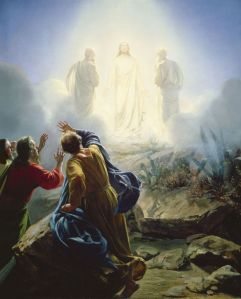
Transfiguration of Jesus
Carl Bloch

About eight days after Jesus said this, he took Peter, John and James with him and went up onto a mountain to pray. As he was praying, the appearance of his face changed, and his clothes became as bright as a flash of lightning. Two men, Moses and Elijah, appeared in glorious splendor, talking with Jesus. They spoke about his departure, which he was about to bring to fulfillment at Jerusalem. Peter and his companions were very sleepy, but when they became fully awake, they saw his glory and the two men standing with him. As the men were leaving Jesus, Peter said to him, “Master, it is good for us to be here. Let us put up three shelters—one for you, one for Moses and one for Elijah.” (He did not know what he was saying.)While he was speaking, a cloud appeared and covered them, and they were afraid as they entered the cloud. A voice came from the cloud, saying, “This is my Son, whom I have chosen; listen to him.” When the voice had spoken, they found that Jesus was alone. The disciples kept this to themselves and did not tell anyone at that time what they had seen. – Luke 9:28‭-‬36

Today’s passage involves a hike with some unexpected events and visitors.  I love to hike and be in the mountains.  I grew up near Seattle only a 45 minute drive from the Cascade Mountains and unlimited hiking opportunities.  The mountains being described here are somewhat different in that this is a desert environment and the mountains are isolated and probably not as high as the cascades. According to Christian tradition, Mount Tabor is the site of the transfiguration of Jesus in this passage. Mount Tabor (הר תבור‎ (Har Tavor) is located in Lower Galilee, Israel, at the eastern end of the Jezreel Valley.  It was about 18 kilometres (11 mi) west of the Sea of Galilee so if they were hiking from the the Sea of Galilee it would have been a 3-4 hour hike to the base of the mountain.

This story comes eight days after a very important conversation Jesus had with his disciples.  In Luke 21 Jesus predicted His own death and resurrection “The Son of Man must suffer many things and be rejected by the elders, the chief priests and the teachers of the law, and he must be killed and on the third day be raised to life.”  I think this is important context for this passage.  I am sure Peter, John, and James were still puzzling over his prophetic prediction.  This event is intended to bring clarity to their conundrum.

Jesus was praying with Peter, John, and James presumably looking on or praying with Him it is not clear.  They were certainly near enough to witness what happened next.  Jesus’ face changed and his clothing began to emit light “as bright as a flash of lightning”.  Luke is not specific about how Jesus’ face changed, he simply states that “the appearance of his face changed”.

One of the most popular posts (viewed 1138 times) I have ever written is called “As Water Reflects the Face“.  Interestingly this post was about Proverbs 27:19, “As water reflects the face, so one’s life reflects the heart.” – one of the shortest water-related passages I have encountered.  I am not sure why this post is popular, but it seems to resonate for some reason.  It is about how our faces  reveal much about our emotions and the state of our inner soul. The change of face happening here is a revealing of something fundamental and elemental about Jesus that these men have only seen glimpses of before.

His clothing was also changed, enveloped in a bright light like lightening.  Perhaps this is a result of an open window to the spiritual realm where Elijah and Moses are dwelling.  Sort of like the bright light that streams into a darkened room from a brightly lighted room.  Peter, John, and James were in the “darkened room” getting drowsy when this bright light shone in and woke them up!  “Peter and his companions were very sleepy, but when they became fully awake, they saw his glory and the two men standing with him.”

I find it interesting that the men are described as being “sleepy” and could only see God’s glory and the miraculous visitors when they were “fully awake”.  This is the hidden well in this passage for me.  Am I fully awake so that I can see and experience God’s glory like this? If not why not?  What would it take to become more awake so I can experience God’s glory more often?  These are all difficult questions and I will not pretend to fully understand their answers, but they are certainly worth chewing on.

There has been a lot of discussion and discourse lately about being “woke”.  Wikipedia has this description “Woke is a political term originating in the United States referring to a perceived awareness of issues concerning social justice and racial justice. It derives from the African-American Vernacular English expression “stay woke”, whose grammatical aspect refers to a continuing awareness of these issues.” I am not going to get into the politics of the term or whether it secular or sacred, but Jesus was very much concerned with social justice and racial justice.  He was constantly tearing down barriers between people and their prejudices.  He woke people all the time to the important spiritual aspects of their lives and how to love God, receive God’s love, and love one another, regardless of social class or race.

Returning to the spiritual awakening that Peter, john, and James are experiencing we find that as they are looking on this surreal scene they are somewhat confused about what they should be doing.  Peter, never one to let a silence go for too long, speaks up “Master, it is good for us to be here. Let us put up three shelters—one for you, one for Moses and one for Elijah.” (He did not know what he was saying.)”  Peter does not know what to do with the glimpse into the spiritual realm they have been given so he proposes a supremely secular solution.  Let’s build a “church”.

God intervenes is an elemental way to set him straight, “While he was speaking, a cloud appeared and covered them, and they were afraid as they entered the cloud. A voice came from the cloud, saying, “This is my Son, whom I have chosen; listen to him.”  No need to build a shelter, plan a pot luck, or decorate the altar with unnecessary things.  All that was required was to “listen to Jesus, God’s Son”.  This is the important part of this well known passage for me.  We can spend all sorts of energy and time trying building shelters for Jesus and “fixing” things in this world, and we should be doing that as faithful followers of Christ, but I think it needs to start with what God said to these “woke” men – “listen to him”.

Prayer: God you are a champion for those who are hurting and helpless.  Help us to listen to your Son and follow His lead in healing and helping. 


Posted in Christian Community, Christian Leadership, Christianity, Discipleship, Faith, Following God, God's Love for Us, Jesus, Life Together, Love for the Lost, Luke, Miracles, The Earthly Realm, The Nature of God, The Spiritual Realm, woke | Tagged , , , , , , | 1 Comment

Solitary Places

They sailed to the region of the Gerasenes, which is across the lake from Galilee. When Jesus stepped ashore, he was met by a demon-possessed man from the town. For a long time this man had not worn clothes or lived in a house, but had lived in the tombs. When he saw Jesus, he cried out and fell at his feet, shouting at the top of his voice, “What do you want with me, Jesus, Son of the Most High God? I beg you, don’t torture me!” For Jesus had commanded the impure spirit to come out of the man. Many times it had seized him, and though he was chained hand and foot and kept under guard, he had broken his chains and had been driven by the demon into solitary places. Jesus asked him, “What is your name?” “Legion,” he replied, because many demons had gone into him. And they begged Jesus repeatedly not to order them to go into the Abyss. A large herd of pigs was feeding there on the hillside. The demons begged Jesus to let them go into the pigs, and he gave them permission. When the demons came out of the man, they went into the pigs, and the herd rushed down the steep bank into the lake and was drowned. When those tending the pigs saw what had happened, they ran off and reported this in the town and countryside, and the people went out to see what had happened. When they came to Jesus, they found the man from whom the demons had gone out, sitting at Jesus’ feet, dressed and in his right mind; and they were afraid. Those who had seen it told the people how the demon-possessed man had been cured. Then all the people of the region of the Gerasenes asked Jesus to leave them, because they were overcome with fear. So he got into the boat and left. The man from whom the demons had gone out begged to go with him, but Jesus sent him away, saying, “Return home and tell how much God has done for you.” So the man went away and told all over town how much Jesus had done for him. – Luke 8:26‭-‬39

This familiar water is recounted in Matthew 8:28-34 where I reflected on it in a post called rushing into the lake.  The main message I gleaned from the Matthew passage was that there is an unseen spiritual world all around that can give rise to all manner or storms and squalls that we ignore at our own peril.  The story is also told in Mark 5:1-20, although in both the Mark and Luke accounts there is only one demon possessed man and in Matthew there are two. In the post I wrote about the Mark passage, called Diluted with Demons, I wondered if the soul of the man had been diluted or replaced by the impure spirits.

In this account Jesus steps on the shore of the lake and He is immediately accosted by a naked man who lived among the tombs near Gerasenes.  When he saw Jesus approaching this man dropped to his knees at Jesus’ feet and said “What do you want with me, Jesus, Son of the Most High God? I beg you, don’t torture me!”.  Each of the previous versions of this story contain a similar quote so it seems this was an important part of the story. The spirits clearly knew who Jesus was, the Son of God on earth.  I think the demons that were possessing this unfortunate man had this clarity because they were on the same side of the “window” that Jesus represented between the spiritual and the secular worlds.

This passage includes one detail that is not emphasized in the other accounts, “he had broken his chains and had been driven by the demon into solitary places.”  The interesting part of this is “solitary places”.  Why did the demons drive this man into solitary places?  Is there something about isolation from other people that served the purposes of the demons that were diluting this man’s soul?  Perhaps they knew that through community this man could have been cared for by others in a way similar to the way Jesus is caring for him here.

Jesus transfers the “legion” of demons into the herd of pigs “the herd rushed down the steep bank into the lake and was drowned.” In a way they were returning to the “spiritual sea” from which they came. I am not sure how the spiritual realm to which these demons returned relates to the undiscovered country that Jesus is the bridge to for all those that are willing to “sit at his feet” like this man.  The response of the people to this miraculous healing of mind and body is received with fear and rejection “they found the man from whom the demons had gone out, sitting at Jesus’ feet, dressed and in his right mind; and they were afraid.”

What were they people afraid of?  Perhaps they thought Jesus was somehow demonic because He could command the demons.  I do not know.  Whatever the reason they did not embrace this miracle with grace and understanding.  They told Jesus to leave.  So Jesus got back in the boat and was ready to head out.  Then comes the hard part of this story for me.

The formerly demon-possessed man asks to go with Jesus in the boat: “The man from whom the demons had gone out begged to go with him, but Jesus sent him away, saying, “Return home and tell how much God has done for you.” I can almost feel the disappointment this man must have felt when Jesus rejected his request to go along in the boat.  Jesus of course knew that it was more important for this man to be a witness where he was than to become a disciple in the boat, but it is still a hard thing to hear. I am pretty sure there are many places we need to go that are equally hard like into prisons to care for the captives there, into places of poverty to share our provisions, or perhaps into developing countries to share our science of sustainable clean water.

Casting Crowns has a song I really like called “set me free” which I am pretty sure is about this story.  It really captures the captivity this man was facing and the freedom he found. Here are some of the lyrics:

It hasn’t always been this way
I remember brighter days
Before the dark ones came
Stole my mind
Wrapped my soul in chains

Now I live among the dead
Fighting voices in my head
Hoping someone hears me crying in the night
And carries me away

Morning breaks another day
Finds me crying in the rain
All alone with my demons I am
Who is this man that comes my way?
The dark ones shriek
They scream His name
Is this the One they say will set the captives free?
Jesus, rescue me

Set me free of the chains holding me

Is anybody out there hearing me?
Set me free

As the God man passes by
He looks straight through my eyes
And darkness cannot hide

Do you want to be free?
Lift your chains
I hold the key
All power on Heaven and Earth belong to me

Set Them Free by Casting Crowns

Prayer: God set us all free from the things that bind us to this world and keep us from being in the places You need us to be.

Posted in Christianity, Discernment, Faith, Following God, God's Love for Us, Impure spirits, Jesus, Love for the Lost, Luke, Miracles, reconciliation, Redemption, Satan, The Spiritual Realm, Trusting God | Tagged , , , , , | 1 Comment

Spiritual Squalls

One day Jesus said to his disciples, “Let us go over to the other side of the lake.” So they got into a boat and set out. As they sailed, he fell asleep. A squall came down on the lake, so that the boat was being swamped, and they were in great danger. The disciples went and woke him, saying, “Master, Master, we’re going to drown!” He got up and rebuked the wind and the raging waters; the storm subsided, and all was calm. “Where is your faith?” he asked his disciples. In fear and amazement they asked one another, “Who is this? He commands even the winds and the water, and they obey him.” Luke 8:22‭-‬25

I navigated this stretch of water twice before in previous versions of this account in Matthew 8:18‭-‬27 in a post called The Waves Obey Him; and in Mark 4:35‭-‬41 for a post called Who is this?. As I read this version it occurs to me that this passage is really about fear of “drowning”, not through lungs filling with water and inability to breathe, but a fear of a soul submersion in a scary spiritual sea that we cannot see and only rarely even sense.  Jesus is about to teach the disciples how to become sailors on this spiritual sea which requires faith not fishing skills.

Let’s back paddle for a moment and go back to the start of the story. Jesus says “Let us go over to the other side of the lake.” This seemingly simple start contains a clue to the spiritual squall that the disciples are about to experience. We often describe dying, crossing over, as going over to the “other side”, the other side of what? Most people would agree the crossing over from this land of oblivion when we die is a change in our fundamental reality. Some believe that a great nothingness awaits, others believe our souls catch a ride in a different body through reincarnation, and those who follow Jesus and His teachings believe that our souls remain intact and can choose to accept Jesus’ help in crossing a great river to an undiscovered country where our souls are “saved”.

In many ways we are obsessed with oblivion and what will happen when we cross over at the end of our time here on earth.  The disciples are given a glimpse of this but they are afraid of drowning and all they can see are waves and wind, “Master, Master, we’re going to drown!”.  I get the fear of drowning that was in their hearts.  When I was getting my PhD I learned to whitewater kayak with a fellow student who was really adept at it, and to be honest a little crazy about the risks he would take.  This should have been a clue to use caution when he asked if he could teach me to whitewater kayak.  I am always up for an adventure so we practiced rolling the kayak in a warm swimming pool.  I got pretty proficient at remaining in my kayak while upside down in the water while I used the clever paddle maneuver to right myself and keep from drowning.

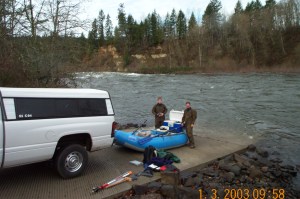
I was pretty confident in my boat flipping skills until we set out on a real river on a chilly fall day with dry suits on to combat the 45 degree water.  Soon after starting our float I found myself upside down floating down a very cold river with my head banging on rocks.  I was also headed for a log jam and was afraid that I would be swept under the logs and drown.  Well to make a long story short I bailed out of the kayak and “swamped” the boat, but I did not drown so I had that going for me.  I completed the trip with an abundance of humility, caution, and more than a little fear of a repeat performance.  Being in that foreign environment, upside down, and disoriented was truly one of the scariest moments in my life.  I think that is perhaps the way these fisherman feel in this spiritual squall they are experiencing with Jesus.

The spiritual realm that Jesus is trying to help them grow accustomed to through this very physical parable is a foreign environment to the disciples.  I am sure they often feel upside down and disoriented by the teachings that Jesus is sharing.  That is why Jesus asks them “Where is your faith?” instead of why are you afraid?  The ability to navigate the spiritual sea that Jesus is providing the window to does not depend on boating skills or even strength and courage in the traditional sense.  As Jesus reminds the disciples it is firmly rooted in faith and the ability to fix our eyes on Him.  Unfortunately the disciples seem to completely miss this point.  They are focused on the miraculous and magical calming of the wind and waves rather than the deeper truth that Jesus was trying to help them see.

Prayer: God help us to take every opportunity to learn how to see and experience the spiritual in our lives, even when it is scary to do so.

Posted in Christianity, Discipleship, Faith, Following God, Free Will, God's Love for Us, Heaven, Jesus, Luke, Miracles, Parable, The Earthly Realm, The Nature of God, The Spiritual Realm | Tagged , , , , , , | 32 Comments

Persevering Plants

While a large crowd was gathering and people were coming to Jesus from town after town, he told this parable: “A farmer went out to sow his seed. As he was scattering the seed, some fell along the path; it was trampled on, and the birds ate it up. Some fell on rocky ground, and when it came up, the plants withered because they had no moisture. Other seed fell among thorns, which grew up with it and choked the plants. Still other seed fell on good soil. It came up and yielded a crop, a hundred times more than was sown.” When he said this, he called out, “Whoever has ears to hear, let them hear.” His disciples asked him what this parable meant. He said, “The knowledge of the secrets of the kingdom of God has been given to you, but to others I speak in parables, so that, “ ‘though seeing, they may not see; though hearing, they may not understand.’ “This is the meaning of the parable: The seed is the word of God. Those along the path are the ones who hear, and then the devil comes and takes away the word from their hearts, so that they may not believe and be saved. Those on the rocky ground are the ones who receive the word with joy when they hear it, but they have no root. They believe for a while, but in the time of testing they fall away. The seed that fell among thorns stands for those who hear, but as they go on their way they are choked by life’s worries, riches and pleasures, and they do not mature. But the seed on good soil stands for those with a noble and good heart, who hear the word, retain it, and by persevering produce a crop. – Luke 8:4‭-‬15

Today’s passage contains only a tangential water reference, “no moisture” but the parable is so familiar and resonates with my inner farmer so I decided it was worth a look. Jesus is teaching in parables, dense packets of insight and understanding.  I am always amazed by the depth of meaning in these seemingly simple stories.  The story Jesus tells to this crowd of people “from town after town” is about farming.  I am sure this was a familiar topic to the majority of His listeners.  I suspect it was common practice for people to have small gardens even if they had other occupations or life pursuits.

The main character of this story is the “seed” being sowed.  Seeds are truly amazing things.  In all shapes and sizes they contain all the information and molecular machinery to produce an amazing array of plants.  The metaphorical meaning of the seed in this story is really the “the Word of God”, the underlying logos of the universe, and how all those listening can find the undiscovered country.  The story is so familiar that it is a challenge to view it with fresh eyes, but I have been surprised by hidden wells before so here goes.

The person sowing the seed is a farmer (God).  The farmer is scattering this seed far and wide and it is falling on different locations, each of which has different ability to support the growth and development of the seed into a mature plant.  The four locations are 1) on the path; 2) rocky soil; 3) among  thorns; 4) good soil.  Let’s take each one of these parable pools and explore their meaning.

The first location is interesting. I have created paths in most of the gardens I have planted in my life.  It is important to have a path so you can navigate the garden to tend the plants while not trampling or disturbing them. The path is a place near the farmer’s sowing, but it is a location that has been compacted and corrupted by the frequent traffic of many feet.  The path may be have been good soil at one time but it is now not a good place to plant because of the way it has been used.  I think this is analogous in some ways to people who become so focused on the path to enlightenment that they miss the point of the path, which is to “access the garden”. Jesus explains this part of the parable this way “Those along the path are the ones who hear, and then the devil comes and takes away the word from their hearts, so that they may not believe and be saved.”  I think “the devil” is really good at distracting us when all that is really required is to believe and be saved.

The second location is the rocky soil.  I have tried to garden in rocky soil and it is really frustrating.  Digging is hard, water does not stick around for long, there is not much to nourish the plants as they grow, and fertilizer that is added tends to wash away and do no good.  So not only is is it difficult for the seed to get a start in this hard place but it is difficult for the seed to grow and thrive due to lack of nutrients and water.  The plants on the rocky soil are disconnected from their water source and cannot thrive.  Jesus explains it this way “Those on the rocky ground are the ones who receive the word with joy when they hear it, but they have no root.”  What Jesus is describing is people with hard hearts or souls that are not really open to change, even if they outwardly look like wondering souls.

The third location is the “thorny place” with thorns that “which grew up with it and choked the plants.  One of the tasks that every gardener must do often is to remove weeds, plants that are trying to compete with the things you have planted for nutrients and water.  Unchecked, these weeds will make it difficult or impossible for the crops you planted to bear fruit.  We all have busy calendars full of events, meetings, and things we think are important enough to add to our calendar.  I freely confess I have a hard time saying “no” to things.  Part of the reason I started this blog is to force myself to “weed” my spiritual garden on a regular basis so that I have a better chance of bearing the fruit God needs me to bear. Jesus explains it his way “The seed that fell among thorns stands for those who hear, but as they go on their way they are choked by life’s worries, riches and pleasures, and they do not mature.”  The interesting thing about the maturation process that Jesus is talking about has nothing to do with chronological age or earthly wisdom.  Mature followers are actually supposed to become as children in relation to God.

The last location, the “good soil” is the goal here.  Good soil is full of life and organic matter, capable of accessing and retaining moisture to support strong roots and growth.  Good soil comes about through careful garden tending (avoiding trampling and compacting), rock removal, and weeding.  This is what discipleship is supposed to look like.  We are to engage in all of these spiritual disciplines to make ourselves good soil to that we can grow strong and thrive.  Jesus explains it this way “But the seed on good soil stands for those with a noble and good heart, who hear the word, retain it, and by persevering produce a crop.”  We need to persevere in our pursuit of God.  It is a process and a sometimes difficult path – not a destination.

I think one of the reasons Jesus shared this parable is that He wants us to take ownership in what type of “location” we are to receive the seed being sown.  Through our choices we can make ourselves into a fruitful place capable of bearing abundant fruit, or we can make ourselves into a frightful place capable of bearing bad fruit or no fruit at all.  This process is hard and will require much pondering, prayer and perseverance.

Prayer: God Help us to pursue You with passion and a desire to make our hearts good soil for your word.

Posted in Christianity, Discernment, Discipleship, Following God, Forgiveness, Free Will, garden, God's Love for Us, Luke, Parable, The Earthly Realm, The Spiritual Realm | Tagged , , , , , | Leave a comment

Tears of Transformation

When one of the Pharisees invited Jesus to have dinner with him, he went to the Pharisee’s house and reclined at the table. A woman in that town who lived a sinful life learned that Jesus was eating at the Pharisee’s house, so she came there with an alabaster jar of perfume. As she stood behind him at his feet weeping, she began to wet his feet with her tears. Then she wiped them with her hair, kissed them and poured perfume on them. When the Pharisee who had invited him saw this, he said to himself, “If this man were a prophet, he would know who is touching him and what kind of woman she is—that she is a sinner.” Jesus answered him, “Simon, I have something to tell you.” “Tell me, teacher,” he said. “Two people owed money to a certain moneylender. One owed him five hundred denarii, and the other fifty. Neither of them had the money to pay him back, so he forgave the debts of both. Now which of them will love him more?” Simon replied, “I suppose the one who had the bigger debt forgiven.” “You have judged correctly,” Jesus said. Then he turned toward the woman and said to Simon, “Do you see this woman? I came into your house. You did not give me any water for my feet, but she wet my feet with her tears and wiped them with her hair. You did not give me a kiss, but this woman, from the time I entered, has not stopped kissing my feet. You did not put oil on my head, but she has poured perfume on my feet. Therefore, I tell you, her many sins have been forgiven—as her great love has shown. But whoever has been forgiven little loves little.” – Luke 7:36‭-‬47

Today’s passage has many interesting eddies and whirlpools of wisdom, lets dive in and see what we can plumb from the depths of this discourse. I confess I just love the way Luke writes and recounts these stories about Jesus – so many details and layers of meaning and metaphor.

In this story Jesus is having dinner at the house of a Pharisee. Given His previous interactions with these religious leaders I am somewhat surprised that this Pharisee would have invited Him at all. Perhaps he wanted to catch Him in some sort of “sin” or association like the one that is described in this passage.

A woman shows up uninvited to the Pharisee’s dinner party. This is not just any woman but a woman “who lived a sinful life”. Although it does not say I would think that the most likely sin she would have been guilty of at the time was a sexual sin in the form of prostitution, marital infidelity, or adultery. I am a little surprised that she was even able to get close to Jesus and that she was given access to the house. Perhaps they were eating in a courtyard where there was room for people to gather around the central “important” people while they were eating. Maybe the Pharisee allowed her access with the intention of “trapping” Jesus. I do not know.

Whatever the means or method the woman finds herself at Jesus’ feet doing something that probably made the Pharisee uncomfortable, “As she stood behind him at his feet weeping, she began to wet his feet with her tears. Then she wiped them with her hair, kissed them and poured perfume on them.” Jesus saw a tender soul seeking a savoir that could strip away the of sin of her life with His love and forgiveness. The Pharisee, looking at the same woman, could only see a sinful woman wasting her expensive perfume in a hopeless attempt at salvation. Jesus uses this event to help Peter to “see” this woman, and others like her, the way He does rather than like the Pharisee.

The Pharisee was musing within his mind “If this man were a prophet, he would know who is touching him and what kind of woman she is—that she is a sinner.” Of course Jesus knew this woman, and the Pharisee, better than they knew themselves. He just chose to see them as they could be through the forgiveness and grace of God. Jesus saw possibilities while the Pharisee saw only sin and separation from God – unforgivable uncleanness.

Interestingly, Jesus chooses to talk directly to Simon rather than the Pharisee in response to the Pharisee’s internal musings about the woman. Jesus uses a story of financial debt forgiveness to get to the heart of the matter. We all have a debt in the form of sin. Some have “big” debts and others have smaller debts but there is no one who is without sin. We all have some examples of falling short of loving God with our whole heart, mind, and strength and our neighbors as ourselves.

The point Jesus is trying to make with Simon is that those who have messed up in big ways are more appreciative of forgiveness that those who, at least on the surface, have less sin to forgive. I get what Jesus is saying, but I think in reality sin is not like money, it is more like the scent of a skunk. It only takes a little to make us stink, it is really hard to get off, and it does not matter if you smell a little like a skunk or a lot no one wants to be around you. In fact the only way to get the “stink” of sin off is to accept the salvation offered by the Savoir, whether yours sins are big or small.

Jesus’ point here is that your level of “stinkiness”, sin, does not determine your ability to love God or others. This woman was able to show her love for Jesus in a way that the Pharisee was not. Jesus summarizes “Do you see this woman? I came into your house. You did not give me any water for my feet, but she wet my feet with her tears and wiped them with her hair. You did not give me a kiss, but this woman, from the time I entered, has not stopped kissing my feet. You did not put oil on my head, but she has poured perfume on my feet. Therefore, I tell you, her many sins have been forgiven—as her great love has shown.”

The woman’s external actions demonstrated a wondering soul ready to love God and accept the grace of God and forgiveness Jesus offered. She showed that she had great love in her heart despite the “stain” of sin that was all the Pharisee could see. She gave her tears, samples of her soul, to Jesus in a way that revealed where heart was residing, and it was with God.

The way Jesus describes her forgiveness of sins is interesting. He says “her many sins have been forgiven—as her great love has shown.” Her demonstrations of great love was the external evidence of the forgiveness of her sins that had already been accomplished in her soul when she sought out Jesus for help.

This story is comforting confirmation that the forgiveness of our sins is only as far away as our actions and acceptence keep it. Salvation does not requires unattainable Pharisaical perfection. It only requires a soul that is seeking after God. If we seek after Jesus with the passion and pursuit of this “sinful” woman then we will find him and the forgiveness He offers. God is seeking us while we are seeking Him, even if we do not know it.

Prayer: God You love us and want to teach us how to love You and others. Help us to accept the forgiveness You freely offer so we can love you and others more effectively.

Posted in Christianity, Discernment, Discipleship, Faith, Following God, Forgiveness, Free Will, God's Love for Us, Healing, Jesus, Luke, Pharisee, Redemption, Sin, The Nature of God | Tagged , , , , , , | 4 Comments

Firm Foundations

“Why do you call me, ‘Lord, Lord,’ and do not do what I say? As for everyone who comes to me and hears my words and puts them into practice, I will show you what they are like. They are like a man building a house, who dug down deep and laid the foundation on rock. When a flood came, the torrent struck that house but could not shake it, because it was well built. But the one who hears my words and does not put them into practice is like a man who built a house on the ground without a foundation. The moment the torrent struck that house, it collapsed and its destruction was complete.” – Luke 6:46‭-‬49

I have been looking forward to this stretch of the river for some time. As a river scientist and someone who loves to be on and around dynamic rivers it holds special meaning for me. Jesus is providing a word picture for those who “hear him” so let’s listen in, “As for everyone who comes to me and hears my words and puts them into practice, I will show you what they are like a man building a house, who dug down deep and laid the foundation on rock. When a flood came, the torrent struck that house but could not shake it, because it was well built.”

I was once involved in a law suit involving damage to a house during a flood. I was working for the state of Oregon at the time as a reclamationist. Most people have never heard of a reclamationist but basically I was a “rock cop” making sure that miners of sand, gravel, rock, and metals followed the mining and reclamation laws for Oregon. As it turns out the best place, at least in Oregon, to find sand and gravel is near or in rivers. Since rivers are dynamic places subject to flooding this can create problems at times when the mining changes the way the river would naturally flow or flood.

So the entire lawsuit was about whether a mining operation had changed the way the river flooded and caused damage to a property downstream from the mining operation. I was on the witness stand for three hours straight! The lawyer for the person suing the state and the mining operator was trying to get me to say that it was the state’s fault that the river flooding damaged the house. Finally the judge came to my rescue and told the lawyer to stop badgering this young man and get on with it. Part of me felt sorry for this homeowner whose home was damaged, but the geologist and river scientist in me realized that the location of the home was the problem not the river, flooding, or even the mining operation. I am not sure how this law suit ended up but it taught me important lessons about lawyers, lawsuits and locating homes on floodplains.

But I digress…back to the passage at hand. It is important to note that one can “hear” Jesus’ words but not put them into practice which results in the second part of the word picture “But the one who hears my words and does not put them into practice is like a man who built a house on the ground without a foundation. The moment the torrent struck that house, it collapsed and its destruction was complete.” Let’s take each one of these parts of the word picture on and see what hidden wells may be there.

The first home builder builds his home with a firm foundation after digging all the way to the “rock”. Geologists are often consulted about the composition and competency of the rocks when building a home or structure. So why is it better from a geologic perspective to build on a rock foundation? When it comes to rivers it means that you are building on something that is immovable rather than the movable bed that most rivers are built upon. The biggest flood in the world may erode the bedrock in a river but it rarely if ever moves it. This is not true for the sand, gravel, and rocks that are in most rivers. They are supposed to move when a river floods, it is part of the elegant and dynamic equilibrium that a river establishes to dissipate energy during a flood. It is this movement that makes most river rocks look rounded and smooth and an important part of determining the shape and form of a river.

God is certainly like this immovable bedrock and that is probably why Jesus chose this for his word picture. The interesting thing about God is that He is like both an immovable rock and like the magnificently malleable water in the riverthe lion and lamb.

The reason bedrock is immovable is that it is connected to the underlying foundations of the earth. It is on top of this underlying foundation that all the trees, rivers, soils, and everything humans have ever built are placed. Ah this is a hidden well after all…

This foundation is very much like the logos, “the word”, the underlying reason behind the universe, that is mentioned in the beginning of the book of John as being at the root of all things. God is not only like this foundation He is this foundation!

The second part of Jesus’ word picture about the “man who built a house on the ground without a foundation”. Metaphorically speaking the “ground without a foundation” superimposed on the rock foundation of God’s logos is all the of hand prints of human history, including the cultural and religious practices that we have used to decorate the alter in our attempts to get closer to God.

There are many ways we can succumb to this error in our lives, some obvious and some not so obvious. The obvious ones are when we replace God with alternate altars of gold or stone in the form or idols or pursuits that are either in opposition to God’s will or ignorant of it. The less obvious ones are especially an issue within the church and organized religion. For some reason we are really good at encrusting God’s relatively simple message, which Jesus summarized in Mark 12:29-31:

“The most important one,” answered Jesus, “is this: ‘Hear, O Israel: The Lord our God, the Lord is one. Love the Lord your God with all your heart and with all your soul and with all your mind and with all your strength. The second is this: ‘Love your neighbor as yourself. There is no commandment greater than these.”

So what is the take home message here? I think it is that we should be very careful that we are building our faith and way of following God on the firm foundation which has been around since the beginning, God’s logos, and we should put this into practice in our lives by loving our neighbors as ourselves.

Prayer: God Help us to build our lives on the firm foundation that begins and ends with You.

Posted in Christianity | Leave a comment

Luke’s Layers of Meaning

One day as Jesus was standing by the Lake of Gennesaret, the people were crowding around him and listening to the word of God. He saw at the water’s edge two boats, left there by the fishermen, who were washing their nets. He got into one of the boats, the one belonging to Simon, and asked him to put out a little from shore. Then he sat down and taught the people from the boat. When he had finished speaking, he said to Simon, “Put out into deep water, and let down the nets for a catch.” Simon answered, “Master, we’ve worked hard all night and haven’t caught anything. But because you say so, I will let down the nets.” When they had done so, they caught such a large number of fish that their nets began to break. So they signaled their partners in the other boat to come and help them, and they came and filled both boats so full that they began to sink. When Simon Peter saw this, he fell at Jesus’ knees and said, “Go away from me, Lord; I am a sinful man!” For he and all his companions were astonished at the catch of fish they had taken, and so were James and John, the sons of Zebedee, Simon’s partners. Then Jesus said to Simon, “Don’t be afraid; from now on you will fish for people.” So they pulled their boats up on shore, left everything and followed him. – Luke 5:1‭-‬11 NIV

Luke provides so much more depth and detail than the other gospels. It is kind of like comparing a wall to wall carpet to an ornate tapestry, or a seven course meal to fast food. The main event of this story was James and John becoming followers of Jesus, but Luke has provided many new layers of meaning to this story. A cliff notes version of this event was provided in Mark when I reflected on Jesus being a window between worlds. I went back to see what the account in Matthew was like and realized that somehow I floated past this water reference (Matthew 4:18-22) without reflecting on it. It turns out it is similar to the account in the book of Mark:
As Jesus was walking beside the Sea of Galilee, he saw two brothers, Simon called Peter and his brother Andrew. They were casting a net into the lake, for they were fishermen. “Come, follow me,” Jesus said, “and I will send you out to fish for people.” At once they left their nets and followed him. Going on from there, he saw two other brothers, James son of Zebedee and his brother John. They were in a boat with their father Zebedee, preparing their nets. Jesus called them, and immediately they left the boat and their father and followed him. – Matthew 4:18-22.

The version in Matthew, like Mark is just the bare facts of the event without the depth and detail of the Luke account. Rather than schlep my boat back upstream to run that bit of water I will just focus on the Luke account here. Luke provides much more information about how people are feeling and what might be motivating them to do what they are doing.

For example, Luke begins with the seemingly innocuous statement “the people were crowding around him and listening to the word of God”. The people were listening, which is a key point here and something that we all need to do if we are to hear God’s subtle voice sometimes. Jesus begins to teach in a not so subtle way from a fishing boat he has borrowed from Simon. Perhaps in payment Jesus directs Simon to put out into the lake and cast his nets. Simon is skeptical because he is after all the expert on fishing and they have not been having much luck after fishing all night.

Fortunately for Simon Jesus knows where and how to fish even better than this “fisherman” and they catch so many fish that they are in danger of sinking. Simon has to seek help from his friends to deal with the bounty provided by Jesus. At this point Luke adds the name Peter to Simon’s name and describes his response to this miracle of the fish: “When Simon Peter saw this, he fell at Jesus’ knees and said, “Go away from me, Lord; I am a sinful man!” I find it interesting that the first response of the Simon (Peter) is to look inward and see his own sin. I assume this was because he realized that only God could provide a miraculous catch like he just witnessed. Instead of reaching out and hugging the God of the universe he was ready to jump overboard. I feel like God would have preferred a hug.

Then toward the end Jesus tips his hand as the real reason for this miraculous mound of mackerel in the boat, “Don’t be afraid; from now on you will fish for people.” So they pulled their boats up on shore, left everything and followed him.” Jesus was trying to channel the hearts of these fishermen in a way that they could relate to and remember. He wanted their hearts to know and understand this new thing that he was enlisting them to share. Hopefully the reason they chose to follow Him was not the magic and miracle of the event, but the profoundness of Godly precipitate in their midst for the first time in human history.

Prayer: God you show up in our lives in many different ways. Help us to see You and Your presence in everything we see and do.

Posted in Christianity, Discipleship, Faith, Following God, God's Love for Us, Jesus, Luke, Miracles, Sharing the Gospel, Trusting God | Tagged , , , , , , | 6 Comments

Wondering Souls

Jesus in the Jordan River with John the Baptist by Paul Revere

The people were waiting expectantly and were all wondering in their hearts if John might possibly be the Messiah. John answered them all, “I baptize you with water. But one who is more powerful than I will come, the straps of whose sandals I am not worthy to untie. He will baptize you with the Holy Spirit and fire. His winnowing fork is in his hand to clear his threshing floor and to gather the wheat into his barn, but he will burn up the chaff with unquenchable fire.” – Luke 3:15‭-‬17

Welcome to the book of Luke! I have always understood that Luke was a “Physician”. It is easy to apply our modern ideas about what it means to be a doctor to Luke but I am not sure this is accurate or fair. Clearly medicine at the time was a very different thing than it is today. I am teaching a class right now and we are using a book about the 1918 Spanish Flu called Pale Rider by Laura Spinney. We have been exploring what was known and what was not known about diseases and germs at the time of this pandemic so I have a better appreciation of what it meant to be a “physician” at the time of Jesus.

Apparently at the time Luke would have been practicing medicine he would have been strongly influenced by Greek concepts of health and healing which had been largely adopted by the Romans. At the core of their understanding was the idea that within each person were four fluids or “humors”. Imbalance in these humors resulted in external manifestations of ill health. The four humors were black and yellow bile, phlegm, and blood. I am not sure to what extent Luke would have ascribed to this idea or practiced blood letting and other treatments intended to restore balance in these fluids, but since water is in fact a fluid and it is integral to my “walk on water” through the bible I thought it important to be cognizant of this context.

I assume that Luke also understood some illnesses, perhaps most, to have a spiritual cause. I think that even most modern doctors would acknowledge that on some level there is a connection between the mind and body in determining our overall health. Some might be even be willing to admit a spiritual side to some symptoms. From my experience I think our health is the result of a complex mixture of the physical, spiritual, and intellectual causes.

This passage comes after floating past much of the familiar territory in Luke about of Christ’s birth and childhood which is the subject of much Christmas tradition. There are deep truths in much of this familiar water but alas no water references.  This account of people approaching John the Baptist along the Jordan River asking him who he is and what he has come to do has been recounted in both Matthew and Mark

In previous versions I do not remember this particular wording being used to describe the people waiting “The people were waiting expectantly and were all wondering in their hearts” What does it mean to wonder in your heart? Since the heart has been pretty much synonymous with our souls this statement would seem to be saying that the people’s souls were “wondering.”. What does it mean to have a wondering soul?  I really like the idea, perhaps a future Rabbit Trail for sure. 

I associate wondering with curiosity, and curiosity with children.  So to approach God with a wondering soul is to acknowledge our status as little ones in relation to a loving God. This is not to lessen our lives here on earth, but to place them in the proper spiritual perspective.  Souls that wonder seek and knock to find answers.

The take home message for me from this hidden well is to approach God with a soul full of wonder at His amazing love and care for us as His children.  Not a bad beginning for the book of Luke.  I look forward to running this stretch of river.

Prayer: God You love us as little ones.  Help us to approach You with souls full of wonder.


Posted in baptism, Christianity, Discipleship, Faith, Following God, Forgiveness, Free Will, God's Love for Us, Jesus, Love for the Lost, Luke, Messiah, The Nature of God, Trusting God | Tagged , , , , , , , | 23 Comments